




china split butterfly valves Performance Analysis
Introduction
China split butterfly valves represent a critical component in fluid control systems across numerous industrial applications, including water treatment, chemical processing, power generation, and HVAC. These valves, characterized by their bi-part construction allowing for easier maintenance and reduced downtime, utilize a disc rotating within the valve body to regulate flow. Their inherent advantages in terms of compact design, light weight, and relatively low cost have driven their widespread adoption, particularly in large-diameter pipeline systems. However, variations in manufacturing quality, material selection, and design nuances present significant challenges regarding long-term reliability and performance. This technical guide provides an in-depth examination of China split butterfly valves, covering material science, manufacturing processes, performance characteristics, potential failure modes, and relevant industry standards. Understanding these aspects is crucial for procurement managers, engineers, and maintenance personnel to ensure optimal valve selection, installation, and operational longevity, mitigating risks associated with leakage, corrosion, and system failure.
Material Science & Manufacturing
The performance of a split butterfly valve is inextricably linked to the materials used in its construction. The valve body is commonly fabricated from ductile iron (QT450-10), carbon steel (A536 65-45-12), or stainless steel (304/316). Ductile iron provides a cost-effective solution with good tensile strength and corrosion resistance, but is susceptible to graphitic corrosion in specific environments. Carbon steel offers higher strength but necessitates robust protective coatings to prevent corrosion. Stainless steel, while the most expensive, provides superior corrosion resistance in aggressive chemical environments. The disc material often mirrors the body material, though alloys like Hastelloy or Monel may be used for highly corrosive fluids. The seat material, crucial for sealing, is typically EPDM, PTFE, or NBR, selected based on fluid compatibility and temperature range.
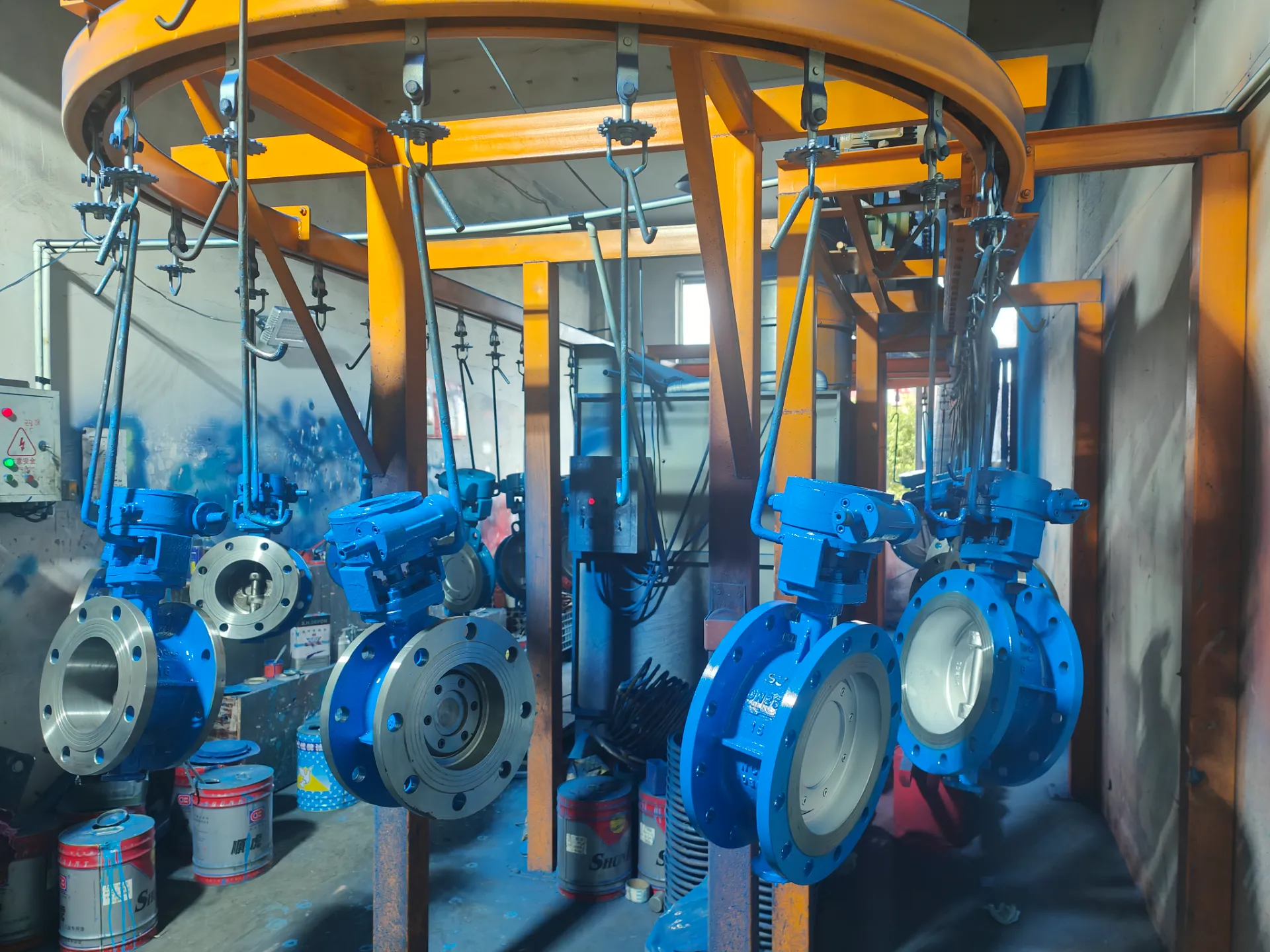
Manufacturing involves several key stages. The body is typically produced via sand casting, requiring precise mold design and metal pouring control to minimize porosity and ensure dimensional accuracy. Splitting the body requires precision machining to create a tight, leak-proof joint. The disc is forged or cast, followed by machining and polishing to achieve a smooth surface finish for optimal flow characteristics. Seat vulcanization (for EPDM/NBR) or PTFE lining is a critical process affecting seal integrity. Welding processes, if used for connecting components, must adhere to stringent quality control standards (AWS D1.1) to prevent weld defects. Parameter control during heat treatment (for steel components) is vital for achieving desired mechanical properties such as yield strength and hardness. Non-destructive testing (NDT) methods, including radiography, ultrasonic testing, and liquid penetrant inspection, are employed to detect internal and surface flaws. Surface treatments like epoxy coating or galvanization are commonly applied to carbon steel bodies to enhance corrosion resistance.
Performance & Engineering
The performance of split butterfly valves hinges on several engineering considerations. Torque requirements, dictated by fluid pressure, valve size, and seat friction, are crucial for actuator selection. Actuators can be manual, pneumatic, electric, or hydraulic, with pneumatic and electric actuators being the most common for automated control. The valve’s Kv/Cv value (flow coefficient) determines its flow capacity, influencing pressure drop across the valve. Cavitation, a phenomenon arising from rapid pressure changes, can cause erosion of the disc and seat, necessitating careful valve sizing and control strategies. Furthermore, the valve must withstand the hydrostatic pressure of the fluid, with safety factors incorporated into the design to prevent body rupture.
Environmental resistance is paramount. External corrosion protection, especially in coastal or industrial environments, requires appropriate coating systems. Temperature extremes can affect seal material performance and dimensional stability. Flutter, a vibration phenomenon induced by flow turbulence, can lead to premature wear and fatigue failure, mitigated through streamlined disc designs and flow conditioners. Compliance with relevant industry standards is essential. API 598 mandates pressure testing procedures, while ISO 5208 defines performance requirements for butterfly valves. Finite element analysis (FEA) is frequently used during the design phase to simulate stress distribution and optimize valve geometry, ensuring structural integrity under various operating conditions. Proper installation, including alignment with the pipeline and adequate support, is critical to prevent distortion and leakage.
Technical Specifications
| Parameter | DN50 (2 inch) | DN100 (4 inch) | DN200 (8 inch) | DN300 (12 inch) |
|---|---|---|---|---|
| Maximum Pressure (PN) | 16 bar | 10 bar | 6 bar | 4 bar |
| Temperature Range (°C) | -20 to 120 | -20 to 120 | -20 to 80 | -10 to 80 |
| Seat Material | EPDM | EPDM/PTFE | PTFE | PTFE |
| Body Material | Ductile Iron QT450-10 | Ductile Iron QT450-10 | Carbon Steel A536 65-45-12 | Carbon Steel A536 65-45-12 |
| Actuator Type | Manual/Pneumatic | Pneumatic/Electric | Electric/Hydraulic | Electric/Hydraulic |
| Weight (kg) | 2.5 | 6.0 | 25 | 55 |
Failure Mode & Maintenance
Split butterfly valves, while robust, are susceptible to several failure modes. Seat erosion, caused by abrasive particles in the fluid or cavitation, is a common issue, leading to leakage. Corrosion, particularly in carbon steel bodies without adequate protection, can compromise structural integrity. Disc fatigue cracking, stemming from cyclic loading and vibration, can result in catastrophic failure. Bolted joint failure, due to loosening or corrosion of bolts, can lead to body separation and leakage. Stem packing failure can cause leakage around the stem.
Preventive maintenance is crucial. Regular inspection of the seat for wear or damage is essential. Periodic tightening of bolts and replacement of corroded fasteners should be implemented. Lubrication of the stem and actuator mechanism reduces friction and extends component life. Protective coatings should be inspected and repaired as needed. For valves handling abrasive fluids, consider installing strainers upstream to remove particulate matter. Regular testing (API 598) verifies leak tightness. When replacing a seat, ensure proper material compatibility and follow the manufacturer’s installation instructions. In cases of severe corrosion, the valve body may require replacement. Implementing a condition monitoring program, including vibration analysis and thermal imaging, can detect early signs of failure, allowing for proactive maintenance and preventing unplanned downtime.
Industry FAQ
Q: What is the primary advantage of a split butterfly valve over a monolithic design, particularly concerning maintenance?
A: The split design allows for in-line maintenance without complete pipeline disruption. The body can be separated at the split line, enabling access to the disc, seat, and stem for inspection, repair, or replacement. This significantly reduces downtime and associated costs compared to monolithic valves, which often require pipeline draining and valve removal for similar maintenance procedures.
Q: How does the choice of seat material impact the valve’s suitability for different chemical applications?
A: Seat material compatibility is paramount. EPDM is suitable for water and many chemical applications but can degrade with exposure to oils and solvents. PTFE offers broad chemical resistance but has lower mechanical strength and can creep under high loads. NBR provides good resistance to oils and fuels but is less resistant to ozone and weathering. Selecting the correct seat material prevents swelling, degradation, and leakage, ensuring long-term performance.
Q: What are the key considerations when selecting an actuator for a large-diameter split butterfly valve?
A: For large-diameter valves, actuator selection requires careful torque calculation considering fluid pressure, valve size, and seat friction. Electric actuators offer precise control and are suitable for remote operation, while hydraulic actuators provide high torque for demanding applications. Pneumatic actuators are cost-effective for simpler applications. Redundancy features, such as fail-safe mechanisms, should be considered for critical applications.
Q: What are the common causes of cavitation in butterfly valves and how can they be mitigated?
A: Cavitation occurs when the pressure drops below the vapor pressure of the fluid, forming bubbles that collapse violently, causing erosion. It’s often caused by improper valve sizing, high flow velocities, or sudden changes in flow direction. Mitigation strategies include proper valve sizing, using multi-stage valves to reduce pressure drop, and installing flow conditioners upstream of the valve.
Q: What non-destructive testing (NDT) methods are typically employed to ensure the quality of China split butterfly valves?
A: Common NDT methods include liquid penetrant inspection (LPI) to detect surface cracks, magnetic particle inspection (MPI) for detecting surface and near-surface defects in ferrous materials, radiographic testing (RT) to reveal internal flaws, and ultrasonic testing (UT) for detecting internal defects and measuring material thickness. These methods ensure the valve meets required quality standards and prevent premature failure.
Conclusion
China split butterfly valves offer a compelling combination of performance, cost-effectiveness, and maintainability, making them a prevalent choice across a wide range of industrial applications. However, realizing these benefits hinges on a comprehensive understanding of material science, manufacturing quality, and operational considerations. The selection of appropriate materials, adherence to stringent quality control during manufacturing, and implementation of a proactive maintenance program are critical for ensuring long-term reliability and preventing costly failures.
Looking forward, advancements in materials science, such as the development of more corrosion-resistant alloys and improved elastomer compounds, will further enhance the performance and lifespan of these valves. Furthermore, the integration of smart valve technology, including sensor-based condition monitoring and remote diagnostics, will enable predictive maintenance strategies, optimizing operational efficiency and minimizing downtime. A meticulous approach to valve selection, installation, and maintenance, coupled with continuous innovation, will ensure that China split butterfly valves continue to play a vital role in industrial fluid control systems.
-
The Essential Guide to Dual Plate Check Valves
-
Swing Check Valve Types: Reliable Flow Control & Backflow Prevention
-
Top Reasons to Choose a Stainless Steel Flange Check Valve for Industrial Applications
-
solenoid valve 3 way 2 position Performance Analysis
-
micro solenoid valve Performance Analysis
-
solenoid ball valve Performance Analysis
-
micro solenoid valves Performance Engineering
-
solenoid ball valves Performance Analysis
-
solenoid valve 5 2 Performance Analysis
-
solenoid valve stainless steel Performance Analysis
-
stainless steel solenoid valves Performance Analysis
-
solenoid valve 5/2 Performance Analysis
-
cryogenic solenoid valve Performance Analysis
-
direct acting solenoid valve Performance Analysis
-
miniature solenoid valve Performance Analysis
 Afrikaans
 Albanian
 Amharic
 Arabic
 Armenian
 Azerbaijani
 Basque
 Belarusian
 Bengali
 Bosnian
 Bulgarian
 Catalan
 Cebuano
 Corsican
 Croatian
 Czech
Czech
 Danish
 Dutch
Dutch
 Esperanto
 Estonian
 Finnish
 French
 Frisian
 Galician
 Georgian
 German
 Greek
Greek
 Gujarati
 Haitian Creole
 Hausa
Hawaiian
Hausa
Hawaiian
 Hebrew
 Hindi
Hindi
 Miao
Miao
 Hungarian
 Icelandic
 Igbo
Igbo
 Indonesian
 Irish
Irish
 Italian
 Japanese
 Javanese
Kannada
Javanese
Kannada
 Kazakh
 Khmer
Khmer
 Rwandese
 Korean
 Kurdish
 Kyrgyz
 Lao
Lao
 Latin
Latin
 Latvian
 Lithuanian
 Luxembourgish
 Macedonian
 Malgashi
 Malay
Malay
 Malayalam
 Maltese
 Maori
Maori
 Marathi
 Mongolian
 Myanmar
 Nepali
 Norwegian
 Norwegian
 Occitan
 Pashto
 Persian
 Polish
 Portuguese
Punjabi
Portuguese
Punjabi
 Romanian
 Russian
 Samoan
 Scottish Gaelic
 Serbian
 Sesotho
 Shona
Shona
 Sindhi
 Sinhala
 Slovak
 Slovenian
 Somali
 Spanish
 Sundanese
 Swahili
 Swedish
Tagalog
Swedish
Tagalog
 Tajik
Tajik
 Tamil
Tamil
 Tatar
Tatar
 Telugu
 Thai
Thai
 Turkish
 Turkmen
 Ukrainian
 Urdu
Urdu
 Uighur
 Uzbek
Uzbek
 Vietnamese
 Welsh
Welsh
 Bantu
Bantu
 Yiddish
 Yoruba
 Zulu
Zulu
 English