




Flanged Gate Valves: Flange Ends and Configurations
In industrial piping systems where reliability and leak-proof performance are paramount, flanged gate valves serve as critical components for fluid control. The gate valve flange type design offers superior sealing capabilities and structural integrity, while gate valve flange end configurations ensure secure pipeline connections. These valves are particularly valued in sectors requiring high-pressure containment and minimal flow restriction.
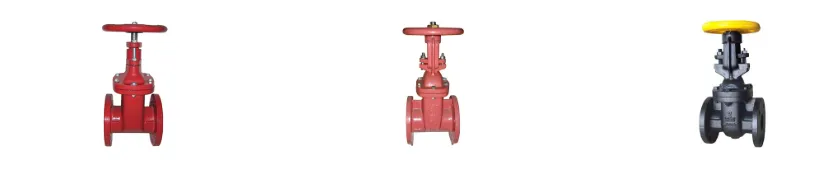
Key Advantages of Flanged Gate Valves
Zero Pressure Drop Design: Full-bore opening creates straight-line flow with minimal turbulence.
Robust Flange Connections: Gate valve flange end designs prevent leaks in high-pressure systems.
Material Versatility: Available in cast iron, ductile iron, stainless steel, and special alloys.
Bidirectional Sealing: Effective flow control in either direction for flexible installation.
High-Temperature Tolerance: Suitable for steam, hot oil, and other thermal applications.
Common Applications for Gate Valve Flange Type
Municipal Water Systems: Mainline isolation and distribution control.
Oil & Gas Pipelines: Crude oil transfer and refinery processes.
Power Generation: Steam line isolation in thermal plants.
Chemical Processing: Handling corrosive media with specialty alloys.
Wastewater Treatment: Mainline shut-off and bypass systems.
Installation Best Practices for Gate Valve Flange End
Pre-Installation Inspection: Verify flange dimensions and gasket compatibility.
Bolt Tightening Sequence: Use crisscross pattern for even gasket compression.
Alignment Verification: Ensure perfect pipeline alignment before final tightening.
Operational Testing: Cycle valve several times under pressure before commissioning.
Maintenance Access: Leave adequate clearance for handwheel operation and maintenance.
FAQs: Flanged Gate Valve Configurations and Applications
What are the main benefits of gate valve flange type designs?
The flanged connection provides superior leak protection, easier maintenance, and better pressure containment compared to threaded or welded alternatives.
How do I select the proper gate valve flange end configuration?
Consider operating pressure, temperature, medium characteristics, and existing pipeline flange standards when selecting flange type and rating.
What maintenance do flanged gate valves typically require?
Regular lubrication of stems, gasket inspections, and operational cycling to prevent seat sticking in infrequently used valves.
Can flanged gate valves be used for throttling applications?
While possible, they're not recommended for prolonged throttling as partial opening can cause seat erosion and vibration damage.
What are the key differences between raised face and flat face flanges in gate valve flange end designs?
Raised face (RF) flanges feature a small raised surface around the bore for better gasket compression, while flat face (FF) flanges have completely flat surfaces and are typically used for lower pressure applications with full-face gaskets. RF flanges are more common in high-pressure systems using ring-type gaskets.
The engineering advantages of flanged gate valves, particularly in gate valve flange type configurations with proper gate valve flange end specifications, make them indispensable for industrial fluid systems. Their robust construction, reliable performance, and maintenance-friendly design continue to make them the preferred choice for critical isolation applications across multiple industries. Proper selection and installation ensure decades of trouble-free service in even the most demanding operating conditions.
-
The Essential Guide to Dual Plate Check Valves
-
Swing Check Valve Types: Reliable Flow Control & Backflow Prevention
-
Top Reasons to Choose a Stainless Steel Flange Check Valve for Industrial Applications
-
solenoid valve 3 way 2 position Performance Analysis
-
micro solenoid valve Performance Analysis
-
solenoid ball valve Performance Analysis
-
micro solenoid valves Performance Engineering
-
solenoid ball valves Performance Analysis
-
solenoid valve 5 2 Performance Analysis
-
solenoid valve stainless steel Performance Analysis
-
stainless steel solenoid valves Performance Analysis
-
solenoid valve 5/2 Performance Analysis
-
cryogenic solenoid valve Performance Analysis
-
direct acting solenoid valve Performance Analysis
-
miniature solenoid valve Performance Analysis
 Afrikaans
 Albanian
 Amharic
 Arabic
 Armenian
 Azerbaijani
 Basque
 Belarusian
 Bengali
 Bosnian
 Bulgarian
 Catalan
 Cebuano
 Corsican
 Croatian
 Czech
Czech
 Danish
 Dutch
Dutch
 Esperanto
 Estonian
 Finnish
 French
 Frisian
 Galician
 Georgian
 German
 Greek
Greek
 Gujarati
 Haitian Creole
 Hausa
Hawaiian
Hausa
Hawaiian
 Hebrew
 Hindi
Hindi
 Miao
Miao
 Hungarian
 Icelandic
 Igbo
Igbo
 Indonesian
 Irish
Irish
 Italian
 Japanese
 Javanese
Kannada
Javanese
Kannada
 Kazakh
 Khmer
Khmer
 Rwandese
 Korean
 Kurdish
 Kyrgyz
 Lao
Lao
 Latin
Latin
 Latvian
 Lithuanian
 Luxembourgish
 Macedonian
 Malgashi
 Malay
Malay
 Malayalam
 Maltese
 Maori
Maori
 Marathi
 Mongolian
 Myanmar
 Nepali
 Norwegian
 Norwegian
 Occitan
 Pashto
 Persian
 Polish
 Portuguese
Punjabi
Portuguese
Punjabi
 Romanian
 Russian
 Samoan
 Scottish Gaelic
 Serbian
 Sesotho
 Shona
Shona
 Sindhi
 Sinhala
 Slovak
 Slovenian
 Somali
 Spanish
 Sundanese
 Swahili
 Swedish
Tagalog
Swedish
Tagalog
 Tajik
Tajik
 Tamil
Tamil
 Tatar
Tatar
 Telugu
 Thai
Thai
 Turkish
 Turkmen
 Ukrainian
 Urdu
Urdu
 Uighur
 Uzbek
Uzbek
 Vietnamese
 Welsh
Welsh
 Bantu
Bantu
 Yiddish
 Yoruba
 Zulu
Zulu
 English