




Plate Flange Performance Analysis
Introduction
Plate flanges are critical components in piping systems, serving as the connecting points between sections of pipe, valves, pumps, and other equipment. Functionally, they distribute the load and stress from the connected components, preventing leaks and ensuring structural integrity. Positioned within the broader industrial chain, plate flanges represent a crucial element in pressure vessel and piping design, falling under the purview of mechanical engineering and materials science. Their manufacturing and application are subject to stringent industry standards, primarily focused on pressure containment, dimensional accuracy, and material compatibility. Core performance characteristics include pressure rating, temperature resilience, and corrosion resistance, directly impacting the reliability and safety of the overall system. The selection of the appropriate plate flange material and design is dictated by factors such as the operating fluid, pressure, temperature, and applicable regulatory requirements. A primary industry pain point revolves around selecting flanges that can withstand harsh operating conditions and prevent catastrophic failure, which necessitates thorough understanding of material properties and adherence to rigorous quality control protocols.
Material Science & Manufacturing
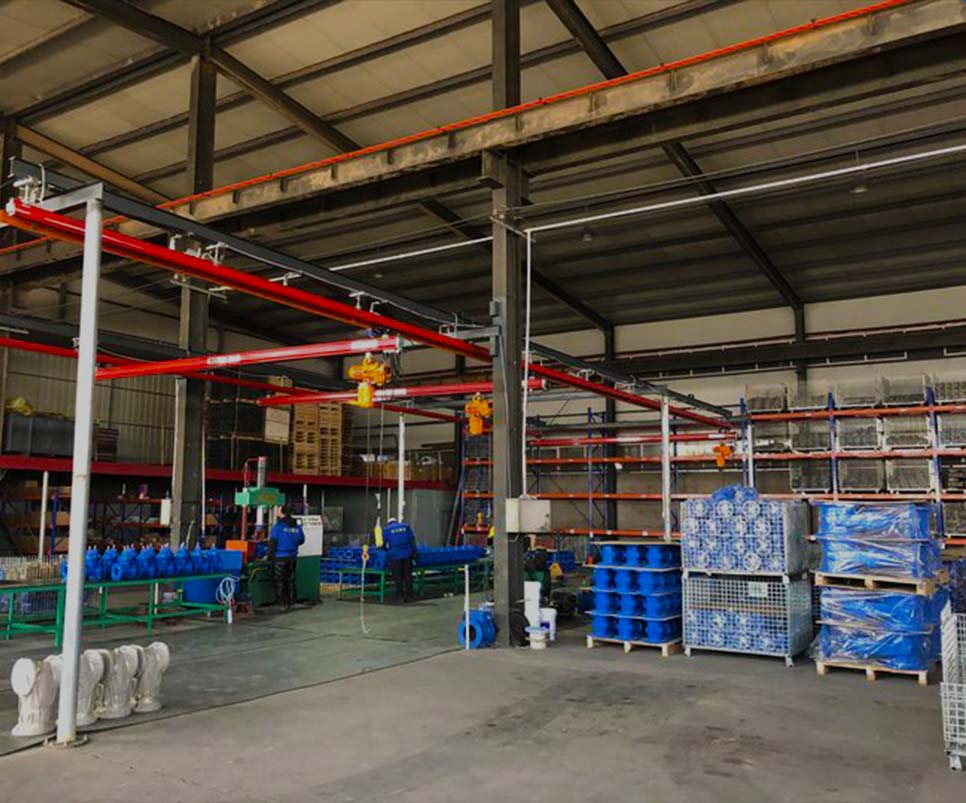
Plate flanges are typically manufactured from carbon steel (ASTM A105, A36), stainless steel (304/304L, 316/316L), alloy steel (A182 F304, F316), or other specialized alloys depending on the service requirements. Carbon steel offers high strength and cost-effectiveness but is susceptible to corrosion. Stainless steel provides excellent corrosion resistance, particularly in aggressive environments. Alloy steels are employed in high-temperature and high-pressure applications, leveraging enhanced creep resistance and tensile strength. The manufacturing process generally involves cutting the flange blank from a plate, followed by machining operations to achieve the required dimensions and surface finish. Critical parameters include plate thickness, which dictates the pressure rating; bolt circle diameter, governing the flange’s connection interface; and facing type (raised face, flat face, ring type joint), impacting the sealing mechanism. Welding is often employed to attach the flange to the piping system, requiring qualified welders and procedures conforming to ASME Section IX. Non-destructive testing (NDT), such as radiographic testing (RT), ultrasonic testing (UT), and liquid penetrant testing (PT), is essential to verify weld integrity and detect potential flaws. Heat treatment processes, such as annealing or normalizing, may be implemented to relieve residual stresses and improve the material’s mechanical properties. Proper surface preparation, including grit blasting and coating application, is crucial to enhance corrosion resistance and extend the flange’s service life.
Performance & Engineering
The performance of a plate flange is fundamentally governed by its ability to withstand internal pressure, external loads, and environmental stressors. Force analysis, utilizing finite element analysis (FEA), is commonly employed to evaluate stress distribution within the flange and bolted connection under various loading conditions. This analysis accounts for factors such as pressure, temperature gradients, bolt preload, and external bending moments. Environmental resistance is paramount, and the material selection must consider the corrosive properties of the conveyed fluid and the ambient environment. For example, exposure to chlorides in seawater necessitates the use of highly alloyed materials like duplex stainless steel. Compliance requirements are dictated by industry codes and standards, including ASME B16.5 for flanges and flanged fittings, which specifies dimensional tolerances, pressure-temperature ratings, and material specifications. Furthermore, adherence to PED (Pressure Equipment Directive) in Europe and similar regulations in other regions is mandatory for pressure-containing systems. The gasket material and bolting arrangement are also critical engineering considerations, influencing the leak tightness and structural integrity of the connection. Proper bolt tensioning, verified using torque wrenches or ultrasonic bolt load measurement, is crucial for achieving the desired sealing performance and preventing flange separation. Consideration must also be given to thermal expansion and contraction, which can induce stresses in the flange and piping system.
Technical Specifications
| Parameter | ASTM A105 Carbon Steel | 304/304L Stainless Steel | A182 F316 Alloy Steel | Unit |
|---|---|---|---|---|
| Tensile Strength | 580-700 | 880-1000 | 830-1000 | MPa |
| Yield Strength | 310-450 | 205-310 | 240-380 | MPa |
| Elongation | 20-30 | 30-50 | 15-25 | % |
| Hardness (Brinell) | 110-180 | 95-115 | 140-200 | HB |
| Maximum Operating Temperature | 425 | 870 | 815 | °C |
| Corrosion Resistance | Low | Excellent | Very Good | Qualitative |
Failure Mode & Maintenance
Plate flanges are susceptible to several failure modes. Corrosion is a prevalent issue, particularly in carbon steel flanges exposed to corrosive fluids or environments, leading to pitting corrosion and eventual through-wall penetration. Fatigue cracking can occur under cyclical loading, especially at the bolt holes, initiating from stress concentrations and propagating over time. Bolted connection failure can result from insufficient bolt preload, corrosion of the bolts, or stripping of the bolt threads. Gasket failure, manifested as leakage, can stem from improper gasket selection, inadequate bolt load, or gasket degradation due to temperature or chemical attack. Thermal cycling can induce thermal stress, leading to distortion and eventual cracking. Maintenance practices are crucial for preventing these failures. Regular visual inspections should be conducted to identify signs of corrosion, cracking, or leakage. Periodic bolt torque checks are essential to ensure adequate bolt preload. Gasket replacement should be performed according to a predefined schedule or when leakage is detected. Protective coatings, such as epoxy or polyurethane, can be applied to mitigate corrosion. In critical applications, non-destructive testing (NDT) methods, such as ultrasonic testing or radiographic testing, can be employed to detect hidden flaws. Implementing a preventive maintenance program based on risk assessment and operational history is paramount for maximizing the flange’s service life and ensuring the safe operation of the piping system. Furthermore, adherence to proper installation procedures and operator training are vital in minimizing potential failures.
Industry FAQ
Q: What is the impact of bolt material on flange performance in a high-temperature application?
A: Bolt material significantly affects performance. Standard carbon steel bolts lose strength rapidly at elevated temperatures. Alloy steel bolts (e.g., A193 B7, B16) are commonly used for high-temperature applications as they maintain their mechanical properties at higher temperatures. Proper bolt preload is also critical; excessive preload can lead to bolt stretching or failure, while insufficient preload can compromise the gasket seal and structural integrity.
Q: How does facing type (RF, FF, RTJ) influence gasket selection?
A: The facing type dictates the appropriate gasket material. Raised Face (RF) flanges require gaskets that can compensate for the surface irregularities. Flat Face (FF) flanges are suitable for low-pressure applications and require flat gaskets. Ring Type Joint (RTJ) flanges necessitate the use of metal rings that are compressed between the flange faces to create a leak-tight seal. The gasket material must be chemically compatible with the conveyed fluid and operating temperature.
Q: What are the implications of using an incorrect flange pressure rating?
A: Using a flange with an insufficient pressure rating can lead to catastrophic failure, resulting in leaks, equipment damage, and potential injury. The flange pressure rating must exceed the maximum operating pressure of the system, with a suitable safety factor. The pressure rating is influenced by factors such as flange material, dimensions, and bolt circle diameter.
Q: How critical is proper flange alignment during installation?
A: Proper flange alignment is crucial for achieving a uniform gasket seal and minimizing stress on the bolted connection. Misalignment can cause uneven gasket compression, leading to leakage and potential flange distortion. Alignment should be checked using precision measuring tools, and shims may be required to correct any discrepancies.
Q: What NDT methods are most effective for detecting flaws in welded flanges?
A: Radiographic testing (RT) is highly effective for detecting internal flaws, such as porosity, inclusions, and cracks. Ultrasonic testing (UT) can also detect internal flaws and is particularly useful for assessing the weld root. Liquid penetrant testing (PT) is suitable for detecting surface cracks and discontinuities. Magnetic particle testing (MT) is applicable to ferromagnetic materials and can reveal surface and near-surface flaws.
Conclusion
Plate flanges represent a foundational element in piping system integrity, demanding meticulous attention to material selection, manufacturing processes, and engineering design. Understanding the interplay between material properties, pressure-temperature ratings, and potential failure modes is crucial for ensuring long-term reliability and safe operation. The stringent demands of various industries necessitate adherence to internationally recognized standards, such as ASME B16.5, and the implementation of comprehensive quality control protocols throughout the entire lifecycle of the flange – from fabrication to installation and ongoing maintenance.
Future advancements in flange technology may focus on the development of novel materials with enhanced corrosion resistance and mechanical properties, as well as the integration of smart sensors for real-time monitoring of flange performance and detection of potential issues. Moreover, optimizing flange designs through advanced FEA simulations and exploring alternative joining techniques, such as advanced welding methods, will contribute to increased efficiency and reliability. Continual investment in research and development, coupled with a commitment to industry best practices, will be essential for addressing the evolving challenges and ensuring the continued safe and efficient operation of critical infrastructure.
-
megalug flange Performance and Engineering
-
Plate Flange Performance Analysis
-
Reducing Flange Performance Analysis
-
Sealing Flange Performance Analysis
-
Turbo Flanges Performance Analysis
-
Screwed Flange Performance Analysis
-
Screwed Flanges Performance Analysis
-
Screw Flanges Performance Analysis
-
weld neck flanges Performance Analysis
-
welding neck flange Material Science Manufacturing
-
Raised Face Flange Performance Analysis
-
Threaded Flanges Performance Analysis
-
uni flange Performance Analysis
-
Thread Flange Material Science and Performance
-
Flange Welding Performance Analysis
 Afrikaans
 Albanian
 Amharic
 Arabic
 Armenian
 Azerbaijani
 Basque
 Belarusian
 Bengali
 Bosnian
 Bulgarian
 Catalan
 Cebuano
 Corsican
 Croatian
 Czech
Czech
 Danish
 Dutch
Dutch
 Esperanto
 Estonian
 Finnish
 French
 Frisian
 Galician
 Georgian
 German
 Greek
Greek
 Gujarati
 Haitian Creole
 Hausa
Hawaiian
Hausa
Hawaiian
 Hebrew
 Hindi
Hindi
 Miao
Miao
 Hungarian
 Icelandic
 Igbo
Igbo
 Indonesian
 Irish
Irish
 Italian
 Japanese
 Javanese
Kannada
Javanese
Kannada
 Kazakh
 Khmer
Khmer
 Rwandese
 Korean
 Kurdish
 Kyrgyz
 Lao
Lao
 Latin
Latin
 Latvian
 Lithuanian
 Luxembourgish
 Macedonian
 Malgashi
 Malay
Malay
 Malayalam
 Maltese
 Maori
Maori
 Marathi
 Mongolian
 Myanmar
 Nepali
 Norwegian
 Norwegian
 Occitan
 Pashto
 Persian
 Polish
 Portuguese
Punjabi
Portuguese
Punjabi
 Romanian
 Russian
 Samoan
 Scottish Gaelic
 Serbian
 Sesotho
 Shona
Shona
 Sindhi
 Sinhala
 Slovak
 Slovenian
 Somali
 Spanish
 Sundanese
 Swahili
 Swedish
Tagalog
Swedish
Tagalog
 Tajik
Tajik
 Tamil
Tamil
 Tatar
Tatar
 Telugu
 Thai
Thai
 Turkish
 Turkmen
 Ukrainian
 Urdu
Urdu
 Uighur
 Uzbek
Uzbek
 Vietnamese
 Welsh
Welsh
 Bantu
Bantu
 Yiddish
 Yoruba
 Zulu
Zulu
 English