




china ball valve 4 inch Performance Analysis

Introduction
A 4-inch china ball valve is a quarter-turn rotational motion valve utilized to regulate the flow of fluids within a pipeline system. Its technical positioning within the industrial chain is as a critical control component, typically installed between flanges or with threaded end connections. Ball valves, generally, offer superior sealing capabilities compared to gate or globe valves, making them suitable for applications requiring minimal leakage. This specific size—4 inches—is commonly employed in industrial processes, water treatment facilities, and large-scale plumbing systems. Core performance characteristics include tight shut-off, low pressure drop when fully open, and relatively quick operation. However, performance is heavily dependent on material selection, manufacturing tolerances, and operational parameters like temperature and pressure. The increasing demand for reliable flow control in complex industrial environments positions 4-inch ball valves as a pivotal component. A key industry pain point is ensuring consistent quality control in manufacturing, particularly concerning material traceability and dimensional accuracy, given the global sourcing landscape.
Material Science & Manufacturing
The body of a 4-inch china ball valve is frequently manufactured from carbon steel (ASTM A105), stainless steel (304/316 – ASTM A351), or cast iron (ASTM A48). The ball itself is typically constructed from stainless steel (410, 316) for corrosion resistance. Seals, crucial for leak-tight operation, are commonly made from PTFE (Teflon), reinforced PTFE, or other elastomeric materials like Viton. The manufacturing process begins with material selection and verification against specified chemical compositions. Carbon steel bodies are often cast or forged, followed by machining to precise dimensions. Stainless steel components typically undergo investment casting or machining. The ball itself requires high-precision machining and polishing to achieve a smooth surface finish, minimizing friction and ensuring a tight seal. Key parameters controlled during manufacturing include wall thickness of the body (to withstand pressure), ball diameter and sphericity (critical for sealing), and surface roughness of the ball and seat. Welding processes (SMAW, GTAW) employed for joining components must adhere to ASME Section IX standards to ensure structural integrity. Post-weld heat treatment (PWHT) is often performed to relieve residual stresses. Seat materials undergo rigorous testing for hardness and resilience. A significant manufacturing challenge is maintaining dimensional consistency across large production runs.
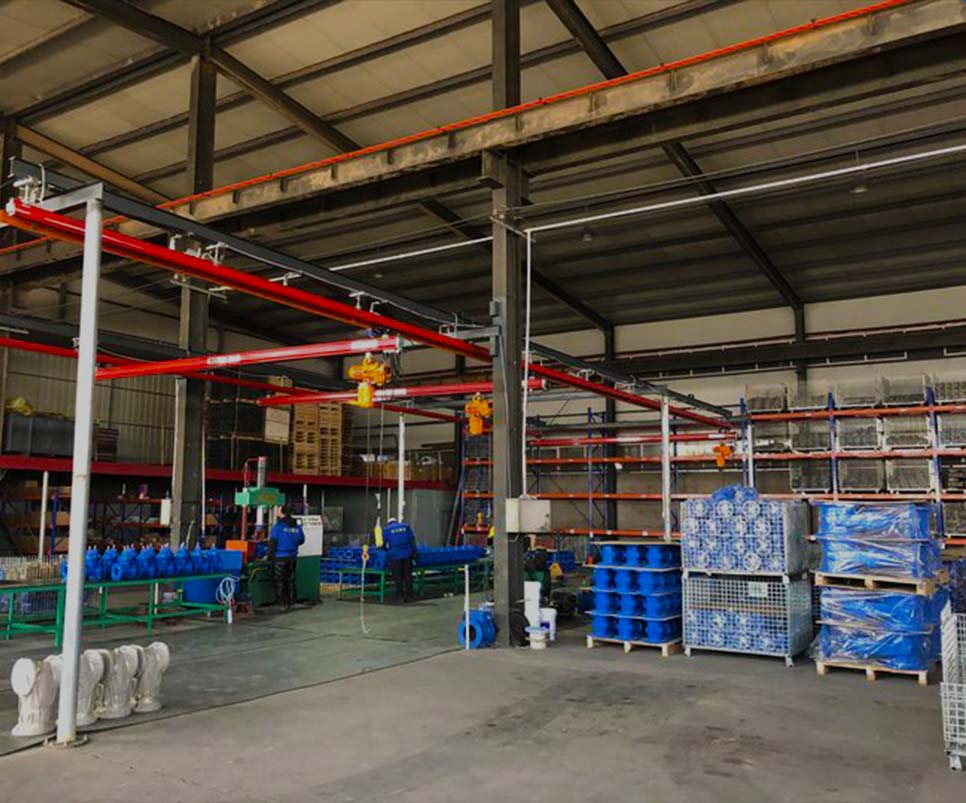
Performance & Engineering
Performance evaluation of a 4-inch ball valve centers on its pressure-temperature rating, leak rate, and flow coefficient (Cv). Pressure testing is conducted per API 598, subjecting the valve to hydrostatic shell and seat tests to verify its ability to withstand specified pressures without leakage. Leakage is quantified using standards like ANSI/FCI 70-2. The flow coefficient (Cv) determines the valve’s capacity to pass a specific volume of fluid with a given pressure drop; this is vital for system hydraulic design. Force analysis considers the torque required to operate the valve (influenced by seat material, pressure differential, and ball size). Environmental resistance is crucial; carbon steel valves require protective coatings (epoxy, polyurethane) to prevent corrosion in corrosive atmospheres. Stainless steel offers inherent corrosion resistance, but passivation treatments may be necessary. Compliance requirements depend on the application; valves for potable water systems must meet NSF/ANSI 61 standards, while those used in oil and gas applications must comply with API 6D. Actuation—manual, pneumatic, or electric—impacts the valve's operational speed and control capabilities. Finite element analysis (FEA) is used during the design phase to optimize the valve body geometry and ensure structural integrity under various loading conditions.
Technical Specifications
| Parameter | Specification (Typical) | Unit | Testing Standard |
|---|---|---|---|
| Nominal Size | 4 inch | - | ANSI B16.34 |
| Pressure Rating | 150 lb, 300 lb | psi | ASME B16.34 |
| Body Material | Carbon Steel (A105), Stainless Steel (304/316) | - | ASTM A105, ASTM A351 |
| Ball Material | Stainless Steel (410, 316) | - | ASTM A276 |
| Seat Material | PTFE, Reinforced PTFE | - | ASTM D3805 |
| Connection Type | Flanged (ANSI B16.5), Threaded (ANSI B1.20.1) | - | ANSI B16.5, ANSI B1.20.1 |
Failure Mode & Maintenance
Common failure modes for 4-inch ball valves include seat erosion/damage (leading to leakage), ball scratching or corrosion, stem packing failure (resulting in external leakage), and body cracking due to over-torque or corrosion. Fatigue cracking can occur in the body under cyclic loading. Delamination of the seat material can compromise sealing integrity. Cavitation erosion can damage the ball and seat in applications with high fluid velocities and pressure drops. Oxidation can affect carbon steel components if protective coatings are compromised. Maintenance involves regular inspection of the valve body for corrosion, tightening of gland packing to prevent stem leakage, lubrication of the ball and seat, and periodic replacement of worn seals. Seat replacement often requires specialized tools and trained personnel. Non-destructive testing (NDT) methods like ultrasonic testing (UT) and radiographic testing (RT) can detect internal flaws in the body. Preventive maintenance schedules should be established based on the operating conditions and fluid characteristics. Proper storage is critical to prevent corrosion during periods of inactivity. For critical applications, consider implementing a condition monitoring program based on vibration analysis and leak detection.
Industry FAQ
Q: What is the expected lifespan of a 4-inch carbon steel ball valve in a wastewater treatment plant?
A: The lifespan is highly dependent on the wastewater composition and maintenance schedule. However, with regular inspection, coating maintenance, and proper operation, a lifespan of 10-15 years can be expected. Corrosion is the primary concern, and protective coatings should be regularly inspected and re-applied as needed.
Q: Can a PTFE seat be used with abrasive fluids containing solid particles?
A: While PTFE offers good chemical resistance, it is relatively soft and susceptible to abrasion. For abrasive fluids, a reinforced PTFE seat or a metal-seated ball valve is recommended to extend service life. The choice depends on the particle size, concentration, and velocity of the abrasive fluid.
Q: What is the significance of the “bubble-tight” shut-off rating?
A: “Bubble-tight” shut-off indicates the valve meets a stringent leakage rate requirement, typically quantified in ANSI/FCI 70-2 as Class VI (0.01cc/min/inch of seat diameter). This is crucial for applications where any leakage is unacceptable, such as in hazardous fluid handling or precise process control.
Q: What are the advantages of a full-port ball valve versus a reduced-port ball valve?
A: A full-port ball valve has an internal diameter equal to the pipe's internal diameter, minimizing pressure drop and maximizing flow capacity. A reduced-port ball valve has a smaller internal diameter, resulting in a higher pressure drop but potentially offering better flow control characteristics in certain applications.
Q: How does temperature affect the performance of a ball valve?
A: Temperature affects the material properties of both the valve body and the seals. High temperatures can reduce the strength of the body material and cause the seals to degrade, leading to leakage. Valves are typically rated for specific temperature ranges, and exceeding these limits can compromise performance and safety.
Conclusion
The 4-inch china ball valve serves as a fundamental flow control component across diverse industrial applications. Its performance is inextricably linked to material selection, meticulous manufacturing processes, and adherence to stringent industry standards. Ensuring long-term reliability necessitates a comprehensive understanding of potential failure modes and the implementation of proactive maintenance strategies.
Continued advancements in materials science—specifically, the development of more durable seal materials and corrosion-resistant alloys—will further enhance the performance and longevity of these valves. A focus on quality control throughout the manufacturing process, alongside robust testing procedures, remains paramount to mitigating the risks associated with global sourcing and ensuring consistent product reliability.
-
The Essential Guide to Dual Plate Check Valves
-
Swing Check Valve Types: Reliable Flow Control & Backflow Prevention
-
Top Reasons to Choose a Stainless Steel Flange Check Valve for Industrial Applications
-
3 way 2 position solenoid valve Performance Analysis
-
brake solenoid valve Performance Analysis
-
solenoid valve 110v Performance Analysis
-
solenoid valve explosion proof Performance Analysis
-
explosion proof solenoid valves Performance Analysis
-
solenoid valve 3 way 2 position Performance Analysis
-
micro solenoid valve Performance Analysis
-
solenoid ball valve Performance Analysis
-
micro solenoid valves Performance Engineering
-
solenoid ball valves Performance Analysis
-
solenoid valve 5 2 Performance Analysis
-
solenoid valve stainless steel Performance Analysis
 Afrikaans
 Albanian
 Amharic
 Arabic
 Armenian
 Azerbaijani
 Basque
 Belarusian
 Bengali
 Bosnian
 Bulgarian
 Catalan
 Cebuano
 Corsican
 Croatian
 Czech
Czech
 Danish
 Dutch
Dutch
 Esperanto
 Estonian
 Finnish
 French
 Frisian
 Galician
 Georgian
 German
 Greek
Greek
 Gujarati
 Haitian Creole
 Hausa
Hawaiian
Hausa
Hawaiian
 Hebrew
 Hindi
Hindi
 Miao
Miao
 Hungarian
 Icelandic
 Igbo
Igbo
 Indonesian
 Irish
Irish
 Italian
 Japanese
 Javanese
Kannada
Javanese
Kannada
 Kazakh
 Khmer
Khmer
 Rwandese
 Korean
 Kurdish
 Kyrgyz
 Lao
Lao
 Latin
Latin
 Latvian
 Lithuanian
 Luxembourgish
 Macedonian
 Malgashi
 Malay
Malay
 Malayalam
 Maltese
 Maori
Maori
 Marathi
 Mongolian
 Myanmar
 Nepali
 Norwegian
 Norwegian
 Occitan
 Pashto
 Persian
 Polish
 Portuguese
Punjabi
Portuguese
Punjabi
 Romanian
 Russian
 Samoan
 Scottish Gaelic
 Serbian
 Sesotho
 Shona
Shona
 Sindhi
 Sinhala
 Slovak
 Slovenian
 Somali
 Spanish
 Sundanese
 Swahili
 Swedish
Tagalog
Swedish
Tagalog
 Tajik
Tajik
 Tamil
Tamil
 Tatar
Tatar
 Telugu
 Thai
Thai
 Turkish
 Turkmen
 Ukrainian
 Urdu
Urdu
 Uighur
 Uzbek
Uzbek
 Vietnamese
 Welsh
Welsh
 Bantu
Bantu
 Yiddish
 Yoruba
 Zulu
Zulu
 English