




china double flanged butterfly valves Performance Engineering
Introduction
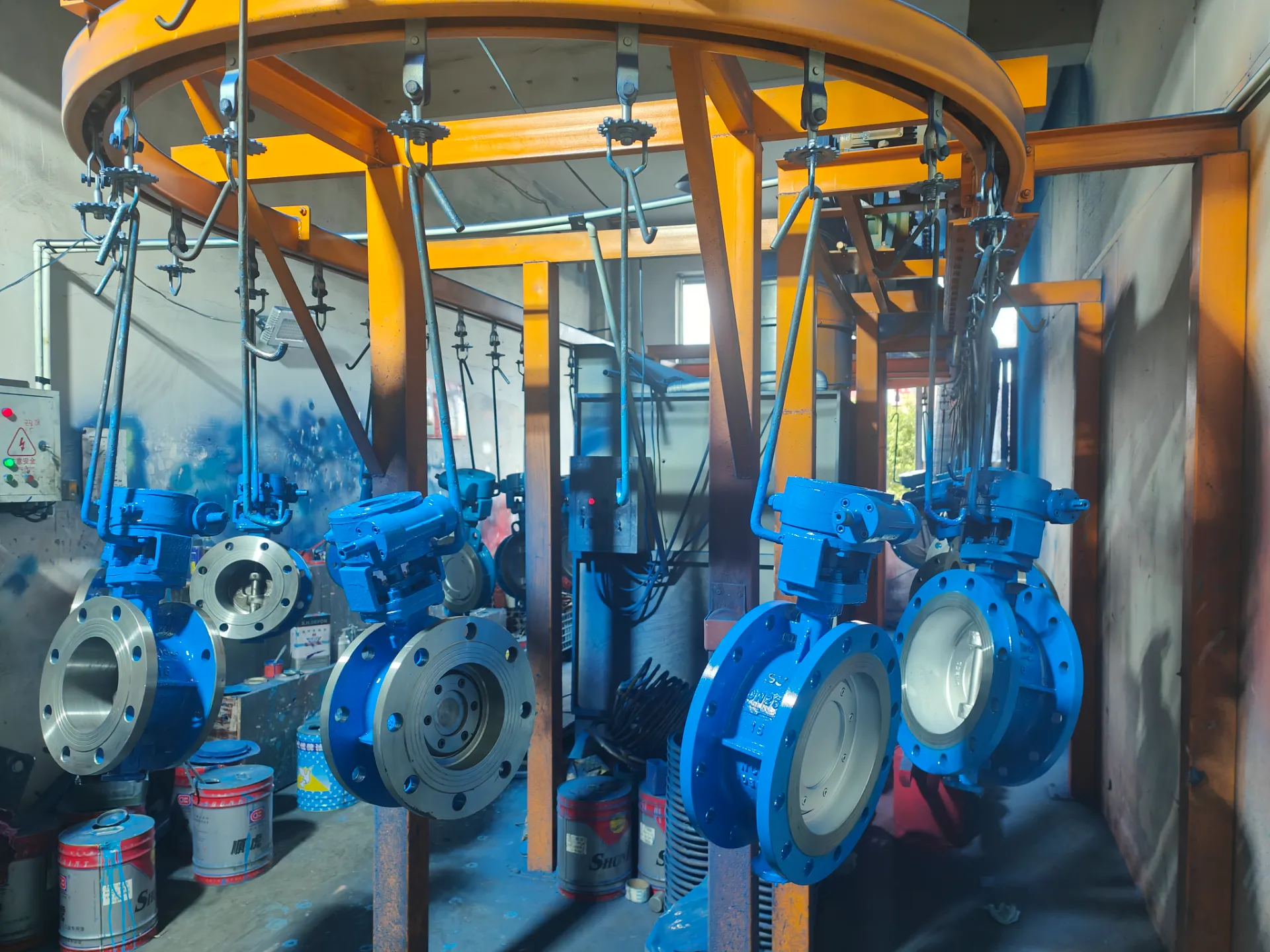
China double flanged butterfly valves are critical flow control components utilized extensively in a diverse range of industrial applications including water treatment, chemical processing, power generation, and HVAC systems. Positioned within the fluid handling system as a quarter-turn valve, they regulate flow by rotating a disc within the valve body. Unlike gate valves or globe valves which offer precise throttling, butterfly valves primarily excel in on/off service and flow modulation requiring lower pressure drop. The ‘double flanged’ design signifies that the valve body is equipped with flanges on both ends, facilitating robust and reliable connection to piping systems via bolted flange connections conforming to recognized standards. Core performance characteristics include flow capacity, pressure rating, sealing capability, and operational torque requirements. The prevalence of Chinese manufacturing necessitates understanding their material composition, manufacturing quality controls, and adherence to international standards to ensure long-term operational reliability and safety.
Material Science & Manufacturing
The construction of china double flanged butterfly valves relies on a range of materials selected based on the intended application and fluid compatibility. Common body materials include cast iron (ASTM A126 Grade B, for water and less corrosive applications), ductile iron (ASTM A536 65-45-12, offering increased strength and ductility), carbon steel (ASTM A216 WCB, for high-temperature and high-pressure services), and stainless steel (304/316, for corrosive fluids). The disc is commonly manufactured from the same material as the body, or, in cases of corrosive service, from materials like PTFE, Hastelloy, or other specialized alloys. The valve seat, crucial for achieving a leak-tight seal, utilizes materials such as EPDM, NBR, PTFE, or reinforced graphite, selected based on temperature and chemical resistance. Manufacturing processes begin with pattern making or CAD modeling for the valve body casting. Following casting, rigorous quality control measures, including non-destructive testing (NDT) such as radiographic inspection and liquid penetrant testing, are implemented to identify defects. Machining operations are critical for achieving precise dimensions and smooth sealing surfaces. Disc manufacturing involves forging, machining, and surface treatment to ensure corrosion resistance and smooth operation. Flange facing is performed to meet specified ASME or EN standards. Critical parameters controlled during manufacturing include wall thickness uniformity, surface roughness, dimensional accuracy, and the integrity of the flange connections. Welding processes, where applicable, must be conducted by certified welders following AWS D1.1 standards.
Performance & Engineering
The performance of a double flanged butterfly valve is governed by several key engineering principles. Torque requirements, crucial for actuator sizing, are influenced by factors such as fluid velocity, pressure drop across the valve, disc diameter, and seat material. Cavitation, a significant concern in liquid applications, occurs when pressure drops below the vapor pressure of the fluid, forming bubbles that implode and erode the valve components. Proper valve selection and operation (avoiding excessive throttling) are vital to mitigate cavitation. Flow characteristics are assessed using Cv (flow coefficient) values, determined through hydraulic testing according to standards like API 598. The valve’s pressure-temperature rating, a critical safety parameter, is determined by the weakest component in the assembly and must conform to ASME B16.34 or EN 1092-1 standards. Finite Element Analysis (FEA) is employed during the design phase to optimize the valve body geometry, minimize stress concentrations, and ensure structural integrity under maximum operating pressure. Environmental resistance is also a key consideration; exposure to UV radiation, salt spray, and extreme temperatures can degrade certain materials. Compliance with industry regulations, such as REACH and RoHS, is essential for ensuring product safety and environmental responsibility. The double flange design itself provides improved structural rigidity and allows for higher pressure applications compared to lug or wafer style butterfly valves.
Technical Specifications
| Parameter | Specification (Typical) | Testing Standard | Material Grade (Example) |
|---|---|---|---|
| Valve Size (DN) | 50mm – 2000mm (2" - 80") | ISO 7005 | Various |
| Pressure Rating (PN) | PN6, PN10, PN16, PN25, PN40 | EN 1092-1 | ASTM A216 WCB |
| Body Material | Cast Iron, Ductile Iron, Carbon Steel, Stainless Steel | ASTM A126, A536, A216, A351 | SS316 |
| Disc Material | Cast Iron, Ductile Iron, Stainless Steel | ASTM A126, A536, A351 | CF8M |
| Seat Material | EPDM, NBR, PTFE, Reinforced Graphite | ASTM D2000 | PTFE |
| Connection Type | Double Flanged (ANSI/ASME B16.1, EN 1092-1) | ANSI/ASME B16.1, EN 1092-1 | Various |
Failure Mode & Maintenance
China double flanged butterfly valves are susceptible to several failure modes. Fatigue cracking can occur in the disc or valve body due to cyclic loading and stress concentration, particularly at weld points or flange connections. Corrosion, both localized pitting corrosion and general corrosion, can compromise the integrity of metallic components. Erosion, caused by abrasive particles in the fluid stream, can damage the disc and seat, leading to leakage. Seal failure, stemming from seat degradation or improper seating, is a common issue. Cavitation, as previously mentioned, can lead to significant erosion and damage. Failure analysis should include visual inspection, NDT methods (ultrasonic testing, radiographic inspection), and material testing to determine the root cause. Preventative maintenance is crucial and includes regular inspection of flange connections for tightness, lubrication of the valve stem, and replacement of worn seats or seals. Periodic hydrostatic testing should be conducted to verify the valve’s pressure integrity. Correct installation, avoiding misalignment and excessive stress on the piping system, is essential to prevent premature failure. For valves handling abrasive fluids, consider utilizing hardened disc and seat materials. In corrosive environments, regular monitoring of corrosion rates and application of protective coatings are recommended. Documented maintenance records are vital for tracking valve performance and identifying potential issues before they escalate.
Industry FAQ
Q: What is the primary difference between a double flanged and a wafer-type butterfly valve in terms of application suitability?
A: Double flanged butterfly valves are generally preferred for high-pressure and high-temperature applications, and situations where robust mechanical strength is crucial. The flanged connections provide enhanced structural support. Wafer-type valves are lighter and more cost-effective but are typically limited to lower pressure and temperature services, relying on the piping system for structural support.
Q: How do you verify the sealing performance of a newly installed double flanged butterfly valve?
A: Sealing performance is typically verified through hydrostatic testing according to API 598. This involves applying a test pressure slightly above the valve’s rated pressure and inspecting for any leakage across the seat. Bubble testing with a suitable leak detection fluid can also be employed.
Q: What considerations are important when selecting a seat material for a valve handling a highly corrosive chemical?
A: Chemical compatibility is paramount. The seat material must exhibit excellent resistance to the specific chemical being handled at the operating temperature and pressure. PTFE, reinforced PTFE, and specialized polymers are often chosen for their broad chemical resistance. Consulting a chemical compatibility chart and conducting material testing are essential.
Q: What are the common causes of excessive torque required to operate a double flanged butterfly valve?
A: Common causes include corrosion or buildup on the disc and seat, improper lubrication of the stem, misalignment of the valve in the pipeline, or damage to the valve internals. Regular inspection and maintenance can help identify and address these issues.
Q: What international standards govern the dimensional accuracy and pressure testing of double flanged butterfly valves?
A: Key standards include ASME B16.34 for pressure-temperature ratings, API 598 for inspection and testing, EN 1092-1 for flange dimensions, and ISO 5208 for design and testing. Adherence to these standards ensures interchangeability and safe operation.
Conclusion
China double flanged butterfly valves represent a versatile and cost-effective solution for flow control in a broad spectrum of industrial applications. Their performance, however, is inextricably linked to the quality of materials, precision of manufacturing, and adherence to stringent international standards. A thorough understanding of material science, potential failure modes, and proper maintenance protocols is critical for ensuring long-term reliability and operational safety.
The increasing global demand necessitates continued focus on quality control throughout the manufacturing process, alongside robust testing procedures and transparent documentation. Future advancements will likely focus on incorporating smart valve technologies, improving material corrosion resistance, and optimizing designs to further reduce pressure drop and enhance flow efficiency.
-
The Essential Guide to Dual Plate Check Valves
-
Swing Check Valve Types: Reliable Flow Control & Backflow Prevention
-
Top Reasons to Choose a Stainless Steel Flange Check Valve for Industrial Applications
-
High Temperature Solenoid Valves Performance Analysis
-
hot water solenoid valves Performance Analysis
-
solenoid valve mini Performance Analysis
-
explosion proof solenoid valve Performance Analysis
-
2 position 3 way solenoid valve Performance Analysis
-
3 way 2 position solenoid valve Performance Analysis
-
brake solenoid valve Performance Analysis
-
solenoid valve 110v Performance Analysis
-
solenoid valve explosion proof Performance Analysis
-
explosion proof solenoid valves Performance Analysis
-
solenoid valve 3 way 2 position Performance Analysis
-
micro solenoid valve Performance Analysis
 Afrikaans
 Albanian
 Amharic
 Arabic
 Armenian
 Azerbaijani
 Basque
 Belarusian
 Bengali
 Bosnian
 Bulgarian
 Catalan
 Cebuano
 Corsican
 Croatian
 Czech
Czech
 Danish
 Dutch
Dutch
 Esperanto
 Estonian
 Finnish
 French
 Frisian
 Galician
 Georgian
 German
 Greek
Greek
 Gujarati
 Haitian Creole
 Hausa
Hawaiian
Hausa
Hawaiian
 Hebrew
 Hindi
Hindi
 Miao
Miao
 Hungarian
 Icelandic
 Igbo
Igbo
 Indonesian
 Irish
Irish
 Italian
 Japanese
 Javanese
Kannada
Javanese
Kannada
 Kazakh
 Khmer
Khmer
 Rwandese
 Korean
 Kurdish
 Kyrgyz
 Lao
Lao
 Latin
Latin
 Latvian
 Lithuanian
 Luxembourgish
 Macedonian
 Malgashi
 Malay
Malay
 Malayalam
 Maltese
 Maori
Maori
 Marathi
 Mongolian
 Myanmar
 Nepali
 Norwegian
 Norwegian
 Occitan
 Pashto
 Persian
 Polish
 Portuguese
Punjabi
Portuguese
Punjabi
 Romanian
 Russian
 Samoan
 Scottish Gaelic
 Serbian
 Sesotho
 Shona
Shona
 Sindhi
 Sinhala
 Slovak
 Slovenian
 Somali
 Spanish
 Sundanese
 Swahili
 Swedish
Tagalog
Swedish
Tagalog
 Tajik
Tajik
 Tamil
Tamil
 Tatar
Tatar
 Telugu
 Thai
Thai
 Turkish
 Turkmen
 Ukrainian
 Urdu
Urdu
 Uighur
 Uzbek
Uzbek
 Vietnamese
 Welsh
Welsh
 Bantu
Bantu
 Yiddish
 Yoruba
 Zulu
Zulu
 English