




china inline ball valve Performance Analysis
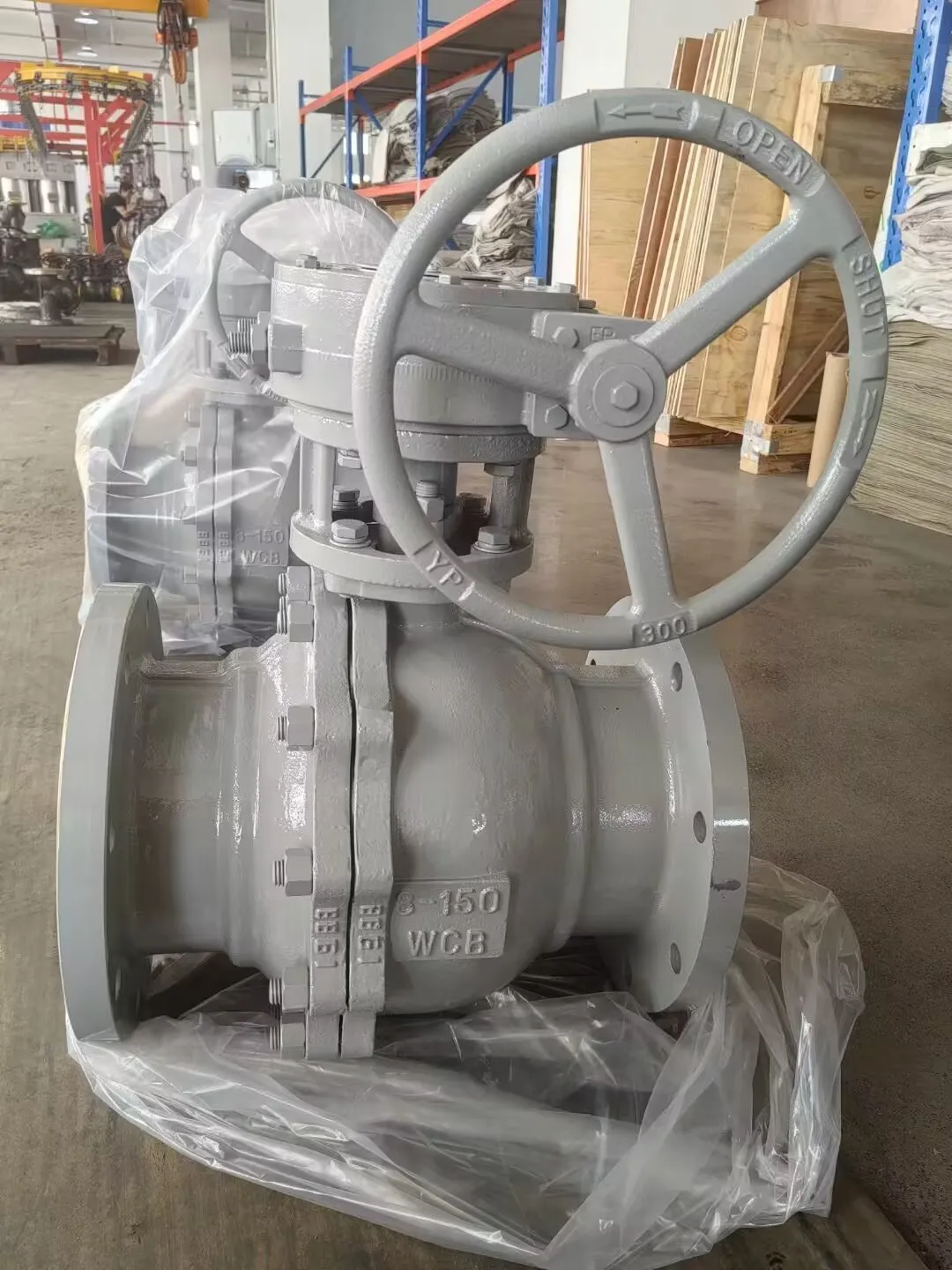
Introduction
China inline ball valves are quarter-turn valves utilizing a hollow, perforated, and pivoting ball to control flow through the valve body. These valves are a critical component in numerous industrial processes, particularly within the chemical, petrochemical, oil and gas, and water treatment sectors. Positioned downstream from larger pipeline infrastructure and often integrated into automated control systems, their primary function is to provide reliable on/off flow control with minimal pressure drop. Inline configuration simplifies integration into existing piping systems, minimizing installation complexities. Core performance characteristics hinge on leak-tight shutoff, rapid actuation, and durability under varied process conditions. Increasingly, advanced materials and sealing technologies are demanded to address challenges associated with corrosive media and extreme temperatures. The Chinese manufacturing base has become a significant global supplier, offering competitive pricing alongside evolving quality standards.
Material Science & Manufacturing
The body of a china inline ball valve is most commonly constructed from carbon steel (ASTM A105, equivalent to GB/T 1220), stainless steel (304/316 – ASTM A351, GB/T 1220), or alloy steels, depending on the application's corrosive environment and pressure requirements. Carbon steel offers cost-effectiveness for non-corrosive applications, while stainless steels provide superior resistance to corrosion from water, acids, and bases. Alloy steels are employed for high-temperature or high-pressure applications demanding increased strength and creep resistance. The ball itself is typically made from hardened stainless steel (410, 316) to resist abrasion and erosion. Seats are often manufactured from PTFE (Teflon), reinforced PTFE, or other polymeric materials like PEEK, chosen for their low friction coefficient and excellent sealing properties.
Manufacturing processes typically involve investment casting or forging for the valve body, followed by precision machining to ensure dimensional accuracy and smooth bore finish. The ball is produced through forging and undergoes rigorous heat treatment to achieve desired hardness. Critical parameters include surface roughness of the ball and seat contact area (Ra < 0.8 µm is typical for metal seats), concentricity between ball and seat, and precise dimensional control of the bore diameter. Welding procedures (SMAW, GTAW, or SAW depending on material and thickness) are strictly governed by ASME Section IX (or equivalent GB standards) to ensure weld integrity and prevent failures due to weld defects like porosity or cracking. Non-destructive testing (NDT) methods, including radiography and liquid penetrant inspection, are essential to verify weld quality. Assembly requires careful torque control during seat and stem packing installation to avoid over-compression or under-compression, both of which can compromise sealing performance.

Performance & Engineering
Performance of a china inline ball valve is dictated by its ability to withstand pressure, temperature, and the chemical characteristics of the process fluid. Force analysis focuses on the torque required for actuation, considering factors like fluid pressure, seat friction, and stem packing friction. Valves are designed to meet specific pressure-temperature ratings (ANSI/ASME B16.34, API 6D, or equivalent GB/T standards) and undergo hydrostatic testing to verify shell integrity. Environmental resistance is crucial; corrosion prevention strategies include material selection (as detailed above) and the application of protective coatings (epoxy, PTFE linings) for valve bodies exposed to corrosive media. Compliance requirements vary by industry and region. For example, valves used in potable water systems must comply with NSF/ANSI 61 standards to ensure they do not leach harmful contaminants into the water. Valves intended for explosive environments (oil & gas) require ATEX or IECEx certification demonstrating compliance with safety standards regarding ignition hazard prevention. Functional implementation often involves integration with automated control systems (DCS, PLC) via pneumatic or electric actuators. The selection of actuator size and type is critical to ensure reliable and responsive valve operation.
Technical Specifications
| Parameter | Carbon Steel Valve | 316 Stainless Steel Valve | Pneumatic Actuator |
|---|---|---|---|
| Maximum Operating Pressure (PSI) | 740 | 600 | 145 (Supply) |
| Operating Temperature Range (°F) | -20 to 450 | -40 to 600 | -4 to 176 |
| Connection Type | Threaded, Flanged, Welded | Threaded, Flanged, Welded | N/A |
| Body Material | ASTM A105 | ASTM A351 CF8M | N/A |
| Ball Material | Hardened Carbon Steel | 316 Stainless Steel | N/A |
| Seat Material | PTFE | PTFE | N/A |
Failure Mode & Maintenance
Common failure modes for china inline ball valves include seat leakage due to wear or damage, stem packing failure leading to external leakage, actuator malfunction (for automated valves), and body cracking due to excessive pressure or thermal stress. Fatigue cracking can occur in the valve body or ball under cyclical loading conditions. Corrosion, particularly pitting corrosion in stainless steel valves exposed to chlorides, can lead to perforation and leakage. Degradation of the seat material (PTFE) can occur due to exposure to high temperatures or aggressive chemicals, resulting in reduced sealing performance. Oxidation of metal components can also contribute to corrosion.
Preventative maintenance is critical. Regular inspection of the stem packing gland is recommended to identify and address leaks promptly. Periodic actuation testing (for automated valves) ensures proper functioning of the actuator and control system. Lubrication of the stem and actuator components (following manufacturer's recommendations) reduces friction and extends service life. For valves handling abrasive fluids, consider replacing the ball and seats at predetermined intervals to prevent erosion. In case of leakage, disassemble the valve, inspect the seat and ball for damage, and replace worn or damaged components. Ensure proper re-assembly with correct torque specifications to maintain sealing integrity. Hydrostatic testing should be performed periodically to verify shell integrity, particularly after maintenance or repairs.
Industry FAQ
Q: What is the typical lifespan of a PTFE seat in a ball valve handling mildly corrosive water at 60°C?
A: The lifespan of a PTFE seat under those conditions is typically 3-5 years, but it's highly dependent on water quality (abrasive particles can accelerate wear) and the frequency of valve operation. Regular inspection and replacement based on performance monitoring are crucial.
Q: How does the manufacturing origin (China vs. USA/Europe) typically impact the pressure rating certification process?
A: While Chinese manufacturers are increasingly adhering to international standards, the certification process can sometimes be less transparent. It's vital to verify certifications (e.g., ISO 9001, API 6D) through accredited third-party inspection agencies and ensure compliance with specific project requirements.
Q: What are the key differences between a full-port and reduced-port ball valve, and when would you choose one over the other?
A: A full-port valve has an internal diameter equal to the pipe's internal diameter, minimizing pressure drop. A reduced-port valve has a smaller bore, resulting in a higher pressure drop but often offering better flow control. Choose full-port for applications where minimizing pressure loss is critical, and reduced-port for applications requiring precise throttling.
Q: What is the significance of the valve's 'Cv' value?
A: The Cv value represents the valve's flow capacity—the volume of water (in gallons per minute) that will flow through the valve with a 1 PSI pressure drop. It is critical for accurately sizing the valve to meet the flow requirements of the application.
Q: What are the advantages of using a flanged connection versus a threaded connection for larger diameter ball valves?
A: Flanged connections provide greater structural integrity and are better suited for high-pressure and high-temperature applications. They also allow for easier disassembly and maintenance compared to threaded connections, especially for larger valve sizes.
Conclusion
China inline ball valves represent a versatile and cost-effective flow control solution across a multitude of industrial applications. Their performance and reliability are contingent upon careful material selection based on process fluid compatibility, adherence to rigorous manufacturing standards (including welding and NDT), and a proactive approach to preventative maintenance. Understanding potential failure modes – encompassing seat wear, corrosion, and actuator malfunctions – is essential for optimizing valve lifespan and minimizing downtime.
The evolving landscape of industrial automation and increasingly stringent safety regulations necessitate a continued focus on enhancing valve design, materials, and certification processes. The ability to accurately specify valve parameters based on flow requirements, pressure-temperature ratings, and environmental conditions is paramount. Continued investment in quality control and independent verification of certifications will be critical for ensuring the long-term reliability and performance of china inline ball valves in demanding industrial environments.
-
The Essential Guide to Dual Plate Check Valves
-
Swing Check Valve Types: Reliable Flow Control & Backflow Prevention
-
Top Reasons to Choose a Stainless Steel Flange Check Valve for Industrial Applications
-
High Temperature Solenoid Valves Performance Analysis
-
hot water solenoid valves Performance Analysis
-
solenoid valve mini Performance Analysis
-
explosion proof solenoid valve Performance Analysis
-
2 position 3 way solenoid valve Performance Analysis
-
3 way 2 position solenoid valve Performance Analysis
-
brake solenoid valve Performance Analysis
-
solenoid valve 110v Performance Analysis
-
solenoid valve explosion proof Performance Analysis
-
explosion proof solenoid valves Performance Analysis
-
solenoid valve 3 way 2 position Performance Analysis
-
micro solenoid valve Performance Analysis
 Afrikaans
 Albanian
 Amharic
 Arabic
 Armenian
 Azerbaijani
 Basque
 Belarusian
 Bengali
 Bosnian
 Bulgarian
 Catalan
 Cebuano
 Corsican
 Croatian
 Czech
Czech
 Danish
 Dutch
Dutch
 Esperanto
 Estonian
 Finnish
 French
 Frisian
 Galician
 Georgian
 German
 Greek
Greek
 Gujarati
 Haitian Creole
 Hausa
Hawaiian
Hausa
Hawaiian
 Hebrew
 Hindi
Hindi
 Miao
Miao
 Hungarian
 Icelandic
 Igbo
Igbo
 Indonesian
 Irish
Irish
 Italian
 Japanese
 Javanese
Kannada
Javanese
Kannada
 Kazakh
 Khmer
Khmer
 Rwandese
 Korean
 Kurdish
 Kyrgyz
 Lao
Lao
 Latin
Latin
 Latvian
 Lithuanian
 Luxembourgish
 Macedonian
 Malgashi
 Malay
Malay
 Malayalam
 Maltese
 Maori
Maori
 Marathi
 Mongolian
 Myanmar
 Nepali
 Norwegian
 Norwegian
 Occitan
 Pashto
 Persian
 Polish
 Portuguese
Punjabi
Portuguese
Punjabi
 Romanian
 Russian
 Samoan
 Scottish Gaelic
 Serbian
 Sesotho
 Shona
Shona
 Sindhi
 Sinhala
 Slovak
 Slovenian
 Somali
 Spanish
 Sundanese
 Swahili
 Swedish
Tagalog
Swedish
Tagalog
 Tajik
Tajik
 Tamil
Tamil
 Tatar
Tatar
 Telugu
 Thai
Thai
 Turkish
 Turkmen
 Ukrainian
 Urdu
Urdu
 Uighur
 Uzbek
Uzbek
 Vietnamese
 Welsh
Welsh
 Bantu
Bantu
 Yiddish
 Yoruba
 Zulu
Zulu
 English