




china stainless steel gate valves Performance Analysis
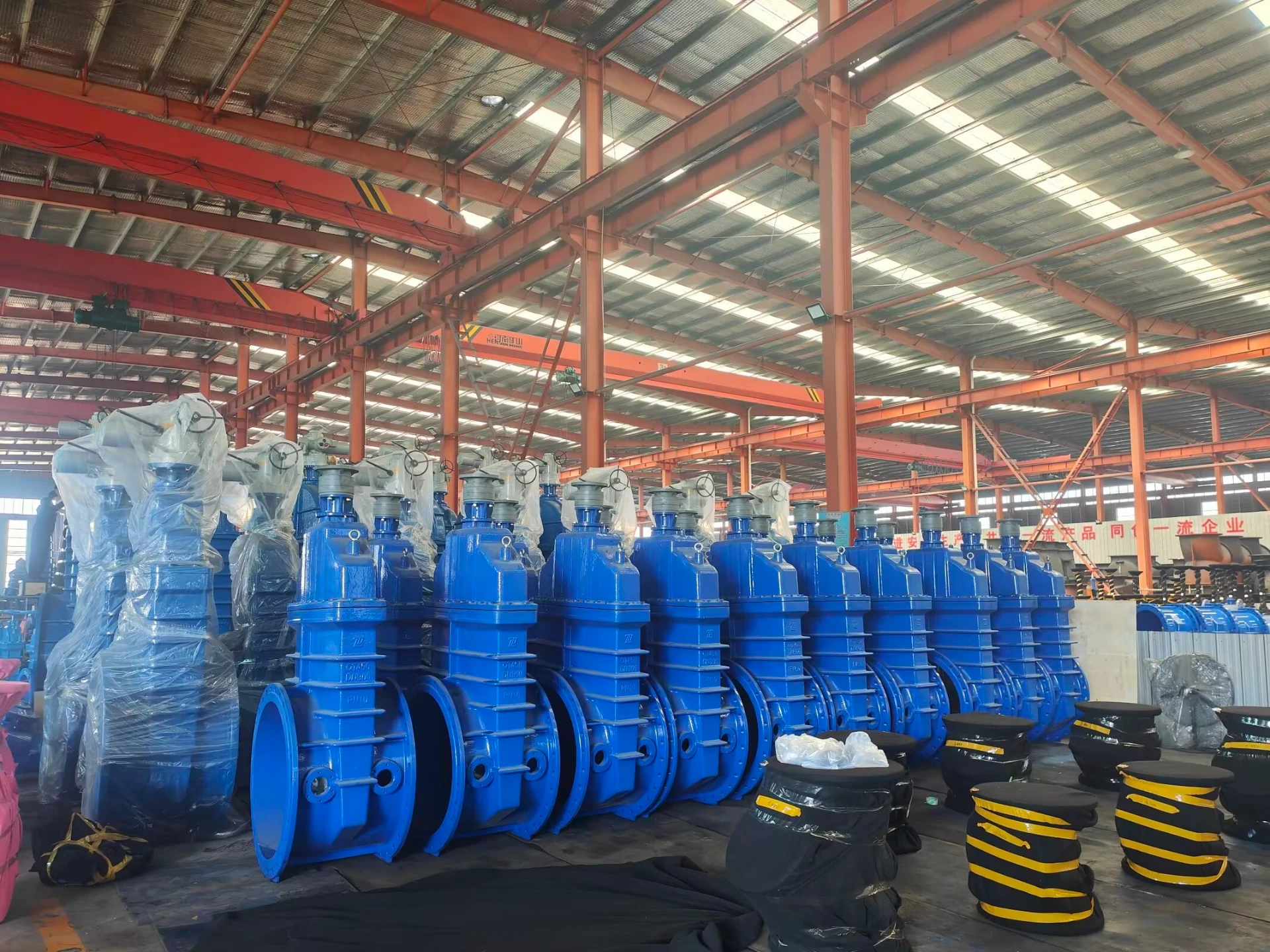
Introduction
China stainless steel gate valves represent a critical component in fluid control systems across a diverse range of industrial applications, including water treatment, chemical processing, oil and gas, and power generation. These valves are characterized by their ability to isolate or regulate flow through a piping system, offering a robust and reliable solution for on/off control. Positioned within the industrial chain as a key endpoint control device, their performance directly impacts process efficiency, safety, and operational longevity. Commonly manufactured in 304, 316, and other austenitic stainless steel grades, these valves prioritize corrosion resistance and are engineered for durability in demanding environments. Core performance metrics revolve around pressure ratings (ANSI, DIN, JIS standards), flow coefficient (Cv), seat leakage class (Class V, Class VI), and operational torque requirements. Increasingly, demand centers on automated configurations—actuated gate valves—providing remote control and integration with SCADA systems. A primary industry pain point centers on consistent quality control, particularly regarding material certification and weld integrity, alongside ensuring compliance with evolving international standards for emissions and material traceability.
Material Science & Manufacturing
The primary material utilized in China stainless steel gate valves is austenitic stainless steel, predominantly 304/304L and 316/316L. 304/304L contains approximately 18-20% chromium and 8-10% nickel, providing excellent corrosion resistance in many environments. The ‘L’ designation indicates low carbon content, minimizing carbide precipitation during welding, which enhances resistance to intergranular corrosion. 316/316L adds molybdenum (2-3%), further improving corrosion resistance, particularly against chlorides. Other materials include PTFE or other polymers for seat seals, bronze or stainless steel for wedges, and various elastomers for packing. Manufacturing typically involves several stages: casting or forging of the valve body; machining of internal components (wedge, seat ring); welding of flanges and other connections using TIG or MIG processes – strict adherence to AWS D1.1 welding code is crucial; non-destructive testing (NDT) including radiographic testing (RT), liquid penetrant testing (PT) and ultrasonic testing (UT) to verify weld integrity; polishing and passivation to enhance corrosion resistance; and final assembly and testing. Key parameter control focuses on maintaining precise tolerances during machining, ensuring complete penetration and minimal porosity in welds, and verifying the chemical composition of the stainless steel through Positive Material Identification (PMI) analysis. Surface roughness (Ra) of the gate and seat ring is critical for achieving tight shut-off.
Performance & Engineering
Performance of stainless steel gate valves is governed by several engineering principles. Force analysis involves calculating stresses induced by internal fluid pressure, valve actuation forces, and external loads. The valve body and components must withstand these forces without deformation or failure. Environmental resistance is crucial; the stainless steel alloy’s pitting resistance equivalent (PREN) value dictates its susceptibility to localized corrosion. Gate valves must comply with various industry standards: API 600 (steel gate valves), BS 5167 (stainless steel gate valves), and pressure equipment directive (PED) 2014/68/EU for European markets. Functional implementation depends on valve size, pressure rating, and fluid properties. The flow coefficient (Cv) is a critical parameter determining the valve’s capacity to handle specific flow rates without excessive pressure drop. Seat leakage class defines the permissible leakage rate, with Class V offering tighter shut-off than Class VI. Actuation—using pneumatic, hydraulic, or electric actuators—requires careful selection based on torque requirements and operating conditions. Cavitation, caused by pressure drop across the valve, can lead to erosion and damage; proper valve sizing and installation are essential to mitigate this risk. The material selection must account for the operating temperature range to avoid issues like thermal expansion and contraction impacting the sealing performance.
Technical Specifications
| Parameter | 304 Stainless Steel | 316 Stainless Steel | Duplex Stainless Steel (e.g., 2205) |
|---|---|---|---|
| Material Standard | ASTM A240 | ASTM A240 | ASTM A240 |
| Tensile Strength (MPa) | 517-724 | 550-790 | 780-930 |
| Yield Strength (MPa) | 205-276 | 275-414 | 450-620 |
| Corrosion Resistance | Good in many environments | Excellent, especially to chlorides | Superior, high resistance to pitting and crevice corrosion |
| Maximum Operating Temperature (°C) | 870 | 925 | 315 |
| Pressure Rating (PN) | Up to PN40 | Up to PN100 | Up to PN160 |
Failure Mode & Maintenance
Common failure modes in stainless steel gate valves include seat erosion due to particulate matter in the fluid, wedge sticking caused by corrosion or debris accumulation, stem leakage due to packing gland failure, and flange leaks resulting from gasket degradation or bolt loosening. Fatigue cracking can occur in the valve body or disc under cyclic loading conditions. Corrosion-induced failure manifests as pitting, crevice corrosion, or intergranular corrosion, particularly in environments containing chlorides. Oxidation at high temperatures can also lead to material degradation. Regular maintenance is crucial for preventing these failures. This includes periodic inspection of the valve body, stem, and seat for signs of corrosion or wear; lubrication of the stem and actuator; replacement of packing and gaskets; and torque checks on flange bolts. Non-destructive testing (NDT) methods like ultrasonic testing (UT) can be employed to detect internal flaws. For valves in critical applications, a preventative maintenance schedule should be implemented, outlining inspection and replacement intervals based on operating conditions and historical failure data. Proper storage of the valve when not in use is also vital to prevent corrosion.
Industry FAQ
Q: What is the significance of the PREN value when selecting a stainless steel gate valve for seawater applications?
A: The Pitting Resistance Equivalent Number (PREN) is a critical metric for evaluating a stainless steel's resistance to localized corrosion, particularly pitting and crevice corrosion, which are prevalent in seawater. A higher PREN value indicates greater resistance. For seawater applications, 316 stainless steel (PREN ~28-32) is generally preferred over 304 (PREN ~18-21). In highly aggressive seawater environments, duplex stainless steels (PREN >40) or even super-austenitic stainless steels should be considered.
Q: How does the carbon content in 304L versus 304 stainless steel affect weldability and corrosion resistance?
A: 304L has a lower carbon content than 304. This reduction minimizes carbide precipitation during the welding process. Carbide precipitation can deplete the chromium content in the weld heat-affected zone, leading to sensitization and increased susceptibility to intergranular corrosion. Therefore, 304L is preferred for welded structures as it provides improved corrosion resistance in the weld zone.
Q: What are the key considerations when specifying an actuated stainless steel gate valve?
A: Key considerations include the actuator type (pneumatic, hydraulic, or electric) based on torque requirements and power availability; the actuator’s fail-safe mechanism (fail-open, fail-close, or fail-in-place) based on process safety requirements; the actuator’s speed and control capabilities; and the environmental conditions the actuator will be exposed to. Proper sizing of the actuator to handle the valve’s operating torque is paramount.
Q: What NDT methods are commonly used to ensure the quality of welded stainless steel gate valves?
A: Radiographic Testing (RT) is used to detect internal flaws such as porosity, inclusions, and cracks in welds. Liquid Penetrant Testing (PT) is employed to identify surface cracks and discontinuities. Ultrasonic Testing (UT) is used to detect both surface and subsurface flaws and assess weld quality. Dye Penetrant testing is also common for surface defect detection. Positive Material Identification (PMI) confirms the chemical composition of the stainless steel.
Q: What impact does fluid velocity have on gate valve performance and longevity?
A: High fluid velocity can lead to cavitation and erosion, particularly across the valve seat and disc. Cavitation creates imploding bubbles that erode the valve’s internal components. Excessive velocity can also induce vibration and noise. Proper valve sizing to maintain a reasonable flow velocity is essential. Consider using a trim with a lower Cv if necessary to reduce velocity.
Conclusion
China stainless steel gate valves are indispensable components in numerous industrial processes, providing reliable flow control where corrosion resistance and durability are paramount. Material selection—specifically the grade of stainless steel—is dictated by the operating environment and fluid characteristics, with 316 and duplex stainless steels offering superior performance in aggressive applications. Rigorous adherence to manufacturing standards, including stringent weld quality control and non-destructive testing, is critical for ensuring long-term reliability and preventing premature failure.
The future of these valves lies in advanced materials, improved automation capabilities, and enhanced diagnostic tools for predictive maintenance. Further development of low-emission sealing technologies and intelligent valve actuators integrating with Industry 4.0 frameworks will be key to optimizing performance and reducing operational costs. Continuous monitoring of valve performance data will enable proactive maintenance strategies, minimizing downtime and maximizing process efficiency.
-
The Essential Guide to Dual Plate Check Valves
-
Swing Check Valve Types: Reliable Flow Control & Backflow Prevention
-
Top Reasons to Choose a Stainless Steel Flange Check Valve for Industrial Applications
-
3 way 2 position solenoid valve Performance Analysis
-
brake solenoid valve Performance Analysis
-
solenoid valve 110v Performance Analysis
-
solenoid valve explosion proof Performance Analysis
-
explosion proof solenoid valves Performance Analysis
-
solenoid valve 3 way 2 position Performance Analysis
-
micro solenoid valve Performance Analysis
-
solenoid ball valve Performance Analysis
-
micro solenoid valves Performance Engineering
-
solenoid ball valves Performance Analysis
-
solenoid valve 5 2 Performance Analysis
-
solenoid valve stainless steel Performance Analysis
 Afrikaans
 Albanian
 Amharic
 Arabic
 Armenian
 Azerbaijani
 Basque
 Belarusian
 Bengali
 Bosnian
 Bulgarian
 Catalan
 Cebuano
 Corsican
 Croatian
 Czech
Czech
 Danish
 Dutch
Dutch
 Esperanto
 Estonian
 Finnish
 French
 Frisian
 Galician
 Georgian
 German
 Greek
Greek
 Gujarati
 Haitian Creole
 Hausa
Hawaiian
Hausa
Hawaiian
 Hebrew
 Hindi
Hindi
 Miao
Miao
 Hungarian
 Icelandic
 Igbo
Igbo
 Indonesian
 Irish
Irish
 Italian
 Japanese
 Javanese
Kannada
Javanese
Kannada
 Kazakh
 Khmer
Khmer
 Rwandese
 Korean
 Kurdish
 Kyrgyz
 Lao
Lao
 Latin
Latin
 Latvian
 Lithuanian
 Luxembourgish
 Macedonian
 Malgashi
 Malay
Malay
 Malayalam
 Maltese
 Maori
Maori
 Marathi
 Mongolian
 Myanmar
 Nepali
 Norwegian
 Norwegian
 Occitan
 Pashto
 Persian
 Polish
 Portuguese
Punjabi
Portuguese
Punjabi
 Romanian
 Russian
 Samoan
 Scottish Gaelic
 Serbian
 Sesotho
 Shona
Shona
 Sindhi
 Sinhala
 Slovak
 Slovenian
 Somali
 Spanish
 Sundanese
 Swahili
 Swedish
Tagalog
Swedish
Tagalog
 Tajik
Tajik
 Tamil
Tamil
 Tatar
Tatar
 Telugu
 Thai
Thai
 Turkish
 Turkmen
 Ukrainian
 Urdu
Urdu
 Uighur
 Uzbek
Uzbek
 Vietnamese
 Welsh
Welsh
 Bantu
Bantu
 Yiddish
 Yoruba
 Zulu
Zulu
 English