




butterfly valve stainless steel Performance Analysis
Introduction
Stainless steel butterfly valves are integral components in fluid handling systems across diverse industries, including chemical processing, water treatment, power generation, and food & beverage. Positioned within the valve family as quarter-turn valves, they regulate flow by rotating a disc perpendicular to the flow direction. Their primary advantage lies in their compact design, lightweight construction, and relatively low pressure drop compared to other valve types. This guide provides a comprehensive technical overview of stainless steel butterfly valves, encompassing material science, manufacturing processes, performance characteristics, failure modes, and relevant industry standards. Core performance metrics include flow coefficient (Cv), pressure rating, seat leakage rate, and operating torque. A key industry pain point is material selection to mitigate corrosion in specific process fluids and ensuring long-term sealing integrity under cyclical operation.
Material Science & Manufacturing
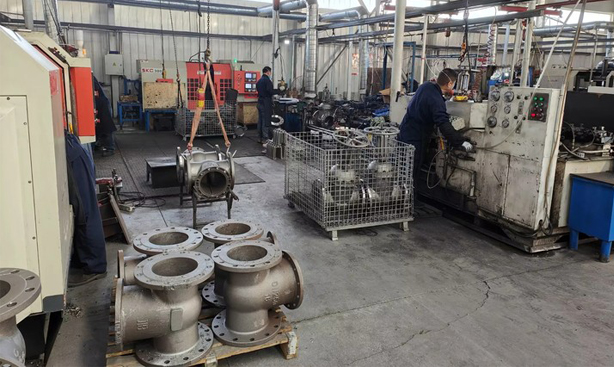
The primary material for stainless steel butterfly valves is, unsurprisingly, stainless steel. Common grades employed include 304/304L (for general purpose applications), 316/316L (superior corrosion resistance, particularly to chlorides), and duplex stainless steels (increased strength and enhanced resistance to pitting corrosion). The ‘L’ designation indicates low carbon content, minimizing carbide precipitation during welding, thus improving weldability and corrosion resistance. Disc and body construction commonly utilize investment casting or forging, providing high dimensional accuracy and mechanical strength. Seats are often made from resilient materials like PTFE, EPDM, or Viton, chosen for their chemical compatibility and sealing properties. Manufacturing involves several critical processes: precision machining of the disc and body, welding (typically TIG or MIG), surface finishing (electropolishing to enhance corrosion resistance and reduce friction), and assembly with careful torque control. Parameter control during welding is paramount; excessive heat input can lead to sensitization and intergranular corrosion. Electropolishing passivates the surface, forming a chromium-rich layer that resists oxidation. The choice of seat material is dictated by the process fluid; for example, EPDM is suitable for water and dilute chemicals, while Viton is preferred for higher temperature and aggressive chemicals.
Performance & Engineering
Performance analysis of stainless steel butterfly valves focuses on hydrodynamic efficiency, pressure containment, and sealing integrity. The flow coefficient (Cv) determines the valve’s capacity to pass a given fluid at a specific pressure drop. Engineering design considerations include disc thickness, body wall thickness, and stem diameter to withstand anticipated pressures and torques. Finite element analysis (FEA) is routinely employed to optimize the design, predict stress concentrations, and prevent failure. Environmental resistance is crucial; exposure to corrosive media can lead to pitting, crevice corrosion, and galvanic corrosion. The selection of appropriate stainless steel grade and surface treatment is vital to mitigating these effects. Compliance requirements vary depending on the application; valves intended for potable water systems must comply with NSF/ANSI 61, while those used in hazardous locations require ATEX or IECEx certification. Torque calculations are essential to ensure manual or automated operation within acceptable limits. Factors influencing torque include fluid pressure, disc diameter, seat friction, and stem packing friction. Fatigue analysis is critical for valves subjected to frequent cycling, identifying potential failure points under dynamic loading conditions.
Technical Specifications
| Parameter | Unit | 304 Stainless Steel | 316 Stainless Steel |
|---|---|---|---|
| Maximum Operating Pressure | psi | 200 | 250 |
| Temperature Range | °F | -20 to 450 | -20 to 600 |
| Cv Value (6" Valve, Fully Open) | GPM | 600 | 620 |
| Seat Leakage (Class VI) | cc/min | 0.1 | 0.05 |
| Body Material | - | ASTM A351 Grade CF8 | ASTM A351 Grade CF8M |
| Disc Material | - | ASTM A351 Grade CF8 | ASTM A351 Grade CF8M |
Failure Mode & Maintenance
Common failure modes in stainless steel butterfly valves include seat degradation (leading to leakage), disc corrosion (reducing flow capacity and potentially causing jamming), stem packing failure (resulting in external leakage), and body cracking (due to fatigue or corrosion). Seat degradation is often caused by abrasive particles in the fluid or chemical attack. Disc corrosion can occur due to improper material selection or inadequate surface protection. Stem packing failure can result from excessive temperature, pressure, or wear. Body cracking typically originates at stress concentrations, such as weld joints. Preventative maintenance is crucial to extend valve life. This includes regular inspection of the seat, disc, and stem packing; lubrication of the stem; and torque checks on fasteners. Non-destructive testing (NDT) methods, such as liquid penetrant testing and radiographic testing, can be used to detect cracks or other defects. If leakage is detected, the seat should be inspected and replaced if necessary. Corrosion can be mitigated by applying protective coatings or using more corrosion-resistant materials. In the event of body cracking, the valve should be replaced immediately. Proper storage practices are also important; valves should be stored in a dry, clean environment to prevent corrosion.
Industry FAQ
Q: What is the impact of chloride concentration on the long-term performance of 316 stainless steel butterfly valves in seawater applications?
A: High chloride concentrations in seawater can lead to pitting and crevice corrosion of 316 stainless steel. While 316 offers improved resistance compared to 304, prolonged exposure can still result in localized corrosion. Supplemental measures, such as duplex stainless steel selection, cathodic protection, or the application of corrosion-resistant coatings, are often recommended to extend valve life in these environments. Regular inspection and monitoring for signs of pitting are also essential.
Q: How does the selection of seat material impact the valve’s ability to handle abrasive slurries?
A: Abrasive slurries accelerate seat wear, leading to leakage. Resilient seat materials like EPDM and PTFE are more susceptible to abrasion than harder materials like reinforced PTFE or metal seats. For highly abrasive slurries, hardened polymer seats or metal-to-metal sealing configurations may be required, accepting a slight increase in leakage rate in exchange for longevity. The particle size and concentration within the slurry are critical factors in determining the optimal seat material.
Q: What are the key considerations when specifying a butterfly valve for cryogenic service?
A: Cryogenic service requires careful material selection to avoid embrittlement. Austenitic stainless steels like 304 and 316 can become brittle at extremely low temperatures. Low-temperature carbon steels or specialized alloys are often preferred. Additionally, the valve design must account for thermal contraction and expansion, and the seat material must maintain its sealing properties at cryogenic temperatures.
Q: What are the advantages and disadvantages of using a butterfly valve versus a ball valve in high-pressure applications?
A: Ball valves generally offer tighter shut-off and are better suited for high-pressure applications, especially when zero leakage is critical. Butterfly valves have a lower pressure drop and are more compact, but their sealing performance is typically not as robust as a ball valve at very high pressures. The choice depends on the specific pressure rating, leakage requirements, and space constraints.
Q: How does the stem design contribute to the overall reliability and longevity of the butterfly valve?
A: The stem design is critical. A robust stem, properly supported by bearings or bushings, minimizes deflection and prevents premature wear of the stem packing. Corrosion resistance of the stem material is also crucial, especially in harsh environments. Proper stem design ensures smooth operation, reduces torque requirements, and extends the life of the packing system.
Conclusion
Stainless steel butterfly valves represent a versatile and cost-effective solution for flow control across a wide range of industrial applications. Proper material selection, meticulous manufacturing processes, and adherence to relevant industry standards are paramount to ensure reliable performance and longevity. The selection of appropriate stainless steel grade, seat material, and surface finish are key to mitigating corrosion and maximizing service life.
Looking ahead, advancements in materials science, such as the development of enhanced duplex stainless steels and novel coatings, will further improve the corrosion resistance and performance of these valves. Furthermore, the integration of smart valve technology, including remote monitoring and predictive maintenance capabilities, will optimize operational efficiency and minimize downtime. A thorough understanding of the valve’s operating environment, potential failure modes, and proper maintenance procedures remains essential for maximizing its value and ensuring safe and reliable operation.
-
The Essential Guide to Dual Plate Check Valves
-
Swing Check Valve Types: Reliable Flow Control & Backflow Prevention
-
Top Reasons to Choose a Stainless Steel Flange Check Valve for Industrial Applications
-
High Temperature Solenoid Valves Performance Analysis
-
hot water solenoid valves Performance Analysis
-
solenoid valve mini Performance Analysis
-
explosion proof solenoid valve Performance Analysis
-
2 position 3 way solenoid valve Performance Analysis
-
3 way 2 position solenoid valve Performance Analysis
-
brake solenoid valve Performance Analysis
-
solenoid valve 110v Performance Analysis
-
solenoid valve explosion proof Performance Analysis
-
explosion proof solenoid valves Performance Analysis
-
solenoid valve 3 way 2 position Performance Analysis
-
micro solenoid valve Performance Analysis
 Afrikaans
 Albanian
 Amharic
 Arabic
 Armenian
 Azerbaijani
 Basque
 Belarusian
 Bengali
 Bosnian
 Bulgarian
 Catalan
 Cebuano
 Corsican
 Croatian
 Czech
Czech
 Danish
 Dutch
Dutch
 Esperanto
 Estonian
 Finnish
 French
 Frisian
 Galician
 Georgian
 German
 Greek
Greek
 Gujarati
 Haitian Creole
 Hausa
Hawaiian
Hausa
Hawaiian
 Hebrew
 Hindi
Hindi
 Miao
Miao
 Hungarian
 Icelandic
 Igbo
Igbo
 Indonesian
 Irish
Irish
 Italian
 Japanese
 Javanese
Kannada
Javanese
Kannada
 Kazakh
 Khmer
Khmer
 Rwandese
 Korean
 Kurdish
 Kyrgyz
 Lao
Lao
 Latin
Latin
 Latvian
 Lithuanian
 Luxembourgish
 Macedonian
 Malgashi
 Malay
Malay
 Malayalam
 Maltese
 Maori
Maori
 Marathi
 Mongolian
 Myanmar
 Nepali
 Norwegian
 Norwegian
 Occitan
 Pashto
 Persian
 Polish
 Portuguese
Punjabi
Portuguese
Punjabi
 Romanian
 Russian
 Samoan
 Scottish Gaelic
 Serbian
 Sesotho
 Shona
Shona
 Sindhi
 Sinhala
 Slovak
 Slovenian
 Somali
 Spanish
 Sundanese
 Swahili
 Swedish
Tagalog
Swedish
Tagalog
 Tajik
Tajik
 Tamil
Tamil
 Tatar
Tatar
 Telugu
 Thai
Thai
 Turkish
 Turkmen
 Ukrainian
 Urdu
Urdu
 Uighur
 Uzbek
Uzbek
 Vietnamese
 Welsh
Welsh
 Bantu
Bantu
 Yiddish
 Yoruba
 Zulu
Zulu
 English