




steel gate valve Performance Analysis
Introduction
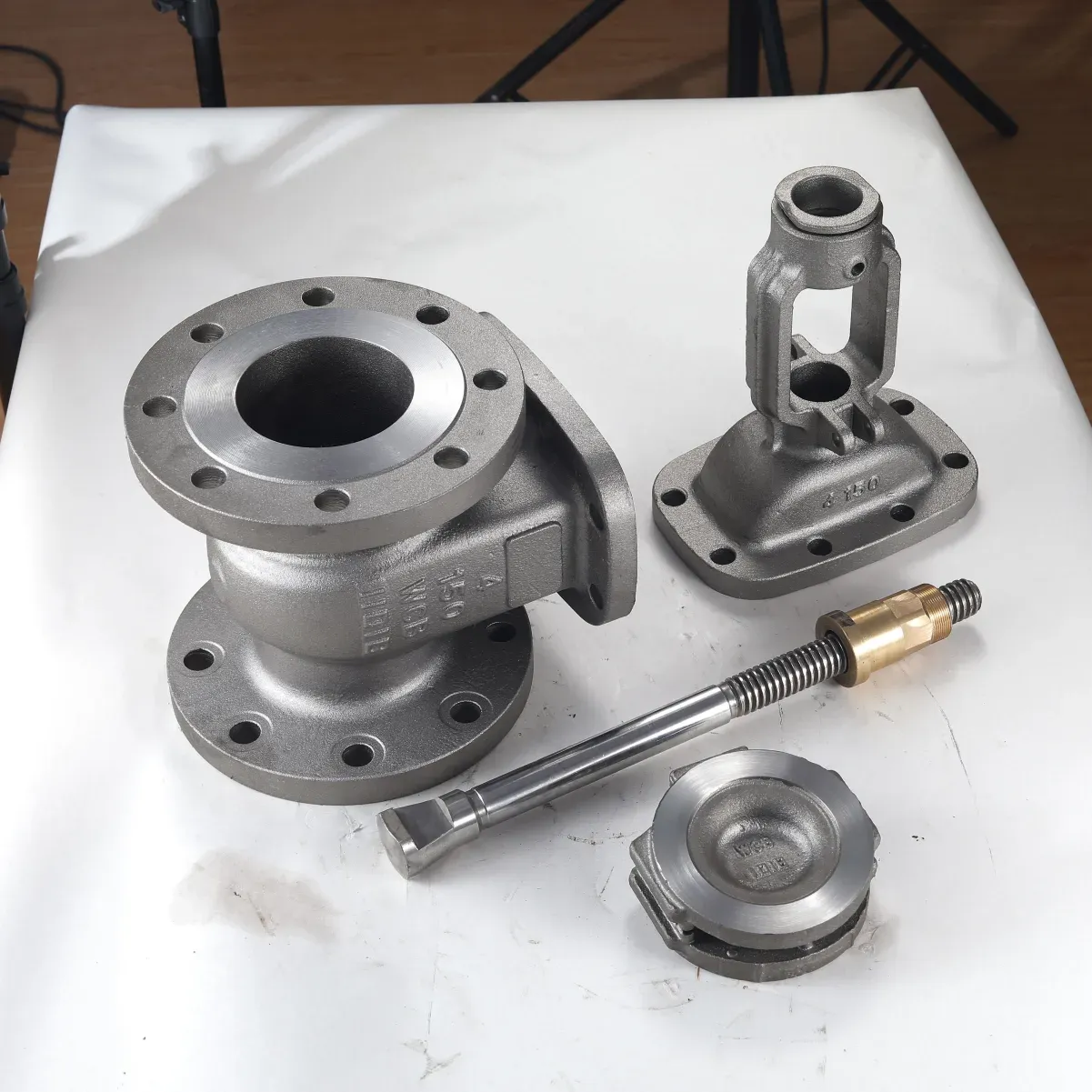
Steel gate valves are critical components in fluid handling systems across numerous industries, including oil and gas, water treatment, and chemical processing. Functioning as isolation valves, they regulate the flow of liquids or gases by employing a gate – typically a flat disc – that slides perpendicularly to the flow path. Their primary purpose is to start and stop flow, rather than to throttle it. Steel gate valves are favored for their robustness, reliability, and ability to handle high pressures and temperatures. The selection of a specific steel alloy and valve design is crucial, dictated by the fluid properties, operating conditions, and safety requirements of the application. A core industry pain point revolves around ensuring long-term corrosion resistance and preventing leakage, particularly in aggressive chemical environments. Proper material selection, manufacturing precision, and adherence to stringent industry standards are therefore paramount.
Material Science & Manufacturing
The primary material for steel gate valve construction is carbon steel (ASTM A105, A350), often alloyed with chromium and molybdenum to enhance corrosion resistance and mechanical strength (e.g., ASTM A182 F304/F316). Stainless steels, such as 304, 316, and duplex stainless steels, are utilized in highly corrosive environments. The gate itself may be solid wedge, split wedge, or parallel disc designs, each impacting flow characteristics and sealing capability. Body materials commonly use cast steel (ASTM A216 WCB) or forged steel. Manufacturing processes involve precision casting, forging, and machining. Welding is a critical process, requiring qualified welders and adherence to ASME Section IX standards to ensure joint integrity. Non-destructive testing (NDT), including radiography, ultrasonic testing, and liquid penetrant inspection, verifies weld quality. Valve seats are typically made of resilient materials like PTFE or reinforced PTFE, providing a tight seal. Critical parameters controlled during manufacturing include dimensional accuracy, surface finish, and heat treatment. Heat treatment (annealing, quenching, and tempering) influences the steel’s hardness, ductility, and resistance to brittle fracture. Chemical composition verification through spectrographic analysis is also essential.

Performance & Engineering
Gate valve performance is assessed based on several key parameters. Pressure-temperature ratings are defined by ASME B16.34 and API 6D, outlining the maximum allowable working pressure (MAWP) at specific temperatures. Leakage rates are critical, governed by API 598, categorizing acceptable leakage classes. Hydrostatic testing verifies the valve’s ability to withstand pressure. The valve’s fugitive emissions performance, as per EPA Method 21, is crucial for environmental compliance. Force analysis is vital in stem and disc design to withstand fluid pressure and prevent jamming. Environmental resistance is ensured through material selection, considering factors such as chloride pitting corrosion (in seawater applications) and erosion from abrasive fluids. Compliance requirements encompass ASME Boiler and Pressure Vessel Code, Section VIII, Division 1 for pressure vessel design, and PED (Pressure Equipment Directive) for European markets. Furthermore, valves intended for hazardous environments must meet ATEX or IECEx standards for explosion protection. The coefficient of fluid friction (Cv) affects flow capacity and pressure drop across the valve.
Technical Specifications
| Parameter | Specification (Typical) | Units | Test Standard |
|---|---|---|---|
| Maximum Allowable Working Pressure (MAWP) | 2500 | psi | ASME B16.34 |
| Temperature Range | -29 to 399 | °F | ASME B16.34 |
| Body Material | ASTM A216 WCB | - | ASTM A216 |
| Gate Material | ASTM A105 | - | ASTM A105 |
| Seat Material | PTFE | - | ASTM D3418 |
| Leakage Rate (Class VI) | 0.15 | mL/min/in | API 598 |
Failure Mode & Maintenance
Common failure modes include seat erosion leading to leakage, stem corrosion causing jamming, gate oxidation resulting in increased friction, and body cracking due to fatigue or stress corrosion cracking. Fatigue cracking can occur in the stem and gate due to repeated opening and closing cycles. Delamination of the seat material can happen from thermal cycling or chemical attack. Corrosion, especially pitting corrosion, degrades the valve body and internal components. Oxidation of the gate surface increases frictional resistance and can hinder operation. Failure analysis, including metallurgical examination and non-destructive testing, is crucial for identifying root causes. Preventative maintenance includes regular inspection for leaks, lubrication of the stem, and replacement of worn seals. Periodic hydrostatic testing verifies the valve’s integrity. Proper storage conditions are also vital to prevent corrosion. A recommended maintenance schedule should be implemented based on operating conditions and valve usage. Replacing the valve entirely may be necessary if irreparable damage is detected, especially concerning critical structural components.
Industry FAQ
Q: What material selection considerations are most important for a steel gate valve operating in a seawater environment?
A: In seawater environments, chloride-induced pitting corrosion is a primary concern. Selecting duplex stainless steels (e.g., UNS S31803, S32205) or super austenitic stainless steels (e.g., Alloy 6Mo) is critical due to their superior resistance to pitting and crevice corrosion. Alloy coatings, like nickel-based alloys, can also enhance corrosion resistance. Careful consideration of gasket materials, utilizing EPDM or Viton, is also necessary.
Q: How does the gate valve’s design (wedge, parallel disc, split wedge) influence its suitability for different applications?
A: Solid wedge gates offer tight shut-off but are susceptible to binding if not properly aligned. Parallel disc gates are ideal for applications with suspended solids as they minimize pressure drop and reduce wear. Split wedge gates combine the benefits of both, providing good shut-off with reduced binding risk, making them versatile for various fluids.
Q: What is the significance of the valve’s ‘Cv’ value in system design?
A: The Cv (coefficient of flow) value represents the valve’s capacity to pass fluid. It’s crucial for calculating pressure drop across the valve and ensuring adequate flow rate for the application. An incorrect Cv value can lead to insufficient flow or excessive pressure loss, impacting system performance.
Q: What are the typical non-destructive testing (NDT) methods used during the manufacturing of steel gate valves?
A: Common NDT methods include Radiographic Testing (RT) to detect internal flaws in welds, Ultrasonic Testing (UT) for detecting surface and subsurface defects, Liquid Penetrant Inspection (LPI) for identifying surface cracks, and Magnetic Particle Inspection (MPI) also for surface defect detection. Dye Penetrant Testing is used to visually verify the quality of the manufactured parts.
Q: What is the role of PTFE in gate valve seat design, and what are its limitations?
A: PTFE (Polytetrafluoroethylene) is widely used as a seat material due to its excellent chemical resistance, low friction coefficient, and good sealing properties. However, PTFE has limitations in high-temperature applications and can exhibit creep under sustained pressure. Reinforced PTFE, containing fillers like glass fiber, improves its mechanical strength and temperature resistance.
Conclusion
Steel gate valves are essential components for flow control in a wide range of industrial applications. Their performance and longevity are intrinsically linked to careful material selection, precise manufacturing processes, and adherence to rigorous industry standards. Understanding the nuances of material science – specifically corrosion resistance – and the potential failure modes is crucial for ensuring reliable operation and minimizing downtime.
Looking ahead, advancements in valve design and materials are focusing on reducing fugitive emissions, improving sealing performance, and extending service life. The adoption of digital valve controllers and predictive maintenance technologies will further enhance the reliability and efficiency of these critical components. Continued investment in robust quality control measures and comprehensive inspection programs remains paramount to maintaining the integrity of steel gate valves in demanding industrial environments.
-
The Essential Guide to Dual Plate Check Valves
-
Swing Check Valve Types: Reliable Flow Control & Backflow Prevention
-
Top Reasons to Choose a Stainless Steel Flange Check Valve for Industrial Applications
-
High Temperature Solenoid Valves Performance Analysis
-
hot water solenoid valves Performance Analysis
-
solenoid valve mini Performance Analysis
-
explosion proof solenoid valve Performance Analysis
-
2 position 3 way solenoid valve Performance Analysis
-
3 way 2 position solenoid valve Performance Analysis
-
brake solenoid valve Performance Analysis
-
solenoid valve 110v Performance Analysis
-
solenoid valve explosion proof Performance Analysis
-
explosion proof solenoid valves Performance Analysis
-
solenoid valve 3 way 2 position Performance Analysis
-
micro solenoid valve Performance Analysis
 Afrikaans
 Albanian
 Amharic
 Arabic
 Armenian
 Azerbaijani
 Basque
 Belarusian
 Bengali
 Bosnian
 Bulgarian
 Catalan
 Cebuano
 Corsican
 Croatian
 Czech
Czech
 Danish
 Dutch
Dutch
 Esperanto
 Estonian
 Finnish
 French
 Frisian
 Galician
 Georgian
 German
 Greek
Greek
 Gujarati
 Haitian Creole
 Hausa
Hawaiian
Hausa
Hawaiian
 Hebrew
 Hindi
Hindi
 Miao
Miao
 Hungarian
 Icelandic
 Igbo
Igbo
 Indonesian
 Irish
Irish
 Italian
 Japanese
 Javanese
Kannada
Javanese
Kannada
 Kazakh
 Khmer
Khmer
 Rwandese
 Korean
 Kurdish
 Kyrgyz
 Lao
Lao
 Latin
Latin
 Latvian
 Lithuanian
 Luxembourgish
 Macedonian
 Malgashi
 Malay
Malay
 Malayalam
 Maltese
 Maori
Maori
 Marathi
 Mongolian
 Myanmar
 Nepali
 Norwegian
 Norwegian
 Occitan
 Pashto
 Persian
 Polish
 Portuguese
Punjabi
Portuguese
Punjabi
 Romanian
 Russian
 Samoan
 Scottish Gaelic
 Serbian
 Sesotho
 Shona
Shona
 Sindhi
 Sinhala
 Slovak
 Slovenian
 Somali
 Spanish
 Sundanese
 Swahili
 Swedish
Tagalog
Swedish
Tagalog
 Tajik
Tajik
 Tamil
Tamil
 Tatar
Tatar
 Telugu
 Thai
Thai
 Turkish
 Turkmen
 Ukrainian
 Urdu
Urdu
 Uighur
 Uzbek
Uzbek
 Vietnamese
 Welsh
Welsh
 Bantu
Bantu
 Yiddish
 Yoruba
 Zulu
Zulu
 English