




miniature needle valve Performance Analysis
Introduction
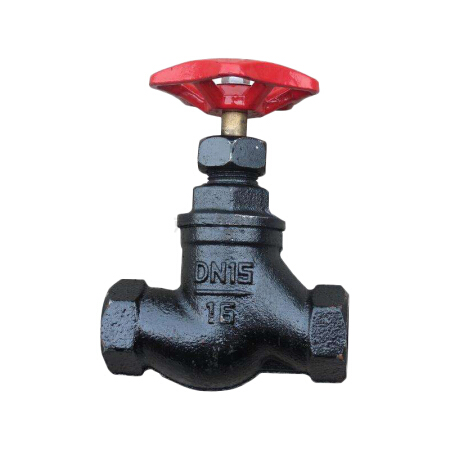
Miniature needle valves are precision fluid control devices designed for applications requiring accurate and repeatable flow regulation in low-flow systems. Positioned within the broader landscape of industrial valve technology, they serve as critical components in analytical instrumentation, medical devices, chemical processing, and various automated systems. Unlike other valve types such as ball valves or gate valves, needle valves utilize a tapered pin (the ‘needle’) that mates with a precisely machined orifice. This design allows for fine adjustments of the flow path, making them ideal for metering and throttling applications. Core performance characteristics include leak tightness, flow coefficient (Cv), pressure drop, and material compatibility. The increasing demand for miniaturization in scientific instruments and microfluidic devices drives the continued development of smaller, more precise, and chemically resistant miniature needle valves.
Material Science & Manufacturing
The body construction of miniature needle valves typically employs materials such as 316 Stainless Steel, brass (C36000), and PTFE (Polytetrafluoroethylene). 316 Stainless Steel provides excellent corrosion resistance in a wide range of fluids and temperatures. Brass offers good machinability and is suitable for non-corrosive applications. PTFE is used for valve seats and seals due to its exceptional chemical inertness and low friction coefficient. The ‘needle’ itself is often fabricated from hardened stainless steel to withstand wear and prevent galling against the orifice. Manufacturing processes vary depending on the materials and volume. Brass bodies are commonly produced using CNC machining and investment casting. Stainless steel bodies frequently utilize Swiss-type turning for high precision and tight tolerances. PTFE components are typically injection molded. Critical parameters include surface finish of the needle and seat (Ra < 0.8 μm is typical for leak tightness), concentricity of the needle to the orifice (within 0.025 mm), and the dimensional accuracy of the flow path. Welding processes, if employed for assembly, require stringent quality control to prevent porosity and ensure structural integrity. Post-processing steps, such as passivation for stainless steel, are crucial for maximizing corrosion resistance.
Performance & Engineering
The performance of a miniature needle valve is heavily influenced by fluid dynamics and material properties. Force analysis considers the torque required to operate the handwheel, the force exerted by the fluid on the needle, and the spring force used for sealing. Environmental resistance is paramount; factors like temperature fluctuations, humidity, and exposure to corrosive media must be accounted for. Compliance requirements often dictate material traceability, pressure testing standards (e.g., ASME B16.34 for leak testing), and regulatory adherence (e.g., RoHS, REACH). Functional implementation involves selecting the appropriate valve size and material based on the fluid type, pressure, temperature, and flow rate. The flow coefficient (Cv) – a dimensionless number representing the valve’s capacity to pass fluid – is a key engineering parameter. Calculating pressure drop across the valve requires consideration of the fluid viscosity, density, and the valve’s internal geometry. Finite Element Analysis (FEA) is often used to optimize the valve’s design for stress distribution and to prevent fatigue failure under cyclic loading. Leak tightness is typically specified in terms of seat leakage rate, often measured in bubbles per minute (BPM) or standard cubic centimeters per minute (SCCM).
Technical Specifications
| Parameter | Unit | Typical Value (Stainless Steel Body) | Typical Value (Brass Body) |
|---|---|---|---|
| Maximum Pressure | psi | 1000 | 600 |
| Operating Temperature Range | °F | -60 to 450 | -20 to 250 |
| Cv (Flow Coefficient) | - | 0.01 - 0.1 | 0.02 - 0.2 |
| Port Size | 1/8" NPT | Various (1/8", 1/4") | Various (1/8", 1/4") |
| Leakage Rate (Seat) | SCCM (Air) | < 1 | < 2 |
| Body Material | - | 316 Stainless Steel | C36000 Brass |
Failure Mode & Maintenance
Miniature needle valves are susceptible to several failure modes. Fatigue cracking can occur in the valve stem due to repeated cycling, especially under high pressure. Erosion of the needle and seat is common with abrasive fluids or particulate contamination, leading to increased leakage. Chemical attack can degrade the valve body or seals if incompatible materials are used. Delamination of PTFE seats can occur with prolonged exposure to certain chemicals. Oxidation can affect stainless steel components at elevated temperatures. Proper maintenance is crucial for extending the valve’s lifespan. Regular inspection for leaks, corrosion, and wear is essential. Periodic cleaning to remove accumulated debris can prevent clogging. Lubrication of the valve stem with a compatible lubricant (e.g., silicone grease) reduces friction and prevents galling. Replacement of seals and seats should be performed proactively based on operating conditions and fluid compatibility. When disassembling the valve, careful attention should be paid to the orientation of components to ensure proper reassembly. Avoid using excessive force when tightening fittings, as this can damage the valve body.
Industry FAQ
Q: What is the primary difference between a miniature needle valve and a ball valve in low-flow applications?
A: While both can control flow, needle valves offer significantly more precise flow regulation due to their tapered design. Ball valves are typically on/off devices, lacking the fine-tuning capability of a needle valve. The needle valve’s gradual opening and closing allows for accurate metering, crucial in applications like gas chromatography or microfluidics. Ball valves are generally less expensive for simple on/off control.
Q: How does the choice of O-ring material impact the performance of a miniature needle valve?
A: O-ring material is critical for leak tightness and chemical compatibility. Viton (FKM) offers broad chemical resistance but may not be suitable for all applications. EPDM is good for water-based systems but less resistant to oils. PTFE offers excellent chemical inertness but has a higher coefficient of friction. Selecting the correct O-ring material ensures long-term performance and prevents swelling or degradation.
Q: What steps can be taken to minimize the risk of clogging in a miniature needle valve handling particulate-laden fluids?
A: Implementing inline filters upstream of the valve is the most effective method. Regularly cleaning or replacing these filters prevents particulate accumulation. Selecting a valve with a larger flow path can also reduce the likelihood of clogging. Using a self-cleaning valve design, if available, can further mitigate the issue. Avoiding fluids with excessive particulate concentration is also essential.
Q: What is the significance of the ‘Cv’ value when selecting a miniature needle valve?
A: The Cv value dictates the valve’s flow capacity. A higher Cv indicates a larger flow rate for a given pressure drop. Selecting a valve with the appropriate Cv is crucial for achieving the desired flow rate in your system. Undersized valves will cause excessive pressure drop, while oversized valves may lack the necessary precision.
Q: What testing procedures are typically used to verify the leak tightness of a miniature needle valve?
A: Bubble leak testing is a common method, immersing the valve in a liquid and pressurizing it with a gas (typically air or nitrogen) to detect any escaping bubbles. Helium leak testing is more sensitive and uses a helium mass spectrometer to detect even minute leaks. Pressure decay testing measures the rate of pressure loss over time. All tests are usually conducted according to established standards (e.g., ASME B16.34).
Conclusion
Miniature needle valves represent a vital component in numerous precision fluid control systems. Their ability to deliver accurate and repeatable flow regulation, combined with a wide range of material and configuration options, makes them indispensable in diverse industries. The careful consideration of material science, manufacturing processes, and performance engineering principles is paramount to ensuring long-term reliability and optimal functionality. Understanding potential failure modes and implementing preventative maintenance strategies further enhances their operational lifespan.
Looking ahead, advancements in microfabrication techniques and smart materials will likely lead to even smaller, more intelligent, and more versatile miniature needle valves. Integration with sensors and actuators will enable real-time monitoring and automated flow control. The continued demand for precision and efficiency in scientific instrumentation, medical devices, and industrial automation will drive innovation in this critical area of fluid control technology.
-
Top Reasons to Choose a Stainless Steel Flange Check Valve for Industrial Applications
-
double flange butterfly valve Performance Analysis
-
Double Flanged Couplings Performance Analysis
-
double flanged butterfly valves Material Science
-
forged flange Performance Analysis
-
forging flange Material Science
-
forging flanges Material Performance
-
Round Flange Performance Analysis
-
Round Flanges Performance Analysis
-
Custom Flange Performance Analysis
-
DN 40 Flange Performance Analysis
-
8 inch flange Performance Analysis
-
angle ring flanges Performance Analysis
-
Flat Flanges Performance Analysis
-
Full Face Flange Performance Analysis
 Afrikaans
 Albanian
 Amharic
 Arabic
 Armenian
 Azerbaijani
 Basque
 Belarusian
 Bengali
 Bosnian
 Bulgarian
 Catalan
 Cebuano
 Corsican
 Croatian
 Czech
Czech
 Danish
 Dutch
Dutch
 Esperanto
 Estonian
 Finnish
 French
 Frisian
 Galician
 Georgian
 German
 Greek
Greek
 Gujarati
 Haitian Creole
 Hausa
Hawaiian
Hausa
Hawaiian
 Hebrew
 Hindi
Hindi
 Miao
Miao
 Hungarian
 Icelandic
 Igbo
Igbo
 Indonesian
 Irish
Irish
 Italian
 Japanese
 Javanese
Kannada
Javanese
Kannada
 Kazakh
 Khmer
Khmer
 Rwandese
 Korean
 Kurdish
 Kyrgyz
 Lao
Lao
 Latin
Latin
 Latvian
 Lithuanian
 Luxembourgish
 Macedonian
 Malgashi
 Malay
Malay
 Malayalam
 Maltese
 Maori
Maori
 Marathi
 Mongolian
 Myanmar
 Nepali
 Norwegian
 Norwegian
 Occitan
 Pashto
 Persian
 Polish
 Portuguese
Punjabi
Portuguese
Punjabi
 Romanian
 Russian
 Samoan
 Scottish Gaelic
 Serbian
 Sesotho
 Shona
Shona
 Sindhi
 Sinhala
 Slovak
 Slovenian
 Somali
 Spanish
 Sundanese
 Swahili
 Swedish
Tagalog
Swedish
Tagalog
 Tajik
Tajik
 Tamil
Tamil
 Tatar
Tatar
 Telugu
 Thai
Thai
 Turkish
 Turkmen
 Ukrainian
 Urdu
Urdu
 Uighur
 Uzbek
Uzbek
 Vietnamese
 Welsh
Welsh
 Bantu
Bantu
 Yiddish
 Yoruba
 Zulu
Zulu
 English