




china needle valves high pressure Performance Analysis
Introduction
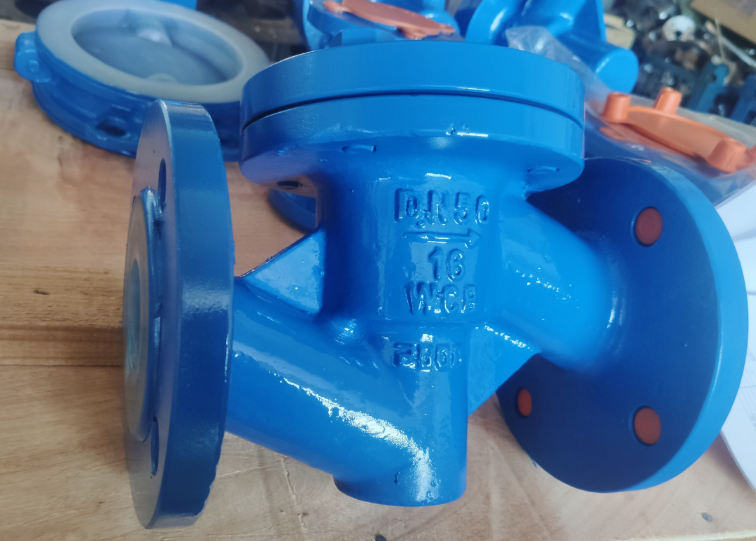
High-pressure needle valves, manufactured in China, represent a critical component in fluid control systems across diverse industries including oil & gas, chemical processing, power generation, and instrumentation. These valves are designed for precise flow regulation, typically in applications requiring frequent throttling or tight shut-off. Their positioning within the industry chain is as a final control element, directly impacting process efficiency, safety, and product quality. Core performance characteristics include high pressure containment, leak-tight sealing, precise flow control even at low flow rates, and resistance to the corrosive effects of process fluids. The proliferation of Chinese manufacturers has led to significant price competition, but also necessitates careful consideration of material traceability, quality control, and adherence to international standards. A primary industry pain point is ensuring the longevity and reliability of these valves in harsh operating environments, particularly concerning material selection to prevent erosion, corrosion, and fatigue failure.
Material Science & Manufacturing
The body construction of high-pressure needle valves commonly utilizes stainless steel alloys (304, 316, 316L) due to their excellent corrosion resistance and mechanical strength. For extremely corrosive environments, materials like Hastelloy, Inconel, or Monel may be employed, albeit at a significantly increased cost. The valve seat, critical for sealing, is often manufactured from reinforced PTFE (Teflon), PEEK, or other polymeric materials with high wear resistance. Tungsten carbide and other hard metals are used for more abrasive applications. The stem material is typically hardened stainless steel or alloy steel, subjected to surface treatments like nitriding to enhance hardness and wear resistance. Manufacturing processes vary depending on the valve size and complexity. Small valves are often produced via investment casting or CNC machining. Larger valves may necessitate forging and subsequent machining. Welding processes (TIG, MIG) are used to join components, requiring strict adherence to welding procedures and non-destructive testing (NDT) – radiographic testing (RT) and liquid penetrant testing (PT) are standard. Key parameter control during manufacturing focuses on dimensional accuracy of the bore and seat, surface finish of the stem, and the hardness profile of critical components. Heat treatment processes must be precisely controlled to achieve the desired material properties and prevent stress corrosion cracking. Proper passivation of stainless steel components is crucial to enhance corrosion resistance.
Performance & Engineering
The performance of a high-pressure needle valve is fundamentally governed by fluid dynamics and stress analysis. Force analysis considers the hydrostatic and hydrodynamic forces acting on the valve components, particularly the stem and seat. High-pressure differentials can induce significant forces, demanding robust mechanical design. Environmental resistance is paramount; valves exposed to corrosive fluids require materials compatible with the specific chemical environment. Compliance requirements depend on the application. For example, valves used in the oil & gas industry must adhere to API 6D standards, while those used in pharmaceutical applications may need to comply with FDA regulations. Functional implementation details include the valve’s Kv/Cv value (flow coefficient), which dictates the flow rate at a given pressure drop. The valve’s hysteresis – the difference in flow rate for the same stem position during opening and closing – is a critical performance metric. Leakage rates are typically specified in terms of bubbles per minute (BPM) or parts per million (PPM). The valve’s packing arrangement (gland packing, bellows seal) directly impacts leakage performance and maintenance requirements. Finite Element Analysis (FEA) is often employed during the design phase to optimize the valve body geometry and minimize stress concentrations.
Technical Specifications
| Parameter | Unit | Typical Value (Stainless Steel 316) | Typical Value (Hastelloy C-276) |
|---|---|---|---|
| Maximum Working Pressure | MPa | 63 | 48 |
| Temperature Range | °C | -60 to +350 | -196 to +425 |
| Cv Value (Typical) | m³/h | 0.1 - 1.5 | 0.1 - 1.5 |
| Connection Type | - | NPT, BSPT, Socket Weld, Butt Weld | NPT, BSPT, Socket Weld, Butt Weld |
| Leakage Rate (Bubble Tight) | BPM (Air) | <0.1 | <0.1 |
| Stem Packing | - | PTFE, Graphite | PTFE, Graphite |
Failure Mode & Maintenance
High-pressure needle valves are susceptible to several failure modes. Fatigue cracking can occur in the valve body or stem due to cyclic loading. Erosion is a concern when handling abrasive fluids, leading to wear of the valve seat and stem. Corrosion, particularly pitting corrosion, can compromise the valve’s integrity. Delamination of the valve seat material can result in leakage. Oxidation at high temperatures can degrade the material properties. A common failure point is the stem packing, which can lose its sealing ability over time due to compression set or thermal cycling. Maintenance solutions involve regular inspection of the valve body for cracks and corrosion, replacement of the stem packing when leakage is observed, and periodic cleaning to remove accumulated debris. For valves operating in harsh environments, a preventative maintenance schedule should include ultrasonic testing (UT) to detect subsurface cracks and radiographic inspection to assess the integrity of welds. Seat replacement is often required after prolonged exposure to abrasive fluids. Proper lubrication of the stem threads is crucial to prevent galling and ensure smooth operation. Complete valve replacement is necessary if significant corrosion or erosion is detected.
Industry FAQ
Q: What is the significance of the Kv/Cv value when selecting a needle valve for a specific application?
A: The Kv/Cv value is a measure of the valve’s flow capacity – it indicates the volumetric flow rate of a fluid that will pass through the valve at a specified pressure drop. Selecting a valve with the appropriate Kv/Cv value is crucial to ensure the desired flow rate is achieved without excessive pressure loss. An undersized valve will restrict flow, while an oversized valve may lead to poor control and potential instability.
Q: How do different stem packing materials compare in terms of performance and longevity?
A: PTFE packing offers excellent chemical resistance and low friction, but can experience creep and compression set over time, leading to leakage. Graphite packing provides higher temperature resistance and better resistance to compression set, but may be less chemically resistant. Combined PTFE and graphite packings offer a balance of properties. Bellows seals offer the best sealing performance and eliminate the risk of stem leakage, but are more expensive and less tolerant of misalignment.
Q: What is the role of passivation in stainless steel needle valve manufacturing?
A: Passivation is a chemical treatment used to remove free iron from the surface of stainless steel, enhancing its corrosion resistance. Free iron can act as a catalyst for corrosion, so its removal creates a protective passive layer of chromium oxide. Proper passivation is critical for valves used in corrosive environments.
Q: What non-destructive testing (NDT) methods are commonly used to verify the quality of welded joints in high-pressure needle valves?
A: Radiographic testing (RT) is used to detect internal flaws in welds, such as porosity and cracks. Liquid penetrant testing (PT) is used to detect surface cracks and discontinuities. Ultrasonic testing (UT) can also be used to detect internal flaws and measure weld thickness. These methods ensure the structural integrity of the welded joints and prevent catastrophic failures.
Q: What are the key considerations when selecting a needle valve for handling abrasive fluids?
A: When handling abrasive fluids, select a valve with a hardened valve seat material (e.g., tungsten carbide) and a stem with a wear-resistant coating. Consider using a valve with a larger flow passage to reduce fluid velocity and minimize erosion. Regular inspection and replacement of the valve seat are essential to prevent leakage and maintain performance.
Conclusion
High-pressure needle valves manufactured in China represent a viable and cost-effective solution for fluid control applications, provided that meticulous attention is paid to material selection, manufacturing quality, and adherence to relevant industry standards. Understanding the material science underpinning valve construction, the engineering principles governing performance, and the potential failure modes is critical for ensuring long-term reliability and safety. Proper preventative maintenance, including regular inspection and timely replacement of components, is essential for maximizing valve lifespan and minimizing downtime.
The continued evolution of materials and manufacturing processes promises to enhance the performance and durability of these valves further. Future developments may focus on advanced coatings to improve wear resistance, innovative sealing technologies to minimize leakage, and the integration of smart sensors for real-time monitoring of valve condition. Ultimately, a comprehensive understanding of these factors will enable informed decision-making and optimize the performance of fluid control systems across a wide range of industrial applications.
-
Top Reasons to Choose a Stainless Steel Flange Check Valve for Industrial Applications
-
1 4 in check valve Performance Engineering
-
check valve 3 4 Performance Analysis
-
11 2 check valve Performance Analysis
-
spring check valve Material Science Manufacturing
-
DN100 Flange Performance Analysis
-
DN50 Flange Performance Analysis
-
double flanged butterfly valve Performance Analysis
-
forged flanges Performance Analysis
-
4 blind flange Performance Engineering
-
3 flanged ball valve Performance Analysis
-
2 threaded flange Performance Analysis
-
4 ball valve flanged Performance Analysis
-
90 degree flange elbow Performance Analysis
-
Custom Flanges Performance Analysis
 Afrikaans
 Albanian
 Amharic
 Arabic
 Armenian
 Azerbaijani
 Basque
 Belarusian
 Bengali
 Bosnian
 Bulgarian
 Catalan
 Cebuano
 Corsican
 Croatian
 Czech
Czech
 Danish
 Dutch
Dutch
 Esperanto
 Estonian
 Finnish
 French
 Frisian
 Galician
 Georgian
 German
 Greek
Greek
 Gujarati
 Haitian Creole
 Hausa
Hawaiian
Hausa
Hawaiian
 Hebrew
 Hindi
Hindi
 Miao
Miao
 Hungarian
 Icelandic
 Igbo
Igbo
 Indonesian
 Irish
Irish
 Italian
 Japanese
 Javanese
Kannada
Javanese
Kannada
 Kazakh
 Khmer
Khmer
 Rwandese
 Korean
 Kurdish
 Kyrgyz
 Lao
Lao
 Latin
Latin
 Latvian
 Lithuanian
 Luxembourgish
 Macedonian
 Malgashi
 Malay
Malay
 Malayalam
 Maltese
 Maori
Maori
 Marathi
 Mongolian
 Myanmar
 Nepali
 Norwegian
 Norwegian
 Occitan
 Pashto
 Persian
 Polish
 Portuguese
Punjabi
Portuguese
Punjabi
 Romanian
 Russian
 Samoan
 Scottish Gaelic
 Serbian
 Sesotho
 Shona
Shona
 Sindhi
 Sinhala
 Slovak
 Slovenian
 Somali
 Spanish
 Sundanese
 Swahili
 Swedish
Tagalog
Swedish
Tagalog
 Tajik
Tajik
 Tamil
Tamil
 Tatar
Tatar
 Telugu
 Thai
Thai
 Turkish
 Turkmen
 Ukrainian
 Urdu
Urdu
 Uighur
 Uzbek
Uzbek
 Vietnamese
 Welsh
Welsh
 Bantu
Bantu
 Yiddish
 Yoruba
 Zulu
Zulu
 English