




spring check valve Material Science Manufacturing
Introduction
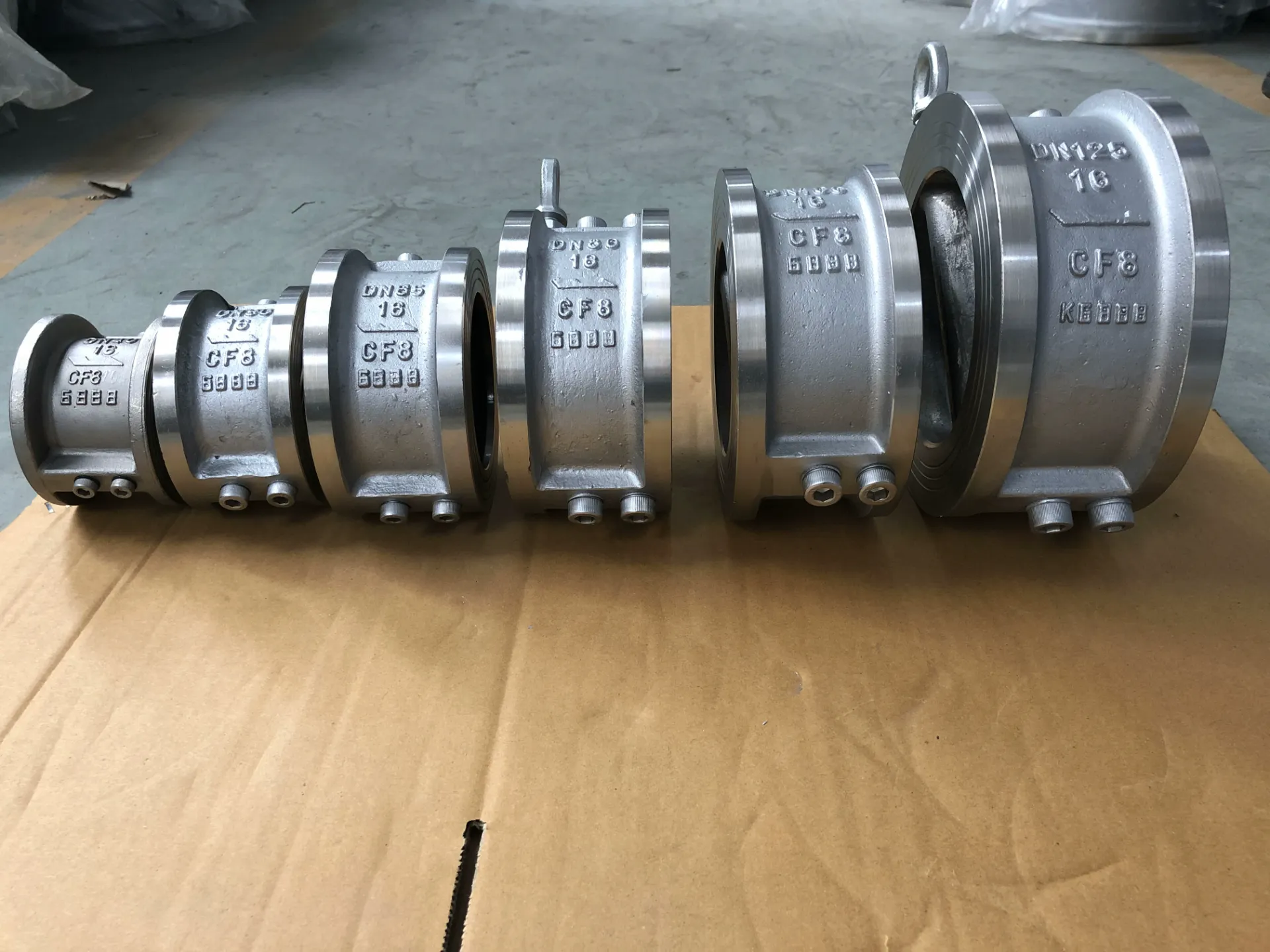
Spring check valves are essential components in fluid handling systems, designed to prevent backflow and ensure unidirectional flow of liquids or gases. Positioned within the broader piping system as a crucial safety and operational control device, they operate passively, relying on pressure differentials and a spring mechanism to automatically open and close. Unlike other valve types requiring manual or automated actuation, the spring check valve’s inherent simplicity and reliability make it a mainstay across diverse industries including water treatment, oil and gas, chemical processing, and power generation. Core performance characteristics include cracking pressure (the minimum upstream pressure required to open the valve), flow coefficient (Cv) indicating flow capacity, leakage rate (measuring backflow prevention efficiency), and materials compatibility with the conveyed fluid. A primary industry pain point revolves around valve selection for corrosive environments and ensuring long-term sealing performance under varying pressure and temperature conditions. Selecting the incorrect material or spring force can lead to premature failure, system downtime, and potential safety hazards.
Material Science & Manufacturing
The body construction of spring check valves typically utilizes materials like stainless steel (304, 316, 316L), carbon steel (with protective coatings), ductile iron, and engineered plastics (PVC, CPVC, PP). Stainless steel grades are preferred for corrosive environments due to their chromium content, forming a passive oxide layer. 316L offers superior resistance to pitting corrosion compared to 304. Carbon steel, while cost-effective, requires epoxy or fusion-bonded epoxy (FBE) coatings to prevent corrosion. Ductile iron provides high tensile strength and impact resistance. The disc and spring material are equally critical; commonly used disc materials include PTFE, EPDM, Viton, and various stainless steel alloys. Spring materials are typically high-strength stainless steel (304, 316) exhibiting excellent fatigue resistance and corrosion resistance.
Manufacturing involves several key processes. Body fabrication often utilizes investment casting or forging followed by precision machining. Welding processes, such as TIG (Tungsten Inert Gas) welding, are crucial for joining components, requiring stringent quality control to ensure weld integrity and prevent porosity. The spring is produced through cold coiling of high-strength wire, followed by stress relieving to enhance durability. The disc is molded or machined to precise dimensions to ensure proper sealing. Critical parameter control during manufacturing includes dimensional accuracy of the disc seat, spring force calibration, surface finish of sealing surfaces (Ra values), and hydrostatic testing to verify leak tightness. Non-destructive testing (NDT) methods like liquid penetrant inspection (LPI) and radiographic testing (RT) are employed to identify internal flaws in castings and welds.
Performance & Engineering
The performance of a spring check valve is governed by fluid dynamics and mechanical engineering principles. Force analysis involves balancing the fluid pressure force acting on the disc against the spring force. The spring force must be sufficient to overcome the fluid pressure at the desired cracking pressure while allowing smooth opening under normal flow conditions. Flow coefficient (Cv) is determined through hydraulic testing, measuring the flow rate at a specific pressure drop. Environmental resistance is a key consideration; valves exposed to outdoor conditions must withstand temperature fluctuations, UV radiation, and potential icing.
Compliance requirements are stringent, particularly in industries handling potable water or hazardous chemicals. Materials must meet NSF/ANSI 61 standards for drinking water system components, ensuring they do not leach harmful substances. Valves handling flammable fluids must comply with API 598 (Valve Inspection and Testing) and potentially ATEX/IECEx directives for explosion protection. Functional implementation requires careful consideration of installation orientation; many spring check valves have specific orientation requirements to ensure proper operation. Furthermore, the valve’s response time (how quickly it closes upon backflow) is critical in applications requiring rapid shut-off to prevent water hammer or process upsets. Fatigue analysis is crucial to predict the valve’s lifespan under cyclical pressure variations.
Technical Specifications
| Parameter | Units | Typical Value (Stainless Steel) | Typical Value (PVC) |
|---|---|---|---|
| Maximum Working Pressure | psi | 1000 | 150 |
| Temperature Range | °F | -20 to 450 | 32 to 140 |
| Cracking Pressure | psi | 2-10 (adjustable spring) | 1-5 (gravity/spring) |
| Flow Coefficient (Cv) | gal/min @ 1 psi ΔP | 5-50 (depending on size) | 2-30 (depending on size) |
| Leakage Rate | % of set flow | <0.1% | <0.5% |
| Connection Type | - | NPT, Flange, Socket Weld | Socket Weld, Threaded |
Failure Mode & Maintenance
Common failure modes in spring check valves include disc sticking due to debris accumulation, spring fatigue leading to reduced closing force, seat erosion resulting in leakage, and corrosion causing body failure. Fatigue cracking can occur in the spring due to cyclical loading, especially in applications with frequent pressure fluctuations. Delamination of coatings on carbon steel bodies exposes the underlying metal to corrosion. Degradation of elastomeric seals (PTFE, EPDM) can occur due to chemical attack or UV exposure. Oxidation of stainless steel in high-temperature, corrosive environments can lead to pitting corrosion.
Preventative maintenance is crucial. Regular inspection should include visual checks for corrosion, damage to the disc and seat, and spring condition. Periodic cleaning to remove debris is essential, particularly in dirty fluid applications. Lubrication of moving parts (where applicable) reduces friction and prevents sticking. Springs should be replaced if they exhibit signs of fatigue or corrosion. Damaged seals should be replaced promptly. Hydrostatic testing should be performed periodically to verify leak tightness. For valves in critical applications, a scheduled replacement program is recommended to proactively mitigate the risk of failure. Consider implementing a condition-monitoring program using vibration analysis or ultrasonic testing to detect early signs of component degradation.
Industry FAQ
Q: What is the impact of fluid viscosity on the cracking pressure of a spring check valve?
A: Increased fluid viscosity significantly increases the cracking pressure. The higher viscosity creates greater resistance to flow, requiring a larger pressure differential to overcome the spring force and open the valve. Valve selection should consider the fluid’s viscosity at the operating temperature to ensure the valve opens reliably.
Q: How do I select the appropriate spring force for a specific application?
A: Spring force selection depends on the fluid density, operating pressure, and desired cracking pressure. A lower spring force results in a lower cracking pressure but may be susceptible to unwanted opening due to fluid momentum. A higher spring force requires a greater pressure differential to open, potentially causing water hammer. Consult valve manufacturer’s data sheets and perform calculations to determine the optimal spring force.
Q: What are the common causes of chatter in spring check valves?
A: Chatter, characterized by rapid opening and closing of the valve, is typically caused by low flow rates, insufficient spring force, or fluid momentum. The valve disc oscillates between open and closed positions. Increasing the spring force or ensuring adequate flow velocity can mitigate chatter.
Q: Can a spring check valve be installed in any orientation?
A: Not all spring check valves can be installed in any orientation. Vertical lift check valves require specific upward orientation to function correctly. Horizontal swing check valves generally have no orientation restrictions. Always refer to the manufacturer’s installation instructions.
Q: What is the benefit of using a spring check valve over a swing check valve in a high-frequency pulsation application?
A: Spring check valves generally perform better in high-frequency pulsation applications. Swing check valves can be prone to water hammer and fatigue failure due to the impact of the disc against the seat with each pulsation. The spring mechanism in a spring check valve provides a more controlled closure, reducing the impact forces.
Conclusion
Spring check valves remain a cornerstone of fluid control systems due to their inherent reliability, simplicity, and cost-effectiveness. Their performance, however, is intrinsically linked to careful material selection, precise manufacturing processes, and adherence to relevant industry standards. Understanding the interplay between fluid dynamics, spring mechanics, and environmental factors is crucial for ensuring optimal operation and preventing premature failure.
Looking forward, advancements in material science, such as the development of novel corrosion-resistant alloys and elastomeric compounds, will further enhance the longevity and performance of these valves. Integration with predictive maintenance technologies, leveraging data analytics and condition monitoring, will enable proactive interventions and minimize downtime. Continued refinement of design and manufacturing techniques will further optimize flow characteristics and reduce the risk of cavitation and water hammer, solidifying the spring check valve’s position as an essential component in critical infrastructure.
-
Top Reasons to Choose a Stainless Steel Flange Check Valve for Industrial Applications
-
1 4 in check valve Performance Engineering
-
check valve 3 4 Performance Analysis
-
11 2 check valve Performance Analysis
-
spring check valve Material Science Manufacturing
-
DN100 Flange Performance Analysis
-
DN50 Flange Performance Analysis
-
double flanged butterfly valve Performance Analysis
-
forged flanges Performance Analysis
-
4 blind flange Performance Engineering
-
3 flanged ball valve Performance Analysis
-
2 threaded flange Performance Analysis
-
4 ball valve flanged Performance Analysis
-
90 degree flange elbow Performance Analysis
-
Custom Flanges Performance Analysis
 Afrikaans
 Albanian
 Amharic
 Arabic
 Armenian
 Azerbaijani
 Basque
 Belarusian
 Bengali
 Bosnian
 Bulgarian
 Catalan
 Cebuano
 Corsican
 Croatian
 Czech
Czech
 Danish
 Dutch
Dutch
 Esperanto
 Estonian
 Finnish
 French
 Frisian
 Galician
 Georgian
 German
 Greek
Greek
 Gujarati
 Haitian Creole
 Hausa
Hawaiian
Hausa
Hawaiian
 Hebrew
 Hindi
Hindi
 Miao
Miao
 Hungarian
 Icelandic
 Igbo
Igbo
 Indonesian
 Irish
Irish
 Italian
 Japanese
 Javanese
Kannada
Javanese
Kannada
 Kazakh
 Khmer
Khmer
 Rwandese
 Korean
 Kurdish
 Kyrgyz
 Lao
Lao
 Latin
Latin
 Latvian
 Lithuanian
 Luxembourgish
 Macedonian
 Malgashi
 Malay
Malay
 Malayalam
 Maltese
 Maori
Maori
 Marathi
 Mongolian
 Myanmar
 Nepali
 Norwegian
 Norwegian
 Occitan
 Pashto
 Persian
 Polish
 Portuguese
Punjabi
Portuguese
Punjabi
 Romanian
 Russian
 Samoan
 Scottish Gaelic
 Serbian
 Sesotho
 Shona
Shona
 Sindhi
 Sinhala
 Slovak
 Slovenian
 Somali
 Spanish
 Sundanese
 Swahili
 Swedish
Tagalog
Swedish
Tagalog
 Tajik
Tajik
 Tamil
Tamil
 Tatar
Tatar
 Telugu
 Thai
Thai
 Turkish
 Turkmen
 Ukrainian
 Urdu
Urdu
 Uighur
 Uzbek
Uzbek
 Vietnamese
 Welsh
Welsh
 Bantu
Bantu
 Yiddish
 Yoruba
 Zulu
Zulu
 English