




vacuum needle valve Performance Analysis

Introduction
Vacuum needle valves are precision components employed to regulate or isolate vacuum flow in a variety of industrial and research applications. Unlike conventional valves, needle valves utilize a tapered needle and seat to provide precise flow control, making them ideal for fine adjustments in vacuum systems. They occupy a critical position within the vacuum system chain, functioning as the final control element preceding the vacuum chamber or process. Their core performance metrics revolve around leak tightness (achieved through robust sealing materials and precision machining), flow coefficient (Cv), and pressure drop, determining the valve's suitability for specific vacuum levels and flow rates. These valves are integral to industries including semiconductor manufacturing, mass spectrometry, vacuum coating, and research laboratories where maintaining consistent and accurate vacuum levels is paramount. A key industry pain point lies in achieving reliable sealing at extremely low pressures and mitigating virtual leaks caused by outgassing from valve materials.
Material Science & Manufacturing
The body construction of vacuum needle valves commonly employs stainless steel grades, particularly 304/304L and 316/316L, selected for their corrosion resistance, weldability, and low outgassing characteristics. The needle and seat, critical for sealing, are often fabricated from hardened stainless steel (e.g., 440C) or specialized alloys like Kmonel or Hastelloy C-276, offering enhanced resistance to erosion and chemical attack. Sealing materials are crucial; PTFE (Teflon), PEEK, and Kalrez (FFKM) are frequently used due to their low permeability to gases and wide temperature range. The manufacturing process begins with precision machining of the valve body, employing CNC turning and milling to achieve tight tolerances. The needle is ground and lapped to a highly polished finish, ensuring a hermetic seal when mated with the seat. Welding processes, often utilizing orbital TIG welding, are used to join components while minimizing weld spatter and porosity. Post-welding, valves undergo rigorous cleaning processes, including degreasing, passivation, and bakeout to remove contaminants and reduce outgassing. Key parameter control focuses on surface finish of the needle and seat (Ra < 0.8 μm is typical), dimensional accuracy of the needle taper, and the cleanliness of all internal components. Material compatibility with the vacuum environment is paramount, avoiding materials prone to significant outgassing (e.g., certain elastomers, plastics).
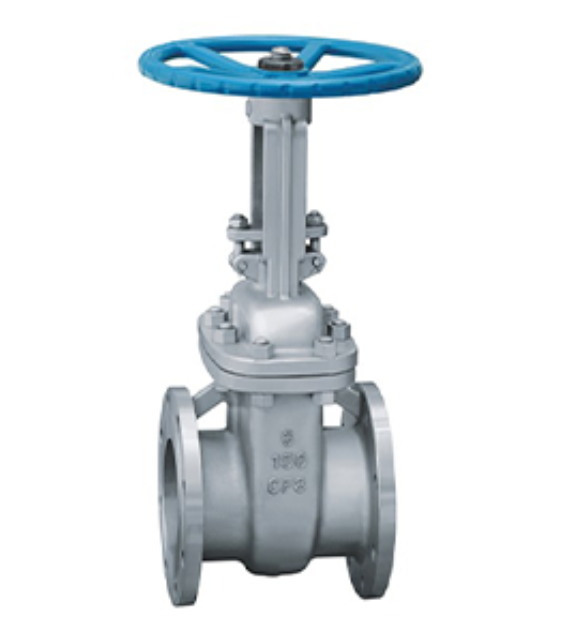
Performance & Engineering
The performance of a vacuum needle valve is dictated by several key engineering principles. Flow analysis, utilizing computational fluid dynamics (CFD), is essential to optimize valve geometry and minimize pressure drop. Force analysis is crucial in designing the handle and needle mechanism, ensuring smooth operation and preventing jamming. Environmental resistance demands consideration of temperature variations, corrosive atmospheres, and radiation exposure in specific applications. Compliance requirements, particularly vacuum tightness standards (leak rate specifications in units of sccm – standard cubic centimeters per minute), are a major driver of design and testing procedures. Functional implementation involves calculating the required Cv value based on the desired flow rate and pressure drop, selecting appropriate sealing materials based on the process gas composition, and integrating the valve into the vacuum system with appropriate fittings (e.g., VCR, KF, CF flanges). A critical aspect is minimizing virtual leaks – permeation of gases through valve materials. This is addressed through material selection and surface treatments to reduce permeability. The valve’s mechanical advantage determines the required actuation force to achieve full closure and precise flow control. Finite element analysis (FEA) is used to model stress distribution and ensure structural integrity under vacuum loads.
Technical Specifications
| Parameter | Unit | Typical Value | Tolerance |
|---|---|---|---|
| Maximum Pressure | psi | 500 | ± 10% |
| Leak Rate | sccm (of Helium) | < 1 x 10⁻⁶ | - |
| Cv (Flow Coefficient) | - | 0.1 - 1.0 | ± 5% |
| Operating Temperature Range | °C | -196 to 400 | - |
| Body Material | - | 316L Stainless Steel | - |
| Seal Material | - | PTFE/Kalrez | - |
Failure Mode & Maintenance
Common failure modes for vacuum needle valves include seat erosion due to particulate contamination, damage to the needle surface leading to leaks, seal degradation caused by chemical attack or temperature extremes, and binding of the needle within the valve body. Fatigue cracking can occur in the stem due to repeated actuation cycles, particularly at higher frequencies. Delamination of the seat material can lead to sudden increases in leak rate. Oxidation of internal components can contribute to increased outgassing and reduced performance. Maintenance typically involves periodic inspection of the needle and seat for damage, cleaning of internal components to remove contaminants, and replacement of seals as needed. Preventive maintenance includes regular bakeout procedures to remove adsorbed gases and applying a thin layer of vacuum grease to the needle and seat (using appropriate vacuum-compatible grease). For valves exhibiting significant leak rates, disassembly and detailed inspection under a microscope are necessary to identify the root cause. If erosion or damage is detected, honing or lapping of the needle and seat may be possible, or replacement of these components may be required. Always ensure proper torque settings during reassembly to avoid damaging the valve body or seals.
Industry FAQ
Q: What is the significance of the leak rate specification (sccm) and how does it relate to achievable vacuum levels?
A: The leak rate (expressed in sccm of Helium) directly impacts the ultimate vacuum level achievable in a system. A lower leak rate means fewer gas molecules entering the vacuum chamber per unit time, allowing for a lower base pressure. The relationship isn't linear; achieving significantly lower base pressures requires exponentially lower leak rates. For example, a leak rate of 1x10⁻⁶ sccm is generally sufficient for many high-vacuum applications, but for ultra-high vacuum (UHV) systems, leak rates below 1x10⁻⁹ sccm are often required.
Q: How do different seal materials (PTFE, PEEK, Kalrez) affect valve performance and application suitability?
A: PTFE offers good chemical resistance and a relatively low cost but has a higher permeability than other options. PEEK provides better mechanical strength and temperature resistance but also exhibits moderate permeability. Kalrez (FFKM) offers the best chemical resistance, lowest permeability, and highest temperature range, making it ideal for demanding applications, but it’s significantly more expensive. The choice depends on the process gas, temperature, and required longevity.
Q: What is “bakeout” and why is it important for vacuum valves?
A: Bakeout is the process of heating the valve (and the entire vacuum system) to an elevated temperature (typically 150-200°C) under vacuum to accelerate the release of adsorbed gases from internal surfaces. These adsorbed gases contribute to virtual leaks and can significantly increase the base pressure. Bakeout reduces outgassing and improves the valve’s performance.
Q: What are the typical flange connections used with vacuum needle valves and what considerations should be made for selection?
A: Common flange connections include VCR, KF, and CF flanges. VCR flanges offer excellent leak tightness and are ideal for UHV applications, but they require specialized tooling for assembly. KF flanges are more affordable and easier to use but have a higher leak rate. CF flanges provide a compromise between leak tightness and ease of use. The flange selection should be based on the required vacuum level, budget, and ease of integration into the existing vacuum system.
Q: How does the flow coefficient (Cv) impact valve selection and system performance?
A: The Cv value represents the valve’s ability to pass a specific flow rate at a given pressure drop. A higher Cv indicates a greater flow capacity. Selecting a valve with an appropriate Cv is crucial to ensure that the valve doesn’t become a bottleneck in the system, restricting flow and impacting process performance. An incorrectly sized valve can lead to excessive pressure drop and instability.
Conclusion
Vacuum needle valves represent a critical component in numerous industrial and research applications demanding precise vacuum control. Their performance is fundamentally linked to material selection, precision manufacturing, and rigorous adherence to vacuum standards. Addressing the challenges of leak tightness, outgassing, and long-term reliability requires a thorough understanding of vacuum technology and the specific demands of the application. Choosing the correct materials for the valve body, needle, seat, and seals, coupled with stringent quality control during manufacturing, are paramount for achieving optimal performance.
Looking forward, advancements in material science – particularly the development of ultra-low outgassing alloys and advanced sealing polymers – will further enhance the performance and longevity of vacuum needle valves. Furthermore, incorporating smart valve technology with integrated sensors and automated control systems will enable real-time monitoring and optimization of vacuum processes. The ongoing pursuit of improved sealing mechanisms and reduced virtual leak rates remains a central focus for future development.
-
Top Reasons to Choose a Stainless Steel Flange Check Valve for Industrial Applications
-
forging flanges Material Performance
-
Round Flange Performance Analysis
-
Round Flanges Performance Analysis
-
Custom Flange Performance Analysis
-
DN 40 Flange Performance Analysis
-
8 inch flange Performance Analysis
-
angle ring flanges Performance Analysis
-
Flat Flanges Performance Analysis
-
Full Face Flange Performance Analysis
-
Full Face Flanges Performance Analysis
-
flange 8 inch Performance Analysis
-
Ring Flange Performance Analysis
-
3 inch split flange Performance Analysis
-
Tongue and groove flange Performance Analysis
 Afrikaans
 Albanian
 Amharic
 Arabic
 Armenian
 Azerbaijani
 Basque
 Belarusian
 Bengali
 Bosnian
 Bulgarian
 Catalan
 Cebuano
 Corsican
 Croatian
 Czech
Czech
 Danish
 Dutch
Dutch
 Esperanto
 Estonian
 Finnish
 French
 Frisian
 Galician
 Georgian
 German
 Greek
Greek
 Gujarati
 Haitian Creole
 Hausa
Hawaiian
Hausa
Hawaiian
 Hebrew
 Hindi
Hindi
 Miao
Miao
 Hungarian
 Icelandic
 Igbo
Igbo
 Indonesian
 Irish
Irish
 Italian
 Japanese
 Javanese
Kannada
Javanese
Kannada
 Kazakh
 Khmer
Khmer
 Rwandese
 Korean
 Kurdish
 Kyrgyz
 Lao
Lao
 Latin
Latin
 Latvian
 Lithuanian
 Luxembourgish
 Macedonian
 Malgashi
 Malay
Malay
 Malayalam
 Maltese
 Maori
Maori
 Marathi
 Mongolian
 Myanmar
 Nepali
 Norwegian
 Norwegian
 Occitan
 Pashto
 Persian
 Polish
 Portuguese
Punjabi
Portuguese
Punjabi
 Romanian
 Russian
 Samoan
 Scottish Gaelic
 Serbian
 Sesotho
 Shona
Shona
 Sindhi
 Sinhala
 Slovak
 Slovenian
 Somali
 Spanish
 Sundanese
 Swahili
 Swedish
Tagalog
Swedish
Tagalog
 Tajik
Tajik
 Tamil
Tamil
 Tatar
Tatar
 Telugu
 Thai
Thai
 Turkish
 Turkmen
 Ukrainian
 Urdu
Urdu
 Uighur
 Uzbek
Uzbek
 Vietnamese
 Welsh
Welsh
 Bantu
Bantu
 Yiddish
 Yoruba
 Zulu
Zulu
 English