




Full Face Flanges Performance Analysis
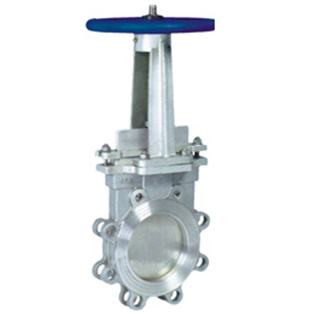
Introduction
Full face flanges are a critical component in piping systems across numerous industries, including oil and gas, chemical processing, water treatment, and power generation. They provide a secure and reliable method for connecting pipes, valves, pumps, and other equipment. Unlike weld neck or slip-on flanges, full face flanges feature a flat, fully-machined sealing surface that extends to the outer diameter of the flange. This design distributes the bolting load evenly across the entire flange face, enhancing gasket sealing performance and minimizing the risk of leaks, particularly in high-pressure and high-temperature applications. The selection of the appropriate full face flange material, dimensions, and pressure rating is paramount to system integrity. This guide will provide a comprehensive technical overview of full face flanges, covering material science, manufacturing processes, performance characteristics, failure modes, and relevant industry standards.
Material Science & Manufacturing
Full face flanges are manufactured from a wide range of materials, each selected for specific application requirements. Common materials include carbon steel (ASTM A105, A516 Grade 70), stainless steel (304/304L, 316/316L, Duplex Stainless Steel), alloy steel (e.g., A182 F22, F91), and specialized materials like Inconel or Hastelloy for highly corrosive environments. The material's chemical composition dictates its mechanical properties – tensile strength, yield strength, elongation, and impact toughness – which are crucial for withstanding operational stresses. Manufacturing typically begins with forging or casting of the flange body. Forging provides superior grain structure and mechanical properties, especially for critical applications. Casting is often used for larger or more complex flange designs. Following forging or casting, the flange undergoes machining processes, including facing, drilling, and bolt hole threading. The full face is precision-machined to achieve a smooth, flat sealing surface, typically to a Ra value of 16-32 micro-inches. Heat treatment is frequently employed to relieve stresses induced during machining and to achieve desired mechanical properties. Non-destructive testing (NDT) methods, such as liquid penetrant inspection (LPI), magnetic particle inspection (MPI), or ultrasonic testing (UT), are employed to detect surface and subsurface flaws. Gasket material compatibility is also a key consideration. Common gasket materials include compressed non-asbestos fiber (CNAF), PTFE, and metallic gaskets, and their selection depends on the fluid being handled, temperature, and pressure. Welding procedures, when applicable for flange attachment, must adhere to ASME Section IX and utilize qualified welders to ensure joint integrity and prevent metallurgical defects like porosity or cracking.

Performance & Engineering
The performance of a full face flange is critically dependent on its ability to maintain a leak-tight seal under operational conditions. Force analysis is essential during design to determine the required bolt load to achieve adequate gasket seating stress. This calculation considers factors such as flange pressure class, gasket type, bolt size and material, and flange dimensions. Environmental resistance is another key performance parameter. Exposure to corrosive fluids, extreme temperatures, and cyclic loading can lead to material degradation and potential failure. Stainless steels and alloy steels offer superior corrosion resistance compared to carbon steel, but their selection must be based on a thorough understanding of the specific operating environment. Compliance requirements, such as those outlined in ASME B16.5, dictate flange dimensions, pressure-temperature ratings, and bolting patterns. Proper flange alignment is crucial to prevent gasket distortion and ensure even stress distribution. Misalignment can induce bending moments that exceed the gasket's sealing capacity. Finite Element Analysis (FEA) is often used to model flange behavior under various loading conditions and to optimize flange design for maximum performance and reliability. Furthermore, the flange's performance is tied to the integrity of the bolting. Bolt material selection, preload torque, and bolt lubrication all play vital roles in maintaining seal integrity and preventing bolt failure due to fatigue or corrosion.
Technical Specifications
| Parameter | ASTM A105 Carbon Steel | 304/304L Stainless Steel | A182 F36 Alloy Steel | Duplex Stainless Steel (UNS S31803) |
|---|---|---|---|---|
| Tensile Strength (MPa) | 400-550 | 517-724 | 483-620 | 700-900 |
| Yield Strength (MPa) | 250-345 | 205-276 | 276-379 | 450-620 |
| Elongation (%) | 20-25 | 30-45 | 18-23 | 25-35 |
| Corrosion Resistance | Low (Requires coating) | Good (General corrosion) | Moderate (Improved over Carbon Steel) | Excellent (Pitting, Crevice, Stress Corrosion Cracking) |
| Maximum Operating Temperature (°C) | 425 | 870 | 370 | 300 |
| Pressure Rating (ASME B16.5) | Up to 2500 lb | Up to 2500 lb | Up to 2500 lb | Up to 2500 lb |
Failure Mode & Maintenance
Full face flanges are susceptible to several failure modes. Fatigue cracking can occur due to cyclic loading, particularly at bolt holes. Corrosion, both general and localized (pitting, crevice corrosion, stress corrosion cracking), can weaken the flange material and lead to leakage. Gasket failure, including compression set, chemical attack, and thermal degradation, is a common issue. Bolting failures, such as thread stripping, bolt fracture, and corrosion of bolts, can also compromise seal integrity. Differential thermal expansion between the flange and the connected piping can induce stresses that exceed the gasket’s capabilities. Maintenance protocols should include regular visual inspections for signs of corrosion, cracking, or gasket leakage. Bolt preload should be periodically checked and adjusted to ensure proper gasket seating. Gaskets should be replaced on a scheduled basis, or whenever signs of degradation are observed. Protective coatings (e.g., epoxy, galvanizing) can be applied to carbon steel flanges to mitigate corrosion. When repairing a damaged flange, it’s crucial to follow established welding procedures and utilize qualified welders. NDT methods should be employed post-repair to verify the integrity of the weld. Proper lubrication of bolts with anti-seize compounds prevents galling and facilitates future disassembly. Implementing a preventative maintenance program focused on regular inspections, bolt torque verification, and gasket replacement will significantly extend the service life of full face flanges and minimize the risk of catastrophic failures.
Industry FAQ
Q: What is the impact of flange facing finish on gasket performance?
A: The flange facing finish, quantified by its Ra value (average roughness), is critical. A smoother finish (lower Ra) reduces surface imperfections that can damage the gasket during compression and operation. A rougher surface can create pathways for leaks and reduces the effective sealing area. ASME B16.5 specifies acceptable flange facing finishes for different pressure classes and gasket types. Deviation from these specifications can compromise seal integrity.
Q: How do you select the appropriate bolt material for a full face flange?
A: Bolt material selection depends on the flange material, operating temperature, pressure, and the corrosivity of the environment. ASTM A193 Grade B7 bolts are commonly used with carbon steel flanges. For higher temperature applications, ASTM A193 Grade B8M Class 2 bolts are preferred. Stainless steel bolts (e.g., 304, 316) are used with stainless steel flanges. Galvanic corrosion must be avoided by selecting compatible bolt and flange materials. Bolt preload is also a factor; higher preload requires bolts with higher tensile strength.
Q: What are the common causes of gasket failure in full face flange connections?
A: Common causes include improper gasket selection (incompatible with the fluid or temperature), insufficient bolt preload, flange misalignment, corrosion of the flange or gasket, thermal cycling causing gasket relaxation, and gasket degradation due to chemical attack. Maintaining proper bolt preload and selecting the appropriate gasket material for the application are crucial for preventing gasket failure.
Q: How does temperature affect the bolt preload in a full face flange joint?
A: Temperature fluctuations can significantly impact bolt preload. Thermal expansion of the flange and piping can reduce bolt preload, while thermal contraction can increase it. It’s essential to account for these temperature effects during installation and to periodically re-torque bolts after temperature stabilization. Using washers under the bolt head and nut helps distribute the load and maintain preload stability.
Q: What NDT methods are typically used to inspect full face flanges?
A: Liquid penetrant inspection (LPI) and magnetic particle inspection (MPI) are commonly used to detect surface cracks and flaws. Ultrasonic testing (UT) can detect subsurface defects. Radiographic testing (RT) provides a volumetric inspection and can reveal internal flaws. Visual inspection is also essential for identifying signs of corrosion, erosion, or damage. The selection of the appropriate NDT method depends on the flange material, potential failure modes, and regulatory requirements.
Conclusion
Full face flanges represent a vital connection element in numerous industrial applications, demanding a robust understanding of their material properties, manufacturing nuances, and operational limitations. This guide has detailed the critical aspects of full face flange technology, emphasizing the interplay between material science, engineering principles, and adherence to industry standards. Proper material selection, precision manufacturing, accurate installation, and diligent maintenance are all essential for ensuring long-term reliability and preventing costly failures.
Future advancements in flange technology are likely to focus on developing lighter-weight materials, improving corrosion resistance through advanced coatings, and incorporating smart sensors for real-time monitoring of bolt preload and gasket performance. A proactive approach to flange management, encompassing regular inspections, preventative maintenance, and ongoing staff training, will be paramount to maintaining the integrity and safety of piping systems in increasingly demanding industrial environments.
-
Top Reasons to Choose a Stainless Steel Flange Check Valve for Industrial Applications
-
8 inch flange Performance Analysis
-
angle ring flanges Performance Analysis
-
Flat Flanges Performance Analysis
-
Full Face Flange Performance Analysis
-
Full Face Flanges Performance Analysis
-
flange 8 inch Performance Analysis
-
Ring Flange Performance Analysis
-
3 inch split flange Performance Analysis
-
Tongue and groove flange Performance Analysis
-
Grooved Flange Performance Analysis
-
o ring flange Performance Analysis
-
Ring Flanges Performance Analysis
-
Groove Flange Performance Analysis
-
Tongue and groove flanges Performance Analysis
 Afrikaans
 Albanian
 Amharic
 Arabic
 Armenian
 Azerbaijani
 Basque
 Belarusian
 Bengali
 Bosnian
 Bulgarian
 Catalan
 Cebuano
 Corsican
 Croatian
 Czech
Czech
 Danish
 Dutch
Dutch
 Esperanto
 Estonian
 Finnish
 French
 Frisian
 Galician
 Georgian
 German
 Greek
Greek
 Gujarati
 Haitian Creole
 Hausa
Hawaiian
Hausa
Hawaiian
 Hebrew
 Hindi
Hindi
 Miao
Miao
 Hungarian
 Icelandic
 Igbo
Igbo
 Indonesian
 Irish
Irish
 Italian
 Japanese
 Javanese
Kannada
Javanese
Kannada
 Kazakh
 Khmer
Khmer
 Rwandese
 Korean
 Kurdish
 Kyrgyz
 Lao
Lao
 Latin
Latin
 Latvian
 Lithuanian
 Luxembourgish
 Macedonian
 Malgashi
 Malay
Malay
 Malayalam
 Maltese
 Maori
Maori
 Marathi
 Mongolian
 Myanmar
 Nepali
 Norwegian
 Norwegian
 Occitan
 Pashto
 Persian
 Polish
 Portuguese
Punjabi
Portuguese
Punjabi
 Romanian
 Russian
 Samoan
 Scottish Gaelic
 Serbian
 Sesotho
 Shona
Shona
 Sindhi
 Sinhala
 Slovak
 Slovenian
 Somali
 Spanish
 Sundanese
 Swahili
 Swedish
Tagalog
Swedish
Tagalog
 Tajik
Tajik
 Tamil
Tamil
 Tatar
Tatar
 Telugu
 Thai
Thai
 Turkish
 Turkmen
 Ukrainian
 Urdu
Urdu
 Uighur
 Uzbek
Uzbek
 Vietnamese
 Welsh
Welsh
 Bantu
Bantu
 Yiddish
 Yoruba
 Zulu
Zulu
 English