




Ring Flanges Performance Analysis

Introduction
Ring flanges are critical components in piping systems, serving as the connection point between sections of pipe, valves, pumps, and other equipment. They are predominantly utilized in applications demanding high pressures and temperatures, common in industries such as oil and gas, chemical processing, power generation, and shipbuilding. Unlike weld neck or slip-on flanges, ring flanges rely on a separate ring, typically a self-energizing gasket, to achieve a pressure-tight seal. This design offers significant advantages in terms of ease of installation, maintenance, and potential for cost savings, particularly in large diameter applications. Their function is to distribute the bolting load evenly, minimizing stress concentration and maximizing sealing efficiency. Understanding the material science, manufacturing processes, and performance characteristics of ring flanges is crucial for ensuring system integrity and operational reliability. The core challenge lies in selecting the appropriate materials and dimensions to withstand specific operational conditions and adhere to stringent industry standards.
Material Science & Manufacturing
Ring flanges are typically manufactured from carbon steel (ASTM A105, A36), stainless steel (304/304L, 316/316L), alloy steel (A182 F22, F91), or specialized alloys like Inconel or Monel, depending on the service environment. Carbon steel offers cost-effectiveness for moderate temperature and pressure applications, while stainless steel provides superior corrosion resistance. Alloy steels are selected for high-temperature, high-pressure scenarios requiring enhanced strength and creep resistance. The material's chemical composition directly influences its mechanical properties, including tensile strength, yield strength, elongation, and hardness. Manufacturing typically involves forging, casting, or machining from bar stock. Forging is preferred for larger diameter flanges, offering superior grain structure and mechanical properties. Casting is suitable for complex geometries and lower volume production. Machining is used for precise dimensions and finishing. Critical parameters during manufacturing include heat treatment to achieve desired hardness and ductility, surface finish to minimize corrosion initiation sites, and dimensional accuracy to ensure proper alignment and sealing. Welding procedures, if applicable for flange fabrication or repair, must adhere to AWS D1.1 standards. Non-destructive testing (NDT), such as liquid penetrant inspection (LPI), magnetic particle inspection (MPI), and ultrasonic testing (UT), is essential to verify weld quality and identify any internal defects.
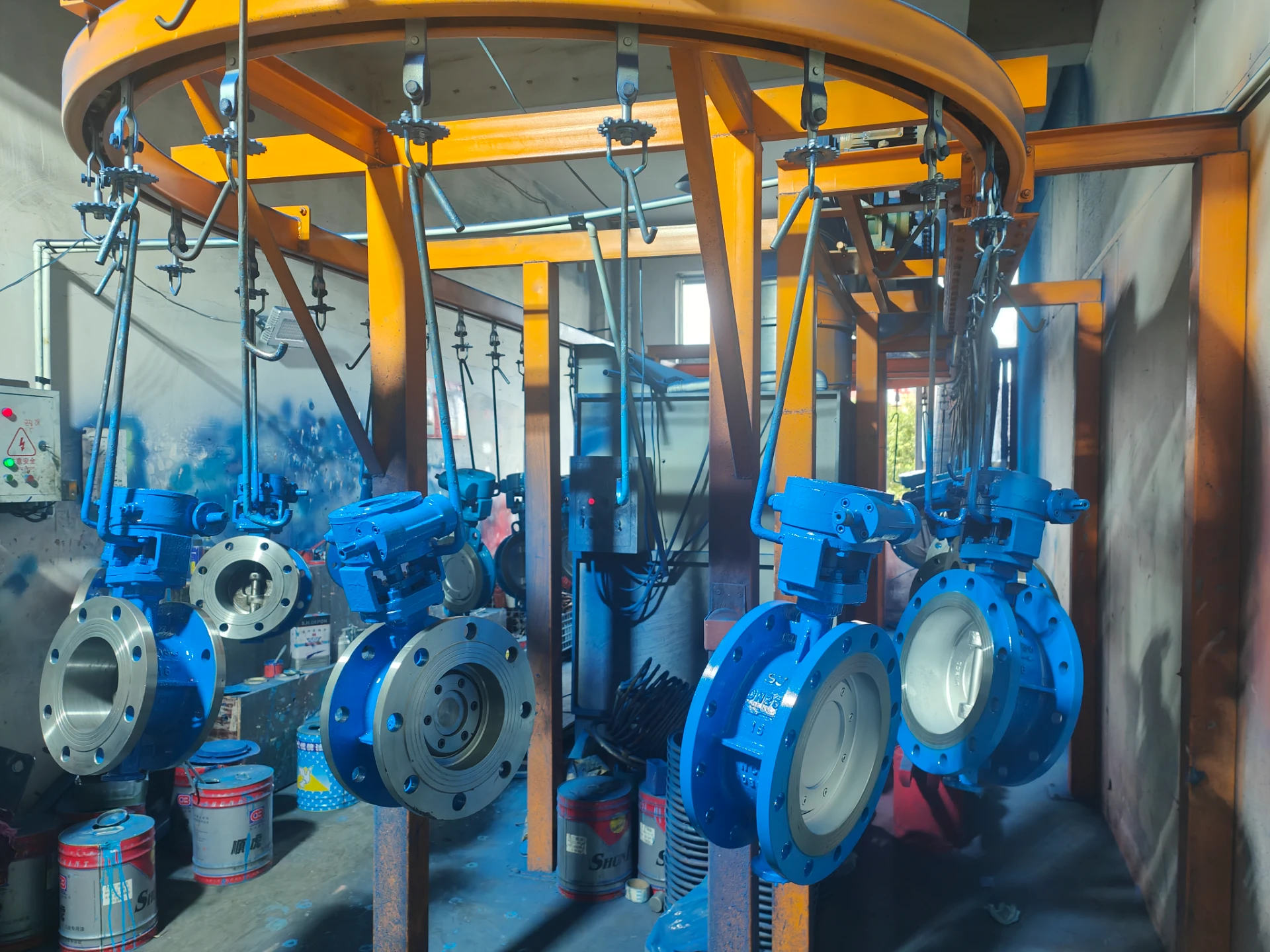
Performance & Engineering
The performance of a ring flange is critically dependent on its ability to maintain a pressure-tight seal under fluctuating temperatures and pressures. Force analysis involves calculating the bolt load required to compress the gasket sufficiently to prevent leakage. This calculation considers the gasket's compressive resilience, the flange's internal pressure, and the bolt circle diameter. Environmental resistance is a key consideration, particularly in corrosive environments. Material selection must account for the potential for pitting corrosion, crevice corrosion, and stress corrosion cracking. Protective coatings, such as epoxy or galvanizing, may be applied to carbon steel flanges to enhance corrosion resistance. Compliance requirements vary depending on the application and industry. ASME B16.5 governs the dimensions and tolerances of flanges, while ASME Section VIII Division 1 provides design rules for pressure vessels and piping. Finite element analysis (FEA) is often employed to simulate stress distribution within the flange under various loading conditions, optimizing the flange's geometry and ensuring structural integrity. The self-energizing gasket design is crucial; as internal pressure increases, it further compresses the gasket, enhancing the seal. Proper bolt torqueing is essential; under-torquing can lead to leakage, while over-torquing can damage the flange or gasket.
Technical Specifications
| Parameter | ASTM A105 Carbon Steel | 304/304L Stainless Steel | A182 F22 Alloy Steel | Unit |
|---|---|---|---|---|
| Tensile Strength | 580 MPa | 517 MPa | 620 MPa | MPa |
| Yield Strength | 345 MPa | 205 MPa | 379 MPa | MPa |
| Elongation | 22% | 30% | 20% | % |
| Hardness (Brinell) | 179 HBW | 95 HBW | 197 HBW | HBW |
| Maximum Operating Temperature | 425°C | 870°C | 538°C | °C |
| Corrosion Resistance | Low | High | Moderate | - |
Failure Mode & Maintenance
Ring flanges are susceptible to several failure modes, including fatigue cracking, corrosion-induced pitting, gasket failure, and bolt failure. Fatigue cracking can occur due to cyclic loading and thermal stresses, particularly in high-pressure applications. Pitting corrosion, initiated by localized defects or chloride attack, can weaken the flange material and lead to leakage. Gasket failure can result from improper installation, material degradation due to temperature or chemical exposure, or excessive compression. Bolt failure can occur due to over-torquing, corrosion, or material fatigue. Regular inspection is crucial for identifying potential failures. Visual inspection should focus on detecting corrosion, cracks, and bolt loosening. Ultrasonic testing (UT) can be used to detect internal cracks and assess wall thickness. Preventative maintenance includes periodic bolt torque checks, gasket replacement based on manufacturer recommendations, and application of protective coatings. If corrosion is detected, localized repairs or flange replacement may be necessary. For critical applications, a preventative maintenance schedule based on risk assessment and operational data is recommended. Proper storage of spare flanges and gaskets is also essential to ensure availability when needed. Replacement should adhere to the original material specifications and ASME B16.5 dimensional requirements.
Industry FAQ
Q: What is the primary advantage of using ring flanges over weld neck flanges in large diameter piping systems?
A: The primary advantage lies in cost and ease of installation. Weld neck flanges require precise welding, which can be expensive and time-consuming, particularly for large diameters. Ring flanges, coupled with a suitable gasket, often require less specialized labor and can be installed more quickly, reducing downtime and overall project costs.
Q: How does material selection impact the long-term reliability of a ring flange in a seawater environment?
A: Seawater is highly corrosive, primarily due to the presence of chloride ions. Carbon steel flanges will rapidly corrode in seawater. Therefore, materials with superior corrosion resistance, such as 316/316L stainless steel, duplex stainless steel, or high-nickel alloys, are essential. Proper gasket selection is also critical, as some gasket materials are susceptible to seawater degradation.
Q: What is the significance of gasket 'm' and 'y' factors in ring flange design?
A: The 'm' and 'y' factors are crucial gasket parameters used in flange design calculations. 'm' represents the gasket factor, accounting for the gasket's compressibility and resilience. 'y' represents the gasket factor for bolt load distribution. These factors are used to determine the required bolt load to achieve a pressure-tight seal, ensuring proper gasket compression without exceeding the flange's or gasket’s limitations.
Q: What Non-Destructive Testing (NDT) methods are commonly used to inspect ring flanges during fabrication and in-service?
A: Common NDT methods include Liquid Penetrant Inspection (LPI) to detect surface cracks, Magnetic Particle Inspection (MPI) for detecting surface and near-surface defects in ferromagnetic materials, Ultrasonic Testing (UT) for detecting internal flaws, and Radiographic Testing (RT) for comprehensive flaw detection. Visual Inspection (VT) is always the first step.
Q: What are the key considerations when specifying bolt materials for ring flange connections?
A: Bolt material must be compatible with the flange material to avoid galvanic corrosion. Bolt strength must be sufficient to provide the required clamping force, considering the operating pressure and temperature. Bolts should meet relevant ASTM specifications (e.g., ASTM A193 for alloy steel bolts, ASTM A307 for carbon steel bolts) and have appropriate coatings for corrosion protection. Proper bolt lubrication during installation is also essential.
Conclusion
Ring flanges represent a robust and versatile solution for connecting piping systems, particularly in demanding industrial applications. Their effectiveness hinges on a holistic understanding of material science, manufacturing precision, and meticulous engineering considerations. Selecting the appropriate materials based on the service environment, adhering to strict manufacturing tolerances, and employing appropriate NDT methods are paramount for ensuring long-term reliability and preventing catastrophic failures.
Looking forward, advancements in gasket materials and surface coatings will continue to enhance the performance and lifespan of ring flange connections. Implementation of predictive maintenance strategies, leveraging sensor technology and data analytics, will enable proactive identification of potential issues before they escalate. Furthermore, ongoing refinement of industry standards and best practices will contribute to safer and more efficient operation of critical infrastructure.
-
Top Reasons to Choose a Stainless Steel Flange Check Valve for Industrial Applications
-
8 inch flange Performance Analysis
-
angle ring flanges Performance Analysis
-
Flat Flanges Performance Analysis
-
Full Face Flange Performance Analysis
-
Full Face Flanges Performance Analysis
-
flange 8 inch Performance Analysis
-
Ring Flange Performance Analysis
-
3 inch split flange Performance Analysis
-
Tongue and groove flange Performance Analysis
-
Grooved Flange Performance Analysis
-
o ring flange Performance Analysis
-
Ring Flanges Performance Analysis
-
Groove Flange Performance Analysis
-
Tongue and groove flanges Performance Analysis
 Afrikaans
 Albanian
 Amharic
 Arabic
 Armenian
 Azerbaijani
 Basque
 Belarusian
 Bengali
 Bosnian
 Bulgarian
 Catalan
 Cebuano
 Corsican
 Croatian
 Czech
Czech
 Danish
 Dutch
Dutch
 Esperanto
 Estonian
 Finnish
 French
 Frisian
 Galician
 Georgian
 German
 Greek
Greek
 Gujarati
 Haitian Creole
 Hausa
Hawaiian
Hausa
Hawaiian
 Hebrew
 Hindi
Hindi
 Miao
Miao
 Hungarian
 Icelandic
 Igbo
Igbo
 Indonesian
 Irish
Irish
 Italian
 Japanese
 Javanese
Kannada
Javanese
Kannada
 Kazakh
 Khmer
Khmer
 Rwandese
 Korean
 Kurdish
 Kyrgyz
 Lao
Lao
 Latin
Latin
 Latvian
 Lithuanian
 Luxembourgish
 Macedonian
 Malgashi
 Malay
Malay
 Malayalam
 Maltese
 Maori
Maori
 Marathi
 Mongolian
 Myanmar
 Nepali
 Norwegian
 Norwegian
 Occitan
 Pashto
 Persian
 Polish
 Portuguese
Punjabi
Portuguese
Punjabi
 Romanian
 Russian
 Samoan
 Scottish Gaelic
 Serbian
 Sesotho
 Shona
Shona
 Sindhi
 Sinhala
 Slovak
 Slovenian
 Somali
 Spanish
 Sundanese
 Swahili
 Swedish
Tagalog
Swedish
Tagalog
 Tajik
Tajik
 Tamil
Tamil
 Tatar
Tatar
 Telugu
 Thai
Thai
 Turkish
 Turkmen
 Ukrainian
 Urdu
Urdu
 Uighur
 Uzbek
Uzbek
 Vietnamese
 Welsh
Welsh
 Bantu
Bantu
 Yiddish
 Yoruba
 Zulu
Zulu
 English