




Groove Flange Performance Analysis

Introduction
Groove flanges, also known as locking groove flanges, represent a critical component in pipeline systems demanding secure, leak-proof connections without welding. Their technical position lies within the mechanical joining category, often employed as an alternative to traditional welded or bolted flange connections. Unlike conventional flanges relying on bolt tension for sealing, groove flanges utilize a metallic gasket compressed within a machined groove on the flange face. This design provides inherent resilience against thermal expansion and contraction, vibration, and pressure fluctuations. Core performance characteristics include high sealing integrity, rapid installation and removal, and reduced maintenance requirements. They are frequently found in industries like oil and gas, petrochemicals, power generation, and shipbuilding where quick connection/disconnection and high reliability are paramount. The increasing demand stems from the need for cost-effective and safe solutions in challenging operational environments. Their robustness particularly addresses the pain point of fugitive emissions, a major concern regarding environmental compliance and operational safety.
Material Science & Manufacturing
Groove flange manufacturing begins with selecting appropriate raw materials, primarily carbon steel (ASTM A105, A36), stainless steel (304/304L, 316/316L), and alloy steels depending on the operating conditions. Carbon steel offers cost-effectiveness for moderate temperature and pressure applications. Stainless steels provide superior corrosion resistance for harsher environments. Alloy steels are utilized for high-temperature, high-pressure, and specialized chemical resistance requirements. The material’s yield strength, tensile strength, and elongation are critical parameters controlled through rigorous testing, including tensile tests (ASTM E8) and impact tests (ASTM A370). The manufacturing process typically involves forging or casting followed by precision machining. Forging imparts superior grain structure and mechanical properties compared to casting, particularly in high-stress areas. Machining involves turning, milling, and grinding to achieve the required flange dimensions and the critical groove profile. Groove geometry – depth, width, and angle – is meticulously controlled using CNC machining to ensure gasket compression and sealing effectiveness. Welding, if employed for fabrication (e.g., welding a hub to a flange face), must adhere to standards like ASME Section IX, employing qualified welders and procedures. Non-destructive testing (NDT) methods, including radiographic testing (RT), ultrasonic testing (UT), and liquid penetrant testing (PT), are essential to verify weld integrity. Surface treatments, such as galvanizing or painting, are applied to protect against corrosion. The metallic gasket material, typically soft iron or stainless steel, is also subject to material certification and hardness testing to ensure compatibility and sealing performance.
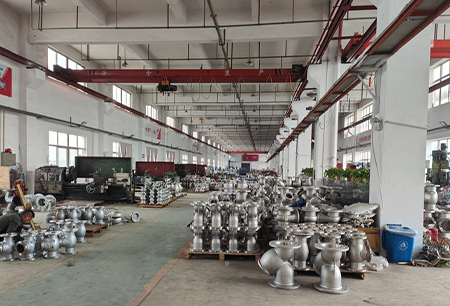
Performance & Engineering
The performance of a groove flange system hinges on several key engineering principles. Force analysis focuses on the bolt load required to achieve adequate gasket compression. This load must exceed the seating stress of the gasket material and accommodate potential pressure surges and thermal expansion. Finite Element Analysis (FEA) is often employed to model stress distribution within the flange and gasket under various loading conditions, identifying potential stress concentrations. Environmental resistance is crucial, particularly concerning corrosion. Material selection, as previously discussed, is the primary defense. However, galvanic corrosion between dissimilar metals (e.g., steel flange and aluminum gasket) must be avoided. Coating selection also plays a role, with epoxy coatings offering good chemical resistance and barrier properties. Compliance requirements vary by industry and region. For pressure vessels and piping, ASME B31.3 and EN 13480 are commonly referenced. These standards dictate allowable stresses, material requirements, and inspection procedures. The system's design must account for the operating temperature and pressure, fluid composition, and potential external loads. Gasket selection is paramount; the gasket's compression characteristics, chemical compatibility with the process fluid, and temperature rating must align with the application. Leak testing, employing methods like pneumatic or hydrostatic testing, is essential to verify the system's sealing performance before commissioning. Furthermore, groove flanges must be designed to withstand dynamic loading due to vibrations, particularly in rotating equipment applications.
Technical Specifications
| Parameter | Carbon Steel (ASTM A105) | Stainless Steel (304/304L) | Stainless Steel (316/316L) | Alloy Steel (A182 F22) |
|---|---|---|---|---|
| Pressure Rating (PSI) | Up to 2000 | Up to 3000 | Up to 3000 | Up to 5000 |
| Temperature Range (°F) | -50 to 400 | -325 to 850 | -325 to 850 | -50 to 1100 |
| Tensile Strength (MPa) | 400-550 | 500-700 | 480-720 | 620-860 |
| Yield Strength (MPa) | 250-350 | 275-450 | 240-410 | 345-550 |
| Gasket Material | Soft Iron, Stainless Steel | Stainless Steel | Stainless Steel | Stainless Steel |
| Groove Profile | ASME B16.20 | ASME B16.20 | ASME B16.20 | ASME B16.20 |
Failure Mode & Maintenance
Groove flange systems, while robust, are susceptible to several failure modes. Fatigue cracking can occur under cyclic loading, particularly at the groove root radius. This is exacerbated by stress concentrations due to improper installation or material defects. Gasket failure, including creep relaxation, erosion, or chemical degradation, is a common issue. Creep relaxation reduces gasket compression over time, leading to leakage. Erosion can occur in abrasive fluid environments. Chemical degradation results from incompatibility between the gasket material and the process fluid. Corrosion, particularly pitting corrosion in chloride-containing environments, can weaken the flange material. Another potential failure mode is bolt loosening due to vibration or thermal cycling. Proper preventative maintenance is crucial. Regular inspection of bolts for tightness is essential, utilizing calibrated torque wrenches. Gasket integrity should be verified periodically, using visual inspection and leak testing. Corrosion protection measures, such as applying protective coatings or using corrosion inhibitors, should be implemented. If fatigue cracking is suspected, NDT methods like ultrasonic testing should be employed to detect cracks before they propagate. Replacement of corroded or damaged flanges is necessary. Proper installation procedures, including correct bolt tightening sequence and torque values, are paramount to preventing premature failure. Detailed records of inspection, maintenance, and repair activities should be maintained.
Industry FAQ
Q: What are the primary advantages of groove flanges over traditional welded flanges in high-vibration environments?
A: Groove flanges offer superior resilience to vibration-induced loosening compared to welded flanges. Welded joints can develop cracks under sustained vibration, leading to leakage. The metallic gasket in a groove flange maintains compression even with vibration, and the locking groove design provides resistance to separation. The inherent flexibility of the grooved connection absorbs vibrational energy, reducing stress on the joint. This makes them ideal for applications like pump skids and reciprocating machinery.
Q: How does the selection of gasket material impact the long-term reliability of a groove flange connection?
A: Gasket material selection is critical. The gasket must be chemically compatible with the process fluid to prevent degradation. Its compression characteristics must be appropriate for the operating pressure and temperature. Soft iron gaskets are commonly used, but stainless steel gaskets offer superior corrosion resistance. The gasket’s temperature rating must also be considered to prevent loss of sealing properties at elevated temperatures. Failure to select the correct gasket material will invariably lead to premature leakage and potential system downtime.
Q: What quality control measures are essential during groove flange fabrication to ensure dimensional accuracy and surface finish?
A: Rigorous quality control is paramount. Dimensional accuracy of the groove profile is verified using calibrated measuring instruments, including micrometers and profile projectors. Surface finish is inspected to ensure proper gasket sealing. Non-destructive testing (NDT), such as liquid penetrant testing, is used to detect surface cracks or flaws. Material traceability is maintained throughout the fabrication process. Welding procedures, if applicable, must be qualified and documented according to ASME Section IX. All critical dimensions must meet the tolerances specified in ASME B16.20.
Q: What are the implications of using dissimilar metals in a groove flange system, and how can these be mitigated?
A: Using dissimilar metals can lead to galvanic corrosion, where one metal corrodes preferentially to the other in the presence of an electrolyte. To mitigate this, select materials with similar electrochemical potentials. If dissimilar metals are unavoidable, use a non-conductive gasket material to electrically isolate them. Applying a protective coating to the less noble metal can also reduce corrosion. Careful consideration of the operating environment and fluid composition is crucial.
Q: What is the recommended torqueing procedure for groove flange bolts, and why is it important to follow it precisely?
A: The recommended torqueing procedure involves a staged tightening sequence, typically using a star pattern to ensure even gasket compression. Torque values are specified by the flange manufacturer and must be adhered to precisely. Under-torquing can lead to insufficient gasket compression and leakage. Over-torquing can damage the flange or bolts. Using calibrated torque wrenches is essential. A visual inspection after torqueing should verify that the flange faces are properly seated.
Conclusion
Groove flange technology provides a robust and reliable alternative to traditional flange connection methods, particularly in demanding industrial applications. Its inherent advantages – ease of installation, reduced maintenance, and resilience to vibration and thermal cycling – address critical pain points in industries like oil & gas, petrochemicals, and power generation. The selection of appropriate materials, precise manufacturing processes, and adherence to industry standards are paramount to ensuring long-term performance and safety.
Future advancements in groove flange technology will likely focus on developing new gasket materials with enhanced chemical resistance and temperature capabilities, optimizing groove designs for specific applications, and incorporating smart monitoring systems to detect and prevent potential failures. The continued adoption of groove flanges will contribute to increased operational efficiency, reduced downtime, and enhanced environmental protection in process industries.
-
Top Reasons to Choose a Stainless Steel Flange Check Valve for Industrial Applications
-
8 inch flange Performance Analysis
-
angle ring flanges Performance Analysis
-
Flat Flanges Performance Analysis
-
Full Face Flange Performance Analysis
-
Full Face Flanges Performance Analysis
-
flange 8 inch Performance Analysis
-
Ring Flange Performance Analysis
-
3 inch split flange Performance Analysis
-
Tongue and groove flange Performance Analysis
-
Grooved Flange Performance Analysis
-
o ring flange Performance Analysis
-
Ring Flanges Performance Analysis
-
Groove Flange Performance Analysis
-
Tongue and groove flanges Performance Analysis
 Afrikaans
 Albanian
 Amharic
 Arabic
 Armenian
 Azerbaijani
 Basque
 Belarusian
 Bengali
 Bosnian
 Bulgarian
 Catalan
 Cebuano
 Corsican
 Croatian
 Czech
Czech
 Danish
 Dutch
Dutch
 Esperanto
 Estonian
 Finnish
 French
 Frisian
 Galician
 Georgian
 German
 Greek
Greek
 Gujarati
 Haitian Creole
 Hausa
Hawaiian
Hausa
Hawaiian
 Hebrew
 Hindi
Hindi
 Miao
Miao
 Hungarian
 Icelandic
 Igbo
Igbo
 Indonesian
 Irish
Irish
 Italian
 Japanese
 Javanese
Kannada
Javanese
Kannada
 Kazakh
 Khmer
Khmer
 Rwandese
 Korean
 Kurdish
 Kyrgyz
 Lao
Lao
 Latin
Latin
 Latvian
 Lithuanian
 Luxembourgish
 Macedonian
 Malgashi
 Malay
Malay
 Malayalam
 Maltese
 Maori
Maori
 Marathi
 Mongolian
 Myanmar
 Nepali
 Norwegian
 Norwegian
 Occitan
 Pashto
 Persian
 Polish
 Portuguese
Punjabi
Portuguese
Punjabi
 Romanian
 Russian
 Samoan
 Scottish Gaelic
 Serbian
 Sesotho
 Shona
Shona
 Sindhi
 Sinhala
 Slovak
 Slovenian
 Somali
 Spanish
 Sundanese
 Swahili
 Swedish
Tagalog
Swedish
Tagalog
 Tajik
Tajik
 Tamil
Tamil
 Tatar
Tatar
 Telugu
 Thai
Thai
 Turkish
 Turkmen
 Ukrainian
 Urdu
Urdu
 Uighur
 Uzbek
Uzbek
 Vietnamese
 Welsh
Welsh
 Bantu
Bantu
 Yiddish
 Yoruba
 Zulu
Zulu
 English