




butterfly valve Material Science and Manufacturing
Introduction
The butterfly valve is a quarter-turn rotational motion valve, utilized to regulate or isolate flow within a pipeline. Positioned within the industrial flow control chain, it serves as a critical component in numerous applications, ranging from water treatment and chemical processing to power generation and HVAC systems. Its core performance characteristics center around flow capacity, pressure drop, sealing efficiency, and operational torque. Compared to gate valves and globe valves, butterfly valves generally exhibit lower pressure drop and faster actuation, making them suitable for large-diameter pipelines and applications requiring frequent operation. A primary industry pain point is achieving reliable, long-term sealing performance, particularly in high-pressure and high-temperature environments, and mitigating corrosion related to the specific process fluid. Further challenges involve material selection to ensure compatibility with aggressive media and ensuring the valve can withstand cyclical operation without fatigue failure.
Material Science & Manufacturing
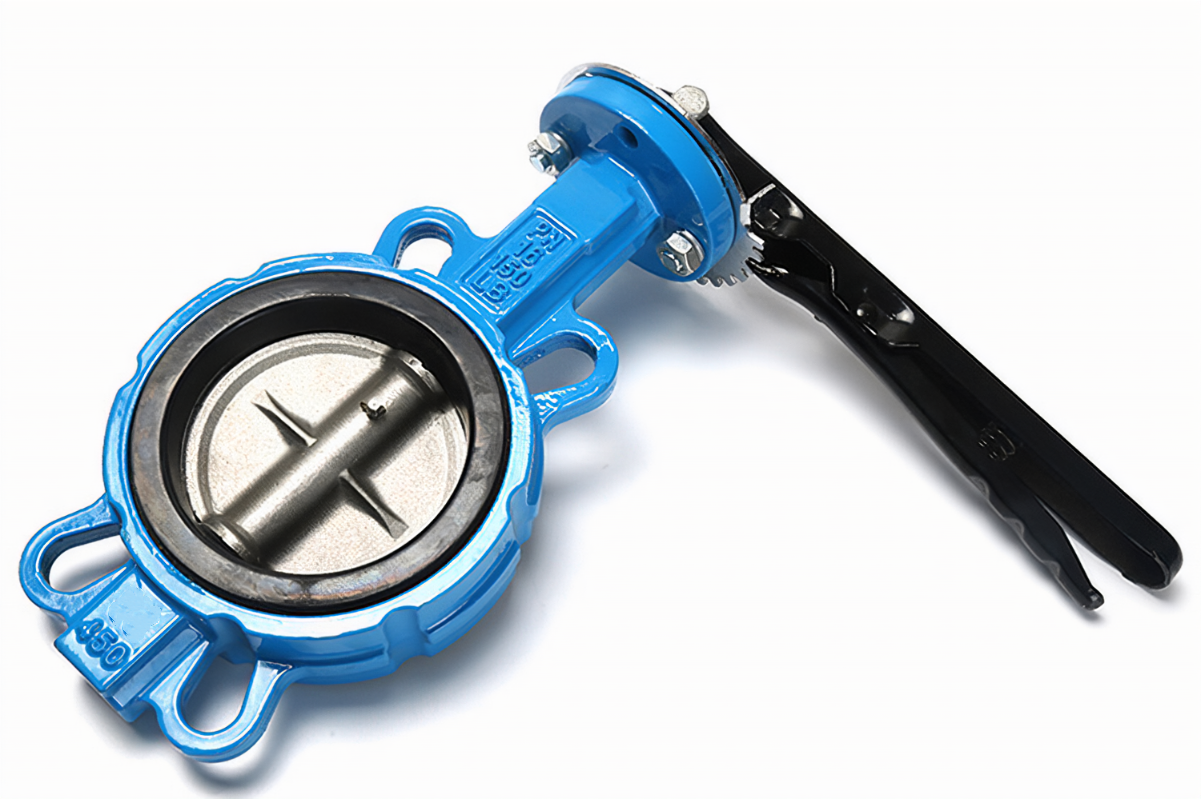
Butterfly valve construction typically involves a disc, a body, and a seat. Common disc materials include stainless steel (304, 316, duplex), carbon steel (ASTM A588), and specialized alloys like Hastelloy or titanium for corrosive environments. The body is frequently cast iron (ASTM A126 Class B), ductile iron (ASTM A536), or stainless steel. Seat materials, crucial for sealing, include elastomers like EPDM, PTFE (Teflon), and Viton, or metallic seals for high-temperature applications. The choice of material dictates the valve’s corrosion resistance, temperature range, and mechanical strength.
Manufacturing processes vary based on valve size and material. For metal bodies, sand casting is prevalent, followed by machining to achieve precise dimensions and smooth sealing surfaces. Welding processes (SMAW, GMAW, GTAW) are employed for fabricating larger valves or integrating components. The disc is typically manufactured through forging, casting, or machining. Elastomeric seats are molded via compression or injection molding, ensuring precise conformity to the body’s sealing surface. Key parameters controlled during manufacturing include material composition verification (spectrometry), heat treatment (for metals to achieve desired hardness and tensile strength), dimensional accuracy (using coordinate measuring machines - CMMs), and surface finish (Ra values) to minimize friction and enhance sealing. Non-destructive testing (NDT) methods like radiography and ultrasonic testing are essential to detect internal flaws in castings and welds. Fiber reinforcement is used in some seat designs to improve mechanical properties and reduce creep.
Performance & Engineering
Butterfly valve performance is fundamentally governed by flow dynamics and structural mechanics. Force analysis considers the fluid pressure acting on the disc, the torque required for actuation, and the stresses induced in the disc and stem. The Cv (flow coefficient) and Kvs (flow capacity) values characterize the valve’s ability to pass fluid with minimal pressure drop. These values are influenced by disc angle, disc diameter, and flow regime (laminar vs. turbulent). Environmental resistance is a critical engineering consideration. Exposure to UV radiation, extreme temperatures, and corrosive atmospheres can degrade the valve’s materials. Metallic valves require protective coatings (epoxy, PTFE) to prevent corrosion. Elastomeric seals can swell or degrade when exposed to certain chemicals, necessitating careful material selection. Compliance requirements, such as those outlined by ANSI/FCI 70-2, dictate pressure-temperature ratings, leakage limits, and testing procedures. Functional implementation involves selecting the appropriate actuator type (pneumatic, electric, hydraulic) based on required torque, speed, and control precision. Gear ratios are engineered to optimize torque output and minimize actuator wear. Proper stem sealing, using packing glands or mechanical seals, is vital to prevent leakage around the stem.
Technical Specifications
| Parameter | Units | Typical Value (Carbon Steel) | Typical Value (Stainless Steel 316) |
|---|---|---|---|
| Maximum Operating Pressure | PSI | 250 | 200 |
| Temperature Range | °F | -20 to 450 | -40 to 650 |
| Cv Value (12-inch Valve, Fully Open) | Gallons per Minute per PSI | 650 | 630 |
| Leakage Class (ANSI/FCI 70-2) | Class | VI | V |
| Actuation Torque (12-inch Valve) | in-lbs | 1500 | 1600 |
| Body Material | - | ASTM A588 | ASTM A351 Grade CF8M |
Failure Mode & Maintenance
Common failure modes in butterfly valves include disc corrosion, seat degradation, stem leakage, and actuator malfunction. Corrosion can occur due to incompatible fluid contact, leading to pitting, erosion, and eventual disc failure. Seat degradation, particularly in elastomeric seals, arises from chemical attack, temperature extremes, and mechanical wear. Stem leakage results from worn packing, damaged stem seals, or stem misalignment. Actuator failures can stem from motor burnout (electric actuators), diaphragm rupture (pneumatic actuators), or hydraulic fluid leaks. Fatigue cracking can occur in the disc or stem under cyclical loading, particularly at stress concentration points. Delamination of polymeric seat linings is a common issue in abrasive fluids.
Preventive maintenance is crucial. Regular inspection of the disc and seat for corrosion or wear is essential. Packing glands should be periodically adjusted to maintain stem sealing. Actuators should be lubricated according to manufacturer’s recommendations. Non-destructive testing (NDT) can detect early signs of cracking. For seat replacement, ensure proper alignment and tightening torque. If corrosion is prevalent, consider upgrading to a more corrosion-resistant material. A comprehensive maintenance program should include scheduled shutdown inspections, functional testing, and replacement of worn components. Implementing a robust lubrication schedule minimizes friction and wear, extending component life. Periodic recalibration of actuators ensures accurate control.
Industry FAQ
Q: What is the primary difference between a resilient-seated and a metal-seated butterfly valve, and when would you choose one over the other?
A: Resilient-seated butterfly valves utilize an elastomeric or polymer liner for sealing, offering excellent leak tightness at lower pressures and temperatures. They're ideal for water, wastewater, and low-pressure chemical applications. Metal-seated valves employ a metal disc and seat, providing higher temperature resistance and tighter shut-off at higher pressures, but typically require higher actuation torque and are more sensitive to particulate matter.
Q: How does the disc thickness affect the pressure rating of a butterfly valve?
A: Disc thickness is a critical factor in determining the valve’s pressure rating. A thicker disc provides greater structural integrity and can withstand higher pressures without deformation or failure. Finite element analysis (FEA) is often used during the design process to optimize disc thickness based on the intended operating pressure and temperature.
Q: What are the common causes of cavitation in butterfly valves and how can they be mitigated?
A: Cavitation occurs when pressure drops below the vapor pressure of the fluid, forming vapor bubbles that collapse violently, causing erosion and noise. It's often caused by improper valve throttling or high flow velocities. Mitigation strategies include reducing flow velocity, avoiding excessive throttling, and selecting a valve design with a streamlined flow path.
Q: What is the significance of the wafer type versus the lug type butterfly valve connection?
A: Wafer-type valves are designed to be held in place between two flanges using bolts and gaskets. They are generally less expensive and lighter weight, but require flange compatibility. Lug-type valves have lugs on the valve body that allow mounting between flanges using bolts only – gaskets are not required. This makes them suitable for applications where flange bolting is limited or where frequent removal is anticipated.
Q: How does the selection of actuator material impact the long-term reliability of a butterfly valve installation?
A: Actuator material selection is crucial, particularly in harsh environments. For example, aluminum actuators may corrode in marine environments, necessitating the use of stainless steel or epoxy-coated actuators. Temperature extremes can affect actuator performance – high temperatures can degrade seals and reduce motor efficiency, while low temperatures can increase viscosity of hydraulic fluids. Correct material selection ensures reliable operation and minimizes maintenance requirements.
Conclusion
Butterfly valves represent a versatile and cost-effective solution for flow control across a broad spectrum of industrial applications. Their robust design, relatively low pressure drop, and efficient operation make them a preferred choice over other valve types in many scenarios. However, achieving long-term reliability necessitates careful consideration of material selection, manufacturing quality, and proper maintenance procedures. Addressing the inherent challenges of sealing performance and corrosion resistance through rigorous engineering and quality control is paramount.
Future trends in butterfly valve technology will likely focus on intelligent valve solutions incorporating sensors, actuators, and communication protocols for remote monitoring and control. Advancements in materials science, such as the development of novel corrosion-resistant alloys and high-performance elastomers, will further enhance valve lifespan and reduce maintenance costs. Furthermore, optimized flow path designs and advanced manufacturing techniques will continue to improve valve efficiency and reduce pressure loss, contributing to overall system performance.
-
Top Reasons to Choose a Stainless Steel Flange Check Valve for Industrial Applications
-
forging flanges Material Performance
-
Round Flange Performance Analysis
-
Round Flanges Performance Analysis
-
Custom Flange Performance Analysis
-
DN 40 Flange Performance Analysis
-
8 inch flange Performance Analysis
-
angle ring flanges Performance Analysis
-
Flat Flanges Performance Analysis
-
Full Face Flange Performance Analysis
-
Full Face Flanges Performance Analysis
-
flange 8 inch Performance Analysis
-
Ring Flange Performance Analysis
-
3 inch split flange Performance Analysis
-
Tongue and groove flange Performance Analysis
 Afrikaans
 Albanian
 Amharic
 Arabic
 Armenian
 Azerbaijani
 Basque
 Belarusian
 Bengali
 Bosnian
 Bulgarian
 Catalan
 Cebuano
 Corsican
 Croatian
 Czech
Czech
 Danish
 Dutch
Dutch
 Esperanto
 Estonian
 Finnish
 French
 Frisian
 Galician
 Georgian
 German
 Greek
Greek
 Gujarati
 Haitian Creole
 Hausa
Hawaiian
Hausa
Hawaiian
 Hebrew
 Hindi
Hindi
 Miao
Miao
 Hungarian
 Icelandic
 Igbo
Igbo
 Indonesian
 Irish
Irish
 Italian
 Japanese
 Javanese
Kannada
Javanese
Kannada
 Kazakh
 Khmer
Khmer
 Rwandese
 Korean
 Kurdish
 Kyrgyz
 Lao
Lao
 Latin
Latin
 Latvian
 Lithuanian
 Luxembourgish
 Macedonian
 Malgashi
 Malay
Malay
 Malayalam
 Maltese
 Maori
Maori
 Marathi
 Mongolian
 Myanmar
 Nepali
 Norwegian
 Norwegian
 Occitan
 Pashto
 Persian
 Polish
 Portuguese
Punjabi
Portuguese
Punjabi
 Romanian
 Russian
 Samoan
 Scottish Gaelic
 Serbian
 Sesotho
 Shona
Shona
 Sindhi
 Sinhala
 Slovak
 Slovenian
 Somali
 Spanish
 Sundanese
 Swahili
 Swedish
Tagalog
Swedish
Tagalog
 Tajik
Tajik
 Tamil
Tamil
 Tatar
Tatar
 Telugu
 Thai
Thai
 Turkish
 Turkmen
 Ukrainian
 Urdu
Urdu
 Uighur
 Uzbek
Uzbek
 Vietnamese
 Welsh
Welsh
 Bantu
Bantu
 Yiddish
 Yoruba
 Zulu
Zulu
 English