




china carbon steel pipe fitting Performance Analysis
Introduction
China carbon steel pipe fittings are integral components in fluid transport systems across numerous industries, including oil and gas, petrochemical processing, water treatment, and power generation. These fittings, typically manufactured according to ANSI/ASME standards but also increasingly adhering to Chinese GB standards, facilitate the connection of pipe sections, allowing for changes in direction, branching, and the addition of instrumentation. Their function extends beyond simple connection; they manage pressure, temperature, and flow rate, directly influencing system efficiency and safety. The competitive landscape of Chinese manufacturers offers a wide range of carbon steel fitting options, primarily utilizing materials like ASTM A53 Grade B, A105, and 304/316 stainless steel equivalents, but quality control and adherence to international specifications are critical considerations for procurement. Core performance characteristics include pressure containment, leak resistance, and resistance to corrosive environments, all of which are paramount to operational reliability.
Material Science & Manufacturing
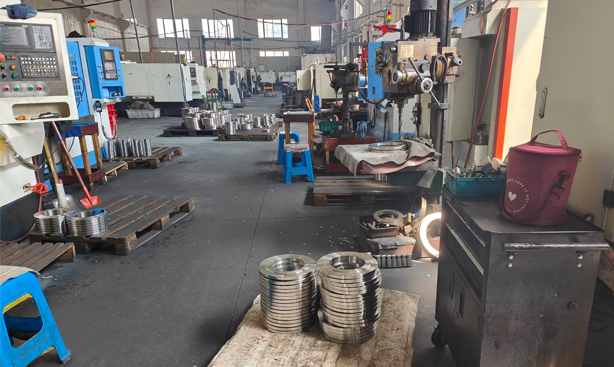
The primary material for these fittings is carbon steel, often specified as ASTM A53 Grade B or A105. A53 Grade B, characterized by its lower carbon content (typically 0.25% max), provides good weldability and ductility, suitable for lower-pressure and lower-temperature applications. A105, a higher-strength carbon steel alloy, is frequently used for forged fittings intended for high-pressure service. The manufacturing process begins with the selection of steel billets, which undergo hot forging, machining, and threading. Forging, either open-die or closed-die, establishes the initial shape. Critical parameters during forging include temperature control (typically 1100-1200°C) to ensure complete material flow and avoid grain boundary weaknesses. Subsequent machining refines the dimensions and creates precise threads adhering to NPT, BSP, or socket weld standards. Welding processes, such as Gas Metal Arc Welding (GMAW) and Gas Tungsten Arc Welding (GTAW), are used for fabricating larger-diameter fittings or complex geometries. Chemical composition control is vital; maintaining appropriate levels of manganese, silicon, and phosphorus influences mechanical properties. Heat treatment, including normalizing and tempering, is employed to relieve residual stresses and optimize the material’s microstructure for enhanced toughness and resistance to brittle fracture. Surface treatments like galvanization or epoxy coating are applied for corrosion protection.
Performance & Engineering
Performance of carbon steel pipe fittings is dictated by a complex interplay of internal pressure, external loads, temperature variations, and the corrosive nature of the conveyed fluid. Force analysis, particularly finite element analysis (FEA), is used during the design phase to predict stress concentrations around threaded connections and weld joints. The design must account for hoop stress induced by internal pressure, bending moments from pipe weight and fluid flow, and potential shock loading. Environmental resistance is a major concern; corrosion, especially localized pitting corrosion and crevice corrosion, can compromise the fitting’s integrity. Material selection, coupled with protective coatings, mitigates this risk. Compliance requirements, specifically ASME B31.3 for process piping and ASME B31.1 for power piping, define acceptable stress levels, inspection intervals, and documentation requirements. Functional implementation necessitates proper installation practices, including thread sealant application (e.g., PTFE tape or pipe dope), tightening torque adherence, and non-destructive testing (NDT) such as radiography or ultrasonic testing to verify weld quality and identify potential flaws. Hydrostatic testing, involving pressurizing the fitting to a specified level, confirms leak tightness and structural integrity.
Technical Specifications
| Parameter | ASTM A53 Grade B | ASTM A105 | 304/304L Stainless Steel Equivalent | GB/T 12459-2001 (Chinese Standard) |
|---|---|---|---|---|
| Tensile Strength (MPa) | 400-530 | 585-758 | 517-724 | ≥410 |
| Yield Strength (MPa) | 240-310 | 345-483 | 205-550 | ≥245 |
| Elongation (%) | 20-30 | 18-25 | 30-60 | ≥20 |
| Hardness (Brinell) | 150-200 | 180-240 | 90-110 | ≤187 |
| Operating Temperature (°C) | -30 to 370 | -30 to 425 | -196 to 850 | -20 to 425 |
| Corrosion Resistance | Limited; Requires Coating | Limited; Requires Coating | Excellent | Comparable to A53/A105 |
Failure Mode & Maintenance
Carbon steel pipe fittings are susceptible to several failure modes. Corrosion, as previously mentioned, is a primary concern, leading to pitting, crevice corrosion, and ultimately, through-wall penetration and leakage. Fatigue cracking can occur under cyclic loading conditions, particularly around threaded connections. The initiation of fatigue cracks is often accelerated by stress concentrators, such as sharp corners or surface defects. Thread stripping, resulting from over-tightening or improper thread engagement, compromises the connection's integrity. Erosion, caused by abrasive particles in the fluid stream, gradually wears away the material. For maintenance, regular visual inspections are crucial to identify signs of corrosion, erosion, or mechanical damage. Periodic hydrostatic testing verifies the fitting's leak tightness. Protective coatings should be inspected for damage and reapplied as necessary. Lubrication of threaded connections prevents galling and facilitates disassembly. If cracks are detected, the fitting should be replaced immediately. For fittings operating in corrosive environments, cathodic protection or the use of corrosion inhibitors can extend service life. Replacement should be conducted by qualified personnel following established safety protocols.
Industry FAQ
Q: What is the primary difference between A53 Grade B and A105 carbon steel fittings and when would you specify one over the other?
A: A53 Grade B offers better weldability and ductility, making it suitable for lower-pressure and lower-temperature applications where forming and bending are common. A105 provides higher strength and is preferred for high-pressure, high-temperature services, especially in forged components like flanges and reducing couplings. The cost is generally similar, so strength requirements usually dictate the selection.
Q: How do Chinese GB standards compare to ANSI/ASME standards for carbon steel pipe fittings?
A: GB standards often align closely with ANSI/ASME standards but may have slightly different tolerances or material composition requirements. Direct interchangeability isn’t always guaranteed. Thorough review of material certificates and dimensional verification are critical. Increasingly, reputable Chinese manufacturers are seeking ANSI/ASME certifications to meet global market demands.
Q: What steps can be taken to mitigate corrosion in carbon steel pipe fittings operating in a seawater environment?
A: Several strategies can be employed. Epoxy coatings or galvanization provide a barrier between the steel and seawater. Cathodic protection, using sacrificial anodes, can prevent corrosion. Selecting a higher-alloy carbon steel with increased chromium content improves corrosion resistance. Regular inspection and maintenance, including coating repair, are essential.
Q: What is the significance of hydrostatic testing and what acceptance criteria are typically used?
A: Hydrostatic testing verifies the structural integrity and leak-tightness of the fitting. It involves pressurizing the fitting to 1.5 times its design pressure for a specified duration (typically 10-15 minutes). Acceptance criteria include no visible leakage and no permanent deformation of the fitting after depressurization.
Q: What non-destructive testing (NDT) methods are commonly used to inspect carbon steel pipe fittings?
A: Radiographic testing (RT) detects internal flaws, such as porosity or inclusions, within the material. Ultrasonic testing (UT) is another method for detecting internal defects and measuring material thickness. Magnetic particle inspection (MPI) is effective for detecting surface and near-surface cracks. Liquid penetrant inspection (LPI) is used for detecting surface-breaking flaws.
Conclusion
China carbon steel pipe fittings represent a cost-effective and readily available solution for fluid conveyance in a wide range of industrial applications. However, their performance and longevity are intrinsically linked to material selection, manufacturing quality, and adherence to relevant international standards. A comprehensive understanding of potential failure modes, coupled with a proactive maintenance strategy, is essential to ensure operational safety and reliability.
The increasing emphasis on quality control and standardization within the Chinese manufacturing sector presents opportunities for sourcing high-performance fittings. However, rigorous supplier qualification, material verification, and independent inspection remain critical to mitigate risks associated with variations in manufacturing practices. Continued research and development in corrosion-resistant alloys and coating technologies will further enhance the durability and extend the service life of these essential components.
-
Top Reasons to Choose a Stainless Steel Flange Check Valve for Industrial Applications
-
8 inch flange Performance Analysis
-
angle ring flanges Performance Analysis
-
Flat Flanges Performance Analysis
-
Full Face Flange Performance Analysis
-
Full Face Flanges Performance Analysis
-
flange 8 inch Performance Analysis
-
Ring Flange Performance Analysis
-
3 inch split flange Performance Analysis
-
Tongue and groove flange Performance Analysis
-
Grooved Flange Performance Analysis
-
o ring flange Performance Analysis
-
Ring Flanges Performance Analysis
-
Groove Flange Performance Analysis
-
Tongue and groove flanges Performance Analysis
 Afrikaans
 Albanian
 Amharic
 Arabic
 Armenian
 Azerbaijani
 Basque
 Belarusian
 Bengali
 Bosnian
 Bulgarian
 Catalan
 Cebuano
 Corsican
 Croatian
 Czech
Czech
 Danish
 Dutch
Dutch
 Esperanto
 Estonian
 Finnish
 French
 Frisian
 Galician
 Georgian
 German
 Greek
Greek
 Gujarati
 Haitian Creole
 Hausa
Hawaiian
Hausa
Hawaiian
 Hebrew
 Hindi
Hindi
 Miao
Miao
 Hungarian
 Icelandic
 Igbo
Igbo
 Indonesian
 Irish
Irish
 Italian
 Japanese
 Javanese
Kannada
Javanese
Kannada
 Kazakh
 Khmer
Khmer
 Rwandese
 Korean
 Kurdish
 Kyrgyz
 Lao
Lao
 Latin
Latin
 Latvian
 Lithuanian
 Luxembourgish
 Macedonian
 Malgashi
 Malay
Malay
 Malayalam
 Maltese
 Maori
Maori
 Marathi
 Mongolian
 Myanmar
 Nepali
 Norwegian
 Norwegian
 Occitan
 Pashto
 Persian
 Polish
 Portuguese
Punjabi
Portuguese
Punjabi
 Romanian
 Russian
 Samoan
 Scottish Gaelic
 Serbian
 Sesotho
 Shona
Shona
 Sindhi
 Sinhala
 Slovak
 Slovenian
 Somali
 Spanish
 Sundanese
 Swahili
 Swedish
Tagalog
Swedish
Tagalog
 Tajik
Tajik
 Tamil
Tamil
 Tatar
Tatar
 Telugu
 Thai
Thai
 Turkish
 Turkmen
 Ukrainian
 Urdu
Urdu
 Uighur
 Uzbek
Uzbek
 Vietnamese
 Welsh
Welsh
 Bantu
Bantu
 Yiddish
 Yoruba
 Zulu
Zulu
 English