




stainless needle valve Performance Analysis
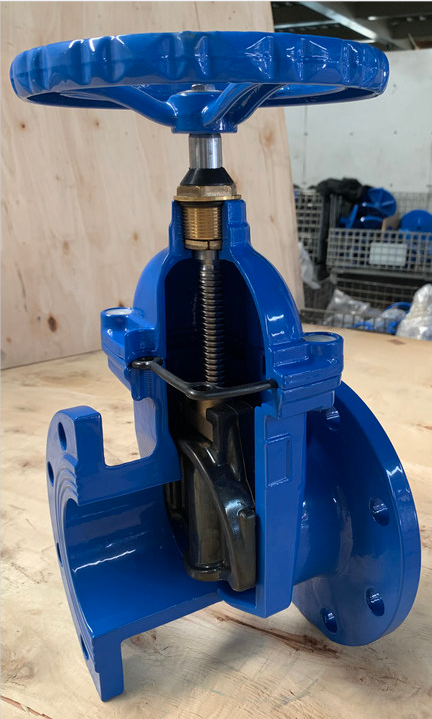
Introduction
Stainless needle valves are precision fluid control devices utilized across a broad spectrum of industrial applications, including chemical processing, oil and gas, pharmaceuticals, and instrumentation. Functionally, they regulate flow rates with high precision by employing a tapered needle that precisely modulates the orifice size. Positioned within the fluid control chain, they operate downstream of pumps, tanks, and reactors, providing a final control element for accurate metering and isolation. Core performance characteristics center around leak-tight shutoff, precise flow control, and resistance to corrosive fluids and high pressures. The selection of stainless steel alloys, typically 304 or 316, dictates the valve's compatibility with various process media and operational environments. A critical industry pain point is ensuring minimal internal volume to reduce dead legs and maintain process purity, particularly in pharmaceutical and bioprocessing applications. Another key concern revolves around maintaining consistent flow characteristics over extended operational lifespans, necessitating robust sealing mechanisms and wear-resistant components.
Material Science & Manufacturing
The predominant material for stainless needle valve construction is Type 304/304L or Type 316/316L stainless steel. 304/304L offers excellent corrosion resistance in mildly corrosive environments and is characterized by approximately 18-20% chromium and 8-10% nickel, providing passivity. The ‘L’ grade denotes low carbon content (<0.03%) enhancing weldability and mitigating carbide precipitation during welding, preventing intergranular corrosion. 316/316L, containing 2-3% molybdenum, substantially increases resistance to chloride pitting and crevice corrosion, making it suitable for more aggressive chemical environments, particularly those containing halides. Body construction typically utilizes investment casting or forging, followed by precision machining to achieve tight tolerances. The needle and seat are manufactured via machining from bar stock, with the needle often subjected to surface hardening treatments like nitriding or chrome plating to improve wear resistance. Sealing is commonly achieved using PTFE (polytetrafluoroethylene) seats, known for their chemical inertness and low friction coefficient. However, PEEK (polyether ether ketone) is increasingly used for higher temperature applications. Manufacturing parameter control is critical; surface finish (Ra) of the needle and seat directly impacts leak tightness, requiring meticulous polishing. Welding processes, when employed, must be performed under controlled atmospheres with appropriate filler metals to maintain corrosion resistance. Non-destructive testing (NDT) like radiography and liquid penetrant inspection are employed to verify weld integrity.
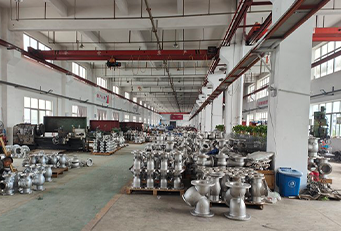
Performance & Engineering
The performance of stainless needle valves is governed by several key engineering principles. Flow characteristics are non-linear, meaning a small rotation of the handwheel results in a significant change in flow rate, particularly at lower flow rates. This is due to the geometry of the needle and seat. Cv (flow coefficient) values are crucial for accurate flow calculations and valve sizing. Pressure drop across the valve is directly proportional to the square of the flow rate and inversely proportional to the Cv value. Force analysis considers the fluid force acting on the needle, particularly at high flow rates, which can contribute to wear and leakage. The valve stem design must withstand these forces. Environmental resistance is paramount, and the selection of materials must account for temperature, pressure, and the chemical composition of the process fluid. Compliance requirements vary by industry; for pharmaceutical applications, valves must conform to ASME BPE standards regarding surface finish, cleaning validation, and material traceability. For hazardous environments, valves must meet ATEX or IECEx certifications for explosion protection. Leakage is typically quantified using seat leakage tests, measuring the rate of fluid passage when the valve is fully closed, expressed in units like SCCM (standard cubic centimeters per minute). Fatigue life is also a significant consideration, particularly in applications involving frequent cycling.
Technical Specifications
| Parameter | Unit | 304 Stainless Steel | 316 Stainless Steel |
|---|---|---|---|
| Maximum Pressure | PSI | 6000 | 6000 |
| Temperature Range | °F | -60 to 450 | -60 to 600 |
| Cv Value (Typical) | - | 0.5 - 5.0 (dependent on size) | 0.5 - 5.0 (dependent on size) |
| Seat Leakage (Maximum) | SCCM | 0.1 | 0.1 |
| Connection Type | - | NPT, BSPT, Socket Weld, Butt Weld | NPT, BSPT, Socket Weld, Butt Weld |
| Body Material | - | 304/304L Stainless Steel | 316/316L Stainless Steel |
Failure Mode & Maintenance
Common failure modes in stainless needle valves include seat erosion, stem packing failure, and body corrosion. Seat erosion is often caused by abrasive particles in the fluid stream or high flow velocities, leading to increased leakage. Stem packing failure results in external leakage around the stem, often due to degradation of the packing material or improper tightening. Body corrosion can occur due to improper material selection for the process fluid, leading to pitting, crevice corrosion, or stress corrosion cracking. Fatigue cracking can also occur in the stem or body due to repeated cycling. Failure analysis typically involves visual inspection, leak testing, and metallurgical analysis of failed components. Maintenance procedures include periodic inspection of the packing gland for leakage, lubrication of the stem threads, and replacement of worn seats or packing. Regular cleaning of the valve body to remove accumulated debris is also crucial. For valves used in critical applications, preventative maintenance schedules should be established based on operating conditions and fluid compatibility. Replacement of the entire valve is recommended if significant corrosion or cracking is detected. Proper storage practices are also vital; valves should be stored in a clean, dry environment to prevent corrosion and contamination.
Industry FAQ
Q: What is the primary difference between a 304 and 316 stainless steel needle valve regarding corrosion resistance?
A: The key distinction lies in the molybdenum content. 316 stainless steel contains 2-3% molybdenum, which significantly enhances its resistance to chloride pitting and crevice corrosion, making it preferable for applications involving seawater, chlorides, or other aggressive halides. 304 stainless steel is suitable for less corrosive environments.
Q: How does the valve’s internal volume impact applications in the pharmaceutical industry?
A: The pharmaceutical industry demands stringent purity standards. Larger internal volumes create “dead legs” where fluid can stagnate, fostering microbial growth and compromising product sterility. Low internal volume needle valves minimize these dead legs, ensuring product integrity.
Q: What are the typical limitations of PTFE seats in high-temperature applications?
A: PTFE exhibits a relatively low maximum continuous operating temperature, typically around 260°C (500°F). Above this temperature, it can begin to degrade, losing its sealing properties. For higher temperature applications, materials like PEEK are preferred.
Q: What is the significance of the Cv value when selecting a needle valve?
A: The Cv value (flow coefficient) is critical for accurately calculating the flow rate through the valve for a given pressure drop. Incorrect valve sizing, based on an inaccurate Cv value, can lead to process inefficiencies or control issues.
Q: How often should the stem packing be replaced, and what are the signs indicating replacement is necessary?
A: The frequency of stem packing replacement depends on operating conditions and the fluid being controlled. Signs indicating replacement include visible stem leakage, increased packing gland tightening requirements, or a noticeable increase in stem friction. A preventative maintenance schedule, typically every 6-12 months, is recommended for critical applications.
Conclusion
Stainless needle valves represent a crucial component in precise fluid control systems across diverse industries. The selection of appropriate materials—primarily 304/304L or 316/316L stainless steel—is paramount, dictated by the process fluid’s corrosive properties and operating temperature. Understanding the valve’s non-linear flow characteristics, quantified by the Cv value, is essential for accurate system design and performance optimization.
Preventative maintenance, including regular inspection of the stem packing and seats, is vital to ensure long-term reliability and prevent failures. Adherence to industry-specific standards, such as ASME BPE for pharmaceutical applications, is non-negotiable. Continued advancements in sealing materials and surface treatments will further enhance the performance and longevity of stainless needle valves in increasingly demanding environments.
-
Top Reasons to Choose a Stainless Steel Flange Check Valve for Industrial Applications
-
8 inch flange Performance Analysis
-
angle ring flanges Performance Analysis
-
Flat Flanges Performance Analysis
-
Full Face Flange Performance Analysis
-
Full Face Flanges Performance Analysis
-
flange 8 inch Performance Analysis
-
Ring Flange Performance Analysis
-
3 inch split flange Performance Analysis
-
Tongue and groove flange Performance Analysis
-
Grooved Flange Performance Analysis
-
o ring flange Performance Analysis
-
Ring Flanges Performance Analysis
-
Groove Flange Performance Analysis
-
Tongue and groove flanges Performance Analysis
 Afrikaans
 Albanian
 Amharic
 Arabic
 Armenian
 Azerbaijani
 Basque
 Belarusian
 Bengali
 Bosnian
 Bulgarian
 Catalan
 Cebuano
 Corsican
 Croatian
 Czech
Czech
 Danish
 Dutch
Dutch
 Esperanto
 Estonian
 Finnish
 French
 Frisian
 Galician
 Georgian
 German
 Greek
Greek
 Gujarati
 Haitian Creole
 Hausa
Hawaiian
Hausa
Hawaiian
 Hebrew
 Hindi
Hindi
 Miao
Miao
 Hungarian
 Icelandic
 Igbo
Igbo
 Indonesian
 Irish
Irish
 Italian
 Japanese
 Javanese
Kannada
Javanese
Kannada
 Kazakh
 Khmer
Khmer
 Rwandese
 Korean
 Kurdish
 Kyrgyz
 Lao
Lao
 Latin
Latin
 Latvian
 Lithuanian
 Luxembourgish
 Macedonian
 Malgashi
 Malay
Malay
 Malayalam
 Maltese
 Maori
Maori
 Marathi
 Mongolian
 Myanmar
 Nepali
 Norwegian
 Norwegian
 Occitan
 Pashto
 Persian
 Polish
 Portuguese
Punjabi
Portuguese
Punjabi
 Romanian
 Russian
 Samoan
 Scottish Gaelic
 Serbian
 Sesotho
 Shona
Shona
 Sindhi
 Sinhala
 Slovak
 Slovenian
 Somali
 Spanish
 Sundanese
 Swahili
 Swedish
Tagalog
Swedish
Tagalog
 Tajik
Tajik
 Tamil
Tamil
 Tatar
Tatar
 Telugu
 Thai
Thai
 Turkish
 Turkmen
 Ukrainian
 Urdu
Urdu
 Uighur
 Uzbek
Uzbek
 Vietnamese
 Welsh
Welsh
 Bantu
Bantu
 Yiddish
 Yoruba
 Zulu
Zulu
 English