




Flanged Couplings Performance Analysis
Introduction
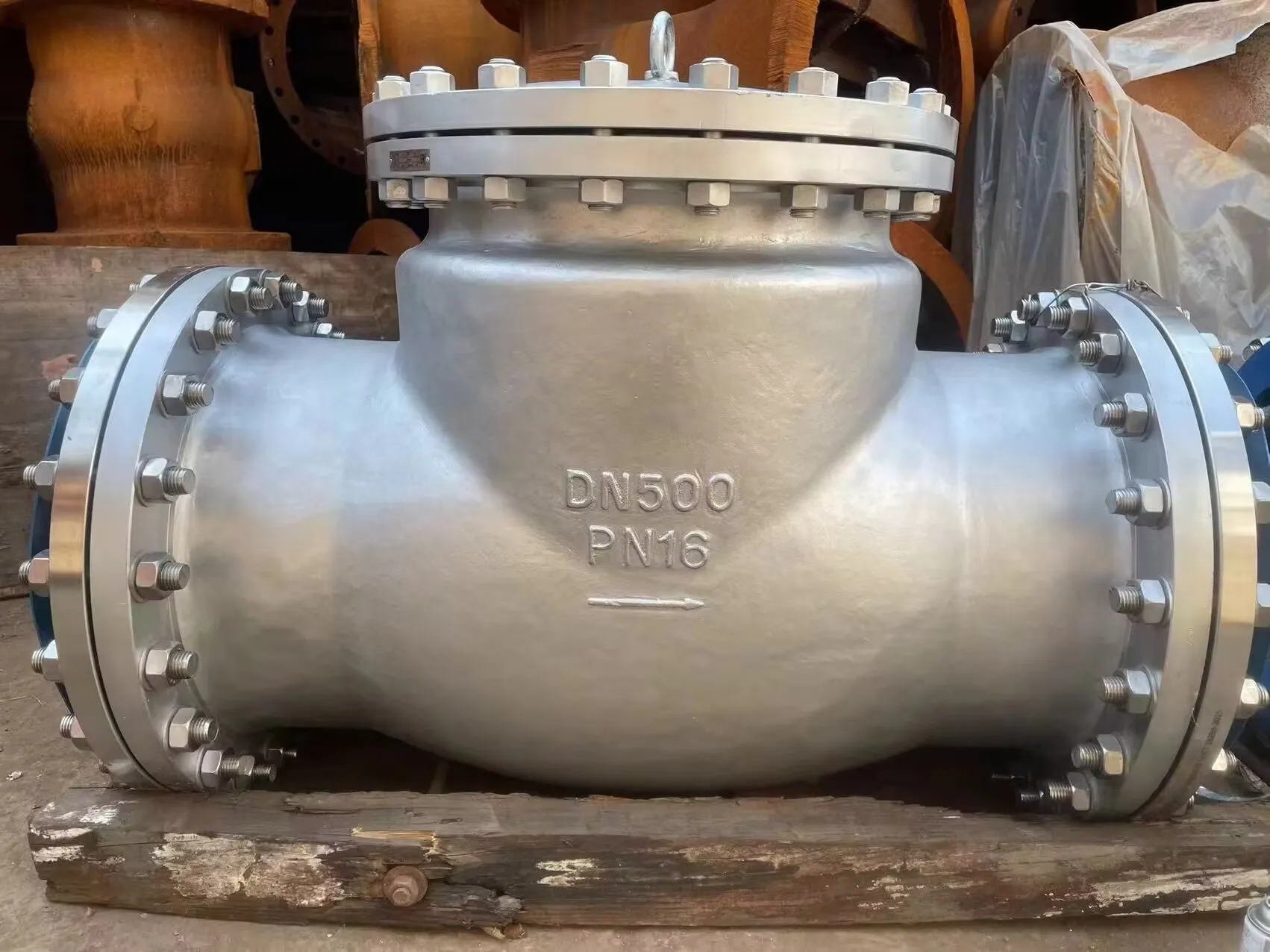
Flanged couplings are mechanical joining components used to connect pipes, valves, pumps, and other equipment in a fluid transfer system. Positioned within the broader landscape of piping and fluid handling, they represent a robust and reliable alternative to welded or threaded connections, particularly in applications demanding frequent disassembly for inspection, maintenance, or replacement. Unlike welding which creates a permanent joint, or threaded connections susceptible to corrosion and galling, flanged couplings provide a readily separable, mechanically sealed interface. Core performance characteristics include pressure containment capability, leak-tightness, and resistance to operational stresses induced by thermal expansion, vibration, and fluid flow. The selection of appropriate flange materials, gasket types, and bolting configurations are critical to ensuring long-term system integrity and minimizing the risk of catastrophic failure. This guide will delve into the material science, manufacturing processes, engineering principles, failure modes, and relevant industry standards governing flanged coupling performance.
Material Science & Manufacturing
Flanged couplings are commonly fabricated from carbon steel (ASTM A105, A36), stainless steel (304/304L, 316/316L), alloy steels (e.g., P22, P91 for high-temperature applications), and occasionally ductile iron. The choice of material depends heavily on the fluid being conveyed, the operating temperature and pressure, and the corrosive environment. Carbon steel provides good strength and cost-effectiveness for general-purpose applications, but is susceptible to corrosion. Stainless steel offers superior corrosion resistance, particularly in chloride-containing environments, but is more expensive. Alloy steels are employed in high-temperature, high-pressure services where creep resistance and oxidation stability are paramount. Ductile iron, while offering good strength and impact resistance, is less commonly used due to its lower temperature performance and susceptibility to stress corrosion cracking. Manufacturing typically involves forging, casting, or machining from bar stock. Forged flanges offer superior strength and grain structure, making them suitable for critical applications. Cast flanges are more economical for larger sizes and complex geometries. Machining from bar stock is often used for small-diameter, high-precision flanges. Critical parameters during manufacturing include dimensional accuracy of the flange face, concentricity of the bolt holes, and surface finish to ensure proper gasket seating. Heat treatment processes, such as normalizing and quenching/tempering, are employed to achieve desired mechanical properties and improve material toughness. Welding procedures, if used for fabrication or repair, must be strictly controlled to prevent the formation of defects like porosity and cracks, and must comply with codes such as ASME Section IX.
Performance & Engineering
The performance of a flanged coupling is critically dependent on its ability to withstand internal pressure, external loads, and thermal stresses. Force analysis involves calculating the bolt load required to maintain gasket compression under operating pressure and temperature. The bolt load must be sufficient to overcome the fluid pressure force, but not so high as to crush the gasket or induce excessive stress in the flange. Finite element analysis (FEA) is commonly used to simulate stress distribution within the flange and bolt assembly, allowing engineers to optimize the design and identify potential failure locations. Environmental resistance is paramount, particularly in corrosive environments. Gasket selection is crucial; materials like PTFE, graphite, and compressed fiber are chosen based on their chemical compatibility with the fluid and their ability to maintain sealing performance at operating temperatures and pressures. Compliance requirements often dictate specific design and testing standards. For example, ASME B31.3 (Process Piping) and ASME Section VIII (Pressure Vessels) specify design rules and inspection procedures for flanged joints. Furthermore, leak testing, often employing pneumatic or hydrostatic pressure, is essential to verify the integrity of the connection. Thermal expansion and contraction must be accounted for in the design to prevent overstressing the bolts or damaging the flanges. Expansion joints and flexible connectors may be incorporated into the piping system to accommodate thermal movements.
Technical Specifications
| Parameter | Carbon Steel (A105) | Stainless Steel (304/304L) | Stainless Steel (316/316L) | Ductile Iron (65-45-12) |
|---|---|---|---|---|
| Tensile Strength (MPa) | 400-550 | 517-724 | 483-620 | 400-550 |
| Yield Strength (MPa) | 250-345 | 207-276 | 241-310 | 240-345 |
| Maximum Operating Temperature (°C) | 200 | 425 | 400 | 120 |
| Pressure Rating (PN) | Up to 420 | Up to 420 | Up to 420 | Up to 250 |
| Corrosion Resistance | Low | Good | Excellent | Moderate |
| Typical Application | Water, Oil, Gas | Chemical Processing, Food & Beverage | Marine, Pharmaceutical | Low-Pressure Systems |
Failure Mode & Maintenance
Flanged couplings are susceptible to several failure modes. Fatigue cracking, often initiated at bolt holes or flange faces, can occur due to cyclic loading and vibration. Gasket failure, resulting in leakage, can be caused by degradation of the gasket material, improper bolt load, or flange distortion. Corrosion, particularly in carbon steel flanges, can lead to pitting, crevice corrosion, and eventual through-wall penetration. Bolt failure can occur due to over-tightening, corrosion, or fatigue. Differential thermal expansion can induce stresses in the flange and bolt assembly, leading to distortion and leakage. Maintenance procedures should include regular visual inspection for signs of corrosion, leakage, or bolt loosening. Bolt torque should be checked periodically and adjusted as needed, following manufacturer's recommendations. Gaskets should be replaced at scheduled intervals or whenever leakage is detected. Flange faces should be inspected for damage and re-machined if necessary. Non-destructive testing (NDT) methods, such as ultrasonic testing (UT) and magnetic particle inspection (MPI), can be used to detect cracks and other defects. In cases of severe corrosion, flange replacement may be necessary. Proper lubrication of the bolts during installation can help prevent corrosion and facilitate future disassembly. Preventive maintenance programs, incorporating these procedures, are crucial for ensuring long-term flanged coupling reliability and minimizing unplanned downtime.
Industry FAQ
Q: What is the impact of gasket selection on long-term flanged joint reliability?
A: Gasket selection is paramount. Incorrect gasket materials lead to premature failure. Factors like chemical compatibility with the process fluid, operating temperature and pressure, and flange surface finish all dictate appropriate gasket material choices. Elastomeric gaskets (e.g., EPDM, Viton) are suitable for lower pressures and temperatures, while spiral-wound gaskets are effective for higher pressures and fluctuating temperatures. Gasket compression, achieved through proper bolt torque, is essential for creating a leak-tight seal; insufficient compression leads to leakage, while excessive compression can damage the gasket.
Q: How do I determine the appropriate bolt torque for a flanged connection?
A: Bolt torque should be determined based on flange material, gasket type, flange size, and operating conditions. Manufacturers typically provide torque specifications, often expressed as a torque value or a torque-turn method. Using a calibrated torque wrench is essential to ensure accurate bolt load. The torque-turn method involves tightening the bolts to a snug-tight condition, then rotating them a specified number of degrees. Over-tightening can stretch or yield the bolts, while under-tightening can lead to leakage.
Q: What are the key considerations when selecting flange material for corrosive environments?
A: The choice of flange material hinges on the specific corrosive agent and its concentration. Stainless steels (316/316L) are often preferred for chloride-containing environments, while exotic alloys like Hastelloy or Inconel may be required for highly corrosive applications. Carbon steel flanges should be protected with coatings (e.g., epoxy, galvanizing) in corrosive environments, but these coatings require periodic inspection and maintenance. Consideration should also be given to galvanic corrosion if dissimilar metals are used in the flanged joint.
Q: What are the common causes of flange face distortion and how can they be prevented?
A: Flange face distortion can arise from uneven bolt tightening, thermal cycling, or mechanical loads. Uneven bolt tightening creates localized stress concentrations, leading to flange warping. Thermal cycling induces expansion and contraction, which can distort the flange if not properly accommodated. Preventative measures include using a proper bolt tightening sequence, employing expansion joints or flexible connectors to absorb thermal movements, and ensuring proper flange support to prevent bending stresses.
Q: How can I effectively identify and address flange leakage?
A: Leakage can be identified through visual inspection, acoustic leak detection, or pressure drop monitoring. Addressing leakage involves first determining the cause, which could be a gasket failure, loose bolts, or flange distortion. Tightening the bolts, replacing the gasket, or re-machining the flange face are common corrective actions. In cases of severe flange distortion or corrosion, flange replacement may be necessary. A leak testing protocol should be implemented to verify the effectiveness of repairs.
Conclusion
Flanged couplings represent a critical component in fluid transfer systems, demanding careful consideration of material science, manufacturing precision, and engineering principles. Selecting the correct flange material, gasket type, and bolt configuration, alongside adherence to relevant industry standards, is essential for ensuring long-term reliability and preventing catastrophic failure. Proper installation, regular inspection, and proactive maintenance are crucial for maximizing the service life of flanged connections and minimizing downtime.
Looking forward, advancements in materials technology and gasket design will continue to improve the performance and durability of flanged couplings. The increasing adoption of digital twins and predictive maintenance techniques will enable proactive identification of potential failure modes and optimization of maintenance schedules, further enhancing the reliability of these critical components. Understanding the fundamental principles outlined in this guide is paramount for engineers, procurement professionals, and maintenance personnel involved in the design, operation, and maintenance of flanged coupling systems.
-
Flanged Couplings Performance Analysis
-
female thread ball valve Performance Analysis
-
1/2 ball valve Material Science Manufacturing
-
gas ball valves Performance Engineering
-
2 inch ball valves Performance Analysis
-
motorized ball valve Performance Analysis
-
floating ball valve Performance Analysis
-
ball valve stainless steel Performance Analysis
-
gate valve stainless steel Performance Analysis
-
dn200 gate valve Performance Analysis
-
gate valve pn40 Material Science
-
dn100 gate valve Performance Analysis
-
gate valve pneumatic Performance Analysis
-
gate valve wheel handle Performance Analysis
-
gate valve high pressure Performance Analysis
 Afrikaans
 Albanian
 Amharic
 Arabic
 Armenian
 Azerbaijani
 Basque
 Belarusian
 Bengali
 Bosnian
 Bulgarian
 Catalan
 Cebuano
 Corsican
 Croatian
 Czech
Czech
 Danish
 Dutch
Dutch
 Esperanto
 Estonian
 Finnish
 French
 Frisian
 Galician
 Georgian
 German
 Greek
Greek
 Gujarati
 Haitian Creole
 Hausa
Hawaiian
Hausa
Hawaiian
 Hebrew
 Hindi
Hindi
 Miao
Miao
 Hungarian
 Icelandic
 Igbo
Igbo
 Indonesian
 Irish
Irish
 Italian
 Japanese
 Javanese
Kannada
Javanese
Kannada
 Kazakh
 Khmer
Khmer
 Rwandese
 Korean
 Kurdish
 Kyrgyz
 Lao
Lao
 Latin
Latin
 Latvian
 Lithuanian
 Luxembourgish
 Macedonian
 Malgashi
 Malay
Malay
 Malayalam
 Maltese
 Maori
Maori
 Marathi
 Mongolian
 Myanmar
 Nepali
 Norwegian
 Norwegian
 Occitan
 Pashto
 Persian
 Polish
 Portuguese
Punjabi
Portuguese
Punjabi
 Romanian
 Russian
 Samoan
 Scottish Gaelic
 Serbian
 Sesotho
 Shona
Shona
 Sindhi
 Sinhala
 Slovak
 Slovenian
 Somali
 Spanish
 Sundanese
 Swahili
 Swedish
Tagalog
Swedish
Tagalog
 Tajik
Tajik
 Tamil
Tamil
 Tatar
Tatar
 Telugu
 Thai
Thai
 Turkish
 Turkmen
 Ukrainian
 Urdu
Urdu
 Uighur
 Uzbek
Uzbek
 Vietnamese
 Welsh
Welsh
 Bantu
Bantu
 Yiddish
 Yoruba
 Zulu
Zulu
 English