




manual gate valve Performance Analysis
Introduction
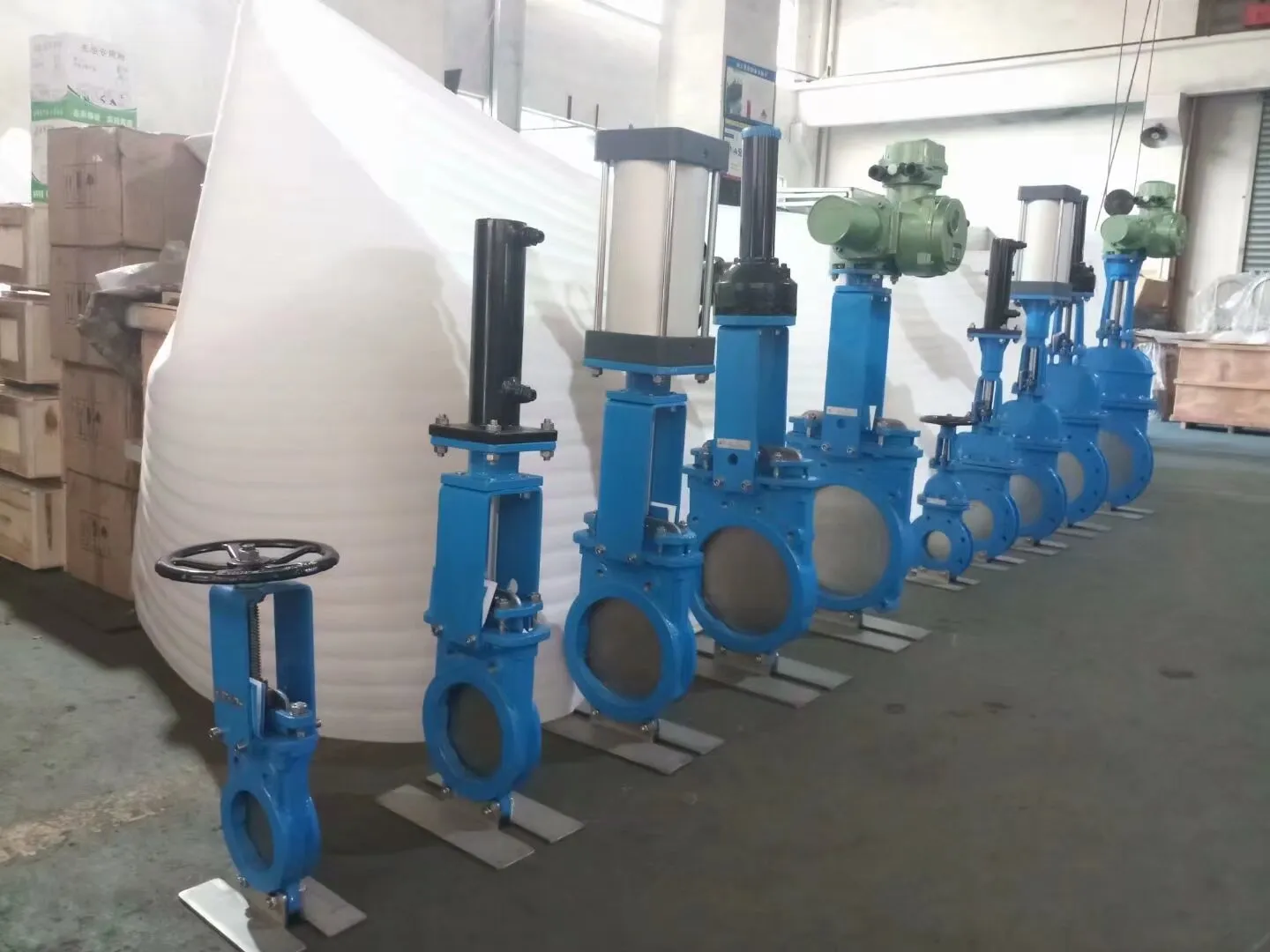
The manual gate valve is a linear motion valve used to start or stop flow. It operates by raising or lowering a gate within the flow path, offering minimal flow restriction when fully open. Positioned within the fluid handling industry, it serves as a critical component in pipelines across numerous sectors including oil & gas, water treatment, chemical processing, and power generation. Its core performance characteristics revolve around its sealing capability, pressure rating, and longevity under diverse operating conditions. Unlike other valve types like globe or ball valves, the gate valve excels in applications requiring infrequent operation and minimal pressure drop. The primary pain point in industry revolves around ensuring long-term sealing integrity, preventing corrosion, and maintaining smooth operation despite potential debris and scaling within the fluid stream. A poorly maintained gate valve can lead to substantial downtime and costly repairs.
Material Science & Manufacturing
The body of a manual gate valve is commonly constructed from cast iron (ASTM A126 Class B), ductile iron (ASTM A536 65-45-12), carbon steel (ASTM A105), or stainless steel (304/316 – ASTM A351). The choice of material dictates corrosion resistance and pressure-temperature limitations. Cast iron provides cost-effectiveness but is susceptible to corrosion without protective coatings. Ductile iron offers enhanced ductility and strength. Carbon steel is robust for high-pressure applications but requires coatings to mitigate corrosion. Stainless steel excels in corrosive environments but comes at a higher cost. The gate itself is frequently made from bronze (ASTM B584), stainless steel, or iron, depending on service requirements. Seats, responsible for sealing, are commonly composed of reinforced PTFE, EPDM, or metal-to-metal designs. Manufacturing typically involves casting or forging the body, followed by machining to precise tolerances. Gate valves are assembled using bolting or welding techniques. Key parameters include wall thickness consistency, surface finish of the gate and seat, and dimensional accuracy of the bore. Welding processes, when employed, require strict adherence to ASME Section IX standards to ensure weld integrity. Heat treatment of carbon and alloy steel components is crucial to achieve the desired mechanical properties (hardness, tensile strength, yield strength) as defined by material specifications.
Performance & Engineering
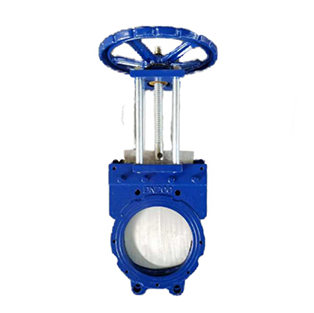
Gate valve performance is heavily reliant on force analysis during operation. The actuator (handwheel) must provide sufficient torque to overcome the frictional forces within the valve and the hydrodynamic forces exerted by the fluid. The stem-to-gate connection must withstand shear stresses. Environmental resistance is paramount; exposure to UV radiation, extreme temperatures, and corrosive fluids can degrade the valve’s materials. Compliance requirements vary by region and application. For potable water systems, NSF/ANSI 61 certification is essential. Oil and gas applications often necessitate API 600 compliance, dictating design, materials, and testing protocols. Functional implementation involves understanding fluid dynamics and pressure drop characteristics. A fully open gate valve ideally presents minimal restriction, but imperfections in manufacturing or the presence of debris can increase pressure loss. Cavitation, caused by rapid pressure changes, can erode the gate and seat, leading to leakage. Proper valve sizing, considering flow rate, fluid viscosity, and pressure, is critical to prevent cavitation and ensure optimal performance. The stem packing must provide an effective seal to prevent leakage around the stem while allowing smooth operation.
Technical Specifications
| Parameter | Unit | Carbon Steel (A105) | Ductile Iron (A536 65-45-12) |
|---|---|---|---|
| Maximum Operating Pressure | psi | 900 | 300 |
| Temperature Range | °F | -20 to 450 | -20 to 300 |
| Gate Material | - | Bronze Alloy | Stainless Steel 316 |
| Seat Material | - | PTFE | EPDM |
| Connection Type | - | Flanged (ANSI B16.5) | Threaded (ANSI B1.20.1) |
| Actuation Type | - | Handwheel | Handwheel |
Failure Mode & Maintenance
Common failure modes in manual gate valves include gate sticking due to corrosion or debris accumulation, seat erosion leading to leakage, stem packing failure causing external leakage, and body cracking under excessive pressure or thermal stress. Fatigue cracking can occur in the gate or stem due to repeated operation. Delamination of coatings can expose the underlying metal to corrosion. Oxidation of metal components can also contribute to degradation. Maintenance involves regular inspection for signs of corrosion, leakage, and wear. Periodic lubrication of the stem and gate is essential. Seat replacement may be necessary if erosion is significant. Packing gland adjustment can address stem leakage. Non-destructive testing (NDT) methods, such as visual inspection, ultrasonic testing (UT), and radiography, can identify hidden cracks or defects. Preventative maintenance schedules should be established based on operating conditions and fluid characteristics. A complete overhaul, involving disassembly, cleaning, inspection, and reassembly, should be performed every 3-5 years, depending on service severity. Proper storage during periods of non-use is also crucial to prevent corrosion.
Industry FAQ
Q: What are the key differences between a wedge gate valve and a parallel disc gate valve, and how does that impact their suitability for different applications?
A: Wedge gate valves utilize a wedge-shaped disc that fits between slightly angled seats, providing a tighter seal, especially at lower pressures. They are ideal for applications requiring bubble-tight shutoff. Parallel disc gate valves have a flat disc that slides against parallel seats. They offer lower flow resistance but may exhibit some leakage. They are suitable for applications where a tight shutoff is not critical, and flow efficiency is prioritized.
Q: How does the selection of stem packing material impact the longevity and performance of a gate valve?
A: Stem packing material is crucial for preventing leakage around the stem. Graphite packing is effective at high temperatures but may require frequent adjustment. PTFE packing offers low friction and good chemical resistance but can creep over time, leading to leakage. Compression packing requires regular tightening. The correct selection depends on the fluid being handled, the operating temperature, and the desired maintenance frequency.
Q: What are the best practices for preventing corrosion in gate valves used in saltwater environments?
A: For saltwater environments, using materials like stainless steel (316) or specialized alloys is paramount. Protective coatings, such as epoxy or polyurethane, can further enhance corrosion resistance. Regular inspection for signs of pitting or corrosion is essential. Sacrificial anodes can be used to protect the valve body. Proper cleaning and maintenance to remove salt deposits are also crucial.
Q: What is the impact of water hammer on gate valve lifespan, and what mitigation strategies can be employed?
A: Water hammer, caused by sudden changes in flow velocity, can induce significant stress on the valve body, gate, and seat, leading to premature failure. Mitigation strategies include using slow-closing gate valves, installing surge arrestors or accumulators in the pipeline, and ensuring proper pipe support to minimize vibration.
Q: What are the requirements for API 600 compliance, and how does it benefit end-users?
A: API 600 sets stringent standards for the design, manufacturing, and testing of gate valves for the petroleum and natural gas industries. Compliance ensures reliability, safety, and interchangeability of components. It covers aspects like material selection, pressure testing, dimensional accuracy, and non-destructive examination. For end-users, API 600 compliance guarantees a valve that meets industry best practices and reduces the risk of failure and downtime.
Conclusion
The manual gate valve remains a fundamental component in numerous industrial fluid handling systems, valued for its simple design and effective flow isolation. Understanding the interplay between material science, manufacturing processes, and operational parameters is crucial for ensuring its long-term performance and reliability. Selecting the appropriate materials, adhering to industry standards (such as API 600), and implementing a robust maintenance program are all vital to minimizing the risk of failure and maximizing the valve’s service life.
Looking ahead, advancements in materials and coatings will continue to enhance the corrosion resistance and durability of gate valves. Integration of smart technologies, such as sensors for monitoring valve position and leakage, could enable predictive maintenance and further improve operational efficiency. The continued demand for reliable and cost-effective flow control solutions will ensure the manual gate valve remains a relevant technology for years to come.
-
Top Reasons to Choose a Stainless Steel Flange Check Valve for Industrial Applications
-
8 inch flange Performance Analysis
-
angle ring flanges Performance Analysis
-
Flat Flanges Performance Analysis
-
Full Face Flange Performance Analysis
-
Full Face Flanges Performance Analysis
-
flange 8 inch Performance Analysis
-
Ring Flange Performance Analysis
-
3 inch split flange Performance Analysis
-
Tongue and groove flange Performance Analysis
-
Grooved Flange Performance Analysis
-
o ring flange Performance Analysis
-
Ring Flanges Performance Analysis
-
Groove Flange Performance Analysis
-
Tongue and groove flanges Performance Analysis
 Afrikaans
 Albanian
 Amharic
 Arabic
 Armenian
 Azerbaijani
 Basque
 Belarusian
 Bengali
 Bosnian
 Bulgarian
 Catalan
 Cebuano
 Corsican
 Croatian
 Czech
Czech
 Danish
 Dutch
Dutch
 Esperanto
 Estonian
 Finnish
 French
 Frisian
 Galician
 Georgian
 German
 Greek
Greek
 Gujarati
 Haitian Creole
 Hausa
Hawaiian
Hausa
Hawaiian
 Hebrew
 Hindi
Hindi
 Miao
Miao
 Hungarian
 Icelandic
 Igbo
Igbo
 Indonesian
 Irish
Irish
 Italian
 Japanese
 Javanese
Kannada
Javanese
Kannada
 Kazakh
 Khmer
Khmer
 Rwandese
 Korean
 Kurdish
 Kyrgyz
 Lao
Lao
 Latin
Latin
 Latvian
 Lithuanian
 Luxembourgish
 Macedonian
 Malgashi
 Malay
Malay
 Malayalam
 Maltese
 Maori
Maori
 Marathi
 Mongolian
 Myanmar
 Nepali
 Norwegian
 Norwegian
 Occitan
 Pashto
 Persian
 Polish
 Portuguese
Punjabi
Portuguese
Punjabi
 Romanian
 Russian
 Samoan
 Scottish Gaelic
 Serbian
 Sesotho
 Shona
Shona
 Sindhi
 Sinhala
 Slovak
 Slovenian
 Somali
 Spanish
 Sundanese
 Swahili
 Swedish
Tagalog
Swedish
Tagalog
 Tajik
Tajik
 Tamil
Tamil
 Tatar
Tatar
 Telugu
 Thai
Thai
 Turkish
 Turkmen
 Ukrainian
 Urdu
Urdu
 Uighur
 Uzbek
Uzbek
 Vietnamese
 Welsh
Welsh
 Bantu
Bantu
 Yiddish
 Yoruba
 Zulu
Zulu
 English