




swing check valve Performance Analysis
Introduction
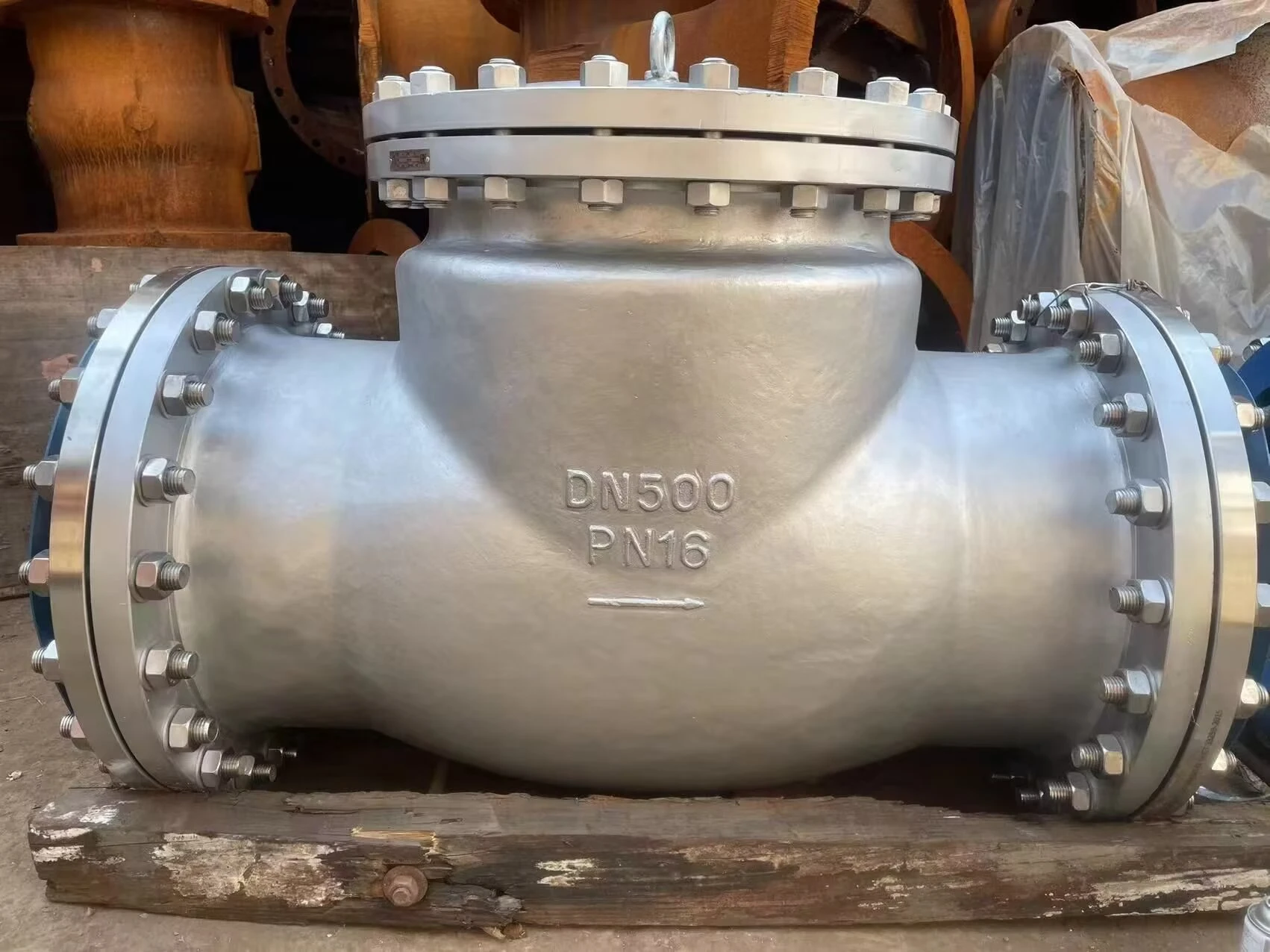
The swing check valve is a critical component in fluid handling systems, designed to prevent backflow and maintain unidirectional flow. Positioned within the broader piping network, it functions as a passive safety device, reliant on the kinetic energy of the fluid to operate. Unlike other check valve types, the swing check valve utilizes a hinged disc that swings freely when forward flow is present and automatically closes against the flow when reversed pressure attempts to occur. This guide provides a comprehensive technical overview of swing check valves, encompassing material science, manufacturing processes, performance characteristics, failure modes, and relevant industry standards. Its core performance revolves around minimizing pressure drop in the forward direction and providing a leak-tight seal against reverse flow. The selection of appropriate materials and design parameters is paramount to ensuring reliable operation within specific application requirements.
Material Science & Manufacturing
Swing check valves are commonly fabricated from a range of materials, dictated by the fluid being handled, temperature, pressure, and corrosive environment. Carbon steel (ASTM A105, A53 Grade B) is prevalent for general water and oil applications due to its cost-effectiveness and adequate strength. Stainless steels (304/304L, 316/316L – ASTM A351) are employed in corrosive environments or where hygiene is critical, offering superior resistance to chemical attack. Alloy steels (e.g., Chrome-Moly steels – ASTM A182) are utilized for high-temperature, high-pressure applications, providing enhanced creep resistance. The disc itself is often lined with elastomers (EPDM, PTFE, Buna-N) for tighter sealing, particularly with low-viscosity fluids.
Manufacturing involves several key processes. The body is typically forged or cast. Forging (using processes like open-die or closed-die forging) provides higher strength and improved grain structure. Casting utilizes sand casting, investment casting, or centrifugal casting, each with varying degrees of precision and cost. The disc is usually machined from a solid billet of the chosen material, ensuring dimensional accuracy and surface finish. Welding (SMAW, GTAW, or SAW – per ASME Section IX) is used to join components, requiring stringent quality control to prevent porosity and ensure structural integrity. Non-destructive testing (NDT) such as radiography, ultrasonic testing, and liquid penetrant inspection are essential to verify weld quality. Surface treatments like passivation (for stainless steel) and epoxy coating (for carbon steel) enhance corrosion resistance. Dimensional accuracy is ensured through precision machining and final inspection using coordinate measuring machines (CMMs).
Performance & Engineering
The performance of a swing check valve is fundamentally governed by fluid dynamics and mechanical engineering principles. Pressure drop is a critical parameter, minimized by streamlining the flow path. The disc’s swing path, seat design, and body geometry influence the pressure loss. Force analysis is crucial; the disc experiences impact forces from the fluid, especially during rapid flow changes. These forces must be within the material’s strength limits to prevent fatigue failure. Cavitation, the formation and collapse of vapor bubbles, can occur with high flow velocities and pressure differentials, causing erosion of the disc and seat. Valve sizing is performed using equations based on flow rate, fluid density, viscosity, and allowable pressure drop (Darcy-Weisbach equation, Hazen-Williams equation).
Environmental resistance is also a significant concern. Temperature fluctuations can induce thermal stresses, potentially leading to leakage. External corrosion, particularly in harsh environments, necessitates appropriate material selection and protective coatings. Compliance requirements are dictated by industry standards (API 598 for manufacturing and testing, ASME B16.34 for pressure ratings, and PED 2014/68/EU for European applications). Functional implementation demands consideration of actuation methods (gravity-assisted, spring-assisted) and sealing mechanisms (metal-to-metal, elastomeric). Proper installation and orientation are vital for optimal performance, preventing issues like disc binding or water hammer.
Technical Specifications
| Parameter | Unit | Typical Value (Carbon Steel) | Typical Value (316 Stainless Steel) |
|---|---|---|---|
| Maximum Operating Pressure | psi | 2000 | 3600 |
| Temperature Range | °F | -20 to 450 | -328 to 650 |
| Connection Type | - | Screwed, Flanged, Welded | Screwed, Flanged, Welded |
| Body Material | - | Carbon Steel (A105) | 316 Stainless Steel (A351) |
| Disc Material | - | Carbon Steel (A105) with optional coating | 316 Stainless Steel (A351) |
| Seat Material | - | Metal to Metal, PTFE | Metal to Metal, PTFE |
Failure Mode & Maintenance
Swing check valves are susceptible to several failure modes. Fatigue cracking of the disc or body can occur due to repeated stress cycles from fluid hammer or vibration. Disc binding, caused by debris accumulation or corrosion, prevents proper closure. Erosion of the disc and seat, especially in abrasive fluid applications, leads to leakage. Corrosion (pitting, crevice corrosion, galvanic corrosion) weakens the valve components. Leakage past the seat, due to wear or damage, is a common failure. Delamination of any polymeric coatings. Oxidation of carbon steel components in high-temperature environments can degrade material properties.
Maintenance involves regular inspection for signs of wear, corrosion, and leakage. Periodic cleaning to remove debris and scale is essential. Lubrication of the hinge pin, if applicable, reduces friction and prevents binding. Seat replacement may be necessary when leakage occurs. Non-destructive testing (NDT) can detect hidden cracks or corrosion. For critical applications, preventative maintenance schedules should be implemented based on operating conditions and fluid characteristics. Proper storage when not in use (protecting sealing surfaces) prevents corrosion and contamination. When replacing components, always use manufacturer-approved parts and follow recommended installation procedures.
Industry FAQ
Q: What is the primary difference between a swing check valve and a lift check valve in terms of pressure drop?
A: Swing check valves generally exhibit lower pressure drop compared to lift check valves, especially in larger sizes. This is because the streamlined flow path through the swing valve minimizes turbulence. Lift check valves, with their abrupt flow redirection, typically create higher pressure losses.
Q: How does the fluid viscosity impact the performance of a swing check valve?
A: Higher fluid viscosity can increase the closing time of the swing check valve disc, potentially leading to water hammer if flow reversal is rapid. It also increases the pressure drop across the valve. Lower viscosity fluids require tighter sealing mechanisms to prevent leakage.
Q: What are the common causes of water hammer in systems utilizing swing check valves?
A: Water hammer is often caused by rapid closure of the swing check valve disc, triggered by sudden flow changes or pump start/stop events. Insufficient dampening, long pipelines, and high flow velocities exacerbate the problem. Proper valve sizing and the use of surge suppressors can mitigate water hammer.
Q: What material selection considerations are crucial when handling corrosive fluids?
A: Selecting materials resistant to the specific corrosive agent is paramount. Stainless steels (316, Alloy 20) and specialized alloys (Hastelloy, Inconel) are commonly used. Elastomeric seals must also be chemically compatible with the fluid. Protective coatings like PTFE or epoxy can further enhance corrosion resistance.
Q: What are the key inspection points during routine maintenance of a swing check valve?
A: Inspection should focus on the disc’s swing path, ensuring it’s free of obstructions. Examine the seat for wear or damage. Check for signs of corrosion or erosion on the body and disc. Verify the integrity of any coatings. Test for leakage under operating conditions. Inspect the hinge pin (if present) for proper lubrication and functionality.
Conclusion
The swing check valve remains a vital component in diverse industrial applications due to its simplicity, reliability, and ability to prevent reverse flow. A thorough understanding of its material science, manufacturing processes, and performance characteristics is essential for ensuring optimal operation and longevity. Selecting the appropriate materials based on the fluid characteristics and operating conditions is crucial.
Future advancements may focus on developing smart check valves with integrated sensors for monitoring performance and predicting maintenance needs. Improvements in disc design and sealing materials will further minimize pressure drop and leakage. Continued adherence to industry standards and best practices is paramount for ensuring the safe and efficient operation of these critical components within complex fluid handling systems.
-
Top Reasons to Choose a Stainless Steel Flange Check Valve for Industrial Applications
-
8 inch flange Performance Analysis
-
angle ring flanges Performance Analysis
-
Flat Flanges Performance Analysis
-
Full Face Flange Performance Analysis
-
Full Face Flanges Performance Analysis
-
flange 8 inch Performance Analysis
-
Ring Flange Performance Analysis
-
3 inch split flange Performance Analysis
-
Tongue and groove flange Performance Analysis
-
Grooved Flange Performance Analysis
-
o ring flange Performance Analysis
-
Ring Flanges Performance Analysis
-
Groove Flange Performance Analysis
-
Tongue and groove flanges Performance Analysis
 Afrikaans
 Albanian
 Amharic
 Arabic
 Armenian
 Azerbaijani
 Basque
 Belarusian
 Bengali
 Bosnian
 Bulgarian
 Catalan
 Cebuano
 Corsican
 Croatian
 Czech
Czech
 Danish
 Dutch
Dutch
 Esperanto
 Estonian
 Finnish
 French
 Frisian
 Galician
 Georgian
 German
 Greek
Greek
 Gujarati
 Haitian Creole
 Hausa
Hawaiian
Hausa
Hawaiian
 Hebrew
 Hindi
Hindi
 Miao
Miao
 Hungarian
 Icelandic
 Igbo
Igbo
 Indonesian
 Irish
Irish
 Italian
 Japanese
 Javanese
Kannada
Javanese
Kannada
 Kazakh
 Khmer
Khmer
 Rwandese
 Korean
 Kurdish
 Kyrgyz
 Lao
Lao
 Latin
Latin
 Latvian
 Lithuanian
 Luxembourgish
 Macedonian
 Malgashi
 Malay
Malay
 Malayalam
 Maltese
 Maori
Maori
 Marathi
 Mongolian
 Myanmar
 Nepali
 Norwegian
 Norwegian
 Occitan
 Pashto
 Persian
 Polish
 Portuguese
Punjabi
Portuguese
Punjabi
 Romanian
 Russian
 Samoan
 Scottish Gaelic
 Serbian
 Sesotho
 Shona
Shona
 Sindhi
 Sinhala
 Slovak
 Slovenian
 Somali
 Spanish
 Sundanese
 Swahili
 Swedish
Tagalog
Swedish
Tagalog
 Tajik
Tajik
 Tamil
Tamil
 Tatar
Tatar
 Telugu
 Thai
Thai
 Turkish
 Turkmen
 Ukrainian
 Urdu
Urdu
 Uighur
 Uzbek
Uzbek
 Vietnamese
 Welsh
Welsh
 Bantu
Bantu
 Yiddish
 Yoruba
 Zulu
Zulu
 English