




butterfly valve flanged Performance Analysis
Introduction
Butterfly valves with flanged connections are quarter-turn rotational motion valves used to regulate or isolate flow within a piping system. They occupy a critical technical position within fluid handling infrastructure across industries like chemical processing, water treatment, power generation, and HVAC. Unlike gate or globe valves, butterfly valves are generally lighter and require less space for installation, making them advantageous in densely populated piping configurations. Their primary performance characteristic lies in their efficiency in flow control, particularly at lower pressures, and their relatively quick opening/closing speeds. Core to their functionality is a disc that rotates perpendicular to the flow, modulating the flow rate based on its angle of deflection. The flanged connections, adhering to specific standards (discussed later), provide a robust and secure attachment to the piping system, essential for maintaining system integrity and preventing leaks.
Material Science & Manufacturing
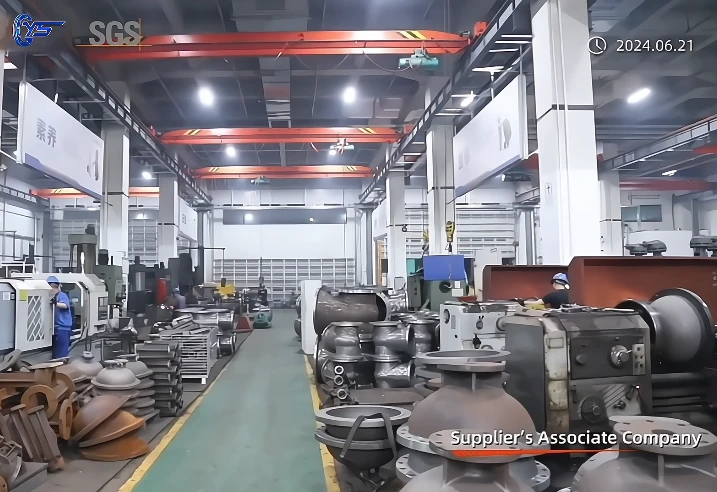
The performance and longevity of a flanged butterfly valve are fundamentally tied to the material science of its components and the precision of its manufacturing processes. The valve body is commonly constructed from ductile iron (ASTM A536-89), carbon steel (ASTM A105), or stainless steel (304/316 – ASTM A351). Ductile iron offers good corrosion resistance and strength at a lower cost, while carbon steel provides high strength but is susceptible to corrosion without protective coatings. Stainless steels, particularly 316, provide exceptional corrosion resistance for aggressive media, but are more expensive. The disc material often mirrors the body material, optimizing compatibility. Seat materials vary widely, including elastomers like EPDM, Viton, or PTFE, selected based on fluid compatibility and temperature requirements. Manufacturing involves several key processes: casting or forging the body, machining the disc and stem, applying protective coatings (epoxy, fusion bonded epoxy – FBE), and assembling the components with precise torque specifications. Welding processes (SMAW, GTAW) used in fabricating the flanges must adhere to ASME Section IX standards to ensure weld integrity. Critical parameters during manufacturing include dimensional accuracy of the disc bore, surface finish of the seating surfaces (Ra < 0.8µm), and proper heat treatment to alleviate residual stresses in the body and disc.
Performance & Engineering
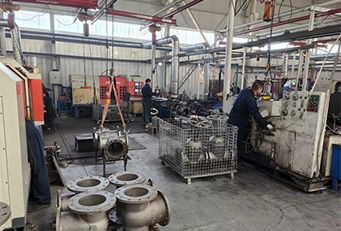
The performance of a flanged butterfly valve is governed by several engineering principles. Torque requirements for operation are dependent on factors like fluid density, flow velocity, pressure drop, and disc position. Cavitation, a significant concern, can occur at high flow velocities and can erode the disc and seat, leading to premature failure. Engineering solutions to mitigate cavitation include optimizing valve trim, reducing pressure drop, and employing cavitation-resistant materials. Environmental resistance is paramount; valve performance can degrade due to exposure to extreme temperatures, UV radiation, or corrosive atmospheres. Material selection plays a crucial role here, as does the application of protective coatings. Flanged connections must meet ASME B16.5 standards for pressure-temperature ratings. Furthermore, compliance with standards like ANSI/FCI 70-2 ensures consistent performance characteristics. Static and dynamic sealing are critical for preventing leakage. Seat design and material selection contribute significantly to sealing efficiency. Finite Element Analysis (FEA) is often employed to optimize valve body geometry and stress distribution, ensuring structural integrity under pressure and thermal loads. The valve’s Kv/Cv value, indicating flow capacity, is a key performance metric used in system design and sizing.
Technical Specifications
| Parameter | Unit | Specification Range (Typical) | Testing Standard |
|---|---|---|---|
| Nominal Diameter | mm | 50 - 2000 | ISO 4126 |
| Pressure Rating | Bar | PN6, PN10, PN16, PN25, PN40 | ASME B16.34 |
| Temperature Range | °C | -20 to +200 (depending on seat material) | ASTM E831 |
| Leakage Rate | ppm | Bubble-Tight (typically < 0.1 ppm) | FCI 70-2 |
| Torque (at full open/close) | Nm | 5 – 500 (dependent on size and pressure) | ISO 5211 |
| Face-to-Face Dimension | mm | DIN EN 558 Series 11 | DIN EN 558-1 |
Failure Mode & Maintenance
Flanged butterfly valves, while robust, are susceptible to several failure modes. Disc corrosion, particularly in carbon steel valves exposed to corrosive fluids, leads to material loss and compromised sealing. Seat erosion, often caused by abrasive particles in the fluid stream or cavitation, results in leakage. Stem corrosion and seizing can hinder valve operation. Flange gasket failure leads to leakage at the flange connection. Fatigue cracking in the disc or body can occur due to cyclic loading. Delamination of protective coatings exposes the underlying material to corrosion. Oxidation of metal components, particularly at high temperatures, degrades material properties. Maintenance procedures include regular inspection for corrosion, erosion, and leaks. Lubrication of the stem bearing is essential for smooth operation. Periodic replacement of the seat is recommended to maintain sealing integrity. Flange bolt tightening should be verified regularly to prevent leaks. Non-Destructive Testing (NDT) methods, such as ultrasonic testing (UT) and liquid penetrant inspection (LPI), can detect cracks and other defects. If corrosion is detected, the valve should be removed from service and either repaired or replaced. Proper cleaning and storage are crucial when valves are not in use.
Industry FAQ
Q: What is the impact of fluid velocity on butterfly valve performance and lifespan?
A: High fluid velocity increases the risk of cavitation and erosion, significantly reducing valve lifespan. It also increases the operating torque required, potentially overloading the actuator. Careful valve sizing and flow control strategies are crucial to maintain velocity within acceptable limits.
Q: How do different seat materials affect the suitability of a butterfly valve for specific applications?
A: Seat material selection is critical. EPDM provides good resistance to water and many chemicals, but has limited temperature range. Viton offers superior temperature resistance and chemical compatibility but is more expensive. PTFE provides excellent chemical resistance and a low coefficient of friction, but is less resilient.
Q: What are the key considerations when selecting a flange connection type (e.g., weld neck, slip-on) for a butterfly valve?
A: Weld neck flanges offer the highest strength and are preferred for high-pressure applications. Slip-on flanges are easier to install but provide lower strength. The flange type must be compatible with the piping system and meet the relevant pressure-temperature rating requirements (ASME B16.5).
Q: How important is proper valve actuation, and what types are commonly used?
A: Proper actuation is essential for reliable valve operation. Common types include pneumatic, electric, and hydraulic actuators. Pneumatic actuators are cost-effective and suitable for many applications. Electric actuators provide precise control and are often used for remote operation. Hydraulic actuators offer high torque for large valves.
Q: What is the role of NDT in ensuring the long-term reliability of a flanged butterfly valve?
A: Non-Destructive Testing (NDT) methods, such as UT and LPI, allow for the detection of internal and surface defects without damaging the valve. Regular NDT inspections can identify potential failure points before they lead to catastrophic failure, enhancing valve reliability and safety.
Conclusion
Flanged butterfly valves represent a versatile and efficient solution for flow control in a wide array of industrial applications. Their performance is inextricably linked to meticulous material selection, precise manufacturing processes adhering to stringent industry standards, and a thorough understanding of the potential failure modes. Effective maintenance protocols, including regular inspection, lubrication, and timely component replacement, are vital for ensuring long-term reliability and minimizing downtime.
Future advancements in butterfly valve technology are likely to focus on improved sealing materials, lightweight designs, and intelligent monitoring systems that provide real-time performance data and predictive maintenance capabilities. Furthermore, continued research into cavitation mitigation techniques and corrosion-resistant coatings will enhance valve longevity and reduce life cycle costs. A continued commitment to adhering to and evolving with international standards will ensure the continued safe and efficient operation of these critical components within industrial infrastructure.
-
Top Reasons to Choose a Stainless Steel Flange Check Valve for Industrial Applications
-
Stub End Flange Performance Analysis
-
Turbo Exhaust Flange Material Analysis
-
Shaft collar flange Performance Analysis
-
butterfly valve flanged Performance Analysis
-
flange butterfly valves Performance Engineering
-
flanged butterfly valves Performance Analysis
-
flanged gate valves Performance Analysis
-
Flanges for butterfly valves Material Analysis
-
gate valve flange Performance Analysis
-
2 inch flange Performance Analysis
-
3 inch flange Performance Analysis
-
Aluminum Flange Material Performance
-
Ring Joint Flange Performance Analysis
-
Square Flange Performance Analysis
 Afrikaans
 Albanian
 Amharic
 Arabic
 Armenian
 Azerbaijani
 Basque
 Belarusian
 Bengali
 Bosnian
 Bulgarian
 Catalan
 Cebuano
 Corsican
 Croatian
 Czech
Czech
 Danish
 Dutch
Dutch
 Esperanto
 Estonian
 Finnish
 French
 Frisian
 Galician
 Georgian
 German
 Greek
Greek
 Gujarati
 Haitian Creole
 Hausa
Hawaiian
Hausa
Hawaiian
 Hebrew
 Hindi
Hindi
 Miao
Miao
 Hungarian
 Icelandic
 Igbo
Igbo
 Indonesian
 Irish
Irish
 Italian
 Japanese
 Javanese
Kannada
Javanese
Kannada
 Kazakh
 Khmer
Khmer
 Rwandese
 Korean
 Kurdish
 Kyrgyz
 Lao
Lao
 Latin
Latin
 Latvian
 Lithuanian
 Luxembourgish
 Macedonian
 Malgashi
 Malay
Malay
 Malayalam
 Maltese
 Maori
Maori
 Marathi
 Mongolian
 Myanmar
 Nepali
 Norwegian
 Norwegian
 Occitan
 Pashto
 Persian
 Polish
 Portuguese
Punjabi
Portuguese
Punjabi
 Romanian
 Russian
 Samoan
 Scottish Gaelic
 Serbian
 Sesotho
 Shona
Shona
 Sindhi
 Sinhala
 Slovak
 Slovenian
 Somali
 Spanish
 Sundanese
 Swahili
 Swedish
Tagalog
Swedish
Tagalog
 Tajik
Tajik
 Tamil
Tamil
 Tatar
Tatar
 Telugu
 Thai
Thai
 Turkish
 Turkmen
 Ukrainian
 Urdu
Urdu
 Uighur
 Uzbek
Uzbek
 Vietnamese
 Welsh
Welsh
 Bantu
Bantu
 Yiddish
 Yoruba
 Zulu
Zulu
 English