




Aluminum Flange Material Performance

Introduction
Aluminum flanges are critical joining components utilized extensively across numerous industries, including petrochemical, pharmaceutical, water treatment, and HVAC. Functionally, they connect pipes, valves, pumps, and other equipment to form a secure and leak-proof system. Their widespread adoption stems from aluminum’s advantageous properties – lightweight nature, inherent corrosion resistance (particularly against atmospheric conditions and many industrial chemicals), and relative ease of manufacturing. Within the industrial chain, aluminum flanges occupy a downstream position, typically specified after system piping and equipment selection are finalized. Core performance characteristics revolve around pressure containment capability, dimensional accuracy for proper sealing, and resistance to the specific corrosive environment to which they will be exposed. Aluminum alloys are preferred where weight is a consideration or where ferrous materials are prone to corrosion, often serving as a cost-effective alternative to stainless steel in less aggressive chemical environments. This guide provides an in-depth analysis of aluminum flange material science, manufacturing processes, performance criteria, failure modes, and relevant industry standards.
Material Science & Manufacturing
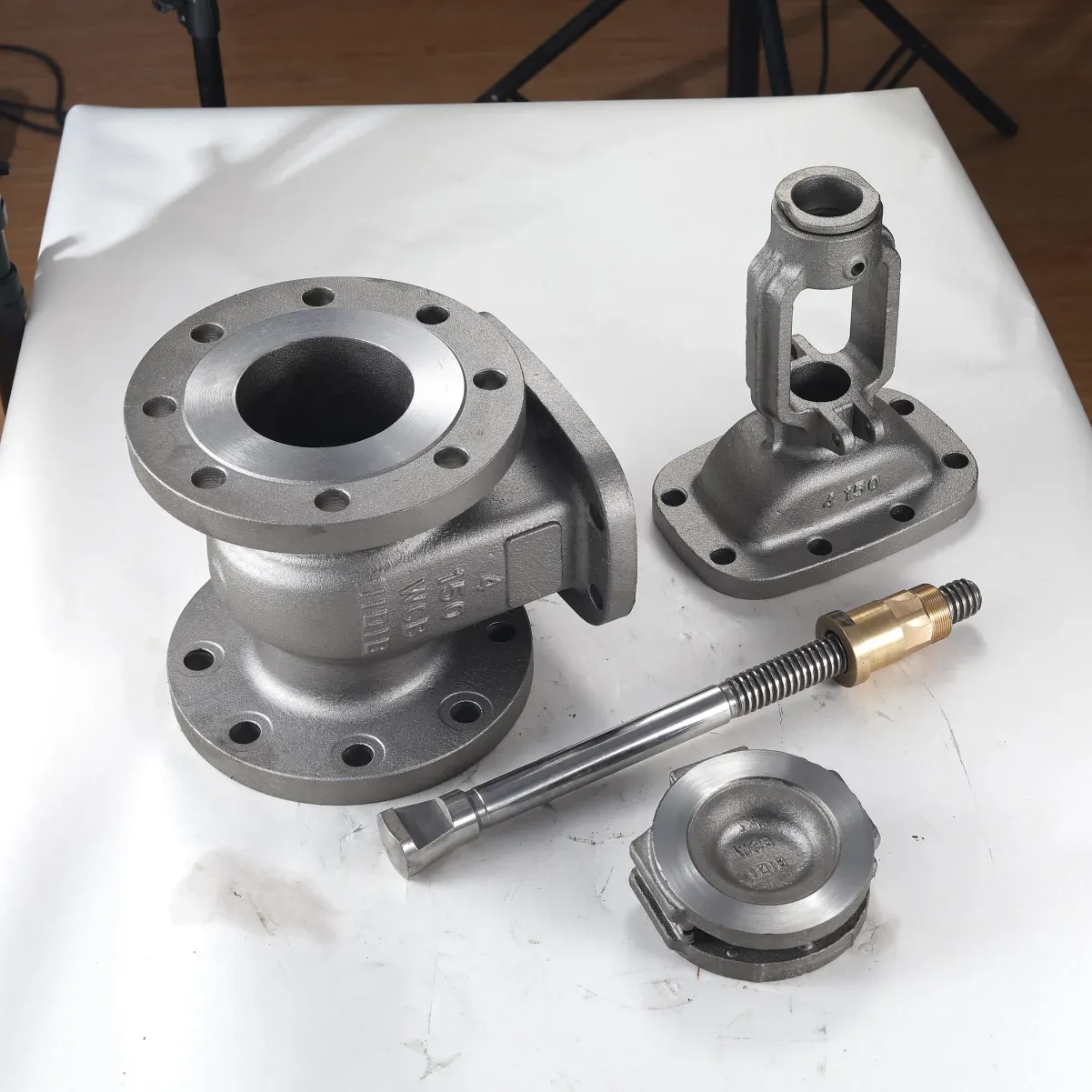
The predominant material for aluminum flanges is aluminum alloy 6061-T6, valued for its strength, weldability, and corrosion resistance. Other commonly used alloys include 5052, 356, and 7075, each tailored to specific application requirements. 6061-T6 comprises approximately 95.8-98.6% Aluminum, 0.8-1.2% Silicon, 0.25-0.40% Iron, 0.15% Copper (max), 0.25% Magnesium, and 0.15% Chromium (max). The “T6” designation signifies solution heat treatment and artificial aging, increasing strength and hardness. Raw material purity is crucial; contaminants like copper can reduce corrosion resistance. Manufacturing typically involves forging, die-casting, or machining from billet stock. Forging provides superior grain structure and strength, ideal for high-pressure applications. Die-casting is suitable for complex geometries and high-volume production, while machining offers precise tolerances. Key parameter control during manufacturing includes: accurate dimensional control achieved through CNC machining; surface finish quality to ensure optimal gasket sealing; heat treatment process monitoring to verify alloy properties; and non-destructive testing (NDT) such as radiography or ultrasonic testing to detect internal flaws. Welding, when required (e.g., for large diameter flanges), must be performed using appropriate aluminum welding techniques (GTAW/TIG or GMAW/MIG) and filler metals to maintain alloy integrity and prevent corrosion. Post-weld heat treatment is often necessary to restore mechanical properties. Surface treatments like anodizing or powder coating are frequently applied to further enhance corrosion resistance.
Performance & Engineering
The performance of aluminum flanges is governed by several engineering considerations. Firstly, pressure-temperature ratings, dictated by ASME B16.5 or EN 1092-1 standards (depending on the regional requirement), must be strictly adhered to. Force analysis, including internal pressure stress, bolt loading, and thermal stresses, is crucial for ensuring structural integrity. Finite Element Analysis (FEA) is commonly employed to model stress distribution and predict flange behavior under various loading conditions. Environmental resistance is paramount; prolonged exposure to corrosive media can lead to pitting corrosion, galvanic corrosion (when in contact with dissimilar metals), or crevice corrosion. Selection of the appropriate aluminum alloy and protective coatings is vital. Compliance requirements vary by industry. For example, flanges used in potable water systems must comply with NSF/ANSI 61 standards to ensure they do not leach harmful contaminants into the water. Those used in hazardous environments may require ATEX certification. Gasket selection is also a critical engineering aspect. The gasket material must be chemically compatible with the process fluid and capable of withstanding the operating temperature and pressure. Proper bolt tightening procedures, utilizing calibrated torque wrenches, are essential to achieve a leak-tight seal. Over-tightening can damage the flange or gasket, while under-tightening can lead to leaks. Thermal expansion considerations are also important, particularly in systems with large temperature fluctuations, to prevent flange distortion and leakage.
Technical Specifications
| Parameter | Unit | 6061-T6 Aluminum Flange (Typical) | 5052 Aluminum Flange (Typical) |
|---|---|---|---|
| Tensile Strength | MPa | 310 | 260 |
| Yield Strength | MPa | 276 | 220 |
| Corrosion Resistance | Rating (1-5, 5=Excellent) | 4 | 4.5 |
| Operating Temperature Range | °C | -200 to 200 | -200 to 150 |
| Density | g/cm³ | 2.7 | 2.68 |
| Hardness (Brinell) | HB | 95 | 85 |
Failure Mode & Maintenance
Aluminum flanges are susceptible to several failure modes. Fatigue cracking can occur under cyclical loading, particularly near bolt holes or weldments. Pitting corrosion, as previously mentioned, is common in chloride-rich environments. Galvanic corrosion arises when aluminum is coupled with more noble metals (e.g., stainless steel) in the presence of an electrolyte. Crevice corrosion can develop in shielded areas, such as under gaskets or around bolt heads. Degradation of gasket materials due to chemical attack or thermal aging can also lead to leaks. Oxidation forms a passive layer that protects the aluminum, but this layer can be compromised by abrasive cleaning or harsh chemicals. Maintenance protocols should include regular visual inspections for signs of corrosion, cracks, or gasket leaks. Bolt tightening should be checked periodically and re-torqued as necessary, adhering to manufacturer’s recommendations. Protective coatings should be inspected for damage and repaired promptly. In corrosive environments, periodic cleaning with appropriate cleaning agents is recommended. For severe corrosion, flange replacement may be required. Non-destructive testing (NDT) methods such as dye penetrant inspection or ultrasonic testing can be used to detect hidden cracks or flaws. Proper gasket selection and installation are crucial preventative maintenance steps. When replacing a flange, ensuring material compatibility with the entire system is vital to prevent galvanic corrosion.
Industry FAQ
Q: What are the primary advantages of using aluminum flanges over steel flanges in a seawater desalination plant?
A: The principal advantage lies in aluminum’s superior corrosion resistance in saline environments compared to carbon steel. While stainless steel is also used, aluminum offers a significant weight reduction, simplifying installation and reducing structural support requirements. The cost is often lower than specialized stainless steel alloys necessary for prolonged seawater exposure. However, careful alloy selection (typically 5052 or 5083) and potentially cathodic protection are essential to mitigate galvanic corrosion when dissimilar metals are present in the system.
Q: How does the heat treatment process (T6) affect the performance of a 6061 aluminum flange?
A: The T6 heat treatment significantly enhances the mechanical properties of 6061 aluminum. It involves solution heat treating the alloy, followed by rapid quenching and artificial aging. This process precipitates strengthening compounds within the aluminum matrix, resulting in a substantial increase in tensile and yield strength, as well as improved hardness. This allows the flange to withstand higher pressures and stresses without deformation or failure.
Q: What is the impact of using an improper gasket material with an aluminum flange in a chemical processing application?
A: An incompatible gasket material can lead to several problems. Chemical attack by the process fluid can cause the gasket to degrade, swell, or lose its elasticity, resulting in leaks. Galvanic corrosion can occur if the gasket material is electrochemically dissimilar to the aluminum flange. Inadequate temperature resistance can lead to gasket failure at elevated temperatures. Proper gasket selection requires considering the process fluid's chemical composition, temperature, pressure, and the flange material.
Q: What Non-Destructive Testing (NDT) methods are most commonly used for inspecting aluminum flanges?
A: Dye penetrant inspection (DPI) is frequently used to detect surface cracks and flaws. Radiographic testing (RT), using X-rays or gamma rays, can reveal internal defects such as porosity or inclusions. Ultrasonic testing (UT) is another common method for detecting internal flaws and measuring material thickness. Eddy current testing (ECT) is also utilized to detect surface and near-surface defects, particularly in conductive materials like aluminum.
Q: What are the considerations for selecting the correct bolt material when fastening an aluminum flange?
A: Selecting the correct bolt material is crucial to avoid galvanic corrosion. Using steel bolts directly against aluminum can lead to accelerated corrosion of the aluminum. Options include using stainless steel bolts with an isolating sleeve or washer, or utilizing aluminum bolts. The bolt material should also have sufficient strength to withstand the applied loads and operating temperatures. The bolt’s coating (if any) must also be compatible with the environment.
Conclusion
Aluminum flanges represent a versatile and cost-effective solution for joining piping systems in a wide range of industrial applications. Their lightweight nature, inherent corrosion resistance, and ease of manufacturing make them a preferred choice in many scenarios. However, successful implementation requires careful consideration of material selection, manufacturing processes, performance criteria, and potential failure modes. Understanding the nuances of alloy composition, heat treatment, and environmental compatibility is paramount to ensuring long-term reliability and safety.
Moving forward, advancements in aluminum alloy development and surface treatment technologies will further enhance the performance and durability of aluminum flanges. The integration of digital twins for predictive maintenance and the adoption of advanced NDT methods will play an increasingly important role in maximizing their operational lifespan and minimizing downtime. Furthermore, a continued focus on sustainable manufacturing practices and the use of recycled aluminum will contribute to a more environmentally responsible industrial landscape.
-
3 inch flange Performance Analysis
-
Aluminum Flange Material Performance
-
Ring Joint Flange Performance Analysis
-
Square Flange Performance Analysis
-
Ring Joint Flanges Performance Analysis
-
Rubber Flanges Performance Analysis
-
Square Flanges Material Science Manufacturing
-
Hubbed Flange Performance Analysis
-
Flat Face Flange Performance Analysis
-
Ball Valve Flange Performance Analysis
-
flat face flanges Performance Analysis
-
Flat Faced Flange Performance Analysis
-
3 in flange Performance Analysis
-
2in flange Performance Analysis
-
Flat Faced Flanges Performance Analysis
 Afrikaans
 Albanian
 Amharic
 Arabic
 Armenian
 Azerbaijani
 Basque
 Belarusian
 Bengali
 Bosnian
 Bulgarian
 Catalan
 Cebuano
 Corsican
 Croatian
 Czech
Czech
 Danish
 Dutch
Dutch
 Esperanto
 Estonian
 Finnish
 French
 Frisian
 Galician
 Georgian
 German
 Greek
Greek
 Gujarati
 Haitian Creole
 Hausa
Hawaiian
Hausa
Hawaiian
 Hebrew
 Hindi
Hindi
 Miao
Miao
 Hungarian
 Icelandic
 Igbo
Igbo
 Indonesian
 Irish
Irish
 Italian
 Japanese
 Javanese
Kannada
Javanese
Kannada
 Kazakh
 Khmer
Khmer
 Rwandese
 Korean
 Kurdish
 Kyrgyz
 Lao
Lao
 Latin
Latin
 Latvian
 Lithuanian
 Luxembourgish
 Macedonian
 Malgashi
 Malay
Malay
 Malayalam
 Maltese
 Maori
Maori
 Marathi
 Mongolian
 Myanmar
 Nepali
 Norwegian
 Norwegian
 Occitan
 Pashto
 Persian
 Polish
 Portuguese
Punjabi
Portuguese
Punjabi
 Romanian
 Russian
 Samoan
 Scottish Gaelic
 Serbian
 Sesotho
 Shona
Shona
 Sindhi
 Sinhala
 Slovak
 Slovenian
 Somali
 Spanish
 Sundanese
 Swahili
 Swedish
Tagalog
Swedish
Tagalog
 Tajik
Tajik
 Tamil
Tamil
 Tatar
Tatar
 Telugu
 Thai
Thai
 Turkish
 Turkmen
 Ukrainian
 Urdu
Urdu
 Uighur
 Uzbek
Uzbek
 Vietnamese
 Welsh
Welsh
 Bantu
Bantu
 Yiddish
 Yoruba
 Zulu
Zulu
 English