




Flat Faced Flanges Performance Analysis
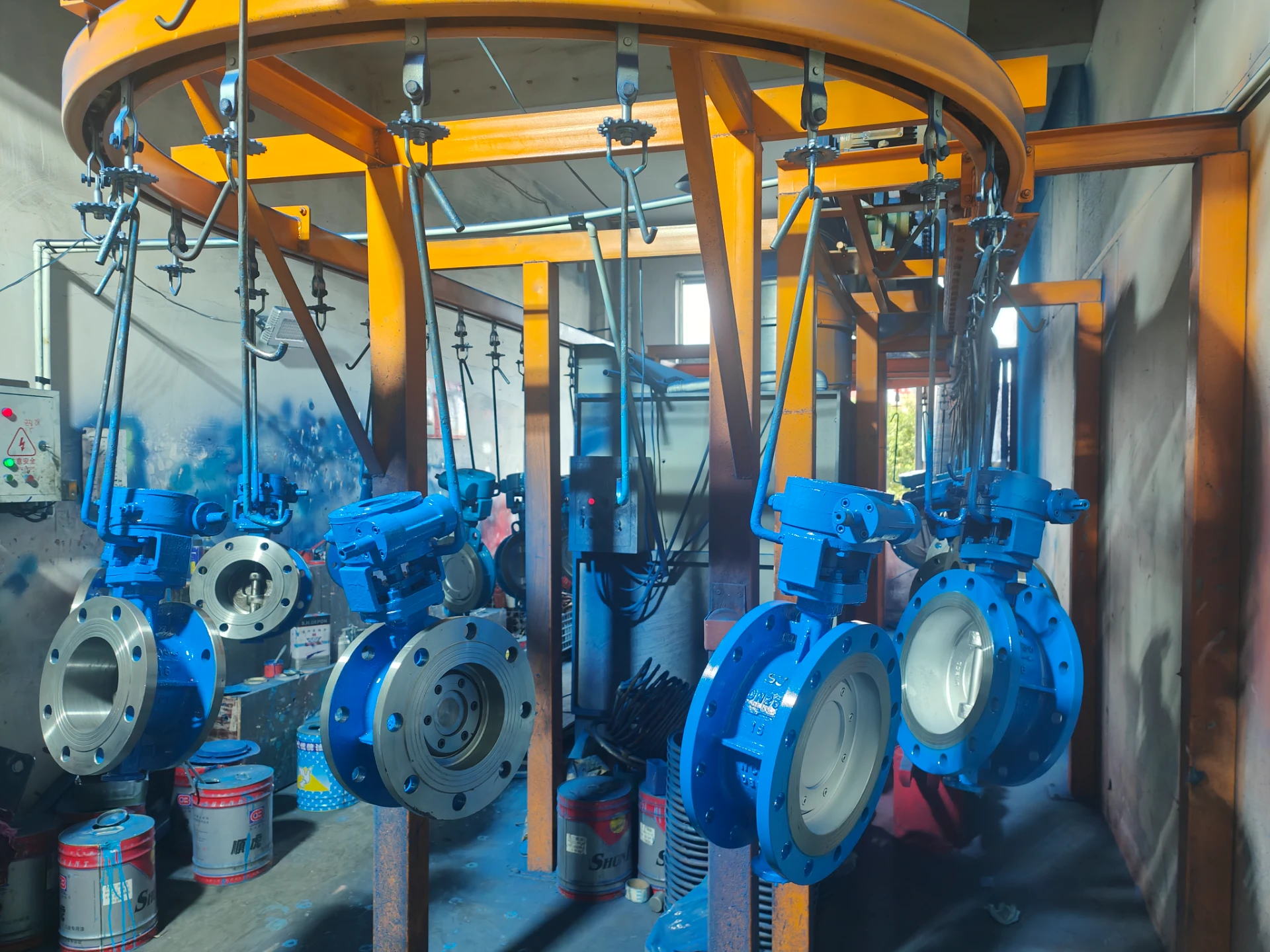
Introduction
Flat faced flanges are a fundamental component in piping systems across numerous industries, including oil and gas, chemical processing, water treatment, and power generation. Functioning as a connecting element between sections of pipe, valves, pumps, and other equipment, they facilitate the sealing and integrity of fluid transfer. Their defining characteristic is the flat mating surface, offering ease of alignment and bolting, particularly advantageous in low-pressure, large-diameter applications. The technical position of flat faced flanges within the industry chain lies immediately downstream of flange forging or casting and upstream of system assembly and operation. Core performance characteristics revolve around maintaining pressure containment, resisting corrosion, and ensuring long-term mechanical integrity under varying operational stresses. Compared to raised face flanges, flat faced flanges offer lower bolt loading requirements but are more susceptible to gasket degradation if surface finishes are not carefully controlled.
Material Science & Manufacturing
Flat faced flanges are commonly manufactured from carbon steel (ASTM A105, A516 Grade 70), stainless steel (304/304L, 316/316L), alloy steel (A182 F22, F91), and, less frequently, ductile iron. Carbon steel is favored for its cost-effectiveness and strength in moderate conditions, while stainless steels provide superior corrosion resistance. Alloy steels are employed in high-temperature, high-pressure environments. The raw material’s chemical composition directly influences mechanical properties like yield strength, tensile strength, and ductility. Manufacturing typically involves forging, casting, or plate cutting followed by machining. Forged flanges exhibit higher strength and impact resistance due to grain flow alignment achieved during the forging process. Casting offers greater design flexibility and is suitable for complex flange geometries. Plate cutting is used for smaller runs and simpler designs. Critical parameters during manufacturing include dimensional accuracy (face diameter, bolt circle diameter, thickness), surface finish (Ra values are crucial for gasket sealing), and weld quality (if applicable for weld neck flanges). Heat treatment, such as normalizing or quenching and tempering, is often applied to achieve desired mechanical properties. Non-destructive testing (NDT) – including visual inspection, radiographic testing (RT), ultrasonic testing (UT), and liquid penetrant testing (PT) – is essential to verify material integrity and identify defects. Gasket material compatibility with the flange material is also paramount; improper selection can lead to galvanic corrosion or gasket failure.

Performance & Engineering
The performance of flat faced flanges is fundamentally governed by stress analysis, particularly concerning internal pressure, bolt loading, and external loads (weight of piping, thermal expansion/contraction). Internal pressure induces hoop stress in the flange and requires sufficient bolt preload to compress the gasket and maintain a leak-tight seal. Bolt preload calculations are based on principles of bolted joint design, incorporating factors like gasket seating stress, bolt tensile strength, and flange material yield strength. Finite Element Analysis (FEA) is frequently used to model stress distributions and optimize flange design for specific operating conditions. Environmental resistance is a key performance consideration. Exposure to corrosive fluids or atmospheres necessitates material selection based on corrosion rate data and the application of protective coatings (e.g., epoxy, galvanizing). Thermal expansion and contraction cause stresses in the flange and connected piping. Expansion loops or flexible connectors are employed to mitigate these stresses. Compliance requirements, such as ASME B16.5 (for standard flanges), dictate dimensional tolerances, pressure-temperature ratings, and material specifications. Leak testing, often employing pneumatic or hydrostatic pressure, verifies the flange’s sealing performance. Furthermore, the flange’s impact resistance must be considered, especially in applications prone to mechanical shock or vibration.
Technical Specifications
| Parameter | ASTM A105 Carbon Steel | 304/304L Stainless Steel | A182 F22 Alloy Steel | Ductile Iron (ASTM A536-65) |
|---|---|---|---|---|
| Tensile Strength (MPa) | 400-550 | 517-724 | 483-620 | 400-550 |
| Yield Strength (MPa) | 250-345 | 207-276 | 241-310 | 207-276 |
| Hardness (Brinell) | 110-170 | 85-100 | 150-200 | 140-190 |
| Corrosion Resistance | Low (requires coating) | Excellent | Good (depends on environment) | Moderate (requires coating) |
| Maximum Operating Temperature (°C) | 232 | 871 | 427 | 120 |
| Pressure Rating (PN) | Up to PN100 | Up to PN420 | Up to PN100 | Up to PN16 |
Failure Mode & Maintenance
Flat faced flanges are susceptible to several failure modes. Corrosion, particularly pitting corrosion and crevice corrosion, can weaken the flange material and lead to leakage. Fatigue cracking can occur under cyclic loading, especially near bolt holes. Gasket failure, manifested as leakage, is a common issue often stemming from improper gasket selection, insufficient bolt preload, or surface finish irregularities. Bolt failure can result from over-tightening, corrosion, or fatigue. Thermal stresses can induce distortion and cracking. Creep, a time-dependent deformation under sustained stress, is a concern at elevated temperatures. For maintenance, regular visual inspection for signs of corrosion, erosion, or damage is crucial. Bolt preload should be checked periodically and adjusted as necessary. Gaskets should be replaced according to manufacturer's recommendations or when leakage is detected. Surface preparation (cleaning, coating) is essential for corrosion prevention. Non-destructive testing (NDT) can be used to detect hidden defects. In cases of severe corrosion or cracking, flange replacement is necessary. Lubricating bolts with anti-seize compound prevents galling and facilitates disassembly. Maintaining accurate records of flange inspections and maintenance activities is vital for long-term reliability.
Industry FAQ
Q: What is the primary advantage of using a flat faced flange versus a raised face flange in a low-pressure application?
A: The primary advantage is simplified alignment and bolting. The flat mating surface requires less precision during assembly, reducing installation time and cost. The lower bolt loading requirements also translate to reduced stress on the connected piping.
Q: How does the surface finish (Ra value) impact the sealing performance of a flat faced flange?
A: A rougher surface finish increases the likelihood of gasket leakage. The gasket must conform to the surface irregularities to achieve a proper seal. Lower Ra values (e.g., 125 micro-inches or less) provide a smoother surface, improving gasket seating and reducing leakage potential.
Q: What material selection considerations are important for a flat faced flange exposed to seawater?
A: For seawater applications, stainless steel alloys (316/316L) or duplex stainless steels are highly recommended due to their superior resistance to chloride-induced pitting corrosion. Carbon steel flanges should be avoided unless protected with a robust corrosion-resistant coating system.
Q: What is the role of gasket selection in mitigating galvanic corrosion between dissimilar flange materials?
A: Selecting a non-conductive gasket material, such as PTFE or rubber, can isolate the dissimilar metals and prevent galvanic corrosion. Alternatively, using a sacrificial anode or applying a corrosion inhibitor can also mitigate the risk.
Q: How often should bolt preload on a flat faced flange be checked and re-torqued?
A: Bolt preload should be checked initially after installation and then periodically, typically every 6-12 months, depending on the severity of the operating conditions (temperature, pressure, vibration). Re-torquing should be performed if preload has dropped below the specified minimum value.
Conclusion
Flat faced flanges, while seemingly simple components, are critical for ensuring the safe and reliable operation of piping systems. Their performance is heavily influenced by material selection, manufacturing quality, engineering design considerations, and proper maintenance practices. Understanding the nuances of stress analysis, corrosion mechanisms, and gasket sealing principles is paramount for preventing failures and maximizing service life.
The continued development of advanced materials, improved manufacturing techniques (such as additive manufacturing for complex flange geometries), and more sophisticated non-destructive testing methods will further enhance the performance and reliability of flat faced flanges. Prioritizing preventative maintenance and adhering to relevant industry standards remain essential for mitigating risks and ensuring long-term operational integrity.
-
flat face flanges Performance Analysis
-
Flat Faced Flange Performance Analysis
-
3 in flange Performance Analysis
-
2in flange Performance Analysis
-
Flat Faced Flanges Performance Analysis
-
megalug flange Performance and Engineering
-
Plate Flange Performance Analysis
-
Reducing Flange Performance Analysis
-
Sealing Flange Performance Analysis
-
Turbo Flanges Performance Analysis
-
Screwed Flange Performance Analysis
-
Screwed Flanges Performance Analysis
-
Screw Flanges Performance Analysis
-
weld neck flanges Performance Analysis
-
welding neck flange Material Science Manufacturing
 Afrikaans
 Albanian
 Amharic
 Arabic
 Armenian
 Azerbaijani
 Basque
 Belarusian
 Bengali
 Bosnian
 Bulgarian
 Catalan
 Cebuano
 Corsican
 Croatian
 Czech
Czech
 Danish
 Dutch
Dutch
 Esperanto
 Estonian
 Finnish
 French
 Frisian
 Galician
 Georgian
 German
 Greek
Greek
 Gujarati
 Haitian Creole
 Hausa
Hawaiian
Hausa
Hawaiian
 Hebrew
 Hindi
Hindi
 Miao
Miao
 Hungarian
 Icelandic
 Igbo
Igbo
 Indonesian
 Irish
Irish
 Italian
 Japanese
 Javanese
Kannada
Javanese
Kannada
 Kazakh
 Khmer
Khmer
 Rwandese
 Korean
 Kurdish
 Kyrgyz
 Lao
Lao
 Latin
Latin
 Latvian
 Lithuanian
 Luxembourgish
 Macedonian
 Malgashi
 Malay
Malay
 Malayalam
 Maltese
 Maori
Maori
 Marathi
 Mongolian
 Myanmar
 Nepali
 Norwegian
 Norwegian
 Occitan
 Pashto
 Persian
 Polish
 Portuguese
Punjabi
Portuguese
Punjabi
 Romanian
 Russian
 Samoan
 Scottish Gaelic
 Serbian
 Sesotho
 Shona
Shona
 Sindhi
 Sinhala
 Slovak
 Slovenian
 Somali
 Spanish
 Sundanese
 Swahili
 Swedish
Tagalog
Swedish
Tagalog
 Tajik
Tajik
 Tamil
Tamil
 Tatar
Tatar
 Telugu
 Thai
Thai
 Turkish
 Turkmen
 Ukrainian
 Urdu
Urdu
 Uighur
 Uzbek
Uzbek
 Vietnamese
 Welsh
Welsh
 Bantu
Bantu
 Yiddish
 Yoruba
 Zulu
Zulu
 English