




solenoid valve miniature Performance Analysis

Introduction
Solenoid valves miniature represent a critical component in numerous fluid control systems across diverse industrial sectors, including analytical instrumentation, medical devices, and pneumatic/hydraulic control. Characterized by their compact footprint and rapid actuation, these valves are employed where space constraints and precise fluid handling are paramount. Unlike larger industrial solenoid valves designed for high flow rates, miniature solenoid valves prioritize responsiveness and low internal volumes. Their function is to control the flow of liquids or gases by electrically energizing a solenoid coil, which in turn actuates a plunger or core to open or close a valve orifice. The industry faces ongoing challenges related to miniaturization without compromising performance, ensuring long-term reliability in demanding applications, and achieving cost-effectiveness for high-volume deployment. Core performance characteristics include response time, leakage rate, operating pressure range, and media compatibility, all of which significantly influence system efficiency and control accuracy.
Material Science & Manufacturing
The construction of solenoid valve miniatures relies on a precise interplay of material science and manufacturing techniques. The valve body is frequently fabricated from stainless steel (304, 316), brass (C36000), or engineered plastics like PEEK (Polyether ether ketone) and PTFE (Polytetrafluoroethylene). Stainless steel offers excellent corrosion resistance and mechanical strength, crucial for aggressive media applications. Brass provides good machinability and cost-effectiveness for less demanding fluids. PEEK and PTFE are chosen for their exceptional chemical inertness and low friction coefficients, suitable for handling highly corrosive substances. The plunger core is typically made from a ferromagnetic material, often a nickel-iron alloy (e.g., Permalloy) to maximize magnetic permeability. The coil winding is generally copper, coated with an insulating varnish to prevent short circuits. Manufacturing processes involve precision machining (CNC milling, turning), micro-injection molding for plastic components, and automated coil winding. Key parameter control during manufacturing includes maintaining tight tolerances on orifice dimensions to ensure consistent flow rates, achieving accurate plunger alignment to minimize hysteresis, and ensuring proper encapsulation of the coil to prevent moisture ingress. Welding processes, when used for stainless steel bodies, require careful control of heat input to prevent distortion and maintain material integrity. Post-processing includes rigorous cleaning to remove particulate matter and ensure compatibility with sensitive fluids.
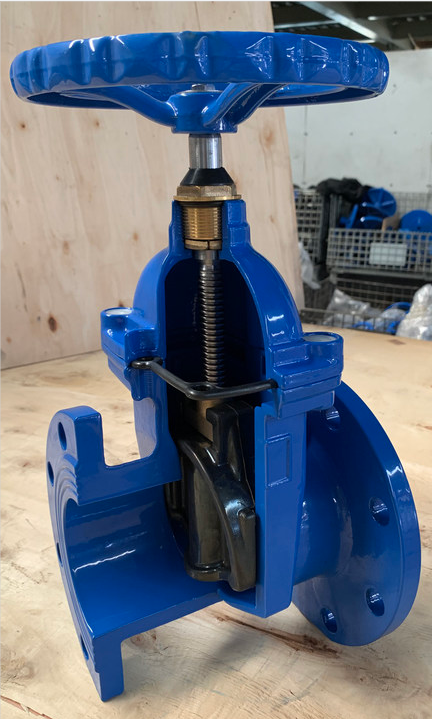
Performance & Engineering
Performance of solenoid valve miniatures is heavily reliant on fluid dynamics and electromagnetic principles. Force analysis determines the required solenoid coil strength to overcome the fluid pressure and spring force opposing plunger movement. Bernoulli’s principle governs flow rate through the orifice, influenced by pressure differential and orifice geometry. Environmental resistance, particularly temperature variations, impacts material properties and fluid viscosity, affecting valve response time and leakage. Compliance requirements, notably RoHS (Restriction of Hazardous Substances) and REACH (Registration, Evaluation, Authorisation and Restriction of Chemicals), dictate material selection and manufacturing processes. Functional implementation involves careful consideration of the valve’s actuation mode (direct-acting, pilot-operated), port configuration, and electrical connection type. Direct-acting valves offer faster response times but require higher power consumption. Pilot-operated valves are more energy-efficient but have slower response times. The valve's spring material (typically stainless steel music wire) influences the valve’s reset time and durability. Proper shielding is critical to prevent electromagnetic interference (EMI) from disrupting the valve’s operation or interfering with surrounding instrumentation. Fatigue analysis is essential for ensuring long-term reliability under cyclical operation, particularly for valves exposed to high pressures and frequent switching.
Technical Specifications
| Parameter | Unit | Typical Value | Tolerance |
|---|---|---|---|
| Operating Pressure (Max) | psi | 150 | ±10% |
| Leakage Rate (Bubble Tight) | sccm | <1 | - |
| Response Time (Actuation) | ms | 5-15 | ±20% |
| Coil Voltage | VDC | 12, 24 | ±5% |
| Orifice Diameter | mm | 0.5-2.0 | ±0.02 |
| Fluid Temperature Range | °C | -20 to 80 | - |
Failure Mode & Maintenance
Solenoid valve miniatures are susceptible to several failure modes. Fatigue cracking of the spring can occur due to prolonged cyclical loading, leading to valve malfunction. Delamination of the coil insulation can result in short circuits and valve failure. Degradation of elastomeric seals (e.g., O-rings, diaphragms) due to chemical incompatibility or temperature extremes leads to leakage. Oxidation of metallic components in corrosive environments can cause seizing and prevent proper actuation. Contamination from particulate matter can block the orifice, restricting flow. Cavitation erosion can damage the orifice in high-flow applications. Maintenance primarily involves regular inspection for leaks, cleaning of the valve body to remove contaminants, and replacement of worn seals and springs. Preventive maintenance includes implementing filtration systems upstream of the valve to minimize particulate contamination. For valves handling aggressive media, periodic material compatibility testing is recommended. When troubleshooting, electrical continuity of the coil should be checked, and the solenoid plunger should be inspected for free movement. Ultrasonic cleaning can be used to remove stubborn deposits. Proper storage in a dry environment is critical to prevent corrosion.
Industry FAQ
Q: What is the impact of fluid viscosity on the response time of a miniature solenoid valve?
A: Increased fluid viscosity directly correlates to slower response times. Higher viscosity fluids offer greater resistance to flow, requiring more force from the solenoid to achieve the same flow rate, and thus increasing the actuation time. Selecting a valve with a larger orifice or a higher coil power can mitigate this effect, but careful consideration of the fluid properties is essential.
Q: How does the choice of valve material affect its compatibility with different media?
A: Material compatibility is paramount. Stainless steel (316) offers broad chemical resistance but may be unsuitable for highly oxidizing acids. Brass is susceptible to corrosion by ammonia and certain chlorides. PEEK and PTFE provide excellent inertness to most chemicals, but their mechanical strength is lower. Careful selection based on a chemical compatibility chart is vital to prevent seal degradation and valve failure.
Q: What measures can be taken to minimize electromagnetic interference (EMI) from a solenoid valve?
A: Shielding the valve body with a conductive material (e.g., aluminum) can effectively block EMI. Using shielded cables for the electrical connection and proper grounding techniques are also crucial. Choosing a valve with a robust coil encapsulation design minimizes radiated emissions. Placement of the valve away from sensitive electronic equipment can also help reduce interference.
Q: What is the significance of the ‘bubble tight’ specification for leakage rate?
A: 'Bubble tight' indicates an extremely low leakage rate, typically less than 1 sccm (standard cubic centimeters per minute). This is critical for applications where even small leaks are unacceptable, such as precision analytical instruments or medical devices. It signifies a high degree of sealing integrity and consistent performance.
Q: What is the typical lifespan of a miniature solenoid valve under continuous operation?
A: Typical lifespan varies based on operating conditions and duty cycle, but a well-maintained miniature solenoid valve can achieve millions of cycles. Factors influencing lifespan include fluid compatibility, operating pressure, temperature, and contamination levels. Regular maintenance and proper selection of valve materials can significantly extend its service life. Expect 5-10 million cycles for typical applications.
Conclusion
Miniature solenoid valves are integral components in modern fluid control systems, offering precision and responsiveness in compact designs. Their performance hinges on a sophisticated understanding of material science, fluid dynamics, and electromagnetic principles. The selection of appropriate materials, precise manufacturing controls, and rigorous testing are essential for ensuring long-term reliability and compatibility with diverse media.
Future development in miniature solenoid valve technology will focus on further miniaturization, increased energy efficiency, and enhanced integration with smart sensors and control systems. Advancements in micro-fabrication techniques and novel materials will drive innovation, enabling wider adoption in emerging applications like microfluidics and lab-on-a-chip devices. Addressing challenges related to durability and cost-effectiveness will remain critical for sustained growth in this dynamic industry.
-
Top Reasons to Choose a Stainless Steel Flange Check Valve for Industrial Applications
-
Direct Acting Solenoid Valves Performance Analysis
-
solenoid valve direct acting Performance Analysis
-
solenoid valve miniature Performance Analysis
-
cryogenic solenoid valves Material Science Manufacturing
-
solenoid valve cryogenic Performance Analysis
-
24vdc solenoid valve Performance Analysis
-
24vdc solenoid valves Performance Analysis
-
solenoid valves 24vdc Performance Analysis
-
solenoid valve 24 vdc Performance Analysis
-
24v dc solenoid valve Performance Analysis
-
circle seal check valve Performance Engineering
-
circle seal check valves Performance Analysis
-
cryogenic check valve Performance Analysis
-
3 swing check valve Performance Analysis
 Afrikaans
 Albanian
 Amharic
 Arabic
 Armenian
 Azerbaijani
 Basque
 Belarusian
 Bengali
 Bosnian
 Bulgarian
 Catalan
 Cebuano
 Corsican
 Croatian
 Czech
Czech
 Danish
 Dutch
Dutch
 Esperanto
 Estonian
 Finnish
 French
 Frisian
 Galician
 Georgian
 German
 Greek
Greek
 Gujarati
 Haitian Creole
 Hausa
Hawaiian
Hausa
Hawaiian
 Hebrew
 Hindi
Hindi
 Miao
Miao
 Hungarian
 Icelandic
 Igbo
Igbo
 Indonesian
 Irish
Irish
 Italian
 Japanese
 Javanese
Kannada
Javanese
Kannada
 Kazakh
 Khmer
Khmer
 Rwandese
 Korean
 Kurdish
 Kyrgyz
 Lao
Lao
 Latin
Latin
 Latvian
 Lithuanian
 Luxembourgish
 Macedonian
 Malgashi
 Malay
Malay
 Malayalam
 Maltese
 Maori
Maori
 Marathi
 Mongolian
 Myanmar
 Nepali
 Norwegian
 Norwegian
 Occitan
 Pashto
 Persian
 Polish
 Portuguese
Punjabi
Portuguese
Punjabi
 Romanian
 Russian
 Samoan
 Scottish Gaelic
 Serbian
 Sesotho
 Shona
Shona
 Sindhi
 Sinhala
 Slovak
 Slovenian
 Somali
 Spanish
 Sundanese
 Swahili
 Swedish
Tagalog
Swedish
Tagalog
 Tajik
Tajik
 Tamil
Tamil
 Tatar
Tatar
 Telugu
 Thai
Thai
 Turkish
 Turkmen
 Ukrainian
 Urdu
Urdu
 Uighur
 Uzbek
Uzbek
 Vietnamese
 Welsh
Welsh
 Bantu
Bantu
 Yiddish
 Yoruba
 Zulu
Zulu
 English