




circle seal check valve Performance Engineering
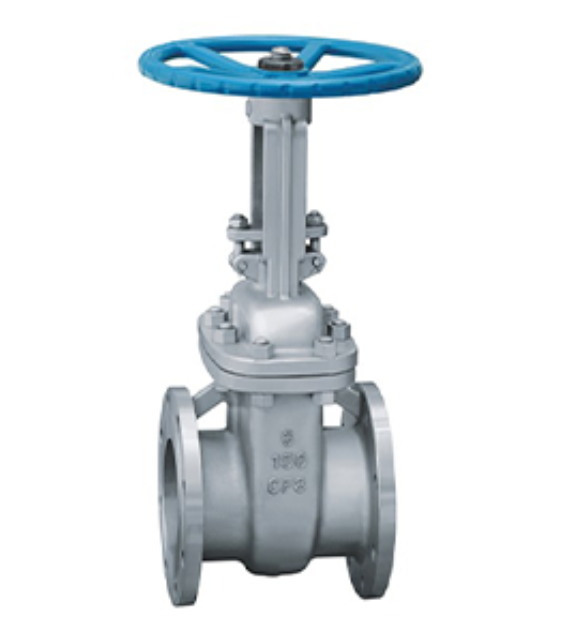
Introduction
Circle seal check valves are integral components in fluid handling systems, designed to prevent backflow in pipelines. Positioned within the broader industrial valve landscape, they serve a critical function in maintaining unidirectional flow across diverse applications – from wastewater treatment and chemical processing to power generation and oil & gas. Unlike swing or lift check valves, the circle seal design utilizes a flexible elastomer disc, forming a tight seal against a precisely machined seat, offering superior sealing capabilities, particularly in low-pressure and slurry-laden applications. Core performance characteristics are defined by minimal leakage rates, consistent flow coefficients (Cv), and durability under cyclical operation. The industry faces challenges in maintaining consistently low leakage across varying fluid viscosities and temperatures, and achieving long-term reliability in abrasive service. This guide provides an in-depth technical analysis of circle seal check valves, covering material science, manufacturing processes, performance engineering, failure modes, and relevant industry standards.
Material Science & Manufacturing
The body of a typical circle seal check valve is commonly constructed from ductile iron (ASTM A536 Grade 65-45-12) due to its robust mechanical properties, corrosion resistance, and cost-effectiveness. Stainless steel (304/316 – ASTM A351 Grade CF8/CF8M) is frequently selected for applications involving corrosive fluids or high-temperature environments. The disc material is critical for sealing performance and is typically manufactured from elastomers such as EPDM (Ethylene Propylene Diene Monomer), Nitrile (NBR - Buna-N), or Viton (FKM - Fluoroelastomer). EPDM offers excellent resistance to water, steam, and many chemicals, while NBR provides good resistance to oil and fuels. Viton offers the broadest chemical compatibility, including strong acids and solvents, but at a higher cost. Manufacturing involves several key stages. Ductile iron bodies are created via sand casting, followed by surface preparation and coating (epoxy or fusion-bonded epoxy – FBE) for enhanced corrosion protection. Stainless steel bodies are typically investment cast. The disc is molded using compression or injection molding, requiring precise control of temperature, pressure, and cure time to ensure dimensional accuracy and material homogeneity. The seating surface is meticulously machined to achieve a Ra value typically below 32 µin (0.8 µm), critical for establishing a leak-tight seal. The spring, often stainless steel 304, is formed and heat-treated to provide consistent closing force over its operational lifespan. Parameter control during elastomer molding is paramount; variations in formulation or processing can significantly impact the disc’s resilience, elasticity, and chemical resistance.
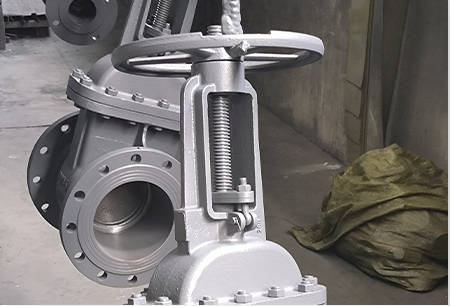
Performance & Engineering
The performance of a circle seal check valve is dictated by hydrodynamic losses, sealing efficiency, and fatigue resistance. Force analysis is essential, considering the fluid pressure, flow velocity, and disc weight. The spring’s force must counteract the fluid pressure to maintain a closed position, while allowing for relatively low cracking pressures (the pressure required to initiate flow). The valve’s Cv (flow coefficient) is a crucial parameter, representing the flow capacity. It is influenced by the valve’s orifice size, disc design, and fluid viscosity. Environmental resistance is critical; exposure to UV radiation, extreme temperatures, and corrosive atmospheres can degrade the elastomer disc and body coatings. Compliance requirements vary by industry and region. For potable water applications, valves must conform to NSF/ANSI 61 standards, ensuring they do not leach harmful contaminants into the water supply. Oil & gas applications demand compliance with API 598 (valve inspection and testing) and API 6D (performance testing). Functional implementation considerations include minimizing water hammer (pressure surge) effects through proper valve sizing and installation orientation. Flutter, or rapid opening and closing of the disc due to flow pulsations, can lead to premature wear and must be mitigated through appropriate valve selection and system design. Finite element analysis (FEA) is increasingly used to optimize disc geometry and body design, minimizing stress concentrations and enhancing fatigue life.
Technical Specifications
| Parameter | Unit | Typical Value (Ductile Iron Body, EPDM Disc) | Stainless Steel 316 Body, Viton Disc |
|---|---|---|---|
| Maximum Working Pressure | PSI | 250 | 300 |
| Temperature Range | °F | -20 to 230 | -20 to 400 |
| Leakage Rate (Bubble Tight) | cc/min | 0.1 | 0.05 |
| Cv (Flow Coefficient) - 2" Valve | GPM | 25 | 28 |
| Body Material | - | Ductile Iron (A536-65-45-12) | Stainless Steel 316 (A351 CF8M) |
| Disc Material | - | EPDM | Viton (FKM) |
Failure Mode & Maintenance
Common failure modes include disc degradation (cracking, swelling, or hardening due to chemical attack or temperature extremes), seat erosion (caused by abrasive particles in the fluid), spring fatigue (loss of closing force over time), and body corrosion. Fatigue cracking can occur in the body due to cyclical pressure fluctuations, particularly at stress concentration points (e.g., weld joints). Delamination of the elastomer disc from the metal insert is another frequent issue, often resulting from inadequate bonding during manufacturing. Oxidation of stainless steel components can occur in high-temperature environments with insufficient oxygen levels. Maintenance typically involves periodic inspection of the disc and seat for wear or damage. Replacement of the disc is a routine maintenance task, requiring careful selection of the correct elastomer material for the specific application. Lubrication of the hinge pin (if applicable) can prevent seizing. Regular coating inspection and repair are crucial for ductile iron bodies to prevent corrosion. For critical applications, non-destructive testing (NDT) methods, such as ultrasonic testing or radiography, can be employed to detect hidden cracks or defects. Preventative maintenance programs, based on operational data and fluid analysis, are essential for maximizing valve lifespan and minimizing unplanned downtime. Thorough flushing of the pipeline prior to valve installation can remove abrasive debris and extend disc life.
Industry FAQ
Q: What are the primary advantages of a circle seal check valve over a swing check valve in slurry applications?
A: Circle seal check valves offer significantly better sealing performance in slurry applications due to the positive shut-off provided by the elastomer disc contacting a machined seat. Swing check valves rely on gravity and backflow to achieve closure, which is less effective with dense or abrasive slurries. This positive shut-off minimizes backflow and reduces the risk of sedimentation within the pipeline.
Q: How does the choice of elastomer affect the valve's chemical compatibility?
A: The elastomer is the most critical component regarding chemical compatibility. EPDM is generally suitable for water, steam, and dilute acids/alkalis. NBR excels with oils and fuels. Viton (FKM) offers the widest range of compatibility, including strong acids, solvents, and hydrocarbons. Improper elastomer selection can lead to swelling, degradation, and ultimately, valve failure.
Q: What is the impact of water hammer on circle seal check valve life?
A: Water hammer creates a rapid pressure surge that can cause significant stress on the valve components, particularly the disc and body. Repeated water hammer events can lead to fatigue cracking and premature failure. Proper valve sizing, slow valve closure, and the use of surge suppressors can mitigate water hammer effects.
Q: What is the recommended maintenance interval for a circle seal check valve in a clean water application?
A: For clean water applications, a visual inspection should be performed annually. The disc and seat should be inspected for wear or damage. Complete disassembly and elastomer replacement are typically recommended every 3-5 years, depending on the operational frequency and water quality.
Q: What standards define acceptable leakage rates for check valves in potable water systems?
A: NSF/ANSI 61 sets the standards for materials used in potable water systems, but doesn't directly define leakage rates. However, most potable water specifications require a 'bubble tight' shut-off, meaning no visible bubbles should be present when the valve is closed and pressurized. AWWA C508 provides detailed testing protocols for check valves, including leakage testing.
Conclusion
Circle seal check valves represent a robust and reliable solution for preventing backflow in a wide spectrum of industrial applications. Their superior sealing performance, particularly with challenging fluids like slurries, stems from the precise interaction between the elastomer disc and machined seat. Careful material selection, rigorous manufacturing processes, and adherence to relevant industry standards are crucial for ensuring long-term reliability and minimizing lifecycle costs.
Future developments in this technology will likely focus on advanced elastomer formulations with enhanced chemical resistance and durability, along with the integration of smart sensors for real-time performance monitoring and predictive maintenance. The ongoing demand for improved efficiency and reduced environmental impact will continue to drive innovation in check valve design and manufacturing.
-
Top Reasons to Choose a Stainless Steel Flange Check Valve for Industrial Applications
-
circle seal check valve Performance Engineering
-
circle seal check valves Performance Analysis
-
cryogenic check valve Performance Analysis
-
3 swing check valve Performance Analysis
-
4 wafer check valve Performance Analysis
-
6 wafer check valve Performance Analysis
-
cryogenic check valves Performance Analysis
-
soft seated check valve Performance Analysis
-
3/4 check valve Performance Analysis
-
wafer style check valve Performance Analysis
-
check valve with orifice Performance Analysis
-
check valve 8 inch Performance Analysis
-
1 1 2 inch check valve Performance Analysis
-
cast iron check valves Performance Analysis
 Afrikaans
 Albanian
 Amharic
 Arabic
 Armenian
 Azerbaijani
 Basque
 Belarusian
 Bengali
 Bosnian
 Bulgarian
 Catalan
 Cebuano
 Corsican
 Croatian
 Czech
Czech
 Danish
 Dutch
Dutch
 Esperanto
 Estonian
 Finnish
 French
 Frisian
 Galician
 Georgian
 German
 Greek
Greek
 Gujarati
 Haitian Creole
 Hausa
Hawaiian
Hausa
Hawaiian
 Hebrew
 Hindi
Hindi
 Miao
Miao
 Hungarian
 Icelandic
 Igbo
Igbo
 Indonesian
 Irish
Irish
 Italian
 Japanese
 Javanese
Kannada
Javanese
Kannada
 Kazakh
 Khmer
Khmer
 Rwandese
 Korean
 Kurdish
 Kyrgyz
 Lao
Lao
 Latin
Latin
 Latvian
 Lithuanian
 Luxembourgish
 Macedonian
 Malgashi
 Malay
Malay
 Malayalam
 Maltese
 Maori
Maori
 Marathi
 Mongolian
 Myanmar
 Nepali
 Norwegian
 Norwegian
 Occitan
 Pashto
 Persian
 Polish
 Portuguese
Punjabi
Portuguese
Punjabi
 Romanian
 Russian
 Samoan
 Scottish Gaelic
 Serbian
 Sesotho
 Shona
Shona
 Sindhi
 Sinhala
 Slovak
 Slovenian
 Somali
 Spanish
 Sundanese
 Swahili
 Swedish
Tagalog
Swedish
Tagalog
 Tajik
Tajik
 Tamil
Tamil
 Tatar
Tatar
 Telugu
 Thai
Thai
 Turkish
 Turkmen
 Ukrainian
 Urdu
Urdu
 Uighur
 Uzbek
Uzbek
 Vietnamese
 Welsh
Welsh
 Bantu
Bantu
 Yiddish
 Yoruba
 Zulu
Zulu
 English