




china 8 inch flange Performance Analysis
Introduction
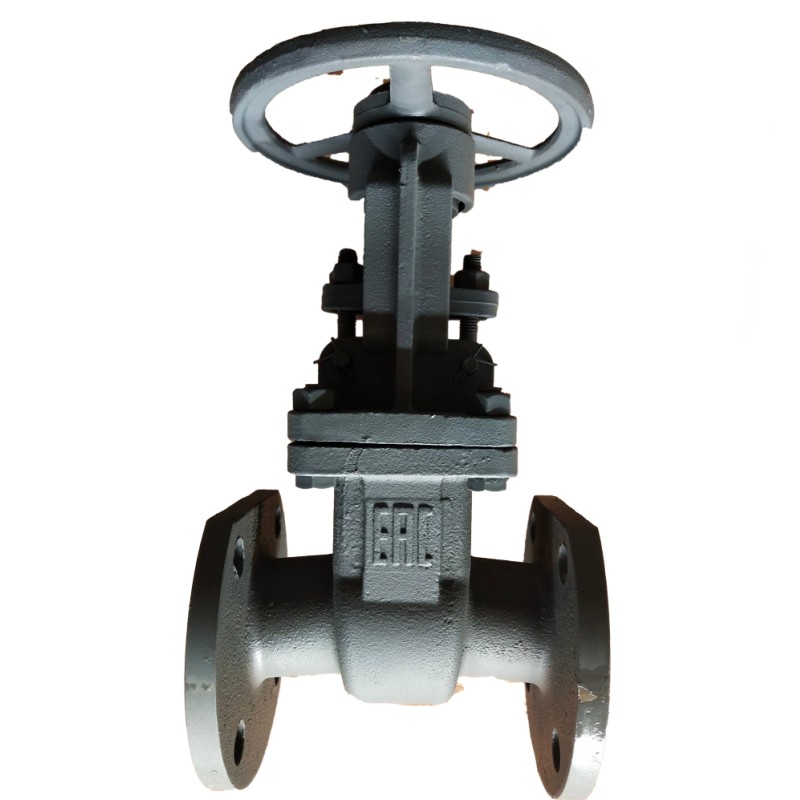
The 8-inch flange, manufactured in China, is a critical component in piping systems across numerous industries, including oil and gas, chemical processing, water treatment, and power generation. Functioning as a mechanical joining device, it facilitates the connection of pipes, valves, pumps, and other equipment. This technical guide provides a comprehensive analysis of 8-inch flanges, focusing on material science, manufacturing processes, performance characteristics, potential failure modes, and relevant industry standards. The primary function of a flange is to create a secure, leak-proof connection capable of withstanding substantial pressure and temperature fluctuations. Unlike welded connections, flanges allow for disassembly and maintenance without disrupting the entire pipeline. The prevalence of Chinese-manufactured flanges is driven by competitive pricing and increasing production capacity, necessitating a thorough understanding of quality control and compliance aspects.
Material Science & Manufacturing
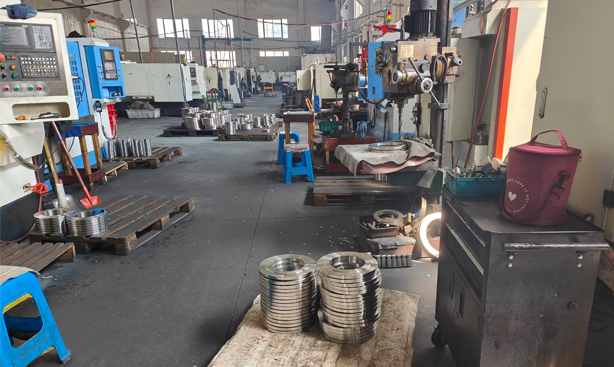
8-inch flanges are commonly manufactured from carbon steel (ASTM A105, A36), stainless steel (304/304L, 316/316L), alloy steel (A182 F304, F316), and occasionally ductile iron. Carbon steel is preferred for general-purpose applications due to its cost-effectiveness and adequate strength. Stainless steel offers superior corrosion resistance, essential for handling corrosive fluids. Alloy steels are utilized in high-temperature, high-pressure environments. The manufacturing process typically begins with steel billet or forging stock. The material undergoes cutting, forming (using methods like forging or casting), machining, and heat treatment. Flange faces are meticulously machined to ensure accurate mating surfaces. Welding (specifically, Shielded Metal Arc Welding – SMAW, Gas Tungsten Arc Welding – GTAW, or Flux-Cored Arc Welding – FCAW) is employed for reinforcing rings and hub dimensions. Non-Destructive Testing (NDT), including radiographic testing (RT), ultrasonic testing (UT), liquid penetrant testing (PT), and magnetic particle testing (MT), is crucial for identifying internal flaws and surface defects. Heat treatment parameters – austenitizing temperature, quenching medium, and tempering temperature – directly influence the mechanical properties, particularly yield strength and tensile strength. Chemical composition verification through methods like Optical Emission Spectroscopy (OES) guarantees adherence to specified material standards. Surface finish, typically achieved through grit blasting or machining, impacts corrosion resistance and gasket seating.
Performance & Engineering
The performance of an 8-inch flange is dictated by its ability to withstand internal pressure, external loads, and cyclical stress. Force analysis involves calculating hoop stress (derived from internal pressure) and longitudinal stress. Finite Element Analysis (FEA) is frequently used to model complex loading scenarios and predict stress concentrations, particularly around bolt holes and the flange face. Gasket selection is critical; materials like non-asbestos fiber, PTFE, or metallic gaskets are chosen based on the fluid type, temperature, and pressure. Bolt preload is a key engineering parameter, ensuring adequate sealing force while preventing gasket creep or bolt failure. Environmental resistance encompasses corrosion, erosion, and temperature effects. Corrosion resistance, particularly in stainless steel flanges, depends on the molybdenum content and the formation of a passive chromium oxide layer. High-temperature applications require consideration of creep deformation and oxidation. Compliance requirements are extensive, governed by standards like ASME B16.5 (for flange dimensions and ratings), ASME Section VIII Division 1 (for pressure vessel design), and API 6A (for wellhead and Christmas tree equipment). Fatigue analysis is crucial for applications involving cyclic loading, predicting the lifespan of the flange under varying stress levels. Thermal expansion and contraction of the piping system must be accommodated through proper flange design and installation.
Technical Specifications
| Parameter | Carbon Steel (A105) | Stainless Steel (304/304L) | Stainless Steel (316/316L) | Ductile Iron (65-45-12) |
|---|---|---|---|---|
| Nominal Pipe Size | 8 inches | 8 inches | 8 inches | 8 inches |
| Pressure Rating (PSI) | Up to 2000 | Up to 1500 | Up to 1500 | Up to 250 |
| Material Standard | ASTM A105 | ASTM A240 / A276 | ASTM A240 / A276 | ASTM A536 |
| Tensile Strength (MPa) | 400-550 | 517-724 | 550-760 | 400-550 |
| Yield Strength (MPa) | 250-345 | 207-276 | 240-310 | 205-345 |
| Corrosion Resistance | Limited | Good | Excellent | Fair (with coating) |
Failure Mode & Maintenance
Common failure modes for 8-inch flanges include corrosion (leading to pitting or through-wall penetration), fatigue cracking (due to cyclical loading), bolt failure (resulting from over-tightening, corrosion, or material defects), gasket failure (caused by improper selection, installation, or degradation), and erosion (particularly in abrasive fluid applications). Failure analysis often involves metallographic examination, fracture surface analysis (using Scanning Electron Microscopy – SEM), and stress analysis. Corrosion can be mitigated through material selection (e.g., using stainless steel or applying protective coatings), cathodic protection, and corrosion inhibitors. Fatigue cracking is prevented through proper design (minimizing stress concentrations) and regular inspection. Bolt failure can be avoided by using appropriate bolting materials, applying correct torque values, and employing anti-seize lubricants. Gasket failure is addressed through proper gasket selection and installation procedures. Preventative maintenance involves regular visual inspections for corrosion, cracks, and leaks. Bolt preload should be periodically checked and adjusted. Non-destructive testing (NDT) can detect subsurface flaws before they lead to catastrophic failure. Periodic hydrostatic testing verifies the integrity of the flange and the entire piping system. Proper documentation of inspection and maintenance activities is essential for tracking performance and identifying potential issues.
Industry FAQ
Q: What are the critical considerations when sourcing 8-inch flanges from China regarding quality control?
A: Critical considerations include verifying the manufacturer’s ISO 9001 certification, requiring a Material Test Report (MTR) for each batch conforming to EN 10204 3.1 or equivalent, performing independent third-party inspection (TPI) at the manufacturing facility, and conducting thorough NDT (radiographic, ultrasonic, liquid penetrant) to confirm weld quality and material integrity. Furthermore, verifying adherence to relevant ASTM standards and examining the manufacturer’s quality management system are vital.
Q: How does the choice of flange facing (Raised Face, Flat Face, Ring Type Joint) impact performance and gasket selection?
A: Raised Face flanges offer a narrow contact area for the gasket, suitable for moderate pressures. Flat Face flanges are used with flat gaskets and are common in low-pressure applications. Ring Type Joint (RTJ) flanges utilize a metal ring gasket compressed between the flange faces, offering a leak-tight seal for high-pressure, high-temperature applications. Gasket selection must be compatible with the flange facing and fluid being handled.
Q: What is the significance of flange bolt material and tightening torque?
A: Bolt material must be compatible with the flange material to prevent galvanic corrosion. Bolt grade (e.g., A193 B7, A193 B8) determines tensile strength and preload capacity. Proper tightening torque is crucial; insufficient torque can lead to leaks, while excessive torque can damage the flange or bolts. Torque values should be calculated based on flange dimensions, gasket type, and bolt size, and verified using calibrated torque wrenches.
Q: What are the implications of using a lower-cost flange material versus a higher alloy grade in a corrosive environment?
A: Using a lower-cost material (e.g., carbon steel) in a corrosive environment can lead to premature failure due to corrosion-induced pitting, erosion, or stress corrosion cracking. While initially cost-effective, the long-term cost of replacement, downtime, and potential safety hazards will likely outweigh the initial savings. Higher alloy grades (e.g., 316/316L) offer superior corrosion resistance, extending the service life of the flange and reducing the risk of failure.
Q: What is the role of NDT in ensuring the reliability of 8-inch flanges, and which methods are most commonly employed?
A: Non-Destructive Testing (NDT) is essential for detecting internal flaws and surface defects without damaging the flange. Commonly employed methods include Radiographic Testing (RT) to identify internal porosity and inclusions, Ultrasonic Testing (UT) to detect subsurface cracks and flaws, Liquid Penetrant Testing (PT) to reveal surface cracks and discontinuities, and Magnetic Particle Testing (MT) to detect surface and near-surface defects in ferromagnetic materials. The selection of NDT method depends on the material, flaw type, and required sensitivity.
Conclusion
The 8-inch flange, a foundational component in numerous industrial applications, demands a thorough understanding of its material properties, manufacturing intricacies, and performance parameters. Selecting the appropriate material, adhering to stringent manufacturing processes, and implementing robust quality control measures are paramount for ensuring long-term reliability and preventing costly failures. The rising prominence of Chinese-manufactured flanges necessitates diligent verification of quality standards and adherence to international regulations.
Ultimately, a comprehensive approach – encompassing informed material selection, precise engineering calculations, meticulous inspection procedures, and proactive maintenance practices – is crucial for maximizing the lifespan and minimizing the lifecycle cost of 8-inch flanges in demanding industrial environments. Continuous monitoring of operating conditions and adherence to relevant industry standards are key to upholding the integrity and safety of piping systems.
-
Top Reasons to Choose a Stainless Steel Flange Check Valve for Industrial Applications
-
24vdc solenoid valve Performance Analysis
-
24vdc solenoid valves Performance Analysis
-
solenoid valves 24vdc Performance Analysis
-
solenoid valve 24 vdc Performance Analysis
-
24v dc solenoid valve Performance Analysis
-
circle seal check valve Performance Engineering
-
circle seal check valves Performance Analysis
-
cryogenic check valve Performance Analysis
-
3 swing check valve Performance Analysis
-
4 wafer check valve Performance Analysis
-
6 wafer check valve Performance Analysis
-
cryogenic check valves Performance Analysis
-
soft seated check valve Performance Analysis
-
3/4 check valve Performance Analysis
 Afrikaans
 Albanian
 Amharic
 Arabic
 Armenian
 Azerbaijani
 Basque
 Belarusian
 Bengali
 Bosnian
 Bulgarian
 Catalan
 Cebuano
 Corsican
 Croatian
 Czech
Czech
 Danish
 Dutch
Dutch
 Esperanto
 Estonian
 Finnish
 French
 Frisian
 Galician
 Georgian
 German
 Greek
Greek
 Gujarati
 Haitian Creole
 Hausa
Hawaiian
Hausa
Hawaiian
 Hebrew
 Hindi
Hindi
 Miao
Miao
 Hungarian
 Icelandic
 Igbo
Igbo
 Indonesian
 Irish
Irish
 Italian
 Japanese
 Javanese
Kannada
Javanese
Kannada
 Kazakh
 Khmer
Khmer
 Rwandese
 Korean
 Kurdish
 Kyrgyz
 Lao
Lao
 Latin
Latin
 Latvian
 Lithuanian
 Luxembourgish
 Macedonian
 Malgashi
 Malay
Malay
 Malayalam
 Maltese
 Maori
Maori
 Marathi
 Mongolian
 Myanmar
 Nepali
 Norwegian
 Norwegian
 Occitan
 Pashto
 Persian
 Polish
 Portuguese
Punjabi
Portuguese
Punjabi
 Romanian
 Russian
 Samoan
 Scottish Gaelic
 Serbian
 Sesotho
 Shona
Shona
 Sindhi
 Sinhala
 Slovak
 Slovenian
 Somali
 Spanish
 Sundanese
 Swahili
 Swedish
Tagalog
Swedish
Tagalog
 Tajik
Tajik
 Tamil
Tamil
 Tatar
Tatar
 Telugu
 Thai
Thai
 Turkish
 Turkmen
 Ukrainian
 Urdu
Urdu
 Uighur
 Uzbek
Uzbek
 Vietnamese
 Welsh
Welsh
 Bantu
Bantu
 Yiddish
 Yoruba
 Zulu
Zulu
 English