




Pipe fitting valves Performance Engineering

Introduction
Pipe fitting valves are critical components in fluid handling systems across numerous industries, including oil and gas, chemical processing, water treatment, and power generation. These valves regulate, direct, or isolate the flow of liquids, gases, or slurries within a pipeline. Their technical position in the industry chain lies between pipeline fabrication and process control instrumentation. Core performance characteristics include flow capacity (Cv), pressure drop, sealing integrity (leakage rate), and resistance to the corrosive properties of the conveyed fluid. Valve selection is fundamentally driven by process parameters – temperature, pressure, fluid type, and flow rate – and stringent safety requirements. A critical industry pain point is the selection of materials compatible with increasingly aggressive process fluids, alongside the need for reliable, long-term operation with minimal maintenance to prevent costly downtime. The increasing demand for automated control systems adds further complexity, requiring integration with actuators and control loops.
Material Science & Manufacturing
The primary materials utilized in pipe fitting valve construction are carbon steel (ASTM A105, A53), stainless steel (304/304L, 316/316L, duplex stainless steels), alloy steels (e.g., chrome-moly steels for high-temperature service), and specialized alloys like Hastelloy or Inconel for highly corrosive environments. The choice is governed by the fluid’s chemical composition, temperature, and pressure. Manufacturing processes vary depending on valve type and size. Ball valves commonly employ precision machining of the valve body from forged or cast materials, followed by hardening and polishing of the ball and seats. Gate valves often utilize casting followed by extensive machining of the gate and valve body. Globe valves involve complex casting patterns and precise machining of the disc and seat to ensure tight shut-off. Butterfly valves rely on casting or fabrication of the disc and body. Welding is crucial in many valve constructions, employing techniques like shielded metal arc welding (SMAW), gas tungsten arc welding (GTAW), or submerged arc welding (SAW), all rigorously controlled to ensure weld integrity and prevent porosity or cracking. Key parameters include weld heat input, cooling rates, and post-weld heat treatment. Seat materials (e.g., PTFE, PEEK, metal-to-metal) are selected for their sealing properties and chemical resistance, with careful attention paid to temperature limits and pressure ratings. Surface finishing, through processes like polishing and coating, is essential for minimizing friction and maximizing corrosion resistance.
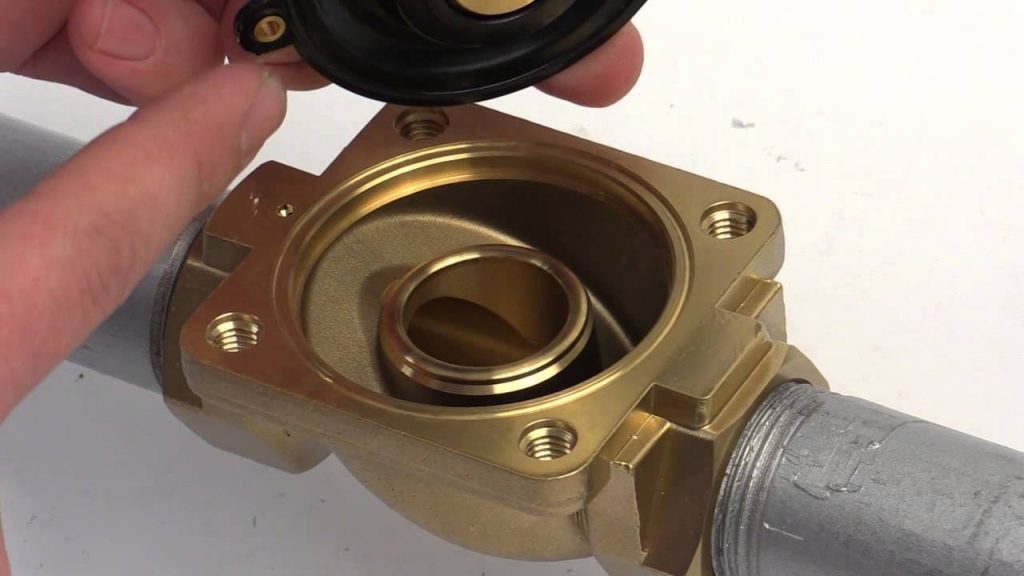
Performance & Engineering
Valve performance is fundamentally governed by fluid dynamics and structural mechanics. Flow coefficient (Cv) determines the valve's capacity to pass fluid at a given pressure drop. Pressure drop calculations rely on Bernoulli’s equation and consideration of flow regime (laminar or turbulent). Engineering designs must account for hydrodynamic forces acting on the valve internals, particularly at high flow velocities. Finite Element Analysis (FEA) is widely used to assess stress distribution within the valve body and components under pressure and thermal loading. Compliance requirements are dictated by industry standards such as ASME B16.34 for valve pressure-temperature ratings and API 598 for inspection and testing. Leakage rates are critical, particularly in safety-critical applications, and are classified according to standards like ANSI/FCI 70-2. Valve actuation – manual, pneumatic, electric, or hydraulic – introduces additional engineering considerations, including torque requirements, actuator speed, and fail-safe mechanisms. For cryogenic applications, material selection is paramount to prevent brittle fracture, requiring materials with high fracture toughness at low temperatures. Vibration analysis is also essential, especially in systems prone to water hammer or flow-induced vibration, to prevent fatigue failure.
Technical Specifications
| Valve Type | Maximum Working Pressure (PSI) | Temperature Range (°F) | Material (Body) |
|---|---|---|---|
| Ball Valve | 740 | -60 to 450 | Carbon Steel (A105) |
| Gate Valve | 1440 | -20 to 800 | Cast Iron (ASTM A126 Class B) |
| Globe Valve | 720 | -20 to 400 | Stainless Steel (316) |
| Butterfly Valve | 285 | -40 to 250 | Ductile Iron (ASTM A536 65-45-12) |
| Check Valve (Swing) | 1440 | -300 to 650 | Alloy Steel (F11) |
| Plug Valve | 900 | -50 to 450 | Carbon Steel (A105) |
Failure Mode & Maintenance
Common failure modes in pipe fitting valves include seat erosion and leakage due to abrasive particles in the fluid stream, particularly in slurry applications. Corrosion, both uniform and localized (pitting, crevice corrosion), can degrade valve internals, leading to leakage or seizing. Fatigue cracking can occur in valve bodies and components subjected to cyclic loading, especially under high-stress conditions. Stem packing failure results in leakage around the stem. Cavitation erosion, caused by rapid pressure fluctuations, can damage valve trim. Maintenance strategies include regular inspection for corrosion, erosion, and leakage. Periodic stem packing replacement is essential to prevent fugitive emissions. Lubrication of valve internals reduces friction and prevents seizing. Non-destructive testing (NDT) methods like ultrasonic testing (UT) and radiographic testing (RT) can detect internal flaws. Preventive maintenance schedules should be based on operating conditions and valve criticality. For valves exposed to corrosive fluids, periodic material integrity assessments are vital. Replacement of worn or damaged components is critical to prevent catastrophic failure. Proper storage and handling of valves are also crucial to prevent damage during transportation and installation.
Industry FAQ
Q: What is the significance of the valve’s ‘Cv’ value, and how does it impact system design?
A: The Cv (flow coefficient) value is a critical parameter quantifying a valve’s ability to pass fluid. A higher Cv indicates greater flow capacity for a given pressure drop. Incorrect Cv selection can lead to insufficient flow rates, resulting in process bottlenecks, or excessive pressure drops, increasing energy consumption and potentially causing cavitation. System designers utilize Cv values to calculate pressure losses, determine pump sizing requirements, and ensure optimal system performance.
Q: How does material selection mitigate corrosion in highly aggressive chemical processing applications?
A: Material selection is paramount in corrosive environments. Stainless steels (316, duplex) offer superior corrosion resistance compared to carbon steel, but may not be suitable for all chemicals. Nickel-based alloys (Hastelloy, Inconel) provide exceptional resistance to a wide range of corrosive media, but are more expensive. Coatings (e.g., PTFE, epoxy) can provide a barrier against corrosion, but their effectiveness depends on the coating’s integrity and chemical compatibility. Careful consideration of the fluid’s chemical composition, temperature, and concentration is crucial when selecting appropriate materials.
Q: What are the key differences between ball valves and gate valves in terms of performance and application suitability?
A: Ball valves offer quick on/off operation with minimal pressure drop when fully open and provide tight shut-off. They’re ideal for frequent operation and throttling applications, but aren’t designed for prolonged throttling. Gate valves, conversely, have low pressure drop when fully open but are slower to operate. They are best suited for fully open or fully closed service, not for modulating flow. Gate valves aren’t ideal for applications with particulate matter, as these can lodge in the gate and impede operation.
Q: What are the implications of using a valve outside of its specified pressure-temperature rating?
A: Operating a valve beyond its pressure-temperature rating significantly compromises its integrity and can lead to catastrophic failure. Exceeding the pressure limit can cause body distortion, gasket failure, or even rupture. Exceeding the temperature limit can reduce material strength, accelerate corrosion, and compromise sealing performance. Valves are rigorously tested and rated to ensure safe operation within defined parameters. Operating outside these parameters voids warranties and poses a significant safety risk.
Q: What preventative maintenance practices should be implemented to extend the lifespan of pipe fitting valves?
A: Regular inspection for external corrosion, leakage, and visible damage is critical. Periodic lubrication of valve stems and operators reduces friction and prevents seizing. Stem packing should be replaced proactively to prevent fugitive emissions. Non-destructive testing (NDT) can detect internal flaws. Valves should be operated within their specified limits and protected from excessive shock or vibration. Maintaining accurate records of maintenance activities facilitates informed decision-making regarding valve replacement.
Conclusion
Pipe fitting valves represent a fundamental component in process industries, demanding a comprehensive understanding of material science, manufacturing processes, and performance characteristics. Correct valve selection and diligent maintenance are crucial to ensure safe, reliable, and efficient operation. The increasing complexity of industrial processes requires ongoing advancements in valve technology, focusing on improved materials, enhanced sealing mechanisms, and intelligent automation capabilities.
Future developments will likely focus on smart valves equipped with sensors for real-time monitoring of performance parameters, predictive maintenance capabilities, and remote control functionalities. Further research into novel materials with enhanced corrosion resistance and higher temperature capabilities will be critical for addressing the challenges posed by increasingly aggressive process environments. Standardization efforts will continue to refine industry best practices and ensure interoperability between valve systems and control infrastructure.
-
Top Reasons to Choose a Stainless Steel Flange Check Valve for Industrial Applications
-
24vdc solenoid valve Performance Analysis
-
24vdc solenoid valves Performance Analysis
-
solenoid valves 24vdc Performance Analysis
-
solenoid valve 24 vdc Performance Analysis
-
24v dc solenoid valve Performance Analysis
-
circle seal check valve Performance Engineering
-
circle seal check valves Performance Analysis
-
cryogenic check valve Performance Analysis
-
3 swing check valve Performance Analysis
-
4 wafer check valve Performance Analysis
-
6 wafer check valve Performance Analysis
-
cryogenic check valves Performance Analysis
-
soft seated check valve Performance Analysis
-
3/4 check valve Performance Analysis
 Afrikaans
 Albanian
 Amharic
 Arabic
 Armenian
 Azerbaijani
 Basque
 Belarusian
 Bengali
 Bosnian
 Bulgarian
 Catalan
 Cebuano
 Corsican
 Croatian
 Czech
Czech
 Danish
 Dutch
Dutch
 Esperanto
 Estonian
 Finnish
 French
 Frisian
 Galician
 Georgian
 German
 Greek
Greek
 Gujarati
 Haitian Creole
 Hausa
Hawaiian
Hausa
Hawaiian
 Hebrew
 Hindi
Hindi
 Miao
Miao
 Hungarian
 Icelandic
 Igbo
Igbo
 Indonesian
 Irish
Irish
 Italian
 Japanese
 Javanese
Kannada
Javanese
Kannada
 Kazakh
 Khmer
Khmer
 Rwandese
 Korean
 Kurdish
 Kyrgyz
 Lao
Lao
 Latin
Latin
 Latvian
 Lithuanian
 Luxembourgish
 Macedonian
 Malgashi
 Malay
Malay
 Malayalam
 Maltese
 Maori
Maori
 Marathi
 Mongolian
 Myanmar
 Nepali
 Norwegian
 Norwegian
 Occitan
 Pashto
 Persian
 Polish
 Portuguese
Punjabi
Portuguese
Punjabi
 Romanian
 Russian
 Samoan
 Scottish Gaelic
 Serbian
 Sesotho
 Shona
Shona
 Sindhi
 Sinhala
 Slovak
 Slovenian
 Somali
 Spanish
 Sundanese
 Swahili
 Swedish
Tagalog
Swedish
Tagalog
 Tajik
Tajik
 Tamil
Tamil
 Tatar
Tatar
 Telugu
 Thai
Thai
 Turkish
 Turkmen
 Ukrainian
 Urdu
Urdu
 Uighur
 Uzbek
Uzbek
 Vietnamese
 Welsh
Welsh
 Bantu
Bantu
 Yiddish
 Yoruba
 Zulu
Zulu
 English