




china 3 way globe valve Performance Analysis
Introduction
The 3-way globe valve, manufactured in China, is a critical component in fluid control systems across diverse industrial applications. Positioned within the broader valve technology landscape, it differs fundamentally from gate, ball, and butterfly valves through its specialized design for throttling and flow regulation. Unlike valves primarily focused on on/off service, the globe valve's streamlined pathway and disc closure mechanism facilitate precise control of fluid flow. This makes it especially valuable in processes demanding consistent temperature, pressure, or flow rate management. The ‘3-way’ designation refers to its three ports – one common inlet and two outlets (or vice versa) – allowing for diverting or mixing fluids within a single valve body. Core performance metrics include flow coefficient (Cv), pressure drop, and sealing capability, all critical factors in determining suitability for specific operational parameters. A significant challenge in the industry is maintaining consistent quality control across various Chinese manufacturers, ensuring adherence to international standards and reliable long-term performance.
Material Science & Manufacturing
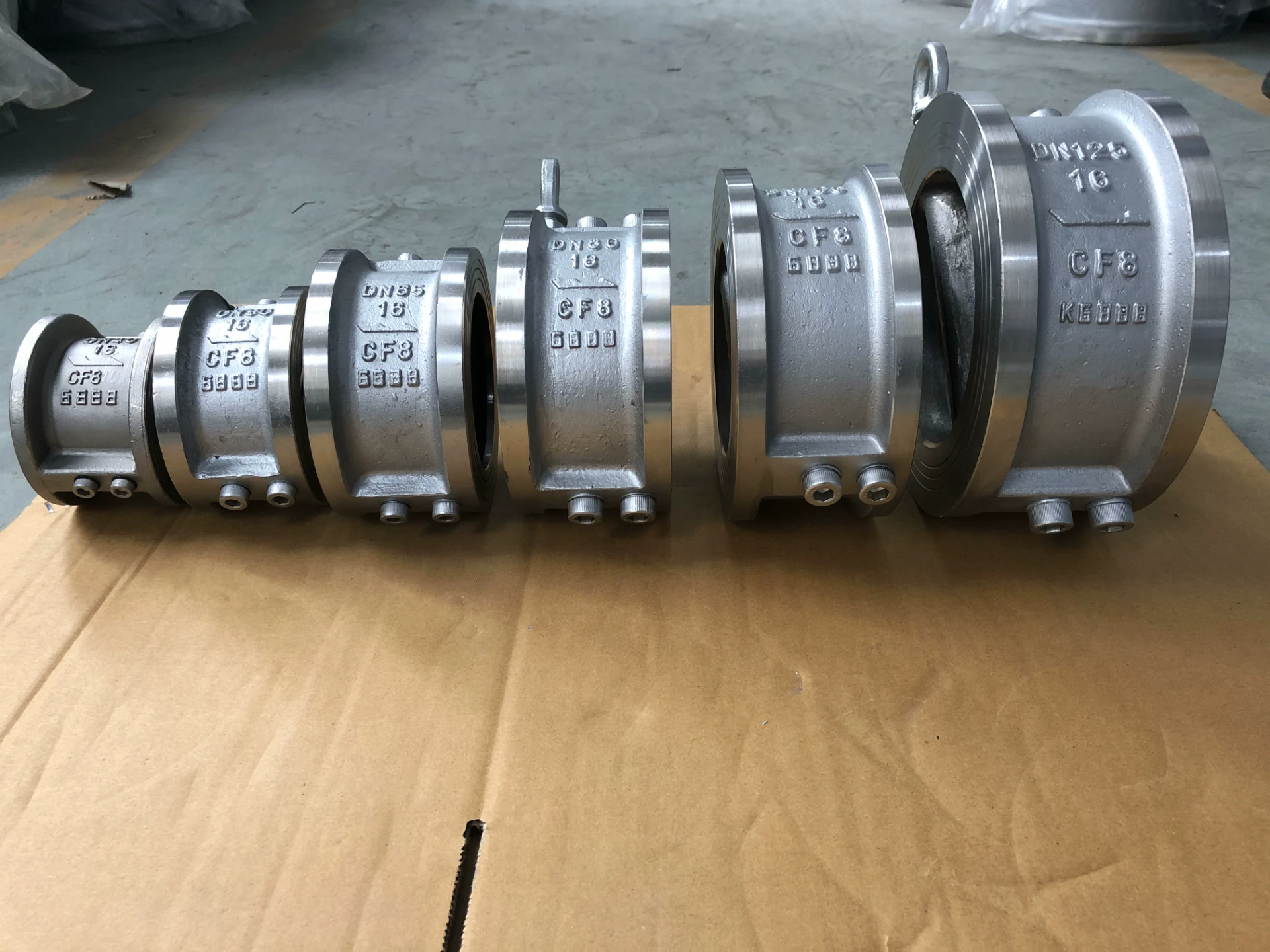
The body construction of a China-manufactured 3-way globe valve typically utilizes materials like ASTM A351 Grade CF8 (stainless steel), WCB (Carbon Steel), or ductile iron (QT450-10). Stainless steel (304/316) provides excellent corrosion resistance, crucial for handling aggressive media. WCB offers high strength and cost-effectiveness for less corrosive environments. Ductile iron balances strength with affordability. The disc, responsible for flow control, commonly employs materials like PTFE (polytetrafluoroethylene), reinforced PTFE, or hardened alloys like Stellite 6 for enhanced wear resistance. Seat materials mirror the disc selection, with PTFE offering a tight shut-off. Manufacturing processes begin with precision casting or forging of the valve body. Machining operations are then employed to create the internal flow passages and sealing surfaces. The critical step of disc facing and lapping ensures leak-tight closure. Welding processes (SMAW, GTAW) are used for joining components, requiring strict adherence to ASME Section IX standards. Key parameter control includes maintaining dimensional tolerances within +/- 0.1mm for critical sealing surfaces, ensuring weld penetration depth and avoiding porosity, and achieving a surface roughness (Ra) of less than 1.6µm on the disc and seat for optimal sealing. Post-manufacturing, valves undergo hydrostatic testing to verify pressure integrity and leak tightness.
Performance & Engineering
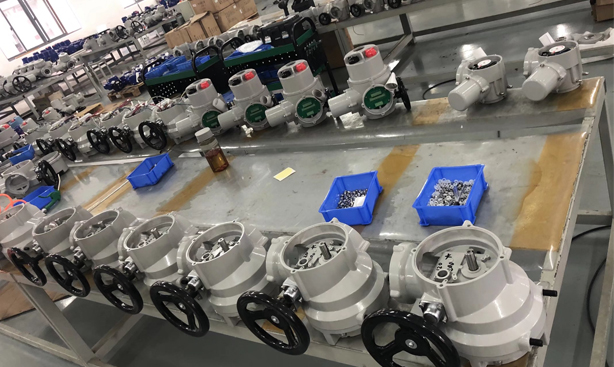
Performance of a 3-way globe valve is fundamentally governed by fluid dynamics and mechanical stress analysis. The valve's flow coefficient (Cv) – a measure of its flow capacity – is calculated using equations derived from Bernoulli's principle and considers factors like valve size, port geometry, and pressure drop. Pressure drop across the valve increases exponentially with flow rate, and engineers must account for this to prevent cavitation or erosion damage. Force analysis focuses on the hydrodynamic forces exerted on the disc by the flowing fluid and the static forces generated by the pressure differential. The stem and actuator must be engineered to withstand these forces. Environmental resistance is critical, particularly in corrosive or high-temperature applications. Material selection and protective coatings (e.g., epoxy, PTFE lining) are essential. Compliance requirements include adherence to API 600 (Flanged Steel Gate Valves - also applicable to globe valves), ASME B16.34 (Valve Pressure Testing), and ISO 17889 (Valve pressure and leakage). Functional implementation requires careful consideration of the actuator type (pneumatic, electric, hydraulic) and control system integration. The actuator must deliver sufficient torque to overcome the fluid forces and achieve precise positioning. Proper sizing of the valve is paramount – undersized valves cause excessive pressure drop, while oversized valves compromise control accuracy.
Technical Specifications
| Parameter | Unit | Typical Range (China-Manufactured) | Common Standards Reference |
|---|---|---|---|
| Maximum Operating Pressure | MPa | 1.6 - 25 | ASME B16.34 |
| Operating Temperature | °C | -29 - 425 | ASTM A351 |
| Valve Size (DN) | mm | 15 - 300 | DIN EN 1092 |
| Connection Type | - | Flanged (RF, FF), Threaded, Welded | ASME B16.5 |
| Flow Coefficient (Cv) | m³/h | 5 - 600 | ISA 75.01 |
| Leakage Class | - | Class VI (Bubble Tight) | API 598 |
Failure Mode & Maintenance
Common failure modes in China-manufactured 3-way globe valves include seat erosion, disc wear, stem packing leakage, and body corrosion. Seat erosion occurs due to abrasive particles in the fluid stream impacting the sealing surface at high velocity. Disc wear is a result of repeated contact with the seat during throttling. Stem packing leakage arises from degradation of the packing material or improper tightening. Body corrosion is caused by exposure to corrosive fluids or environmental factors. Fatigue cracking can occur in the stem or disc due to cyclic loading. Delamination of PTFE seats can lead to leakage. Oxidation of metallic components at high temperatures weakens the material. Preventive maintenance is crucial. This includes regular inspection of the stem packing for leaks, lubrication of the stem threads, and periodic inspection of the disc and seat for wear or erosion. Replacement of worn parts is essential. For seat erosion, consider using hardened seats or coatings. For stem packing leakage, replace the packing material or adjust the packing gland. Corrosion prevention involves applying protective coatings or using corrosion-resistant materials. Regular hydrostatic testing (per ASME B16.34) verifies pressure integrity. When disassembling, ensure proper torque specifications are followed during reassembly to maintain sealing integrity.
Industry FAQ
Q: What are the primary differences between a 3-way globe valve and a conventional globe valve in terms of application suitability?
A: A conventional globe valve is typically used for on/off isolation or simple throttling. A 3-way globe valve excels in diverting or mixing fluids, enabling more complex process control. If you need to route fluid to one of two destinations based on process conditions, a 3-way valve is the ideal choice. If you simply need to start or stop flow, a 2-way globe valve is sufficient.
Q: How does the material of construction influence the valve’s performance in highly corrosive environments?
A: The material of construction is paramount. Carbon steel is susceptible to corrosion in many environments. Stainless steel (316) offers significantly improved corrosion resistance due to its molybdenum content. For extremely corrosive environments, specialized alloys like Hastelloy or Monel may be required. PTFE-lined valves provide a barrier against corrosion for the wetted parts.
Q: What is the impact of flow velocity on the lifespan of a 3-way globe valve, and how can it be mitigated?
A: High flow velocity accelerates erosion and cavitation, significantly reducing valve lifespan. Mitigating strategies include selecting a valve with an appropriately sized flow passage to maintain velocities within acceptable limits (typically below 2 m/s), using hardened trim materials, and installing flow conditioners upstream of the valve to reduce turbulence.
Q: What are the key considerations when selecting an actuator for a 3-way globe valve?
A: Key considerations include the required torque to overcome fluid forces, the speed of response, the precision of positioning, and the control system integration. Pneumatic actuators are cost-effective for simple on/off or throttling applications. Electric actuators offer precise positioning and are suitable for automated control systems. Hydraulic actuators provide high torque for large valves.
Q: What are the common quality control shortcomings observed in China-manufactured valves and what steps should be taken to address them?
A: Common shortcomings include inconsistencies in material composition, inadequate weld quality, dimensional inaccuracies, and insufficient pressure testing. To address these, rigorous vendor qualification is essential, including factory audits and material certification reviews. Independent third-party inspection during manufacturing and pre-shipment inspection are critical. Detailed purchase specifications referencing international standards (API, ASME, ISO) should be enforced.
Conclusion
The China-manufactured 3-way globe valve represents a versatile and cost-effective solution for a wide range of fluid control applications. However, realizing its full potential requires a thorough understanding of the underlying material science, manufacturing processes, and performance characteristics. Maintaining quality control through rigorous vendor assessment and adherence to international standards is paramount to ensuring reliable long-term operation and minimizing the risk of premature failure.
Ultimately, successful implementation hinges on careful valve sizing, appropriate material selection based on the application’s fluid properties, and a proactive maintenance program designed to address common failure modes. As industrial processes become increasingly complex and demand greater precision, the role of the 3-way globe valve – and the expertise required to select and maintain it – will only continue to grow.
-
Top Reasons to Choose a Stainless Steel Flange Check Valve for Industrial Applications
-
Flanged Elbow Performance Analysis
-
3 bolt flange bearings Performance Analysis
-
elbow with flange Performance Analysis
-
Elbow Flanges Performance Analysis
-
flanged check valves Performance Analysis
-
Flange Square Performance Analysis
-
flanged butterfly valve Performance Analysis
-
flanged gate valve Material Science Manufacturing
-
Pinion Flange Performance Analysis
-
Precision flange Performance Analysis
-
Stub End Flange Performance Analysis
-
Turbo Exhaust Flange Material Analysis
-
Shaft collar flange Performance Analysis
-
butterfly valve flanged Performance Analysis
 Afrikaans
 Albanian
 Amharic
 Arabic
 Armenian
 Azerbaijani
 Basque
 Belarusian
 Bengali
 Bosnian
 Bulgarian
 Catalan
 Cebuano
 Corsican
 Croatian
 Czech
Czech
 Danish
 Dutch
Dutch
 Esperanto
 Estonian
 Finnish
 French
 Frisian
 Galician
 Georgian
 German
 Greek
Greek
 Gujarati
 Haitian Creole
 Hausa
Hawaiian
Hausa
Hawaiian
 Hebrew
 Hindi
Hindi
 Miao
Miao
 Hungarian
 Icelandic
 Igbo
Igbo
 Indonesian
 Irish
Irish
 Italian
 Japanese
 Javanese
Kannada
Javanese
Kannada
 Kazakh
 Khmer
Khmer
 Rwandese
 Korean
 Kurdish
 Kyrgyz
 Lao
Lao
 Latin
Latin
 Latvian
 Lithuanian
 Luxembourgish
 Macedonian
 Malgashi
 Malay
Malay
 Malayalam
 Maltese
 Maori
Maori
 Marathi
 Mongolian
 Myanmar
 Nepali
 Norwegian
 Norwegian
 Occitan
 Pashto
 Persian
 Polish
 Portuguese
Punjabi
Portuguese
Punjabi
 Romanian
 Russian
 Samoan
 Scottish Gaelic
 Serbian
 Sesotho
 Shona
Shona
 Sindhi
 Sinhala
 Slovak
 Slovenian
 Somali
 Spanish
 Sundanese
 Swahili
 Swedish
Tagalog
Swedish
Tagalog
 Tajik
Tajik
 Tamil
Tamil
 Tatar
Tatar
 Telugu
 Thai
Thai
 Turkish
 Turkmen
 Ukrainian
 Urdu
Urdu
 Uighur
 Uzbek
Uzbek
 Vietnamese
 Welsh
Welsh
 Bantu
Bantu
 Yiddish
 Yoruba
 Zulu
Zulu
 English