




china tongue and groove flanges Performance Analysis
Introduction
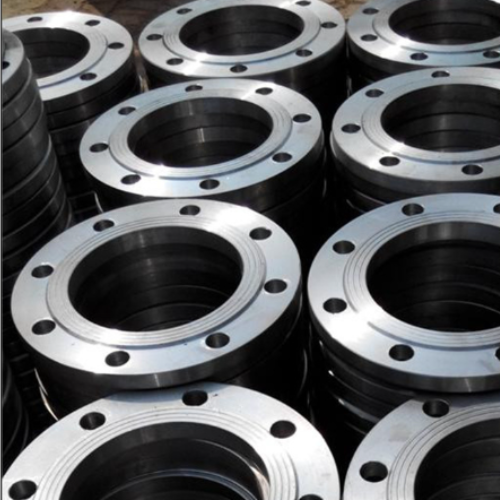
China tongue and groove flanges represent a critical joining technology within piping systems across numerous industrial applications, including water treatment, chemical processing, and power generation. Distinguished by their interlocking male and female profiles machined into the flange faces, these components provide a mechanical seal in addition to bolt load, enhancing sealing integrity compared to standard flat-face flanges. Positioned between traditional weld-neck flanges and more complex gasketed connections, tongue and groove flanges address limitations inherent in each, particularly in scenarios requiring frequent disassembly for maintenance or inspection. Their prevalence in China stems from standardized manufacturing capabilities and a focus on robust, reliable connections. Core performance characteristics are centered around pressure containment, leak prevention, and ease of assembly/disassembly, critically influencing operational efficiency and safety.
Material Science & Manufacturing
The selection of materials for china tongue and groove flanges is paramount, dictated by the fluid being conveyed, operating temperature, and pressure. Common materials include carbon steel (ASTM A105, equivalent to GB/T 1220), stainless steel (304/316 – GB/T 1220), and alloy steels (ASTM A182 F51/F53). Carbon steel offers cost-effectiveness for non-corrosive applications, while stainless steels provide superior corrosion resistance, essential in chemical environments. Alloy steels are employed for high-temperature, high-pressure service. Manufacturing typically commences with forging or casting of the flange blank. Critical parameter control during forging includes temperature uniformity and controlled cooling rates to prevent grain size irregularities and residual stresses. Machining follows, requiring high-precision CNC equipment to achieve the tight tolerances demanded by the tongue and groove interface (typically ±0.025mm). The groove geometry is crucial; incorrect profiling leads to uneven load distribution and potential leaks. Surface finish is also important – a Ra value of 1.6 μm or less is preferred to minimize surface defects that could compromise sealing. Heat treatment processes, such as annealing or normalizing, are often employed to relieve stresses introduced during machining and enhance mechanical properties. Finally, non-destructive testing (NDT), including liquid penetrant inspection (LPI) and ultrasonic testing (UT), verifies the absence of defects prior to shipment.
Performance & Engineering
The performance of tongue and groove flanges hinges on achieving a reliable mechanical seal. Finite Element Analysis (FEA) is commonly used to optimize flange geometry and bolt load distribution, particularly for high-pressure applications. Bolt preload is critical; insufficient preload results in gasket compression below its minimum sealing threshold, while excessive preload can induce yielding in the flange material. The ASME PCC-1 standard provides guidance on calculating appropriate bolt loads. Environmental resistance is another key consideration. Exposure to corrosive fluids necessitates material selection that minimizes galvanic corrosion (especially when dissimilar metals are used in the flanged joint). Furthermore, temperature fluctuations induce thermal expansion and contraction, creating stresses within the flanged connection. Engineers must account for these thermal stresses during design, potentially incorporating expansion joints or utilizing materials with compatible thermal expansion coefficients. Compliance with standards like API 6A (for wellhead and Christmas tree applications) and ASME B31.3 (for process piping) is mandatory, dictating material selection, manufacturing tolerances, and testing procedures. The ability of the flange to withstand cyclic loading – repeated pressurization and depressurization – is a vital engineering parameter, assessed through fatigue analysis. Proper gasket selection is also integral to performance, with materials like PTFE, compressed fiber sheet, or metal gaskets chosen based on fluid compatibility and temperature range.
Technical Specifications
| Parameter | Unit | ASTM A105 (Carbon Steel) | ASTM A182 F316 (Stainless Steel) |
|---|---|---|---|
| Tensile Strength | MPa | 400-550 | 520-700 |
| Yield Strength | MPa | 250-345 | 205-275 |
| Elongation | % | 18-22 | 30-50 |
| Hardness (Brinell) | HB | 160-200 | 85-100 |
| Corrosion Resistance | Rating (1-5, 5=Excellent) | 2 | 5 |
| Maximum Operating Temperature | °C | 425 | 870 |
Failure Mode & Maintenance
Failure modes in china tongue and groove flanges commonly include gasket failure (resulting in leakage), bolt failure (due to fatigue or corrosion), and flange face distortion (caused by excessive load or thermal cycling). Fatigue cracking can initiate at stress concentration points, such as bolt holes or at the root of the tongue and groove interface. Corrosion, particularly galvanic corrosion, can weaken the flange material and lead to through-wall cracking. Creep, a time-dependent deformation under sustained load, is a concern at elevated temperatures. Delamination can occur in composite gasket materials, compromising sealing effectiveness. Maintenance involves regular visual inspection for signs of corrosion, leakage, or bolt loosening. Bolt preload should be checked and re-torqued periodically according to manufacturer recommendations. Gaskets should be replaced during scheduled maintenance or if leakage is detected. If flange face distortion is observed, the flange may require replacement. Non-destructive testing (NDT) techniques, such as ultrasonic testing, can be employed to detect subsurface cracks or corrosion. Proper lubrication of bolts prevents galling and facilitates disassembly. Preventative maintenance programs, including corrosion protection measures (e.g., coatings, cathodic protection), significantly extend flange service life.
Industry FAQ
Q: What are the primary advantages of tongue and groove flanges compared to standard flat-face flanges in high-pressure applications?
A: Tongue and groove flanges offer enhanced sealing capabilities in high-pressure applications due to the mechanical interlock between the flange faces. This interlock reduces reliance on gasket compression alone, minimizing the risk of leakage under high stress. The precise machining of the tongue and groove also provides a more consistent sealing surface, leading to improved reliability.
Q: How does the material selection influence the long-term performance of tongue and groove flanges in corrosive environments?
A: Material selection is critical. Carbon steel flanges are susceptible to corrosion in many environments and should be avoided unless specifically protected with coatings. Stainless steel alloys, particularly 316, offer superior corrosion resistance. For highly corrosive environments, more specialized alloys like Hastelloy or Inconel may be necessary. The choice should be based on a thorough understanding of the fluid composition, temperature, and concentration.
Q: What are the key considerations when specifying bolt materials and preload for tongue and groove flange connections?
A: Bolt materials must be compatible with the flange material to prevent galvanic corrosion. Alloy steel bolts (e.g., ASTM A193 B7) are commonly used for high-temperature and high-pressure applications. Bolt preload is crucial; it must be sufficient to achieve the desired gasket compression but not so high as to induce yielding in the flange. Calculations should follow ASME PCC-1 guidelines, accounting for bolt size, flange dimensions, and gasket properties.
Q: What non-destructive testing (NDT) methods are typically employed to ensure the integrity of newly manufactured tongue and groove flanges?
A: Liquid penetrant inspection (LPI) is commonly used to detect surface cracks and porosity. Ultrasonic testing (UT) is employed to detect subsurface defects like inclusions or voids. Radiographic testing (RT) can provide a comprehensive view of the flange's internal structure, although it’s less frequently used due to cost and safety concerns. Magnetic particle inspection (MPI) is suitable for detecting surface and near-surface defects in ferromagnetic materials.
Q: What preventative maintenance procedures are recommended to extend the service life of tongue and groove flange connections?
A: Regular visual inspection for corrosion, leakage, and bolt loosening is essential. Periodic bolt preload checks and re-torquing should be performed. Gaskets should be replaced during scheduled maintenance. Corrosion protection measures, such as applying protective coatings or utilizing cathodic protection, can significantly extend flange life. Maintaining accurate records of inspections and maintenance activities is also crucial.
Conclusion
China tongue and groove flanges represent a robust and reliable joining solution for piping systems across diverse industries. Their performance is deeply intertwined with careful material selection, precise manufacturing processes, and adherence to stringent engineering standards. Understanding the potential failure modes – from gasket degradation to fatigue cracking – and implementing appropriate preventative maintenance strategies are paramount to ensuring long-term operational integrity and safety.
Looking ahead, advancements in materials science and manufacturing technologies will likely lead to the development of even more durable and corrosion-resistant tongue and groove flange designs. The integration of digital technologies, such as sensor-based monitoring and predictive maintenance algorithms, will further enhance the reliability and efficiency of these critical components, optimizing performance throughout their service life.
-
Top Reasons to Choose a Stainless Steel Flange Check Valve for Industrial Applications
-
Flanged Elbow Performance Analysis
-
3 bolt flange bearings Performance Analysis
-
elbow with flange Performance Analysis
-
Elbow Flanges Performance Analysis
-
flanged check valves Performance Analysis
-
Flange Square Performance Analysis
-
flanged butterfly valve Performance Analysis
-
flanged gate valve Material Science Manufacturing
-
Pinion Flange Performance Analysis
-
Precision flange Performance Analysis
-
Stub End Flange Performance Analysis
-
Turbo Exhaust Flange Material Analysis
-
Shaft collar flange Performance Analysis
-
butterfly valve flanged Performance Analysis
 Afrikaans
 Albanian
 Amharic
 Arabic
 Armenian
 Azerbaijani
 Basque
 Belarusian
 Bengali
 Bosnian
 Bulgarian
 Catalan
 Cebuano
 Corsican
 Croatian
 Czech
Czech
 Danish
 Dutch
Dutch
 Esperanto
 Estonian
 Finnish
 French
 Frisian
 Galician
 Georgian
 German
 Greek
Greek
 Gujarati
 Haitian Creole
 Hausa
Hawaiian
Hausa
Hawaiian
 Hebrew
 Hindi
Hindi
 Miao
Miao
 Hungarian
 Icelandic
 Igbo
Igbo
 Indonesian
 Irish
Irish
 Italian
 Japanese
 Javanese
Kannada
Javanese
Kannada
 Kazakh
 Khmer
Khmer
 Rwandese
 Korean
 Kurdish
 Kyrgyz
 Lao
Lao
 Latin
Latin
 Latvian
 Lithuanian
 Luxembourgish
 Macedonian
 Malgashi
 Malay
Malay
 Malayalam
 Maltese
 Maori
Maori
 Marathi
 Mongolian
 Myanmar
 Nepali
 Norwegian
 Norwegian
 Occitan
 Pashto
 Persian
 Polish
 Portuguese
Punjabi
Portuguese
Punjabi
 Romanian
 Russian
 Samoan
 Scottish Gaelic
 Serbian
 Sesotho
 Shona
Shona
 Sindhi
 Sinhala
 Slovak
 Slovenian
 Somali
 Spanish
 Sundanese
 Swahili
 Swedish
Tagalog
Swedish
Tagalog
 Tajik
Tajik
 Tamil
Tamil
 Tatar
Tatar
 Telugu
 Thai
Thai
 Turkish
 Turkmen
 Ukrainian
 Urdu
Urdu
 Uighur
 Uzbek
Uzbek
 Vietnamese
 Welsh
Welsh
 Bantu
Bantu
 Yiddish
 Yoruba
 Zulu
Zulu
 English