




china 3 swing check valve Performance Analysis
Introduction
The 3” swing check valve is a critical component in fluid handling systems, designed to prevent backflow in pipelines. Positioned within the broader industrial valve market, these valves are predominantly employed in water treatment, wastewater management, power generation, chemical processing, and oil & gas applications. Functionally, a swing check valve utilizes a hinged disc that allows fluid to flow in one direction and automatically closes to prevent reverse flow. Core performance characteristics include its sealing capability, flow coefficient (Cv), pressure drop, and the material compatibility with the conveyed fluid. A major industry pain point revolves around maintaining consistent sealing performance under varying pressure and temperature conditions, particularly in aggressive chemical environments, and minimizing pressure loss to maintain system efficiency. This guide provides an in-depth examination of 3” swing check valve design, materials, performance, failure modes, and relevant industry standards.
Material Science & Manufacturing
The body of a 3” swing check valve is commonly manufactured from ductile iron (ASTM A536 65-45-12), carbon steel (ASTM A105), or stainless steel (304/316). Ductile iron provides good corrosion resistance and strength at a relatively low cost. Carbon steel offers high strength and is suitable for high-pressure applications but requires protective coatings to mitigate corrosion. Stainless steel provides superior corrosion resistance, making it ideal for handling corrosive fluids. The disc is typically made from the same material as the body or from a more corrosion-resistant alloy, such as Hastelloy or Monel, depending on the application. The pin, which acts as the hinge for the disc, is often made from stainless steel to resist corrosion and wear.
Manufacturing processes involve several stages. The body is often created through sand casting, followed by machining to ensure precise dimensions and smooth sealing surfaces. Welding is employed to attach flanges and other components. The disc undergoes forging, machining, and polishing. Critical parameters during manufacturing include material composition verification (using methods like X-ray fluorescence), dimensional accuracy (using coordinate measuring machines - CMM), surface roughness measurement (Ra values), and hydrostatic testing to ensure leak tightness. Heat treatment processes are crucial for achieving desired mechanical properties in the cast iron and steel components, influencing tensile strength, yield strength, and hardness. The seat, often made of EPDM, NBR, or PTFE, is carefully bonded or mechanically secured to the body to provide a reliable seal. The quality of this bond is paramount to preventing leakage.
Performance & Engineering
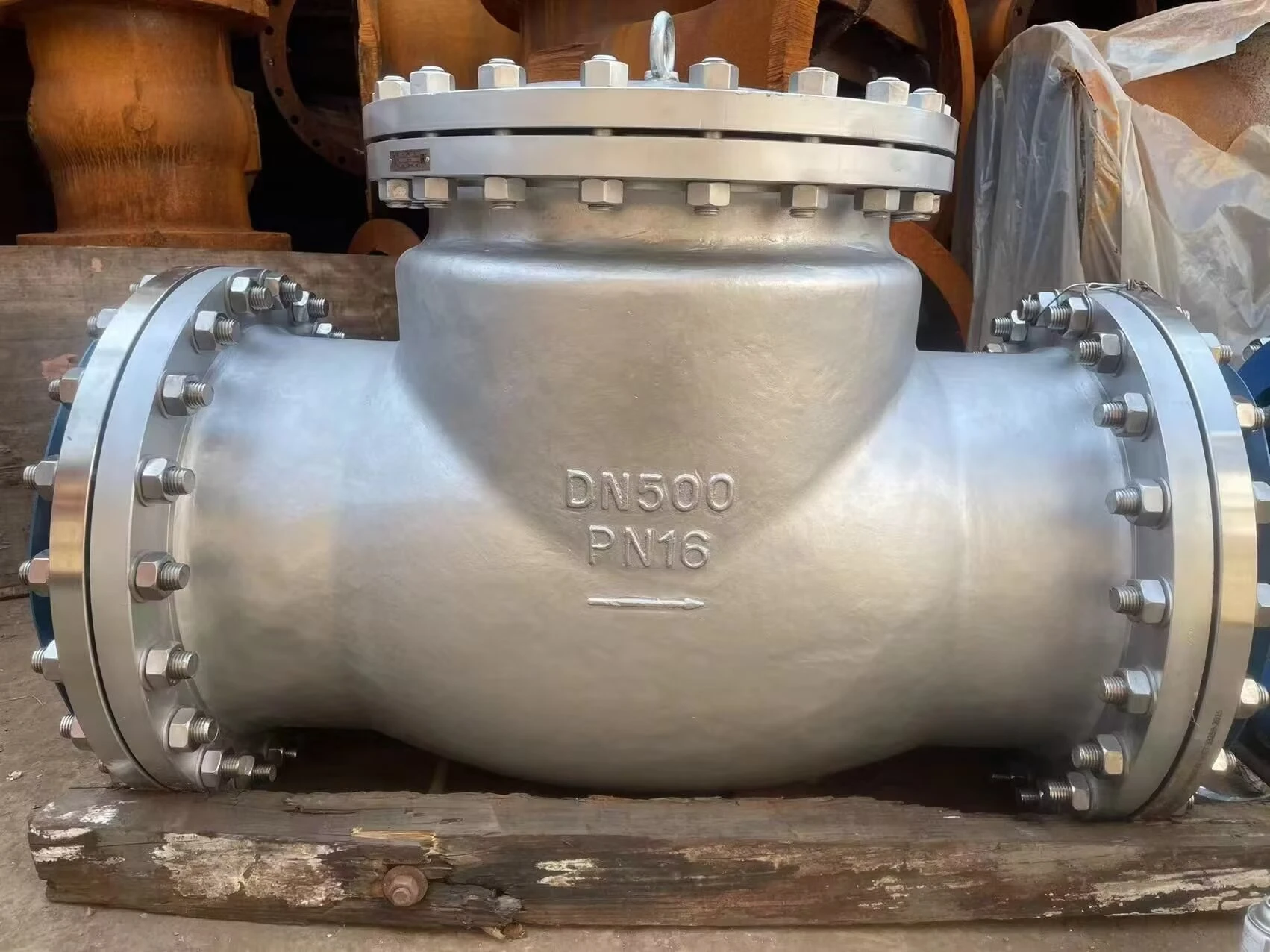
The performance of a 3” swing check valve is governed by fluid dynamics and mechanical engineering principles. The flow coefficient (Cv) determines the valve’s capacity to pass fluid, and is heavily influenced by the disc diameter and flow area. Pressure drop across the valve is a critical consideration, especially in systems where minimizing energy loss is paramount. Computational Fluid Dynamics (CFD) analysis is frequently used to optimize valve design and reduce pressure drop. Force analysis is essential to determine the stresses acting on the disc and hinge pin during operation, particularly under high flow rates and water hammer events.
Environmental resistance is another crucial aspect. Valves operating in outdoor environments must withstand temperature extremes, UV radiation, and potential corrosion from atmospheric elements. Valves handling corrosive fluids require materials that exhibit chemical compatibility (e.g., resistance to acids, bases, and solvents). Compliance with industry standards, such as API 598 (Valve Inspection and Testing), is mandatory to ensure the valve meets specified performance criteria. The spring mechanism, if present (some designs use gravity only), must be engineered to provide consistent closing force over its operational lifespan, resisting fatigue and corrosion. Fatigue life assessment, using methods like S-N curve analysis, ensures the structural integrity of the valve under cyclic loading.
Technical Specifications
| Parameter | Specification | Testing Standard | Typical Value |
|---|---|---|---|
| Nominal Size | 3 inches (DN80) | ANSI/ASME B16.10 | 80 mm |
| Body Material | Ductile Iron ASTM A536 65-45-12 | ASTM A536 | 65-45-12 Grade |
| Disc Material | Ductile Iron ASTM A536 65-45-12 / Stainless Steel 316 | ASTM A536 / ASTM A240 | Dependent on application |
| Seat Material | EPDM / NBR / PTFE | ASTM D2000 | Dependent on fluid compatibility |
| Pressure Rating | 125 PSI / 16 Bar | ANSI/ASME B16.34 | 1.6 MPa |
| Temperature Range | -20°C to 180°C (-4°F to 356°F) | Dependent on seat material | Varies with elastomer |
Failure Mode & Maintenance
Common failure modes of 3” swing check valves include disc erosion due to particulate matter in the fluid, seat degradation leading to leakage, corrosion of metallic components, fatigue cracking of the disc or hinge pin, and binding of the disc due to debris or corrosion. Disc erosion is particularly prevalent in slurry applications. Seat degradation can occur due to chemical attack, temperature extremes, or mechanical wear. Corrosion is a significant concern in aggressive chemical environments. Fatigue cracking typically occurs near stress concentration points, such as the hinge pin hole.
Preventive maintenance is critical to extend valve life. Regular inspection should include visual checks for corrosion, erosion, and leakage. Lubrication of the hinge pin (if applicable) is recommended to reduce friction and prevent binding. Periodic testing of the seal (hydrostatic testing) is crucial to identify any leakage. If leakage is detected, the seat should be replaced. For valves operating in corrosive environments, protective coatings (e.g., epoxy coatings) should be applied and regularly inspected. In cases of significant corrosion or erosion, the entire valve body or disc may need to be replaced. A robust maintenance program, including detailed records of inspections, repairs, and replacements, is essential for ensuring long-term reliability.
Industry FAQ
Q: What is the impact of fluid velocity on the lifespan of a swing check valve?
A: Higher fluid velocities can significantly accelerate erosion of the disc and seat, reducing valve life. Excessive velocity can also induce water hammer, leading to fatigue failure. Proper valve sizing and flow control are crucial to maintain optimal fluid velocity within recommended limits.
Q: How does the choice of seat material affect the valve's performance with different fluids?
A: Seat material compatibility is paramount. EPDM is suitable for water and many general-purpose applications, but is not resistant to oils. NBR offers better oil resistance but has limited temperature range. PTFE provides excellent chemical resistance and a wide temperature range but is susceptible to creep and may require frequent replacement.
Q: What are the key considerations when selecting a swing check valve for a high-pressure application?
A: Pressure rating must exceed the maximum system pressure. The valve body material should be selected for sufficient strength and pressure containment capability (e.g., carbon steel or stainless steel). The design should incorporate robust sealing mechanisms to prevent leakage at high pressures. Regular inspection and testing are critical.
Q: What is the role of the hinge pin in a swing check valve, and what are common failure mechanisms associated with it?
A: The hinge pin allows the disc to swing freely and close tightly. Common failure mechanisms include corrosion, fatigue cracking due to cyclic loading, and wear. Regular lubrication (if applicable) and inspection for corrosion are crucial preventative measures.
Q: How do you verify the leak tightness of a newly installed or maintained swing check valve?
A: Hydrostatic testing is the most reliable method. The valve is isolated and filled with a test fluid (typically water) to a pressure higher than the operating pressure. The valve is then observed for any signs of leakage over a specified period. Leakage is unacceptable.
Conclusion
The 3” swing check valve is a fundamental component in numerous fluid handling systems, demanding a thorough understanding of material science, manufacturing processes, and performance characteristics. Ensuring appropriate material selection, rigorous quality control during manufacturing, and proactive maintenance are vital to maximize its operational lifespan and reliability. Addressing industry pain points related to sealing consistency, pressure drop minimization, and corrosion resistance necessitates a continuous focus on design optimization and advanced material technologies.
Future developments are likely to involve the incorporation of advanced materials, such as ceramic coatings, to enhance corrosion resistance and erosion protection. Smart valve technologies, integrating sensors and remote monitoring capabilities, will enable predictive maintenance and optimize valve performance. Adherence to relevant industry standards and best practices remains paramount for ensuring safe and efficient operation.
-
flat face flanges Performance Analysis
-
Flat Faced Flange Performance Analysis
-
3 in flange Performance Analysis
-
2in flange Performance Analysis
-
Flat Faced Flanges Performance Analysis
-
megalug flange Performance and Engineering
-
Plate Flange Performance Analysis
-
Reducing Flange Performance Analysis
-
Sealing Flange Performance Analysis
-
Turbo Flanges Performance Analysis
-
Screwed Flange Performance Analysis
-
Screwed Flanges Performance Analysis
-
Screw Flanges Performance Analysis
-
weld neck flanges Performance Analysis
-
welding neck flange Material Science Manufacturing
 Afrikaans
 Albanian
 Amharic
 Arabic
 Armenian
 Azerbaijani
 Basque
 Belarusian
 Bengali
 Bosnian
 Bulgarian
 Catalan
 Cebuano
 Corsican
 Croatian
 Czech
Czech
 Danish
 Dutch
Dutch
 Esperanto
 Estonian
 Finnish
 French
 Frisian
 Galician
 Georgian
 German
 Greek
Greek
 Gujarati
 Haitian Creole
 Hausa
Hawaiian
Hausa
Hawaiian
 Hebrew
 Hindi
Hindi
 Miao
Miao
 Hungarian
 Icelandic
 Igbo
Igbo
 Indonesian
 Irish
Irish
 Italian
 Japanese
 Javanese
Kannada
Javanese
Kannada
 Kazakh
 Khmer
Khmer
 Rwandese
 Korean
 Kurdish
 Kyrgyz
 Lao
Lao
 Latin
Latin
 Latvian
 Lithuanian
 Luxembourgish
 Macedonian
 Malgashi
 Malay
Malay
 Malayalam
 Maltese
 Maori
Maori
 Marathi
 Mongolian
 Myanmar
 Nepali
 Norwegian
 Norwegian
 Occitan
 Pashto
 Persian
 Polish
 Portuguese
Punjabi
Portuguese
Punjabi
 Romanian
 Russian
 Samoan
 Scottish Gaelic
 Serbian
 Sesotho
 Shona
Shona
 Sindhi
 Sinhala
 Slovak
 Slovenian
 Somali
 Spanish
 Sundanese
 Swahili
 Swedish
Tagalog
Swedish
Tagalog
 Tajik
Tajik
 Tamil
Tamil
 Tatar
Tatar
 Telugu
 Thai
Thai
 Turkish
 Turkmen
 Ukrainian
 Urdu
Urdu
 Uighur
 Uzbek
Uzbek
 Vietnamese
 Welsh
Welsh
 Bantu
Bantu
 Yiddish
 Yoruba
 Zulu
Zulu
 English