




dual plate check valve Performance Analysis
Introduction
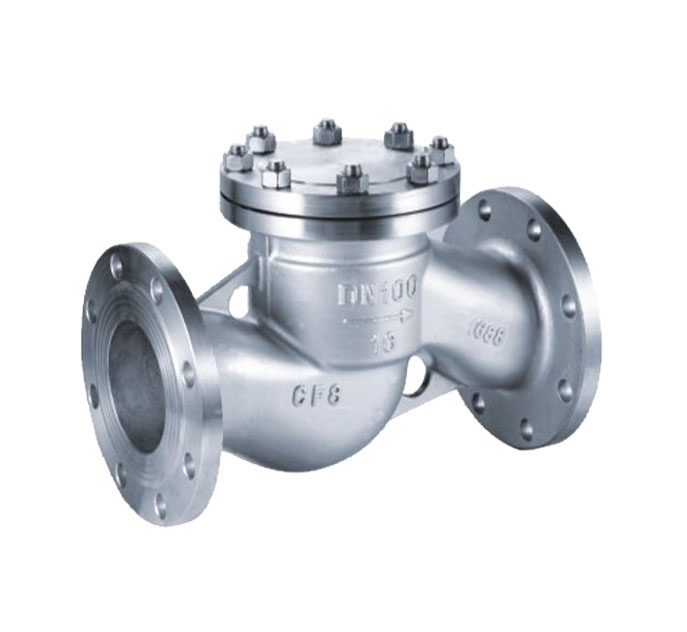
Dual plate check valves are critical components in pipeline systems designed to prevent backflow of fluid. Positioned within the industry chain between pump discharge and process equipment, or downstream of critical pressure sources, these valves ensure unidirectional flow, protecting pumps, compressors, and other sensitive equipment from reverse rotation and potential damage. Unlike swing or lift check valves, the dual plate design utilizes two opposed, angled discs, offering low head loss, rapid response times, and suitability for a wide range of fluids and pressures. Their core performance characteristics center around minimal pressure drop, tight shut-off capabilities, and resilience against water hammer and flow pulsations. The increased sophistication of modern process control necessitates reliable and responsive check valve technology, driving demand for dual plate designs in applications ranging from water treatment and power generation to chemical processing and oil & gas.
Material Science & Manufacturing
The performance and longevity of a dual plate check valve are intrinsically linked to the material selection and manufacturing processes employed. The valve body is typically constructed from cast iron (ASTM A126 Grade B), ductile iron (ASTM A536 65-45-12), or stainless steel (304/316 – ASTM A351). Cast iron offers cost-effectiveness for non-corrosive applications, while ductile iron provides enhanced strength and impact resistance. Stainless steel grades are selected for aggressive chemical environments or high-temperature services. The discs themselves are commonly manufactured from stainless steel (304/316 – ASTM A276 Type 304/316) or alloy steels, prioritizing corrosion resistance and fatigue strength. Springs, crucial for disc closure, are typically made from stainless steel (301/304 - ASTM A313) offering both resilience and corrosion resistance.
Manufacturing begins with precision casting or forging of the valve body. Critical dimensions are maintained through CNC machining, ensuring accurate alignment of the disc chambers. The discs are formed through stamping or machining, then subjected to surface finishing to minimize friction and ensure a tight seal. Heat treatment is applied to alloy steel components to achieve desired hardness and ductility. The spring is compression-set to a specific force during assembly, dictating the valve’s cracking pressure. Quality control involves non-destructive testing (NDT) methods, including liquid penetrant inspection (LPI - ASTM E165) and radiographic testing (RT - ASTM E94) to detect flaws in castings and welds. Assembly is performed in a clean environment, with stringent torque control applied to all fasteners to prevent loosening during operation. Finally, hydrostatic testing (API 598) validates the valve’s pressure integrity and leak tightness.
Performance & Engineering
The hydraulic performance of a dual plate check valve is governed by fluid dynamics and the valve’s geometry. Force analysis reveals that the closing force is a combination of the spring force and the hydrodynamic force exerted by the flowing fluid. The angled disc design minimizes flow obstruction, resulting in a low head loss coefficient (K-factor), typically between 0.1 and 0.2. Rapid closing speeds are achieved due to the low mass of the discs and the optimized flow path. However, this rapid closure can induce water hammer, particularly in long pipelines. Engineering considerations include sizing the valve appropriately for the flow rate and pipeline diameter, and potentially incorporating surge suppression devices upstream of the valve.
Environmental resistance is paramount. Valves operating in corrosive environments require materials selection specifically resistant to the process fluid (e.g., Hastelloy C-276 for highly corrosive acids). Temperature extremes can affect the spring’s elastic properties and the seal’s integrity; high-temperature applications necessitate specialized seals (e.g., Viton) and materials with high creep resistance. Compliance with industry standards, such as API 598 (Valve Inspection and Testing) and MSS SP-61 (Pressure Testing of Steel Valves), ensures that the valve meets minimum performance and safety requirements. Furthermore, adherence to pressure vessel directives (e.g., ASME Section VIII Division 1) is essential for valves operating in high-pressure systems. The valve’s design must also consider potential cavitation, particularly in systems with significant pressure drops, and incorporate features to mitigate its effects.
Technical Specifications
| Parameter | Unit | Specification Range (Typical) | Standard Compliance |
|---|---|---|---|
| Maximum Operating Pressure | psi | Up to 1440 | ASME Class 600 |
| Maximum Operating Temperature | °F | -20 to 450 (material dependent) | ASTM A351 / A352 |
| Connection Type | - | Flanged (ANSI/ASME B16.5), Threaded (ANSI/ASME B1.20.1), Wafer | ANSI/ASME |
| Valve Size | inch | 2" to 48" | DIN EN 1092-1 |
| Material (Body) | - | Cast Iron, Ductile Iron, Stainless Steel (304/316) | ASTM A126 / A536 / A276 |
| Material (Disc) | - | Stainless Steel (304/316), Alloy Steel | ASTM A276 / A182 |
Failure Mode & Maintenance
Dual plate check valves, while robust, are susceptible to several failure modes. Fatigue cracking of the discs is a common issue, particularly in systems with frequent pulsations or water hammer. This is exacerbated by improper material selection or surface finish. Another failure mode is corrosion, particularly in the valve body and disc, leading to pitting and eventual leakage. Disc sticking, caused by debris accumulation or corrosion products, prevents proper closure, resulting in backflow. Spring failure, due to corrosion or material fatigue, reduces the closing force and can lead to chatter. Seal degradation, caused by chemical attack or thermal cycling, compromises leak tightness.
Preventative maintenance is critical. Regular inspection (at least annually) should include visual examination for corrosion, cracks, and debris. Periodic testing of the valve’s seat leakage (using bubble testing or pressure decay methods) confirms its sealing performance. Lubrication of the hinge points reduces friction and prevents sticking. For valves operating in corrosive environments, protective coatings (e.g., epoxy or PTFE) can extend their lifespan. If disc sticking is observed, cleaning and lapping of the disc surfaces may be required. A complete overhaul, including replacement of the spring and seals, should be performed every 5-7 years, depending on service conditions. Detailed records of inspection and maintenance activities are essential for tracking valve performance and predicting potential failures. Failure analysis should be conducted on any failed components to identify root causes and implement corrective actions.
Industry FAQ
Q: What is the primary advantage of a dual plate check valve over a swing check valve in high-frequency pulsating flow applications?
A: The dual plate check valve’s lower mass and streamlined disc design allow for significantly faster response times to flow reversals compared to a swing check valve. This rapid closure minimizes backflow and reduces the risk of water hammer in pulsating flow scenarios. Swing check valves, with their hinged disc, are prone to oscillation and can exacerbate pulsations.
Q: How does material selection impact the suitability of a dual plate check valve for handling abrasive slurries?
A: Abrasive slurries require valves constructed from highly wear-resistant materials. Hardened stainless steels (e.g., 410SS) or alloys with high chromium content are preferred. Ceramic coatings can also be applied to the discs to enhance abrasion resistance. Proper valve sizing and minimizing flow velocity are also critical to reduce wear.
Q: What are the considerations for specifying a dual plate check valve in a cryogenic service application?
A: Cryogenic service requires materials that maintain ductility at extremely low temperatures. Austenitic stainless steels (304/316) are typically used, but their impact toughness must be verified. Special attention must be paid to seal materials, as many elastomers become brittle at cryogenic temperatures. PTFE or specialized cryogenic seals are often necessary.
Q: How can water hammer be mitigated when using a dual plate check valve in a long pipeline?
A: Mitigation strategies include surge suppression devices (e.g., surge tanks or air chambers) installed upstream of the valve, optimizing valve sizing to minimize pressure drops, and controlling pump start/stop rates. Proper pipeline anchoring and support are also essential.
Q: What level of hydrostatic testing is typically required to verify the integrity of a dual plate check valve before installation?
A: Hydrostatic testing is typically conducted in accordance with API 598. The valve is subjected to a test pressure equal to 1.5 times the maximum working pressure for a specified duration (typically 10-15 minutes) to verify its pressure integrity and leak tightness. Documentation of the test results is essential.
Conclusion
Dual plate check valves represent a sophisticated solution for preventing backflow in a diverse range of industrial applications. Their low head loss, rapid response, and adaptability to various fluids and pressures make them a preferred choice over traditional check valve designs, particularly in systems demanding high performance and reliability. Understanding the interplay between material science, manufacturing precision, and hydraulic engineering principles is critical for selecting and maintaining these valves effectively.
Future trends in dual plate check valve technology are likely to focus on advanced materials with enhanced corrosion resistance and wear properties, intelligent valve designs incorporating sensors for real-time monitoring of valve performance, and optimized geometries for further reduction of pressure drop and water hammer potential. Continued adherence to international standards and best practices in maintenance will be essential for ensuring the long-term integrity and operational efficiency of these critical components.
-
Top Reasons to Choose a Stainless Steel Flange Check Valve for Industrial Applications
-
diaphragm check valve Material Science Manufacturing
-
dual plate check valve Performance Analysis
-
check valve 6 inch Material Science
-
diaphragm check valves Performance Analysis
-
dual plate check valves Performance Analysis
-
vertical check valves Material Science Manufacturing
-
8 check valves Performance Analysis
-
refrigeration check valves Performance Analysis
-
pilot check valve Performance Analysis
-
pressure check valve Performance Analysis
-
check valve 3 4 inch Performance Analysis
-
3 4 inch check valve Performance Analysis
-
piloted check valve Performance Analysis
-
pilot check valves Performance Analysis
 Afrikaans
 Albanian
 Amharic
 Arabic
 Armenian
 Azerbaijani
 Basque
 Belarusian
 Bengali
 Bosnian
 Bulgarian
 Catalan
 Cebuano
 Corsican
 Croatian
 Czech
Czech
 Danish
 Dutch
Dutch
 Esperanto
 Estonian
 Finnish
 French
 Frisian
 Galician
 Georgian
 German
 Greek
Greek
 Gujarati
 Haitian Creole
 Hausa
Hawaiian
Hausa
Hawaiian
 Hebrew
 Hindi
Hindi
 Miao
Miao
 Hungarian
 Icelandic
 Igbo
Igbo
 Indonesian
 Irish
Irish
 Italian
 Japanese
 Javanese
Kannada
Javanese
Kannada
 Kazakh
 Khmer
Khmer
 Rwandese
 Korean
 Kurdish
 Kyrgyz
 Lao
Lao
 Latin
Latin
 Latvian
 Lithuanian
 Luxembourgish
 Macedonian
 Malgashi
 Malay
Malay
 Malayalam
 Maltese
 Maori
Maori
 Marathi
 Mongolian
 Myanmar
 Nepali
 Norwegian
 Norwegian
 Occitan
 Pashto
 Persian
 Polish
 Portuguese
Punjabi
Portuguese
Punjabi
 Romanian
 Russian
 Samoan
 Scottish Gaelic
 Serbian
 Sesotho
 Shona
Shona
 Sindhi
 Sinhala
 Slovak
 Slovenian
 Somali
 Spanish
 Sundanese
 Swahili
 Swedish
Tagalog
Swedish
Tagalog
 Tajik
Tajik
 Tamil
Tamil
 Tatar
Tatar
 Telugu
 Thai
Thai
 Turkish
 Turkmen
 Ukrainian
 Urdu
Urdu
 Uighur
 Uzbek
Uzbek
 Vietnamese
 Welsh
Welsh
 Bantu
Bantu
 Yiddish
 Yoruba
 Zulu
Zulu
 English