




check valve 6 inch Material Science

Introduction
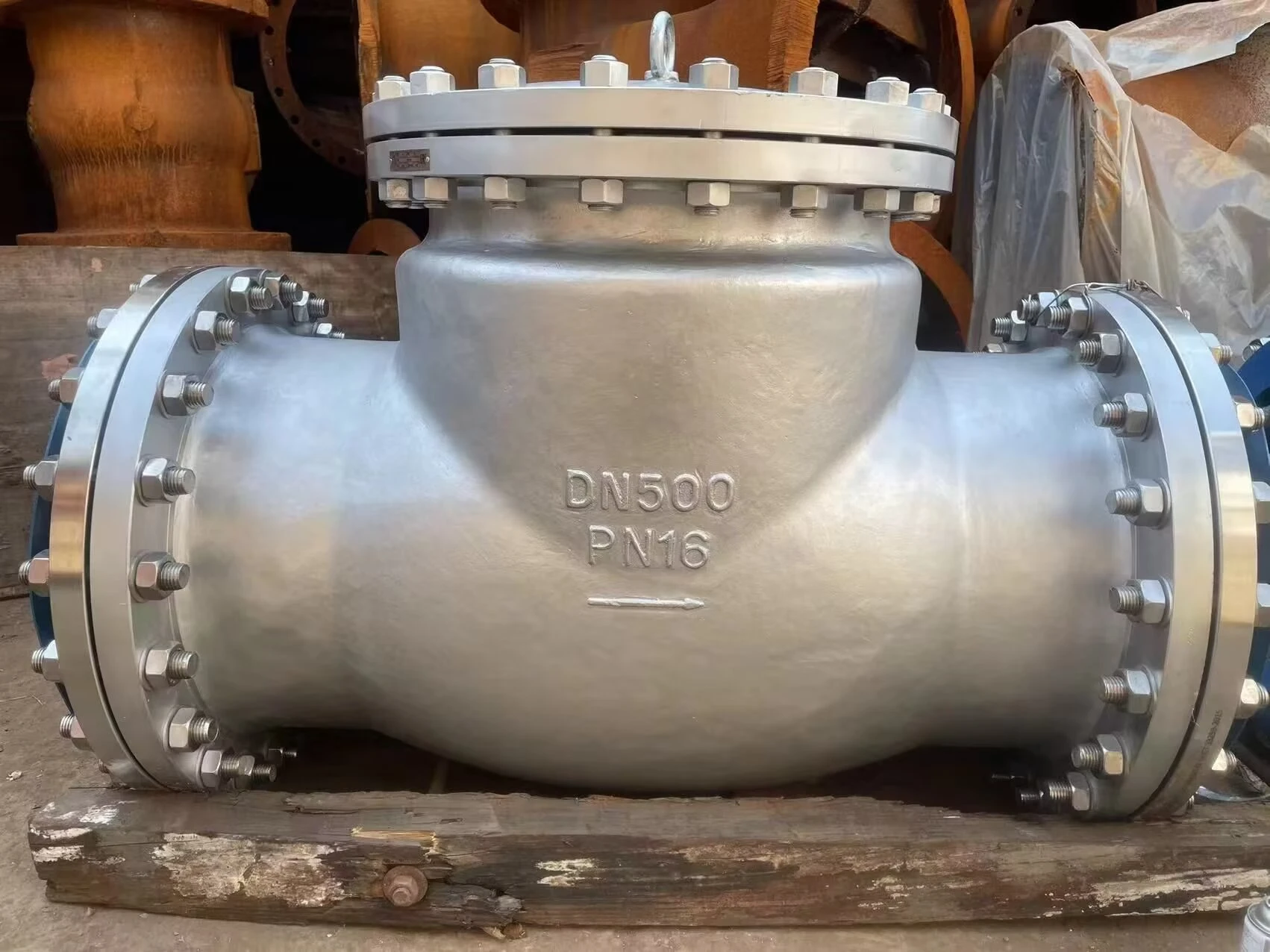
The 6-inch check valve is a critical component in fluid handling systems, designed to prevent backflow and maintain unidirectional flow of liquids or gases. Positioned within the broader piping infrastructure, it operates as a passive device, relying on the pressure differential of the fluid to automatically open and close. Its industrial application spans across water treatment, wastewater management, power generation, chemical processing, and oil & gas pipelines. Core performance metrics include flow coefficient (Cv), pressure drop, leak tightness, and operational reliability under specified temperature and pressure conditions. A key industry pain point is the selection of appropriate materials to mitigate corrosion and erosion, ensuring long-term performance and minimizing maintenance downtime. Furthermore, proper sizing is paramount to prevent water hammer and maintain optimal system efficiency.
Material Science & Manufacturing
The body of a 6-inch check valve is commonly constructed from materials such as ductile iron (ASTM A536), carbon steel (ASTM A105), stainless steel (304/316 – ASTM A351), or PVC/CPVC for corrosive environments. Ductile iron offers high tensile strength and impact resistance, while stainless steel provides superior corrosion resistance. The internal components, including the disc and seat, are frequently fabricated from materials like stainless steel, brass (ASTM B16), or elastomer-lined steel. Manufacturing processes vary depending on the material. Cast iron and steel valves utilize sand casting followed by machining and surface finishing. PVC/CPVC valves are produced via injection molding. Swing check valves involve the machining of the disc to ensure proper seating and swing arc. Lift check valves require precise machining of the disc and stem for vertical movement. Key parameter control during manufacturing includes dimensional accuracy of the disc and seat to ensure leak-tight closure, surface roughness to minimize friction, and material heat treatment to achieve desired mechanical properties. Welding processes (SMAW, GTAW) used in steel valve construction must adhere to AWS D1.1 standards, ensuring weld integrity and preventing failure due to stress corrosion cracking.
Performance & Engineering
The performance of a 6-inch check valve is heavily influenced by fluid dynamics and pressure drop. Force analysis considers the hydrodynamic forces acting on the disc during flow, impacting its opening and closing speed. The pressure drop across the valve is determined by its flow coefficient (Cv) and the flow rate, following the Darcy-Weisbach equation. Environmental resistance is critical, particularly in outdoor applications where valves are exposed to temperature fluctuations, UV radiation (for plastic valves), and corrosive atmospheres. Compliance requirements, dictated by standards like API 598 (valve inspection and testing), mandate specific leak rate tests and pressure tests to verify performance. Functional implementation requires proper valve orientation (vertical or horizontal) based on the valve type. Swing check valves generally perform better in horizontal pipelines, minimizing disc slamming. Lift check valves are often preferred for vertical installations. Furthermore, the valve's connection type (flanged, threaded, welded) must be compatible with the piping system and capable of withstanding the operating pressure and temperature. The material selection must also consider the fluid's chemical compatibility to prevent corrosion or degradation.
Technical Specifications
| Parameter | Swing Check Valve (Ductile Iron) | Lift Check Valve (Stainless Steel 316) | PVC Check Valve |
|---|---|---|---|
| Nominal Size | 6 inches (DN150) | 6 inches (DN150) | 6 inches (DN150) |
| Maximum Pressure (PSI) | 250 | 400 | 150 |
| Temperature Range (°F) | -20 to 350 | -300 to 500 | 32 to 140 |
| Connection Type | Flanged (ANSI B16.1) | Flanged (ANSI B16.1) | Socket Weld/Threaded |
| Flow Coefficient (Cv) | 650 | 720 | 400 |
| Leakage Rate (ANSI/FCI 70-2) | Class IV | Class VI | Bubble Tight |
Failure Mode & Maintenance
Common failure modes in 6-inch check valves include disc erosion due to particulate matter in the fluid, seat deformation leading to leakage, corrosion of metallic components, and cracking of plastic valve bodies. Fatigue cracking can occur in swing check valves due to repeated disc slamming, especially in systems with water hammer. Delamination of elastomer linings can also compromise leak tightness. Oxidation and scaling can affect valve internals, increasing friction and hindering operation. Regular maintenance is crucial. This includes periodic inspection of the disc and seat for wear and damage, lubrication of moving parts, and tightening of flange bolts. For valves operating in corrosive environments, regular coating inspection and repair are recommended. Preventive maintenance schedules should be established based on operating conditions and fluid characteristics. Replacement of worn seals and discs is essential to maintain leak tightness. In the event of persistent leakage, a complete valve overhaul or replacement may be necessary. Non-destructive testing (NDT) methods such as visual inspection, liquid penetrant testing, and ultrasonic testing can be employed to detect hidden flaws and assess the valve's structural integrity.
Industry FAQ
Q: What is the primary difference between a swing check valve and a lift check valve in terms of suitability for different applications?
A: Swing check valves are generally preferred for horizontal pipelines due to their lower pressure drop and ability to self-close efficiently with the flow. Lift check valves are more suitable for vertical pipelines as the gravity assists in closure, preventing backflow. Swing valves can experience disc slam at low flow rates, while lift valves are less prone to this issue but may have a higher pressure drop.
Q: How does material selection impact the longevity of a 6-inch check valve in a seawater environment?
A: Seawater is highly corrosive. Ductile iron and carbon steel valves will rapidly corrode without adequate protection. Stainless steel (316) is the minimum recommended material, but duplex stainless steel or specialized alloys are preferred for prolonged service life. Coatings such as epoxy or polyurethane can provide an additional barrier against corrosion, but require regular inspection and maintenance.
Q: What are the critical considerations for sizing a 6-inch check valve to prevent water hammer?
A: Proper sizing involves calculating the flow rate and ensuring the valve's flow coefficient (Cv) is appropriate. Undersized valves can create excessive pressure drop, increasing the risk of water hammer. Oversized valves may not close quickly enough, also contributing to water hammer. The valve’s closing time should be considered in the hydraulic transient analysis.
Q: What are the typical inspection procedures to identify potential failures in a 6-inch check valve during a plant shutdown?
A: Visual inspection for corrosion, erosion, and damage to the disc and seat is the first step. Leak testing with hydrostatic pressure is crucial to verify seal integrity. Non-destructive testing (NDT) methods like liquid penetrant testing can detect surface cracks. Disassembly and inspection of internal components, including springs and dampers, are also recommended.
Q: What is the importance of adhering to API 598 standards during the testing of 6-inch check valves?
A: API 598 defines standardized testing procedures for valves, ensuring consistent quality and performance. Adhering to these standards guarantees that the valve meets specified leak tightness, pressure rating, and operational requirements. Independent verification of compliance with API 598 provides confidence in the valve's reliability and safety.
Conclusion
The 6-inch check valve is a fundamental component in fluid system integrity, demanding careful consideration of material science, manufacturing precision, and performance characteristics. Selection hinges on a comprehensive understanding of the fluid handled, operating conditions, and applicable industry standards. Proper maintenance and periodic inspection are paramount to mitigate failure modes and ensure long-term reliability, minimizing costly downtime and maintaining system efficiency.
Future advancements in check valve technology will likely focus on developing smart valves with integrated sensors for real-time monitoring of performance parameters, predictive maintenance capabilities, and improved sealing materials to further reduce leakage and enhance operational lifespan. Continued adherence to evolving industry standards and best practices is crucial for maintaining safety and optimizing fluid handling systems.
-
Top Reasons to Choose a Stainless Steel Flange Check Valve for Industrial Applications
-
electric check valve Performance Engineering
-
electric check valves Performance Analysis
-
Threaded Check Valves Performance Analysis
-
6 inch check valve Performance Analysis
-
8 check valve Performance Analysis
-
diaphragm check valve Material Science Manufacturing
-
dual plate check valve Performance Analysis
-
check valve 6 inch Material Science
-
diaphragm check valves Performance Analysis
-
dual plate check valves Performance Analysis
-
vertical check valves Material Science Manufacturing
-
8 check valves Performance Analysis
-
refrigeration check valves Performance Analysis
-
pilot check valve Performance Analysis
 Afrikaans
 Albanian
 Amharic
 Arabic
 Armenian
 Azerbaijani
 Basque
 Belarusian
 Bengali
 Bosnian
 Bulgarian
 Catalan
 Cebuano
 Corsican
 Croatian
 Czech
Czech
 Danish
 Dutch
Dutch
 Esperanto
 Estonian
 Finnish
 French
 Frisian
 Galician
 Georgian
 German
 Greek
Greek
 Gujarati
 Haitian Creole
 Hausa
Hawaiian
Hausa
Hawaiian
 Hebrew
 Hindi
Hindi
 Miao
Miao
 Hungarian
 Icelandic
 Igbo
Igbo
 Indonesian
 Irish
Irish
 Italian
 Japanese
 Javanese
Kannada
Javanese
Kannada
 Kazakh
 Khmer
Khmer
 Rwandese
 Korean
 Kurdish
 Kyrgyz
 Lao
Lao
 Latin
Latin
 Latvian
 Lithuanian
 Luxembourgish
 Macedonian
 Malgashi
 Malay
Malay
 Malayalam
 Maltese
 Maori
Maori
 Marathi
 Mongolian
 Myanmar
 Nepali
 Norwegian
 Norwegian
 Occitan
 Pashto
 Persian
 Polish
 Portuguese
Punjabi
Portuguese
Punjabi
 Romanian
 Russian
 Samoan
 Scottish Gaelic
 Serbian
 Sesotho
 Shona
Shona
 Sindhi
 Sinhala
 Slovak
 Slovenian
 Somali
 Spanish
 Sundanese
 Swahili
 Swedish
Tagalog
Swedish
Tagalog
 Tajik
Tajik
 Tamil
Tamil
 Tatar
Tatar
 Telugu
 Thai
Thai
 Turkish
 Turkmen
 Ukrainian
 Urdu
Urdu
 Uighur
 Uzbek
Uzbek
 Vietnamese
 Welsh
Welsh
 Bantu
Bantu
 Yiddish
 Yoruba
 Zulu
Zulu
 English