




electric check valve Performance Engineering
Introduction
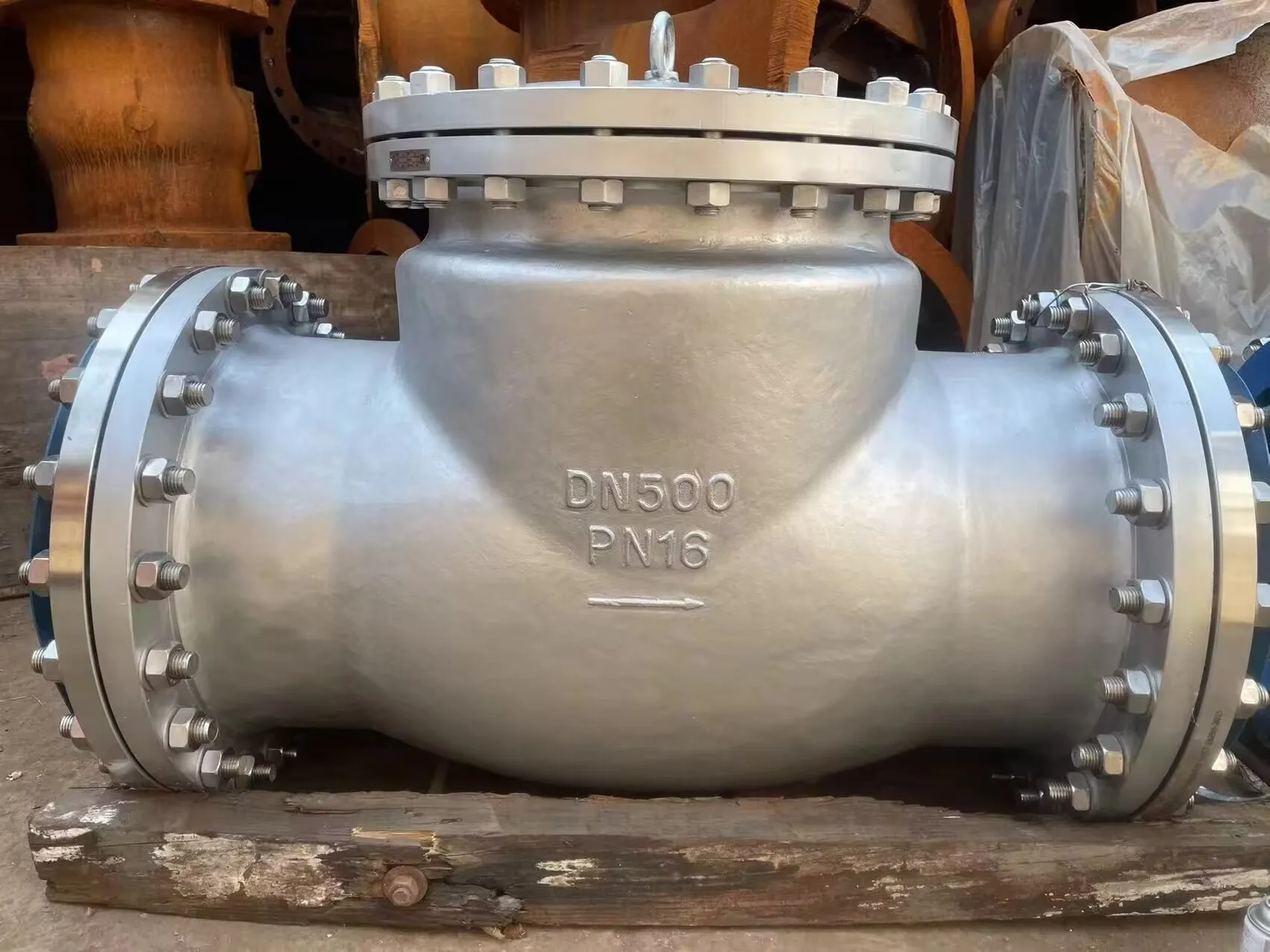
Electric check valves are self-actuated valves designed to allow flow in one direction while automatically preventing backflow. Unlike conventional check valves which rely on pressure differentials and gravity, electric check valves utilize an electric motor and control system to actively manage valve opening and closing. Positioned within the broader industrial fluid control chain, they serve as critical components in systems requiring precise flow regulation and protection against reverse flow conditions, particularly in applications where rapid response times or remote operation are necessary. Their core performance characteristics encompass flow capacity, sealing integrity, response time, and operational reliability, making them integral to processes across diverse industries including chemical processing, water treatment, and power generation. The ability to integrate these valves into automated control systems, coupled with their inherent safety features, differentiates them from traditional passive check valve designs.
Material Science & Manufacturing
The construction of electric check valves necessitates a selection of materials optimized for chemical compatibility, mechanical strength, and durability. Valve bodies are commonly fabricated from ductile iron (ASTM A536 65-45-12), stainless steel (304/316 – ASTM A240), or engineered plastics like Polyvinylidene Fluoride (PVDF) depending on the fluid conveyed and the operating environment. Internal components, including the disc and seat, frequently employ materials such as ceramic (Aluminum Oxide – Al2O3) for wear resistance or PTFE (Polytetrafluoroethylene) for its exceptional chemical inertness. The electric actuator housing is typically constructed from aluminum alloy (A36) due to its lightweight characteristics and machinability. The manufacturing process involves several key stages. Casting or forging forms the initial body shape, followed by precision machining to create the valve ports and seat surfaces. Welding processes (SMAW or GTAW - AWS D1.1) are employed to join components where necessary, requiring strict adherence to weld procedures to ensure structural integrity and leak-proof seals. The actuator assembly involves the mounting of the electric motor, gear train, and control circuitry. Quality control measures at each stage, including non-destructive testing (NDT) such as radiographic inspection (ASTM E94) and hydrostatic testing (API 598), are essential to verifying component integrity and performance. Critical parameters monitored during manufacturing include dimensional accuracy, surface finish, and material hardness.
Performance & Engineering
The performance of an electric check valve is fundamentally governed by principles of fluid dynamics and electromechanical engineering. Force analysis involves calculating the torque required to overcome fluid pressure and friction forces acting on the valve disc. This necessitates a detailed understanding of Bernoulli’s principle and the application of relevant fluid flow equations (Darcy-Weisbach equation). Environmental resistance is crucial; valves operating in corrosive atmospheres must exhibit robust resistance to chemical attack. Material selection plays a paramount role here, with coatings like epoxy resin (ASTM D476) providing an additional barrier against corrosion. Compliance requirements vary by region and application. In potable water systems, valves must comply with NSF/ANSI 61 standards to ensure they do not leach harmful contaminants. For hazardous locations, compliance with ATEX or IECEx directives is mandatory, requiring intrinsically safe designs to prevent ignition of flammable materials. Functional implementation relies on a closed-loop control system. A flow sensor provides feedback to the controller, which adjusts the motor’s operation to maintain the desired flow direction. The actuator's response time (typically measured in milliseconds) is a critical parameter, impacting the valve’s ability to quickly shut off reverse flow. Proper sizing of the actuator and selection of appropriate gear ratios are essential for achieving optimal performance.
Technical Specifications
| Parameter | Unit | Typical Value | Tolerance |
|---|---|---|---|
| Maximum Operating Pressure | PSI | 200 | ±5% |
| Valve Size (Port Diameter) | Inches | 2 | ±0.1 |
| Actuator Voltage | V | 24V DC | ±10% |
| Response Time (Open/Close) | Milliseconds | 200 | ±20 |
| Leakage Rate (Closed) | mL/min | 0.1 | Max. |
| Operating Temperature Range | °F | -20 to 200 | ±5 |
Failure Mode & Maintenance
Electric check valves, while robust, are susceptible to several failure modes. Fatigue cracking of the valve disc or body can occur due to repeated stress cycles induced by fluid pressure fluctuations. Delamination of PTFE seals, particularly in aggressive chemical environments, is another common failure point. Electrical component failure, including motor burnout or controller malfunction, can also prevent proper operation. Oxidation of metallic parts, especially in humid environments, can lead to corrosion and reduced performance. A key failure analysis technique involves visual inspection for cracks, deformation, or corrosion. Non-destructive testing (ultrasonic testing - ASTM E797) can detect internal flaws that are not visible to the naked eye. Preventive maintenance is crucial. Regular lubrication of moving parts, tightening of electrical connections, and inspection of seals are essential. Periodic testing of the actuator’s functionality and calibration of the control system are also recommended. In case of failure, component replacement is typically required, with proper attention to torque specifications during reassembly (ISO 6150). Documentation of maintenance activities and failure history is vital for identifying recurring issues and improving long-term reliability.
Industry FAQ
Q: What are the key advantages of an electric check valve over a traditional swing check valve in a pulsating flow application?
A: Traditional swing check valves can suffer from water hammer and fatigue damage in pulsating flow due to the disc repeatedly slamming shut. Electric check valves offer controlled closure, mitigating water hammer and significantly extending valve life in such applications. The active control also allows for finer adjustments to flow management.
Q: How does the ingress protection (IP) rating of the actuator housing impact the valve’s suitability for outdoor installations?
A: The IP rating defines the level of protection against dust and water ingress. For outdoor installations, a minimum IP65 rating is recommended, indicating protection against dust-tight operation and water jets from any direction. Higher ratings, like IP67 (temporary immersion) or IP68 (continuous immersion), provide enhanced protection in more demanding environments.
Q: What considerations should be made when selecting the appropriate actuator size for a given valve and fluid?
A: Actuator sizing must account for fluid density, viscosity, pressure differential, and flow rate. An undersized actuator may fail to reliably overcome the fluid forces, while an oversized actuator can lead to excessive wear and tear. Manufacturers typically provide sizing charts and software tools to assist in selecting the optimal actuator.
Q: What are the common communication protocols supported by electric check valve controllers for integration into a distributed control system (DCS)?
A: Common communication protocols include 4-20mA analog signals, Modbus RTU/TCP, Profibus DP/PA, and Foundation Fieldbus. The selection of the appropriate protocol depends on the DCS architecture and the specific requirements of the application. HART protocol is also frequently employed for enhanced diagnostics and calibration.
Q: How does temperature affect the performance and lifespan of the valve seals?
A: Elevated temperatures can accelerate the degradation of elastomeric seals like EPDM or Viton, leading to reduced sealing efficiency and eventual failure. Conversely, low temperatures can cause seals to become brittle and lose their flexibility. Proper material selection, considering the operating temperature range, is crucial for ensuring long-term seal performance.
Conclusion
Electric check valves represent a significant advancement in fluid control technology, offering enhanced precision, reliability, and integration capabilities compared to traditional designs. Their ability to actively manage flow direction and integrate seamlessly into automated systems makes them ideally suited for demanding industrial applications. Proper material selection, meticulous manufacturing processes, and diligent maintenance practices are paramount to maximizing performance and extending service life.
Looking ahead, continued innovation in actuator technology and control algorithms will likely lead to even more sophisticated electric check valves with improved efficiency and diagnostic capabilities. The adoption of Industry 4.0 principles, such as predictive maintenance and remote monitoring, will further enhance their value proposition and contribute to optimized process control within various industrial sectors.
-
Top Reasons to Choose a Stainless Steel Flange Check Valve for Industrial Applications
-
electric check valve Performance Engineering
-
electric check valves Performance Analysis
-
Threaded Check Valves Performance Analysis
-
6 inch check valve Performance Analysis
-
8 check valve Performance Analysis
-
diaphragm check valve Material Science Manufacturing
-
dual plate check valve Performance Analysis
-
check valve 6 inch Material Science
-
diaphragm check valves Performance Analysis
-
dual plate check valves Performance Analysis
-
vertical check valves Material Science Manufacturing
-
8 check valves Performance Analysis
-
refrigeration check valves Performance Analysis
-
pilot check valve Performance Analysis
 Afrikaans
 Albanian
 Amharic
 Arabic
 Armenian
 Azerbaijani
 Basque
 Belarusian
 Bengali
 Bosnian
 Bulgarian
 Catalan
 Cebuano
 Corsican
 Croatian
 Czech
Czech
 Danish
 Dutch
Dutch
 Esperanto
 Estonian
 Finnish
 French
 Frisian
 Galician
 Georgian
 German
 Greek
Greek
 Gujarati
 Haitian Creole
 Hausa
Hawaiian
Hausa
Hawaiian
 Hebrew
 Hindi
Hindi
 Miao
Miao
 Hungarian
 Icelandic
 Igbo
Igbo
 Indonesian
 Irish
Irish
 Italian
 Japanese
 Javanese
Kannada
Javanese
Kannada
 Kazakh
 Khmer
Khmer
 Rwandese
 Korean
 Kurdish
 Kyrgyz
 Lao
Lao
 Latin
Latin
 Latvian
 Lithuanian
 Luxembourgish
 Macedonian
 Malgashi
 Malay
Malay
 Malayalam
 Maltese
 Maori
Maori
 Marathi
 Mongolian
 Myanmar
 Nepali
 Norwegian
 Norwegian
 Occitan
 Pashto
 Persian
 Polish
 Portuguese
Punjabi
Portuguese
Punjabi
 Romanian
 Russian
 Samoan
 Scottish Gaelic
 Serbian
 Sesotho
 Shona
Shona
 Sindhi
 Sinhala
 Slovak
 Slovenian
 Somali
 Spanish
 Sundanese
 Swahili
 Swedish
Tagalog
Swedish
Tagalog
 Tajik
Tajik
 Tamil
Tamil
 Tatar
Tatar
 Telugu
 Thai
Thai
 Turkish
 Turkmen
 Ukrainian
 Urdu
Urdu
 Uighur
 Uzbek
Uzbek
 Vietnamese
 Welsh
Welsh
 Bantu
Bantu
 Yiddish
 Yoruba
 Zulu
Zulu
 English