




Threaded Check Valves Performance Analysis
Introduction
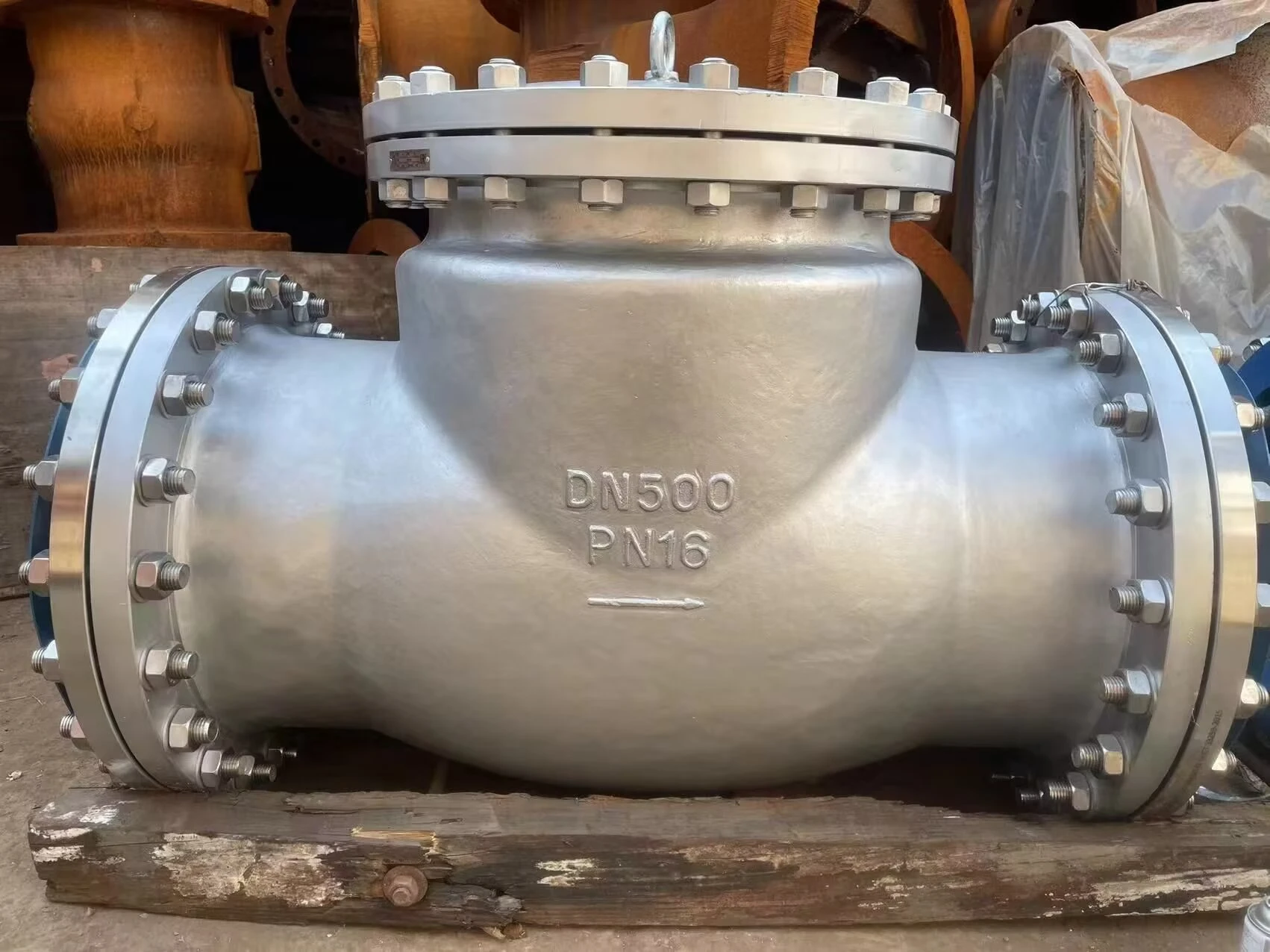
Threaded check valves are essential components in piping systems designed to prevent backflow, ensuring unidirectional fluid transfer. Positioned within the industry chain as a crucial flow control device, these valves operate passively, utilizing the pressure of the fluid to automatically open and close. Unlike actively controlled valves requiring external actuators, check valves rely on inherent pressure differentials. Common materials include brass, stainless steel, and plastic, selected based on fluid compatibility and operating temperature. Core performance characteristics are defined by flow coefficient (Cv), pressure drop, leakage rate, and response time – parameters critical in applications ranging from residential plumbing to complex industrial processes. The primary industry pain point centers on material selection for corrosive fluids and maintaining consistent sealing performance under varying pressures and temperatures. Failure to adequately address these factors leads to costly downtime and potential system failures. Furthermore, ensuring compliance with relevant safety standards and pressure vessel directives is a continuous challenge for manufacturers and end-users.
Material Science & Manufacturing
The body of a threaded check valve is commonly manufactured from brass (CZ121, CZ132), stainless steel (304, 316), or engineered plastics like PVC or CPVC. Brass provides good corrosion resistance in many applications, exhibiting a tensile strength around 400-500 MPa and a hardness of 90-120 Brinell. However, dezincification is a concern in some water chemistries, necessitating stainless steel alternatives. Stainless steel 304 offers excellent corrosion resistance and strength (500-700 MPa tensile strength, 180-220 Brinell hardness) but is susceptible to chloride-induced pitting corrosion. 316 stainless steel, containing molybdenum, significantly enhances resistance to pitting and crevice corrosion. Plastics, while lightweight and cost-effective, have lower tensile strength (20-70 MPa for PVC/CPVC) and are temperature-sensitive. The internal components, particularly the disc and seat, are often manufactured from elastomers like EPDM, NBR, or PTFE. EPDM offers excellent resistance to water and steam, while NBR excels with oil-based fluids. PTFE provides near-universal chemical resistance. Manufacturing processes involve investment casting for metal bodies, followed by CNC machining for precise threading and internal geometry. Plastic bodies are typically produced via injection molding, requiring careful control of melt temperature, injection pressure, and cooling rate to minimize warpage and ensure dimensional accuracy. Sealing surfaces are typically lapped to achieve a Ra value of less than 1.6 μm to ensure leak-tight performance. Welding processes, if used for joining components, must adhere to ASME Section IX standards.
Performance & Engineering
Performance of a threaded check valve is primarily dictated by its hydrodynamic characteristics and structural integrity. Force analysis focuses on the pressure differential acting on the disc, which must be sufficient to overcome spring force (if present) and maintain a closed position. Finite element analysis (FEA) is used to optimize disc geometry and body thickness to withstand maximum operating pressures. Environmental resistance is critical, particularly concerning temperature fluctuations and chemical exposure. Thermal expansion coefficients of the body and disc materials must be considered to prevent stress-induced leakage. Compliance requirements vary by application. For potable water systems, NSF/ANSI 61 certification is mandatory, ensuring the valve materials do not leach harmful contaminants. For applications involving flammable fluids, ATEX or IECEx certification may be required, dictating specific material selection and construction standards to prevent ignition. The cracking pressure, the minimum upstream pressure required to open the valve, is a critical parameter determined by spring force and disc geometry. The flow coefficient (Cv) quantifies the valve’s capacity to pass fluid, and is influenced by the port diameter and internal geometry. Proper sizing of the check valve to the piping system is crucial to minimize pressure drop and prevent water hammer, a phenomenon caused by rapid fluid deceleration which can lead to catastrophic pipe failure. Furthermore, the valve’s response time – the time taken to fully open or close – must be considered in applications requiring rapid flow control.
Technical Specifications
| Parameter | Brass (CZ121) | Stainless Steel 304 | PVC | Unit |
|---|---|---|---|---|
| Maximum Operating Pressure | 1.0 | 2.5 | 0.5 | MPa |
| Operating Temperature Range | -20 to 80 | -20 to 180 | 0 to 60 | °C |
| Flow Coefficient (Cv) – 1” size | 5.2 | 6.5 | 4.8 | m³/hr at 1 bar pressure drop |
| Leakage Rate | <0.1 | <0.01 | <0.2 | ml/min |
| Connection Type | NPT/BSP | NPT/BSP | Socket/Threaded | - |
| Material Standard | ASTM B124 | ASTM A240 | ASTM D1785 | - |
Failure Mode & Maintenance
Common failure modes in threaded check valves include seat erosion, disc deformation, spring fatigue (in spring-loaded designs), and body corrosion. Seat erosion occurs due to abrasive particles in the fluid stream, leading to increased leakage. Disc deformation can result from excessive pressure or temperature, compromising the seal. Spring fatigue reduces the spring force, delaying valve closure and potentially allowing backflow. Corrosion, particularly in brass valves exposed to corrosive fluids, weakens the body and can lead to cracking. Failure analysis often involves visual inspection for cracks or erosion, pressure testing to assess leakage rates, and metallurgical analysis to identify corrosion mechanisms. Preventative maintenance involves regular inspection of seating surfaces, lubrication of moving parts (if applicable), and cleaning to remove debris. For severely corroded valves, replacement is often the most cost-effective solution. To mitigate seat erosion, consider using valves with hardened seats or incorporating strainers upstream to remove particulate matter. For applications with high temperature fluctuations, selecting materials with compatible thermal expansion coefficients is crucial. Periodic testing of the valve’s response time can identify early signs of spring fatigue. A recommended maintenance schedule should include annual inspections and replacement of seals every 2-3 years, depending on the severity of the operating environment.
Industry FAQ
Q: What is the impact of fluid viscosity on the performance of a threaded check valve?
A: Increased fluid viscosity leads to higher pressure drop across the valve and can significantly reduce the flow coefficient (Cv). Higher viscosity fluids require more force to open the disc, potentially leading to slower response times and increased energy consumption. Valves should be properly sized considering the fluid’s viscosity at the operating temperature.
Q: How does water hammer affect the lifespan of a threaded check valve?
A: Water hammer generates intense pressure surges that can exceed the valve's rated pressure, causing damage to the disc, seat, and body. Repeated exposure to water hammer significantly reduces the valve’s lifespan and increases the risk of catastrophic failure. Mitigation strategies include installing slow-closing check valves and employing surge suppressors.
Q: What material is best suited for handling highly corrosive chemicals?
A: For highly corrosive chemicals, PTFE-lined valves or those constructed entirely from highly alloyed stainless steels (e.g., Alloy 20, Hastelloy) are recommended. The specific alloy selection depends on the chemical composition and concentration. Chemical compatibility charts should be consulted before making a material selection.
Q: Can threaded check valves be used in vacuum applications?
A: Standard threaded check valves are generally not suitable for vacuum applications as they rely on pressure differential for operation. Vacuum applications require specialized check valves designed to maintain a seal under negative pressure conditions.
Q: What is the difference between a spring-loaded and a gravity-operated check valve?
A: Spring-loaded check valves use a spring to assist in disc closure, providing faster response times and better sealing at low flow rates. Gravity-operated check valves rely solely on the weight of the disc to close, which can lead to slower response times and potential backflow at low flow rates. Spring-loaded valves are generally preferred for critical applications requiring positive shut-off.
Conclusion
Threaded check valves are fundamental flow control devices, critical for maintaining system integrity and preventing backflow. Their selection necessitates a thorough understanding of material science, manufacturing processes, and performance characteristics. The choice between brass, stainless steel, and plastic hinges on fluid compatibility, operating temperature, and pressure requirements. Careful consideration of potential failure modes – seat erosion, disc deformation, and corrosion – is paramount for ensuring long-term reliability and minimizing downtime.
Moving forward, advancements in valve design will likely focus on incorporating more robust sealing materials, optimizing disc geometry for reduced pressure drop, and developing smart check valves with integrated sensors for real-time monitoring of valve performance. Adherence to industry standards (NSF, ASME, ASTM) and rigorous quality control procedures are essential for manufacturers to deliver reliable and compliant products, meeting the evolving needs of diverse industrial applications.
-
Top Reasons to Choose a Stainless Steel Flange Check Valve for Industrial Applications
-
electric check valve Performance Engineering
-
electric check valves Performance Analysis
-
Threaded Check Valves Performance Analysis
-
6 inch check valve Performance Analysis
-
8 check valve Performance Analysis
-
diaphragm check valve Material Science Manufacturing
-
dual plate check valve Performance Analysis
-
check valve 6 inch Material Science
-
diaphragm check valves Performance Analysis
-
dual plate check valves Performance Analysis
-
vertical check valves Material Science Manufacturing
-
8 check valves Performance Analysis
-
refrigeration check valves Performance Analysis
-
pilot check valve Performance Analysis
 Afrikaans
 Albanian
 Amharic
 Arabic
 Armenian
 Azerbaijani
 Basque
 Belarusian
 Bengali
 Bosnian
 Bulgarian
 Catalan
 Cebuano
 Corsican
 Croatian
 Czech
Czech
 Danish
 Dutch
Dutch
 Esperanto
 Estonian
 Finnish
 French
 Frisian
 Galician
 Georgian
 German
 Greek
Greek
 Gujarati
 Haitian Creole
 Hausa
Hawaiian
Hausa
Hawaiian
 Hebrew
 Hindi
Hindi
 Miao
Miao
 Hungarian
 Icelandic
 Igbo
Igbo
 Indonesian
 Irish
Irish
 Italian
 Japanese
 Javanese
Kannada
Javanese
Kannada
 Kazakh
 Khmer
Khmer
 Rwandese
 Korean
 Kurdish
 Kyrgyz
 Lao
Lao
 Latin
Latin
 Latvian
 Lithuanian
 Luxembourgish
 Macedonian
 Malgashi
 Malay
Malay
 Malayalam
 Maltese
 Maori
Maori
 Marathi
 Mongolian
 Myanmar
 Nepali
 Norwegian
 Norwegian
 Occitan
 Pashto
 Persian
 Polish
 Portuguese
Punjabi
Portuguese
Punjabi
 Romanian
 Russian
 Samoan
 Scottish Gaelic
 Serbian
 Sesotho
 Shona
Shona
 Sindhi
 Sinhala
 Slovak
 Slovenian
 Somali
 Spanish
 Sundanese
 Swahili
 Swedish
Tagalog
Swedish
Tagalog
 Tajik
Tajik
 Tamil
Tamil
 Tatar
Tatar
 Telugu
 Thai
Thai
 Turkish
 Turkmen
 Ukrainian
 Urdu
Urdu
 Uighur
 Uzbek
Uzbek
 Vietnamese
 Welsh
Welsh
 Bantu
Bantu
 Yiddish
 Yoruba
 Zulu
Zulu
 English