




china high pressure check valve Performance Analysis
Introduction
High pressure check valves, manufactured in China, are critical components in fluid handling systems designed to prevent backflow in pipelines operating under substantial pressure. These valves are integral to industries including oil and gas, petrochemical processing, power generation, and hydraulic machinery. Their function is not merely directional control, but the safeguard of equipment integrity and process efficiency. Unlike low-pressure check valves, high-pressure designs necessitate advanced materials and precise engineering to withstand extreme forces and potential erosion. This guide provides a detailed technical overview of these valves, covering material science, manufacturing processes, performance characteristics, failure modes, and relevant industry standards. The increasing demand for reliable and cost-effective high-pressure solutions has positioned China as a major global supplier, requiring a thorough understanding of their production capabilities and quality control measures.
Material Science & Manufacturing
The body of a high-pressure check valve is commonly constructed from carbon steel (ASTM A105, equivalent to GB/T 1220), alloy steel (ASTM A182 F304/F316, equivalent to GB/T 150), or stainless steel (316L) to ensure corrosion resistance and mechanical strength. The disc, responsible for sealing, can be manufactured from materials like PTFE, hardened alloys, or specialized polymers depending on the fluid compatibility and temperature requirements. Spring materials, crucial for disc closure, are typically high-tensile spring steel (e.g., 302/304 stainless steel). Manufacturing processes begin with precision casting or forging of the valve body. Welding (SMAW, GTAW, or SAW, complying with ASME Section IX and GB/T 8163) is employed for joining components. Critical parameters include weld penetration, heat treatment to relieve stress, and non-destructive testing (NDT) like radiographic testing (RT) and ultrasonic testing (UT) to detect flaws. The disc is often machined to exacting tolerances, and surface finishing is paramount to ensure a leak-tight seal. Post-manufacturing, valves undergo hydrostatic testing to verify pressure containment and seat leakage according to API 598 and GB/T 2623. Proper material selection and adherence to stringent manufacturing controls are vital to mitigate corrosion, erosion, and fatigue failure, particularly in harsh operational environments.
Performance & Engineering
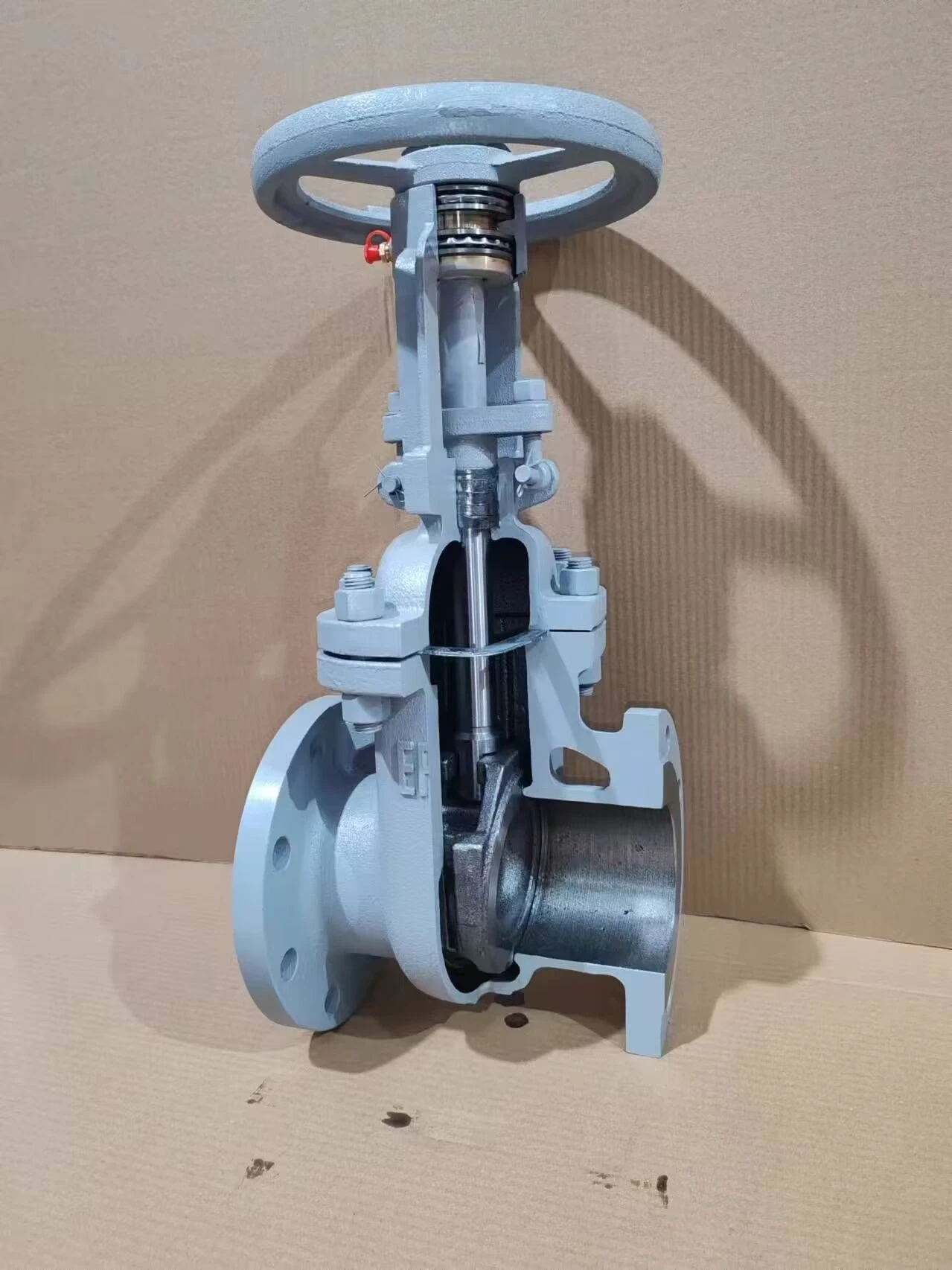
The performance of a high-pressure check valve is dictated by its pressure rating, flow coefficient (Cv), leakage rate, and response time. Pressure ratings are typically specified in PSI or bar, and must exceed the maximum system operating pressure with a safety factor. Flow coefficient, determined through rigorous testing (ISO 5208), quantifies the valve's capacity to handle fluid flow while minimizing pressure drop. Leakage rate, a critical parameter, is often expressed in terms of bubbles per minute or milliliters per minute and is evaluated per API 598. Engineering design focuses on minimizing pressure drop and preventing water hammer. The spring force must be precisely calibrated to overcome fluid pressure and ensure rapid closure, preventing backflow. Finite element analysis (FEA) is used to optimize valve geometry, predict stress distribution, and validate structural integrity under high-pressure conditions. Compliance with industry standards like ASME B16.34 (for valve dimensions) and API 6D (for quarter-turn valves, often applied by analogy) is essential. Furthermore, material compatibility with the conveyed fluid is crucial; for example, stainless steel is preferred for corrosive environments, while ductile iron may be suitable for water applications. Proper installation, including correct orientation and sufficient upstream piping length, also contributes to optimal performance.
Technical Specifications
| Parameter | Units | Typical Range (China Manufactured) | Testing Standard |
|---|---|---|---|
| Maximum Operating Pressure | PSI | Up to 10,000 | API 598 |
| Temperature Range | °F | -20 to 450 | ASTM E290 |
| Body Material | - | Carbon Steel, 304/316 Stainless Steel | ASTM A105, A182 |
| Disc Material | - | PTFE, Alloy Steel, Hastelloy | ASTM D1457 |
| Connection Type | - | Threaded (NPT, BSP), Flanged (ANSI, DIN) | ASME B16.5 |
| Leakage Rate | ml/min | ≤ 0.1 | API 598 |
Failure Mode & Maintenance
High-pressure check valves are susceptible to several failure modes. Erosion, particularly with abrasive fluids, can damage the disc and seat, leading to leakage. Corrosion, especially in chloride-rich environments, can weaken the valve body and internal components. Fatigue cracking can occur due to cyclical pressure fluctuations. Foreign object damage (FOD) can obstruct the disc, preventing proper closure. Spring failure can result in slow or incomplete closure. To mitigate these failures, regular inspection and maintenance are essential. Visual inspection should be conducted for signs of corrosion, erosion, or damage. Pressure testing should be performed periodically to verify leak tightness. The spring should be checked for proper tension and replaced if necessary. Lubrication of moving parts may be required, depending on the valve design. In case of leakage, the disc and seat should be inspected and replaced if damaged. Preventative maintenance, including cleaning and coating, can extend the valve’s lifespan. Comprehensive record-keeping of maintenance activities is crucial for tracking valve performance and identifying potential issues. Root cause analysis should be performed on any failures to prevent recurrence.
Industry FAQ
Q: What are the critical material certifications I should request when sourcing high-pressure check valves from China?
A: You should request material test reports (MTRs) per EN 10204 3.1, verifying the chemical composition and mechanical properties of the valve body and critical components. Specifically, demand certifications for the steel grade (e.g., ASTM A105, A182 F316), the forging/casting process, and any heat treatment performed. Also, request documentation confirming compliance with relevant standards like ASME B16.34 and API 6D.
Q: How can I verify the quality of welding performed on a high-pressure check valve?
A: Request access to Welding Procedure Specifications (WPS) and Procedure Qualification Records (PQR) that demonstrate the welding process is qualified for the specific materials and thicknesses being joined. Demand Non-Destructive Testing (NDT) reports, including Radiographic Testing (RT) and Ultrasonic Testing (UT), to confirm the absence of defects within the weld. Verification of welder qualifications is also crucial.
Q: What is the significance of hydrostatic testing, and what acceptance criteria should be used?
A: Hydrostatic testing verifies the pressure integrity of the valve body and ensures there are no leaks. The test pressure should be 1.5 times the maximum working pressure, held for a specified duration. Acceptance criteria should be zero visible leaks, as per API 598. A detailed test report documenting the pressure, duration, and results should be provided.
Q: What considerations are important for selecting the correct disc material for a specific application?
A: The disc material must be compatible with the conveyed fluid and operating temperature. PTFE is suitable for many applications but has limited temperature resistance. Alloy steels offer high strength and wear resistance. Hastelloy provides excellent corrosion resistance but is more expensive. Consider the fluid’s pH, chemical composition, and the presence of abrasive particles.
Q: What are the common causes of premature failure in high-pressure check valves, and how can these be avoided?
A: Common causes include erosion, corrosion, fatigue, and FOD. To avoid these, ensure proper material selection, conduct regular inspections, implement preventative maintenance programs, and install filters upstream to prevent FOD. Proper installation, avoiding excessive stress on the valve body, is also critical.
Conclusion
High-pressure check valves, crucial for maintaining fluid system integrity, require careful consideration of materials, manufacturing processes, and performance specifications. The ability of Chinese manufacturers to supply these valves competitively hinges on adherence to international quality standards and rigorous testing protocols. Selecting a reputable supplier who prioritizes material traceability, NDT, and hydrostatic testing is paramount.
Continued advancements in materials science, such as the development of more corrosion-resistant alloys and advanced sealing materials, will further enhance the reliability and longevity of these critical components. Effective preventative maintenance programs and thorough failure analysis remain essential for maximizing valve lifespan and minimizing downtime, ultimately contributing to improved operational efficiency and safety.
-
flanged butterfly valves Performance Analysis
-
flanged gate valves Performance Analysis
-
Flanges for butterfly valves Material Analysis
-
gate valve flange Performance Analysis
-
2 inch flange Performance Analysis
-
3 inch flange Performance Analysis
-
Aluminum Flange Material Performance
-
Ring Joint Flange Performance Analysis
-
Square Flange Performance Analysis
-
Ring Joint Flanges Performance Analysis
-
Rubber Flanges Performance Analysis
-
Square Flanges Material Science Manufacturing
-
Hubbed Flange Performance Analysis
-
Flat Face Flange Performance Analysis
-
Ball Valve Flange Performance Analysis
 Afrikaans
 Albanian
 Amharic
 Arabic
 Armenian
 Azerbaijani
 Basque
 Belarusian
 Bengali
 Bosnian
 Bulgarian
 Catalan
 Cebuano
 Corsican
 Croatian
 Czech
Czech
 Danish
 Dutch
Dutch
 Esperanto
 Estonian
 Finnish
 French
 Frisian
 Galician
 Georgian
 German
 Greek
Greek
 Gujarati
 Haitian Creole
 Hausa
Hawaiian
Hausa
Hawaiian
 Hebrew
 Hindi
Hindi
 Miao
Miao
 Hungarian
 Icelandic
 Igbo
Igbo
 Indonesian
 Irish
Irish
 Italian
 Japanese
 Javanese
Kannada
Javanese
Kannada
 Kazakh
 Khmer
Khmer
 Rwandese
 Korean
 Kurdish
 Kyrgyz
 Lao
Lao
 Latin
Latin
 Latvian
 Lithuanian
 Luxembourgish
 Macedonian
 Malgashi
 Malay
Malay
 Malayalam
 Maltese
 Maori
Maori
 Marathi
 Mongolian
 Myanmar
 Nepali
 Norwegian
 Norwegian
 Occitan
 Pashto
 Persian
 Polish
 Portuguese
Punjabi
Portuguese
Punjabi
 Romanian
 Russian
 Samoan
 Scottish Gaelic
 Serbian
 Sesotho
 Shona
Shona
 Sindhi
 Sinhala
 Slovak
 Slovenian
 Somali
 Spanish
 Sundanese
 Swahili
 Swedish
Tagalog
Swedish
Tagalog
 Tajik
Tajik
 Tamil
Tamil
 Tatar
Tatar
 Telugu
 Thai
Thai
 Turkish
 Turkmen
 Ukrainian
 Urdu
Urdu
 Uighur
 Uzbek
Uzbek
 Vietnamese
 Welsh
Welsh
 Bantu
Bantu
 Yiddish
 Yoruba
 Zulu
Zulu
 English