




china manual knife type gate valve Performance Analysis

Introduction
The china manual knife type gate valve is a critical component in industrial fluid handling systems, functioning as a quarter-turn isolation valve. Characterized by its sharp knife gate design, it provides a bubble-tight shutoff, particularly effective with media containing solids or slurries. This valve type distinguishes itself from traditional gate valves by minimizing pressure drop and offering superior shearing action, making it prevalent in industries such as pulp and paper, wastewater treatment, mining, and chemical processing. The manual operation provides a reliable, power-free control method, crucial in environments where electrical safety is paramount. Its positioning in the industry chain is typically between the pipeline infrastructure and process equipment, responsible for controlling flow initiation and termination. Core performance metrics include sealing capability, flow coefficient, and resistance to abrasive wear. Understanding these aspects is vital for optimal system integration and longevity.
Material Science & Manufacturing
The body of a china manual knife type gate valve is commonly constructed from cast iron (ASTM A126 Grade B), ductile iron (ASTM A536 65-45-12), or carbon steel (ASTM A216 WCB). The gate itself is typically manufactured from stainless steel (304, 316, or 410) to enhance corrosion resistance and maintain a sharp cutting edge. Seats are often made of resilient materials like EPDM, Nitrile (NBR), or PTFE, providing a tight seal. Manufacturing begins with patternmaking and core creation for cast iron/steel bodies, followed by sand casting. Precision machining ensures accurate dimensions and smooth gate travel. The knife gate is produced via forging or machining from stainless steel billets, requiring careful heat treatment to achieve the required hardness. Welding procedures (SMAW, GMAW) adhere to AWS D1.1 standards for structural steel welding. Critical parameters during manufacturing include material traceability, welding process control (temperature, shielding gas), non-destructive testing (NDT) like radiographic testing (RT) and ultrasonic testing (UT) to identify defects, and hydrostatic testing to verify pressure integrity. The gate's edge geometry is crucial; a precise angle is maintained via CNC machining to ensure efficient shearing and prevent binding during operation. Coating application, typically epoxy-based, follows to protect against corrosion, adhering to SSPC-SP10 sandblasting standards for surface preparation.
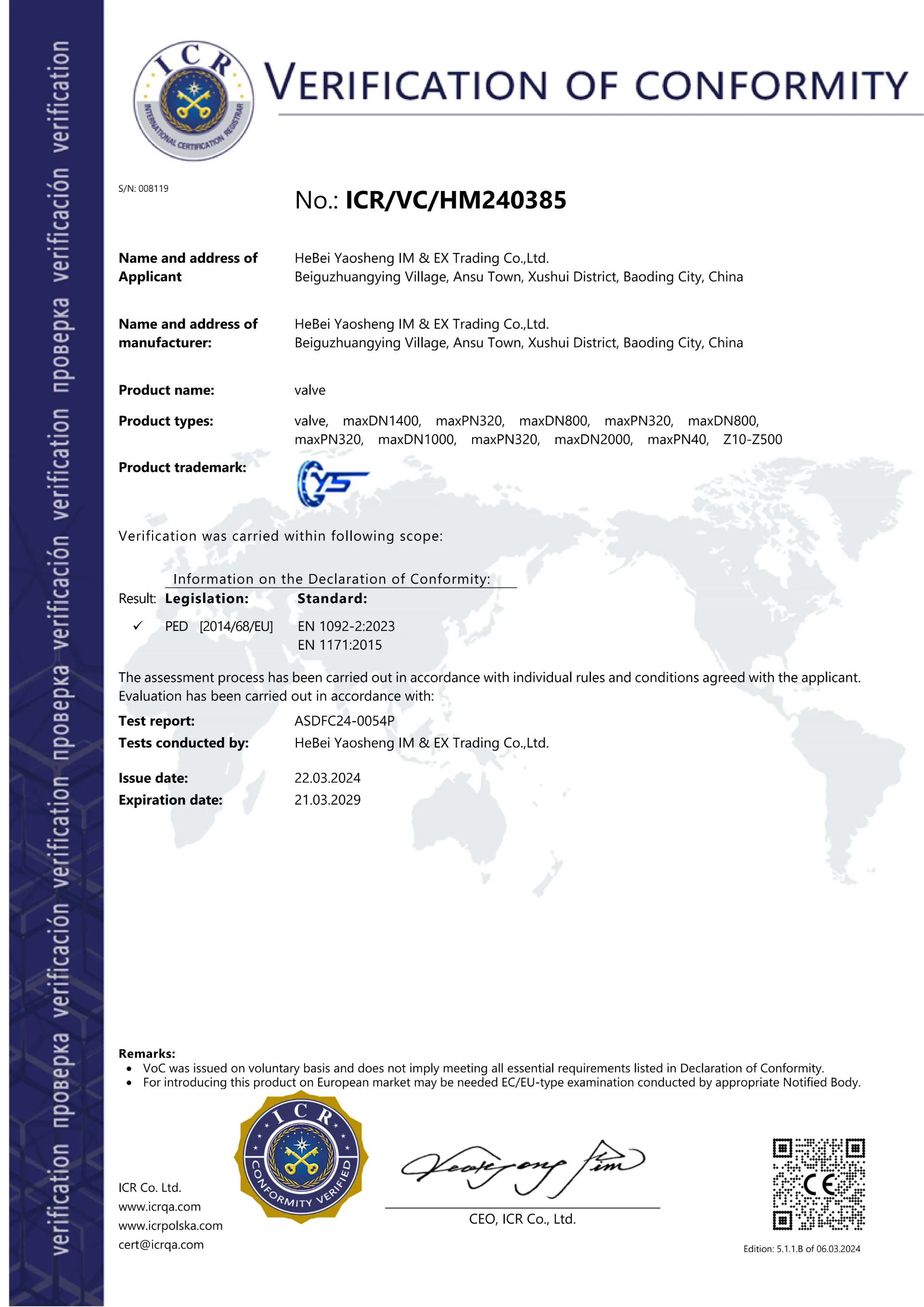
Performance & Engineering
Performance of the knife gate valve hinges on its ability to effectively shear and seal. Force analysis during operation considers the shear force required to cut through media, the seating force maintaining a leak-tight closure, and the torque required for manual actuation. Environmental resistance is critical; materials must withstand operating temperatures (-20°C to 120°C is typical), pressure ratings (up to ANSI Class 300), and chemical compatibility with the conveyed fluid. Compliance requirements depend on the application, with standards like ANSI/FCI 70-2 for control valves and MSS SP-61 for pressure testing being relevant. Engineering considerations include the selection of appropriate seat materials based on chemical compatibility (e.g., Viton for aggressive chemicals, EPDM for water-based systems). The valve's design must minimize turbulence to reduce erosion and cavitation. The stem packing, typically PTFE or graphite, requires careful selection to prevent leakage while maintaining smooth operation. The handwheel design must adhere to ergonomic principles, minimizing operator effort. Failure modes related to over-tightening must be addressed through torque limiting mechanisms and clear operating instructions. Finite element analysis (FEA) is often employed during design to optimize stress distribution and ensure structural integrity under various operating conditions.
Technical Specifications
| Parameter | Specification (Typical) | Unit | Testing Standard |
|---|---|---|---|
| Body Material | Ductile Iron (QT450-10) | - | ASTM A536 65-45-12 |
| Gate Material | Stainless Steel 304 | - | ASTM A276 Type 304 |
| Seat Material | EPDM | - | ASTM D2000 |
| Pressure Rating | 150 | PSI | ANSI B16.34 |
| Temperature Range | -20 to 120 | °C | - |
| Connection Type | Flanged (ANSI B16.1) | - | - |
Failure Mode & Maintenance
Common failure modes in china manual knife type gate valves include gate erosion due to abrasive media, seat damage from solid particle impact, stem packing leakage leading to fugitive emissions, and corrosion of the valve body. Fatigue cracking can occur in the gate or stem under cyclic loading. Delamination of the seat material can compromise sealing. Oxidation of stainless steel components, particularly in high-temperature environments, can reduce corrosion resistance. Maintenance involves regular inspection of the seat and gate for wear, replacement of the stem packing to prevent leakage, lubrication of the stem threads, and periodic coating repair to maintain corrosion protection. Preventative maintenance schedules should be established based on operating conditions and fluid characteristics. Failure analysis should be conducted on failed components to determine the root cause and prevent recurrence. Non-destructive testing (NDT) like liquid penetrant testing (LPT) can detect surface cracks. Torque monitoring during operation can identify potential gate binding issues. If severe corrosion is observed, the entire valve may require replacement. Proper storage conditions (dry, protected from elements) are crucial to prevent premature degradation during periods of non-use.
Industry FAQ
Q: What is the primary advantage of a knife gate valve over a traditional gate valve when handling slurries?
A: The primary advantage lies in the knife gate’s sharp cutting edge. Traditional gate valves have a wedge-shaped gate which can become obstructed by solids in slurries, leading to jamming and damage. The knife gate shears through the slurry, providing a more reliable seal and reducing the risk of failure. This ensures consistent flow and minimizes downtime.
Q: How do I select the correct seat material for a corrosive chemical application?
A: Seat material selection is crucial. Consult a chemical compatibility chart outlining the resistance of various elastomers (EPDM, Viton, PTFE) to the specific chemical in question. Viton (FKM) generally offers superior resistance to a broader range of aggressive chemicals, while EPDM is suitable for water-based and mild chemical applications. PTFE provides excellent chemical inertness but may exhibit lower resilience.
Q: What is the acceptable leakage rate for a closed knife gate valve?
A: Acceptable leakage rates are defined by industry standards like ANSI/FCI 70-2. Typically, a Class VI leakage rate (bubble-tight) is required for critical applications. This corresponds to a maximum leakage rate of 0.1 ml per minute per inch of valve seat perimeter. Leakage testing should be performed according to the applicable standard.
Q: What are the critical considerations for the installation of a flanged knife gate valve?
A: Proper alignment of the valve flanges with the pipeline is critical to prevent stress on the valve body and ensure a proper seal. Gaskets must be selected based on the fluid and temperature. Bolting should be tightened evenly and to the manufacturer’s specified torque. Support structures must be adequate to bear the weight of the valve and piping. Avoid excessive side loads on the valve.
Q: What is the typical lifespan of a knife gate valve in a wastewater treatment plant?
A: The lifespan of a knife gate valve in a wastewater treatment plant depends heavily on the slurry composition, flow velocity, and maintenance schedule. With regular inspection and maintenance (seat replacement, packing replacement), a lifespan of 5-10 years is typical. Highly abrasive slurries or a lack of maintenance can significantly reduce the lifespan.
Conclusion
The china manual knife type gate valve remains a vital isolation solution in diverse industrial applications due to its robust design, effective shutoff capabilities, and suitability for handling challenging media. Its material science, manufacturing precision, and engineering considerations are paramount to ensuring long-term reliability and minimal downtime. Understanding potential failure modes and implementing proactive maintenance strategies are essential for maximizing valve lifespan and minimizing operational costs.
Future developments in knife gate valve technology may focus on improved seat materials with enhanced wear resistance, automated actuation systems for remote control, and intelligent monitoring systems for predictive maintenance. Adhering to relevant international standards and best practices in installation and operation will continue to be crucial for maximizing the performance and safety of these critical components.
-
flanged butterfly valves Performance Analysis
-
flanged gate valves Performance Analysis
-
Flanges for butterfly valves Material Analysis
-
gate valve flange Performance Analysis
-
2 inch flange Performance Analysis
-
3 inch flange Performance Analysis
-
Aluminum Flange Material Performance
-
Ring Joint Flange Performance Analysis
-
Square Flange Performance Analysis
-
Ring Joint Flanges Performance Analysis
-
Rubber Flanges Performance Analysis
-
Square Flanges Material Science Manufacturing
-
Hubbed Flange Performance Analysis
-
Flat Face Flange Performance Analysis
-
Ball Valve Flange Performance Analysis
 Afrikaans
 Albanian
 Amharic
 Arabic
 Armenian
 Azerbaijani
 Basque
 Belarusian
 Bengali
 Bosnian
 Bulgarian
 Catalan
 Cebuano
 Corsican
 Croatian
 Czech
Czech
 Danish
 Dutch
Dutch
 Esperanto
 Estonian
 Finnish
 French
 Frisian
 Galician
 Georgian
 German
 Greek
Greek
 Gujarati
 Haitian Creole
 Hausa
Hawaiian
Hausa
Hawaiian
 Hebrew
 Hindi
Hindi
 Miao
Miao
 Hungarian
 Icelandic
 Igbo
Igbo
 Indonesian
 Irish
Irish
 Italian
 Japanese
 Javanese
Kannada
Javanese
Kannada
 Kazakh
 Khmer
Khmer
 Rwandese
 Korean
 Kurdish
 Kyrgyz
 Lao
Lao
 Latin
Latin
 Latvian
 Lithuanian
 Luxembourgish
 Macedonian
 Malgashi
 Malay
Malay
 Malayalam
 Maltese
 Maori
Maori
 Marathi
 Mongolian
 Myanmar
 Nepali
 Norwegian
 Norwegian
 Occitan
 Pashto
 Persian
 Polish
 Portuguese
Punjabi
Portuguese
Punjabi
 Romanian
 Russian
 Samoan
 Scottish Gaelic
 Serbian
 Sesotho
 Shona
Shona
 Sindhi
 Sinhala
 Slovak
 Slovenian
 Somali
 Spanish
 Sundanese
 Swahili
 Swedish
Tagalog
Swedish
Tagalog
 Tajik
Tajik
 Tamil
Tamil
 Tatar
Tatar
 Telugu
 Thai
Thai
 Turkish
 Turkmen
 Ukrainian
 Urdu
Urdu
 Uighur
 Uzbek
Uzbek
 Vietnamese
 Welsh
Welsh
 Bantu
Bantu
 Yiddish
 Yoruba
 Zulu
Zulu
 English