




Pipe Welded Fittings Performance Analysis
Introduction
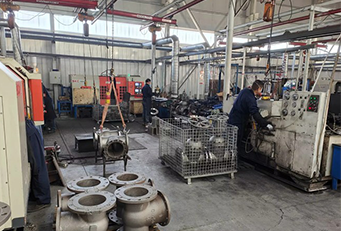
Pipe welded fittings are crucial components in piping systems, facilitating the connection and directional change of pipelines across various industries including oil and gas, petrochemicals, power generation, and water treatment. They represent a significant alternative to threaded or flanged connections, particularly in high-pressure and high-temperature applications. Unlike fittings fabricated from seamless or extruded materials, welded fittings are manufactured by forming and welding steel plates or strips. This process significantly impacts their mechanical properties, corrosion resistance, and overall reliability. Their technical position within the industry chain is defined by their role as integral parts of pressure-containing systems, subject to stringent quality control and regulatory compliance. Core performance characteristics encompass pressure containment capability, weld integrity, dimensional accuracy, and long-term durability against corrosive media and mechanical stress. A key industry pain point revolves around ensuring consistent weld quality and mitigating the risk of weld-related failures, necessitating advanced Non-Destructive Testing (NDT) methods and robust quality assurance programs.
Material Science & Manufacturing
The primary material for pipe welded fittings is carbon steel, specifically ASTM A53 Grade B, though alloy steels (e.g., ASTM A335 P11, P22) and stainless steels (e.g., 304/304L, 316/316L) are employed for enhanced corrosion resistance and elevated temperature service. The chemical composition significantly influences weldability, as the carbon equivalent (CE) dictates the susceptibility to hydrogen-induced cracking (HIC). Manufacturing typically involves forming operations such as rolling, pressing, or bending, followed by welding processes. Submerged Arc Welding (SAW) is prevalent for larger diameter fittings due to its high deposition rate and deep penetration. Gas Metal Arc Welding (GMAW) and Gas Tungsten Arc Welding (GTAW) are used for smaller diameters and critical weld joints demanding precise control. Critical parameters during welding include preheat temperature (to reduce cooling rates and prevent cracking), interpass temperature (to maintain consistent weld metal properties), welding current and voltage (to control penetration and bead geometry), and shielding gas composition (to prevent oxidation and contamination). Post-weld heat treatment (PWHT) is often employed to relieve residual stresses and improve the ductility of the weldment. Material traceability and strict adherence to welding procedures (WPS) are paramount. The mechanical properties of the finished fitting – yield strength, tensile strength, elongation, and impact toughness – are directly correlated to the steel’s composition, welding parameters, and PWHT regime.
Performance & Engineering
The performance of pipe welded fittings is fundamentally governed by their ability to withstand internal pressure, external loads, and cyclic stresses. Pressure containment is analyzed using thin-shell pressure vessel theory, considering factors such as diameter, wall thickness, and material strength. Finite Element Analysis (FEA) is increasingly utilized to model stress concentrations around weld joints, particularly in complex geometries like tees and elbows. Engineering considerations encompass fatigue analysis, where the fitting is subjected to repeated loading cycles. S-N curves (stress versus number of cycles to failure) are used to predict fatigue life, accounting for factors like weld quality, surface finish, and corrosion environment. Environmental resistance is crucial, especially in corrosive fluids. Corrosion mechanisms include uniform corrosion, pitting corrosion, crevice corrosion, and stress corrosion cracking (SCC). Material selection, protective coatings (e.g., epoxy, polyurethane), and cathodic protection are employed to mitigate corrosion. Compliance requirements are dictated by industry standards (see Section 7) and regulatory bodies, including pressure vessel codes (e.g., ASME Section VIII Division 1) and pipeline safety regulations. Proper installation, including correct alignment and adequate support, is essential to prevent excessive stress and ensure long-term reliability. Bending moments applied to the fitting during operation must be calculated and accounted for in the design.
Technical Specifications
| Parameter | ASTM A53 Gr. B (Carbon Steel) | ASTM A335 P11 (Alloy Steel) | 304/304L (Stainless Steel) | Unit |
|---|---|---|---|---|
| Minimum Yield Strength | 250 | 205 | 205 | MPa |
| Minimum Tensile Strength | 400 | 415 | 515 | MPa |
| Elongation (200mm gauge length) | 23 | 18 | 35 | % |
| Impact Toughness (20°C) | 34 | 34 | 69 | J |
| Maximum Carbon Equivalent (CE) | 0.43 | 0.31 | 0.08 | - |
| Wall Thickness Range | Schedule 40, 80, 160 | Schedule 40, 80, 160 | Schedule 5S, 10S, 40S, 80S | mm |
Failure Mode & Maintenance
Pipe welded fittings are susceptible to several failure modes. Fatigue cracking, initiated by cyclic stresses, is a common concern, particularly in systems experiencing pressure fluctuations or vibration. Weld defects, such as porosity, slag inclusions, and incomplete penetration, act as stress concentrators and can lead to crack initiation. Corrosion-related failures include pitting corrosion, which creates localized wall thinning, and stress corrosion cracking (SCC), which occurs under tensile stress in corrosive environments. Hydrogen embrittlement can occur in high-strength steels, leading to brittle fracture. Erosion-corrosion can also degrade the material, especially in systems carrying abrasive fluids. Maintenance involves regular visual inspections for signs of corrosion, cracking, or deformation. Non-Destructive Testing (NDT) methods, such as radiographic testing (RT), ultrasonic testing (UT), and liquid penetrant testing (PT), are used to detect subsurface defects. Periodic hydrostatic testing verifies the pressure integrity of the fitting. Preventive maintenance includes applying protective coatings, implementing cathodic protection, and ensuring proper fluid filtration. For repairs, qualified welders must perform repairs according to approved welding procedures, followed by NDT inspection to ensure weld quality. Record keeping of inspection and maintenance activities is essential for tracking the fitting’s history and predicting future failures.
Industry FAQ
Q: What is the primary difference between SAW and GMAW welding for large-diameter pipe fittings, and how does this impact material properties?
A: Submerged Arc Welding (SAW) offers a higher deposition rate and deeper penetration, making it ideal for thick-walled, large-diameter fittings. This results in a weld with higher heat input, potentially leading to a coarser grain structure and lower toughness in the Heat Affected Zone (HAZ) if not properly controlled with PWHT. GMAW, while offering greater control and weld precision, has a lower deposition rate, making it less efficient for larger fittings. The resulting weld generally has finer grain structure and higher toughness, but may require multiple passes to achieve the desired thickness.
Q: How does the Carbon Equivalent (CE) of the steel influence weldability and what measures are taken to mitigate risks associated with high CE values?
A: A higher Carbon Equivalent (CE) indicates a greater susceptibility to hydrogen-induced cracking (HIC) during welding. High CE steels require stricter preheat and interpass temperature control to slow cooling rates and reduce hydrogen diffusion. Low-hydrogen welding processes, such as GTAW or GMAW with controlled shielding gas, are also employed. Post-weld heat treatment (PWHT) is crucial for diffusing hydrogen and reducing residual stresses.
Q: What NDT methods are most commonly used to assess the integrity of welded pipe fittings, and what defects can each method detect?
A: Radiographic Testing (RT) detects volumetric defects like porosity, slag inclusions, and lack of fusion. Ultrasonic Testing (UT) detects both volumetric and planar defects, including cracks and laminations. Liquid Penetrant Testing (PT) is used to detect surface cracks and discontinuities. Magnetic Particle Testing (MT) detects surface and near-surface defects in ferromagnetic materials. Phased Array Ultrasonic Testing (PAUT) provides more detailed imaging and defect characterization.
Q: How does the selection of filler metal impact the corrosion resistance of a welded joint in a corrosive environment?
A: The filler metal's chemical composition must be compatible with both the base material and the service environment. For example, when welding stainless steel, a matching or over-alloyed filler metal (e.g., 308L, 309L) is essential to maintain corrosion resistance. Dilution effects during welding can alter the weld metal’s composition, so proper filler metal selection is crucial to prevent localized corrosion.
Q: What are the key considerations when specifying the wall thickness of a pipe welded fitting for a given application?
A: Wall thickness is determined by several factors, including the design pressure, operating temperature, fluid properties, and applicable code requirements. Corrosion allowance must be added to account for material loss over the service life. Stress analysis should be performed to ensure the fitting can withstand applied loads and stresses. The fitting’s Schedule number (e.g., 40, 80, 160) corresponds to a specific wall thickness and pressure rating. Consideration should also be given to manufacturing limitations and the availability of specific sizes and materials.
Conclusion
Pipe welded fittings represent a critical component in numerous industrial applications, demanding meticulous attention to material selection, manufacturing processes, and quality control. The inherent complexities of welding necessitate a thorough understanding of metallurgy, welding parameters, and potential failure mechanisms. The long-term performance and reliability of these fittings depend on adherence to established industry standards, rigorous NDT inspection, and proactive maintenance strategies.
Future trends will likely focus on the development of advanced welding techniques, such as laser beam welding and friction stir welding, to improve weld quality and reduce residual stresses. The increasing use of automated welding systems and digital data acquisition will enhance process control and traceability. Furthermore, ongoing research into corrosion-resistant materials and protective coatings will contribute to extended service life and reduced lifecycle costs. Prioritizing these advancements will ensure the continued safe and efficient operation of piping systems across diverse industries.
-
Top Reasons to Choose a Stainless Steel Flange Check Valve for Industrial Applications
-
stainless steel check valves Performance Analysis
-
check valve 6 Performance Analysis
-
check valve stainless steel Performance Analysis
-
6 in check valve Performance Engineering
-
6 check valves Performance Analysis
-
12 inch check valve Performance Analysis
-
lift check valves Performance Engineering
-
check valve 12 inch Performance Analysis
-
stop check valve Performance Analysis
-
check stop valve Performance Analysis
-
stop check valves Performance Analysis
-
pilot operated check valve Performance Analysis
-
spring loaded check valve Material Science Manufacturing
-
pilot operated check valves Performance Analysis
 Afrikaans
 Albanian
 Amharic
 Arabic
 Armenian
 Azerbaijani
 Basque
 Belarusian
 Bengali
 Bosnian
 Bulgarian
 Catalan
 Cebuano
 Corsican
 Croatian
 Czech
Czech
 Danish
 Dutch
Dutch
 Esperanto
 Estonian
 Finnish
 French
 Frisian
 Galician
 Georgian
 German
 Greek
Greek
 Gujarati
 Haitian Creole
 Hausa
Hawaiian
Hausa
Hawaiian
 Hebrew
 Hindi
Hindi
 Miao
Miao
 Hungarian
 Icelandic
 Igbo
Igbo
 Indonesian
 Irish
Irish
 Italian
 Japanese
 Javanese
Kannada
Javanese
Kannada
 Kazakh
 Khmer
Khmer
 Rwandese
 Korean
 Kurdish
 Kyrgyz
 Lao
Lao
 Latin
Latin
 Latvian
 Lithuanian
 Luxembourgish
 Macedonian
 Malgashi
 Malay
Malay
 Malayalam
 Maltese
 Maori
Maori
 Marathi
 Mongolian
 Myanmar
 Nepali
 Norwegian
 Norwegian
 Occitan
 Pashto
 Persian
 Polish
 Portuguese
Punjabi
Portuguese
Punjabi
 Romanian
 Russian
 Samoan
 Scottish Gaelic
 Serbian
 Sesotho
 Shona
Shona
 Sindhi
 Sinhala
 Slovak
 Slovenian
 Somali
 Spanish
 Sundanese
 Swahili
 Swedish
Tagalog
Swedish
Tagalog
 Tajik
Tajik
 Tamil
Tamil
 Tatar
Tatar
 Telugu
 Thai
Thai
 Turkish
 Turkmen
 Ukrainian
 Urdu
Urdu
 Uighur
 Uzbek
Uzbek
 Vietnamese
 Welsh
Welsh
 Bantu
Bantu
 Yiddish
 Yoruba
 Zulu
Zulu
 English