




cast iron check valve Performance Analysis
Introduction
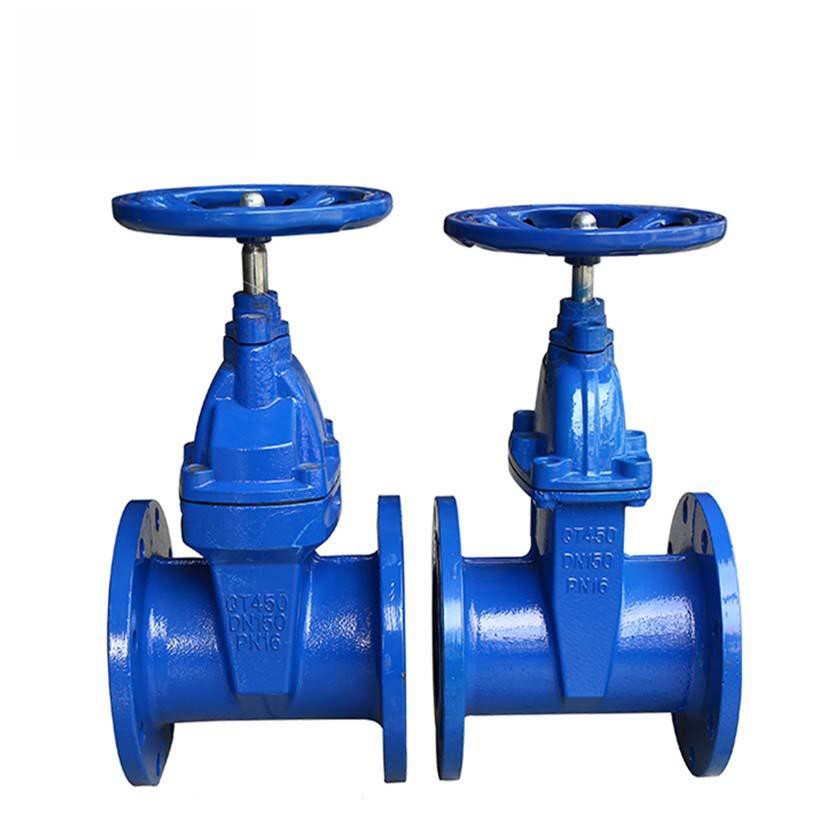
Cast iron check valves are critical components in fluid handling systems, designed to prevent backflow and maintain directional flow. They operate passively, opening with forward flow and closing automatically with reverse pressure. Positioned within the industrial chain, they typically reside downstream of pumps or other flow-inducing devices, ensuring process integrity and equipment protection. Their core performance characteristics – characterized by pressure ratings, flow coefficients (Cv), and sealing efficiency – directly impact system reliability and operational safety. Compared to alternative materials like stainless steel or plastic, cast iron offers a cost-effective solution for moderate temperature and pressure applications, though corrosion resistance requires careful consideration. A key pain point in industry is managing the trade-off between cost, material durability, and long-term maintenance in demanding applications.
Material Science & Manufacturing
The predominant cast iron alloy used in check valve bodies is Gray Cast Iron (ASTM A48 Class 30). This material exhibits excellent machinability, vibration damping capacity, and compressive strength, but relatively low tensile strength and brittleness. Its composition typically includes 96-98% iron, 2-4% carbon (primarily as graphite flakes), 0.5-1.5% silicon, and smaller percentages of manganese, sulfur, and phosphorus. The graphite flake morphology dictates the material’s properties; larger, more numerous flakes lead to increased machinability but reduced strength. Ductile Cast Iron (ASTM A536 65-45-12) offers improved tensile and impact strength due to the spheroidal shape of the graphite inclusions, but is typically more expensive. Manufacturing processes generally involve sand casting, followed by machining operations to achieve precise dimensions and smooth sealing surfaces. Critical parameters during sand casting include mold material composition, pouring temperature (typically 1200-1400°C for gray cast iron), and cooling rate. Rapid cooling can induce residual stresses and increase the risk of cracking. Post-casting processes include stress relieving and surface treatment – often epoxy coating or internal plastic lining – to enhance corrosion resistance. The choice of core material influences surface finish and dimensional accuracy. Precise control of wall thickness is crucial to avoid localized stress concentrations during operation. Gate design and runner systems are optimized to ensure laminar flow during mold filling and minimize turbulence that can introduce defects.
Performance & Engineering
Cast iron check valve performance is heavily influenced by hydrodynamic forces and sealing mechanisms. Force analysis involves calculating pressure drop across the valve, flow velocity, and the resulting forces acting on the disc. The disc design – swing, lift, or tilting – dictates flow characteristics and pressure loss. Swing check valves, common in many applications, offer low pressure drop but can experience water hammer due to the disc slamming shut. Lift check valves minimize water hammer but introduce higher pressure losses. Environmental resistance is a significant concern. Cast iron is susceptible to corrosion, particularly in acidic or saline environments. Galvanic corrosion can occur if the valve is connected to dissimilar metals. Compliance requirements vary depending on the application and geographic region. For potable water systems, valves must meet NSF/ANSI 61 standards for lead content and material safety. For industrial applications involving hazardous fluids, valves must comply with API 598 (Valve Inspection and Testing) and relevant pressure vessel codes. Finite element analysis (FEA) is routinely employed during the design phase to optimize valve geometry, minimize stress concentrations, and predict fatigue life. The spring mechanism (in spring-loaded check valves) is a critical component, requiring careful material selection and fatigue testing to ensure reliable operation over extended periods. The selection of seat material (e.g., EPDM, NBR) must consider chemical compatibility with the conveyed fluid and operating temperature.
Technical Specifications
| Parameter | Unit | Typical Value (Gray Cast Iron) | Typical Value (Ductile Cast Iron) |
|---|---|---|---|
| Maximum Operating Pressure | PSI | 200 | 300 |
| Temperature Range | °F | -20 to 250 | -20 to 450 |
| Cv (Flow Coefficient) | - | 2.5 - 10 (depending on size) | 3.0 - 12 (depending on size) |
| Body Material | - | ASTM A48 Class 30 | ASTM A536 65-45-12 |
| Seat Material | - | EPDM, NBR, PTFE | EPDM, NBR, PTFE |
| Connection Type | - | Flanged, Threaded, Socket Weld | Flanged, Threaded, Socket Weld |
Failure Mode & Maintenance
Common failure modes in cast iron check valves include corrosion-induced leakage, disc fatigue cracking, seat erosion, and body fracture. Corrosion typically manifests as pitting or uniform thinning of the valve body, leading to pinhole leaks. Fatigue cracking can occur in the disc or body near stress concentrators (e.g., weld joints, attachment points). Seat erosion results from abrasive particles in the fluid stream impacting the sealing surface. Body fracture can occur due to excessive pressure, thermal shock, or pre-existing defects. Failure analysis involves visual inspection, non-destructive testing (NDT) – such as liquid penetrant testing or ultrasonic testing – and metallurgical examination of fractured components. Preventive maintenance includes regular inspection for corrosion, sediment buildup, and disc movement. Lubrication of the disc hinge (if applicable) is essential. Periodic testing of the valve’s sealing capability is recommended. Repair options include replacing the seat, disc, or entire valve body, depending on the extent of the damage. For severe corrosion, consider switching to a valve constructed from a more corrosion-resistant material, such as stainless steel or plastic. Internal coating with epoxy or plastic linings can extend the service life of cast iron valves in corrosive environments. Proper installation, including adequate support and alignment, is crucial to prevent stress-induced failures.
Industry FAQ
Q: What is the primary difference between gray cast iron and ductile cast iron for check valve applications?
A: The key difference lies in the graphite morphology. Gray cast iron contains graphite flakes, resulting in lower tensile strength and higher brittleness. Ductile cast iron has spherical graphite, providing significantly improved tensile strength, ductility, and impact resistance. Ductile iron is preferred for higher-pressure applications or environments prone to shock loading, despite being more expensive.
Q: How can I mitigate corrosion issues in a cast iron check valve handling wastewater?
A: Several approaches can be taken. First, consider applying an epoxy or plastic coating to the valve body. Second, select a seat material compatible with the wastewater chemistry (e.g., EPDM for general purpose, PTFE for aggressive chemicals). Third, implement a regular inspection and maintenance program to identify and address corrosion early on. Finally, cathodic protection may be feasible in certain applications.
Q: What factors influence the pressure drop across a swing check valve?
A: The pressure drop is primarily influenced by the flow velocity, valve size, and disc geometry. Higher flow velocities and smaller valve sizes result in greater pressure drops. The disc’s angle of deflection and the presence of any obstructions within the valve body also contribute to pressure loss. Proper valve sizing is critical to minimize pressure drop and ensure efficient operation.
Q: What are the common causes of water hammer in systems with swing check valves?
A: Water hammer occurs when the check valve closes rapidly, abruptly stopping the flow of fluid. This creates a pressure surge that can damage pipes and equipment. Factors contributing to water hammer include high flow velocities, long pipeline lengths, and the lack of damping mechanisms (e.g., surge suppressors). Using a lift check valve or installing a slow-closing swing check valve can help mitigate this issue.
Q: What NDT methods are commonly used to inspect cast iron check valves for defects?
A: Liquid penetrant testing (LPT) is frequently used to detect surface cracks and porosity. Ultrasonic testing (UT) can identify internal flaws and measure wall thickness. Radiographic testing (RT) provides a detailed image of the valve’s internal structure, revealing cracks, voids, and inclusions. Magnetic particle inspection (MPI) is effective for detecting surface and near-surface cracks in ferromagnetic materials (though less useful with some cast iron alloys).
Conclusion
Cast iron check valves remain a prevalent and cost-effective solution for a wide range of fluid handling applications. Their performance, however, is intrinsically linked to material selection, manufacturing precision, and diligent maintenance. Understanding the material science of cast iron – specifically the nuances of gray versus ductile iron – is paramount for appropriate application selection. Addressing corrosion through protective coatings and compatible seat materials is crucial for extending service life and maintaining operational integrity.
Continued advancements in valve design, coupled with improved non-destructive testing methods, will further enhance the reliability and longevity of cast iron check valves. The industry trend towards predictive maintenance, leveraging sensor technology and data analytics, will enable proactive identification of potential failures and minimize downtime. Future research should focus on developing more corrosion-resistant cast iron alloys and optimizing valve geometries to minimize pressure drop and water hammer effects.
-
Top Reasons to Choose a Stainless Steel Flange Check Valve for Industrial Applications
-
check valves high pressure Performance Analysis
-
check valves low pressure Performance Analysis
-
High Pressure Check Valves Performance Analysis
-
low pressure check valves Performance Analysis
-
6 check valve Performance Analysis
-
stainless steel check valves Performance Analysis
-
check valve 6 Performance Analysis
-
check valve stainless steel Performance Analysis
-
6 in check valve Performance Engineering
-
6 check valves Performance Analysis
-
12 inch check valve Performance Analysis
-
lift check valves Performance Engineering
-
check valve 12 inch Performance Analysis
-
stop check valve Performance Analysis
 Afrikaans
 Albanian
 Amharic
 Arabic
 Armenian
 Azerbaijani
 Basque
 Belarusian
 Bengali
 Bosnian
 Bulgarian
 Catalan
 Cebuano
 Corsican
 Croatian
 Czech
Czech
 Danish
 Dutch
Dutch
 Esperanto
 Estonian
 Finnish
 French
 Frisian
 Galician
 Georgian
 German
 Greek
Greek
 Gujarati
 Haitian Creole
 Hausa
Hawaiian
Hausa
Hawaiian
 Hebrew
 Hindi
Hindi
 Miao
Miao
 Hungarian
 Icelandic
 Igbo
Igbo
 Indonesian
 Irish
Irish
 Italian
 Japanese
 Javanese
Kannada
Javanese
Kannada
 Kazakh
 Khmer
Khmer
 Rwandese
 Korean
 Kurdish
 Kyrgyz
 Lao
Lao
 Latin
Latin
 Latvian
 Lithuanian
 Luxembourgish
 Macedonian
 Malgashi
 Malay
Malay
 Malayalam
 Maltese
 Maori
Maori
 Marathi
 Mongolian
 Myanmar
 Nepali
 Norwegian
 Norwegian
 Occitan
 Pashto
 Persian
 Polish
 Portuguese
Punjabi
Portuguese
Punjabi
 Romanian
 Russian
 Samoan
 Scottish Gaelic
 Serbian
 Sesotho
 Shona
Shona
 Sindhi
 Sinhala
 Slovak
 Slovenian
 Somali
 Spanish
 Sundanese
 Swahili
 Swedish
Tagalog
Swedish
Tagalog
 Tajik
Tajik
 Tamil
Tamil
 Tatar
Tatar
 Telugu
 Thai
Thai
 Turkish
 Turkmen
 Ukrainian
 Urdu
Urdu
 Uighur
 Uzbek
Uzbek
 Vietnamese
 Welsh
Welsh
 Bantu
Bantu
 Yiddish
 Yoruba
 Zulu
Zulu
 English