




tee pipe fittings Performance and Engineering
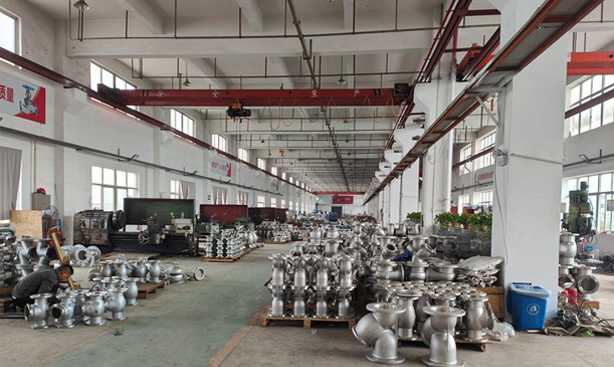
Introduction
Tee pipe fittings are essential components in piping systems, facilitating branching or diverting flow in a single line. Positioned within the industry chain as crucial connecting elements, they bridge straight pipe sections, enabling the creation of complex fluid transport networks. Tees are categorized by their angle of deviation – typically 45 or 90 degrees – and connection methods (threaded, welded, socket weld, butt weld). Core performance characteristics include pressure drop minimization, structural integrity under stress, and compatibility with the transported fluid. Industry pain points revolve around erosion-corrosion failure in high-velocity applications, inadequate material selection for aggressive media, and ensuring consistent dimensional accuracy to prevent leakage. The increasing demand for miniaturization in process instrumentation and the need for leak-proof connections in critical applications drive continuous innovation in tee fitting design and manufacturing.
Material Science & Manufacturing
Tee fittings are manufactured from a diverse range of materials, the selection of which depends on the application’s fluid compatibility, pressure, and temperature requirements. Carbon steel (ASTM A53 Grade B, API 5L) is common for general-purpose applications due to its cost-effectiveness and adequate strength. Stainless steel (304/304L, 316/316L - ASTM A358) provides superior corrosion resistance, critical in chemical processing and food & beverage industries. Alloy steels (e.g., P11, P22 - ASME SA335) are used in high-temperature, high-pressure environments, leveraging their enhanced creep resistance. For particularly corrosive environments, materials like Hastelloy or Titanium are employed. Manufacturing processes vary with material and size. Forging is typical for larger diameter, high-pressure fittings, resulting in a dense grain structure and improved mechanical properties. Seamless tees are produced via hot extrusion, offering superior strength and resistance to fatigue failure. Welded tees are created by welding branches onto a straight pipe section; careful weld procedure specification (WPS) and non-destructive testing (NDT) – radiographic testing (RT) and ultrasonic testing (UT) – are crucial to ensure weld integrity. For smaller tees, machining from solid bar stock is a viable option. Key manufacturing parameters include controlled cooling rates to minimize residual stress, precise dimensional control achieved through CNC machining, and surface finishing to enhance corrosion resistance and reduce friction loss.
Performance & Engineering
The performance of tee pipe fittings is heavily influenced by fluid dynamics and mechanical stress. Flow through a tee introduces flow separation and turbulence, resulting in a pressure drop. Minimizing this pressure drop is critical in energy-efficient systems. Computational Fluid Dynamics (CFD) analysis is frequently employed during the design phase to optimize tee geometry and reduce turbulence. Force analysis considers internal pressure loads, external bending moments, and thermal stresses. The thin-wall section of the tee branch is particularly susceptible to stress concentration. Finite Element Analysis (FEA) is utilized to predict stress distribution and ensure structural integrity under operational loads. Environmental resistance is a key performance aspect. Corrosion, erosion, and fatigue cracking are potential failure mechanisms. Selecting appropriate materials and applying protective coatings (e.g., epoxy, PTFE) mitigate these risks. Compliance requirements vary by industry. ASME B31.3 covers power piping, while ASME B31.1 addresses gas transmission. Pressure vessel codes (ASME Section VIII) may apply to tees integrated into pressure vessel systems. Hydrostatic testing verifies the tee’s ability to withstand design pressure without leakage. Considerations for seismic loads are crucial in regions prone to earthquakes, requiring adherence to standards such as ASME B31.3 Chapter IX.
Technical Specifications
| Parameter | Carbon Steel (A53 Gr. B) | Stainless Steel (304/304L) | Stainless Steel (316/316L) | Alloy Steel (P11) |
|---|---|---|---|---|
| Material Standard | ASTM A53/API 5L | ASTM A358 | ASTM A358 | ASME SA335 P11 |
| Maximum Operating Pressure (psi) | Variable, dependent on wall thickness & diameter (typically up to 2000 psi) | Variable, dependent on wall thickness & diameter (typically up to 3000 psi) | Variable, dependent on wall thickness & diameter (typically up to 3000 psi) | Variable, dependent on wall thickness & diameter (typically up to 2500 psi @ elevated temp) |
| Temperature Range (°F) | -30 to 300 | -325 to 650 | -325 to 850 | -300 to 1100 |
| Wall Thickness (Schedule) | 40S, 80S, 160S | 40S, 80S, 160S | 40S, 80S, 160S | XS, XXS |
| Connection Type | Threaded, Welded, Socket Weld, Butt Weld | Threaded, Welded, Socket Weld, Butt Weld | Threaded, Welded, Socket Weld, Butt Weld | Butt Weld |
| Corrosion Resistance | Low | Good | Excellent | Good (high temp oxidation resistance) |
Failure Mode & Maintenance
Tee pipe fittings are susceptible to several failure modes. Erosion-corrosion, particularly in high-velocity fluid streams containing abrasive particles, leads to material loss and eventual penetration. Fatigue cracking can occur under cyclic loading, initiating at stress concentrators (e.g., weld toes, branch intersections). Galvanic corrosion arises when dissimilar metals are in contact in the presence of an electrolyte. Microbiologically influenced corrosion (MIC) can occur in systems harboring microorganisms. Creep deformation is a concern at elevated temperatures and pressures, especially in alloy steel tees. Leakage at threaded connections is common due to improper sealing or thread damage. Maintenance involves regular visual inspection for signs of corrosion, erosion, or cracking. Non-destructive testing (NDT) – visual testing (VT), liquid penetrant testing (PT), and ultrasonic testing (UT) – can detect subsurface defects. For corroded or eroded tees, replacement is typically the most effective solution. Threaded connections should be periodically retorqued to maintain a proper seal. Weld inspections are critical, and any discovered defects require repair or replacement. Protective coatings should be periodically inspected and reapplied as needed. Proper material selection and appropriate operating conditions are essential for maximizing tee fitting service life.
Industry FAQ
Q: What is the primary difference between a forged and welded tee fitting, and when would you select one over the other?
A: Forged tees are created from a single piece of material, offering superior strength, particularly at the junction, and improved resistance to fatigue. Welded tees are more economical for larger diameters but require stringent weld quality control (WPS, NDT). Forged tees are preferred for critical applications with high pressure, temperature, and cyclic loading. Welded tees are suitable for less demanding services where cost is a significant factor.
Q: How does the schedule number (e.g., 40, 80) impact the pressure-temperature rating of a tee fitting?
A: The schedule number dictates the wall thickness of the tee. Higher schedule numbers correspond to thicker walls, which directly increase the tee's ability to withstand internal pressure and elevated temperatures. The pressure-temperature rating is determined by established standards (e.g., ASME B31.3) based on material, diameter, and schedule number.
Q: What are the common causes of leakage in threaded tee fittings, and how can they be prevented?
A: Common causes include improper sealing tape application, damaged threads, insufficient tightening torque, and galvanic corrosion. Prevention involves using appropriate thread sealant compatible with the fluid, ensuring clean and undamaged threads, applying the correct torque specified by the manufacturer, and employing dielectric unions to isolate dissimilar metals.
Q: What is the role of Non-Destructive Testing (NDT) in ensuring the quality of welded tee fittings?
A: NDT methods, such as Radiographic Testing (RT) and Ultrasonic Testing (UT), are essential for detecting internal defects (e.g., porosity, inclusions, cracks) in weld seams without damaging the fitting. These tests verify weld integrity and ensure the tee meets specified quality standards.
Q: How should tee fittings be selected for systems handling corrosive fluids?
A: Material selection is paramount. Stainless steels (316/316L) and high-alloy materials (Hastelloy, Titanium) offer superior corrosion resistance compared to carbon steel. Consider the specific corrosive agent, its concentration, temperature, and flow velocity. Protective coatings (e.g., PTFE lining) can also enhance corrosion resistance.
Conclusion
Tee pipe fittings represent a fundamental element in fluid handling systems, with their performance directly impacting system efficiency, reliability, and safety. The proper selection of materials, manufacturing processes, and connection methods is critical to mitigate potential failure modes and ensure long-term operational integrity. Advances in CFD and FEA allow for optimized designs that minimize pressure drop and stress concentration, while ongoing advancements in material science continue to expand the range of compatible fluids and operating conditions.
Looking forward, the demand for lightweight and high-strength tee fittings will drive the adoption of new materials and manufacturing techniques, such as additive manufacturing. Continued refinement of NDT methods will improve defect detection capabilities, enhancing quality control. A thorough understanding of the factors governing tee fitting performance, coupled with adherence to relevant industry standards, is paramount for engineers and procurement professionals alike.
-
Top Reasons to Choose a Stainless Steel Flange Check Valve for Industrial Applications
-
electric check valve Performance Engineering
-
electric check valves Performance Analysis
-
Threaded Check Valves Performance Analysis
-
6 inch check valve Performance Analysis
-
8 check valve Performance Analysis
-
diaphragm check valve Material Science Manufacturing
-
dual plate check valve Performance Analysis
-
check valve 6 inch Material Science
-
diaphragm check valves Performance Analysis
-
dual plate check valves Performance Analysis
-
vertical check valves Material Science Manufacturing
-
8 check valves Performance Analysis
-
refrigeration check valves Performance Analysis
-
pilot check valve Performance Analysis
 Afrikaans
 Albanian
 Amharic
 Arabic
 Armenian
 Azerbaijani
 Basque
 Belarusian
 Bengali
 Bosnian
 Bulgarian
 Catalan
 Cebuano
 Corsican
 Croatian
 Czech
Czech
 Danish
 Dutch
Dutch
 Esperanto
 Estonian
 Finnish
 French
 Frisian
 Galician
 Georgian
 German
 Greek
Greek
 Gujarati
 Haitian Creole
 Hausa
Hawaiian
Hausa
Hawaiian
 Hebrew
 Hindi
Hindi
 Miao
Miao
 Hungarian
 Icelandic
 Igbo
Igbo
 Indonesian
 Irish
Irish
 Italian
 Japanese
 Javanese
Kannada
Javanese
Kannada
 Kazakh
 Khmer
Khmer
 Rwandese
 Korean
 Kurdish
 Kyrgyz
 Lao
Lao
 Latin
Latin
 Latvian
 Lithuanian
 Luxembourgish
 Macedonian
 Malgashi
 Malay
Malay
 Malayalam
 Maltese
 Maori
Maori
 Marathi
 Mongolian
 Myanmar
 Nepali
 Norwegian
 Norwegian
 Occitan
 Pashto
 Persian
 Polish
 Portuguese
Punjabi
Portuguese
Punjabi
 Romanian
 Russian
 Samoan
 Scottish Gaelic
 Serbian
 Sesotho
 Shona
Shona
 Sindhi
 Sinhala
 Slovak
 Slovenian
 Somali
 Spanish
 Sundanese
 Swahili
 Swedish
Tagalog
Swedish
Tagalog
 Tajik
Tajik
 Tamil
Tamil
 Tatar
Tatar
 Telugu
 Thai
Thai
 Turkish
 Turkmen
 Ukrainian
 Urdu
Urdu
 Uighur
 Uzbek
Uzbek
 Vietnamese
 Welsh
Welsh
 Bantu
Bantu
 Yiddish
 Yoruba
 Zulu
Zulu
 English