




high temperature needle valve Performance Analysis
Introduction
High temperature needle valves are precision flow control devices designed for applications involving fluids at elevated temperatures and pressures. Positioned within the broader instrumentation and control valve industry, they serve a critical function in processes requiring precise metering, throttling, or shut-off capabilities where standard valves may fail due to thermal limitations. Their core performance characteristics revolve around maintaining tight shut-off, offering linear flow control, and withstanding extreme thermal cycling and chemical attack. Common applications span petrochemical processing, power generation (steam control), high-temperature water systems, and specialized chemical handling. The key industrial pain point addressed by these valves is the reliable control of processes operating beyond the temperature and pressure limits of conventional valve designs, often in corrosive environments. Material selection and sealing technology are paramount concerns for reliable operation.
Material Science & Manufacturing
The construction of high temperature needle valves demands materials possessing exceptional high-temperature strength, creep resistance, and corrosion resistance. Common body materials include Alloy 6 (Hastelloy B-3), Alloy 20, 316/316L stainless steel, and Inconel alloys. The choice depends heavily on the specific fluid compatibility requirements. Valve seats are often manufactured from Stellite alloys (cobalt-chromium-tungsten) or reinforced PTFE compounds formulated for high-temperature service. Needle and stem materials frequently utilize Alloy 6, Inconel 718, or specialized high-strength stainless steel grades. Manufacturing processes begin with precision casting or forging of the valve body. Critical dimensions are machined using CNC equipment to ensure dimensional accuracy and smooth surface finishes, vital for tight sealing. Welding, when employed (e.g., for connecting components), must be performed using GTAW (Gas Tungsten Arc Welding) or similar processes that minimize heat-affected zones and maintain material integrity. Stem polishing is a crucial step to minimize friction and wear against the seat. Post-manufacturing, rigorous non-destructive testing (NDT), including dye penetrant inspection, radiographic testing, and hydrostatic testing, is performed to verify structural integrity and leak tightness. Parameter control during heat treatment is vital to achieving optimal material properties; improper heat treatment can lead to embrittlement or reduced corrosion resistance.
Performance & Engineering
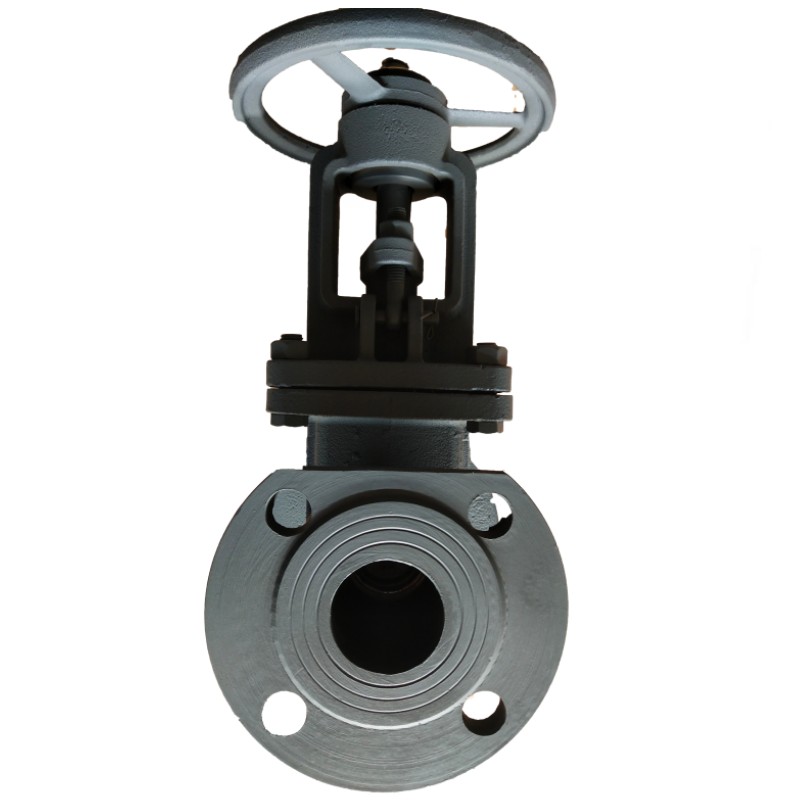
The performance of a high temperature needle valve is governed by several key engineering considerations. Flow capacity is directly related to the Cv (flow coefficient) value, which is influenced by the valve’s orifice size and design. Force analysis is critical to determine the stem packing gland adjustment needed to counteract fluid pressure forces, preventing leakage. Environmental resistance focuses on the valve’s ability to withstand thermal shock, cyclic loading, and exposure to corrosive fluids. The selection of sealing materials (e.g., PTFE, Grafoil) must account for temperature limits, pressure differentials, and chemical compatibility. Compliance requirements often mandate adherence to standards like ASME B16.34 (for pressure-temperature ratings), API 598 (for inspection and testing), and potentially hazardous area certifications (ATEX, IECEx) depending on the application. Functional implementation involves careful consideration of actuator selection (manual, pneumatic, or electric) and integration into the process control system. Proper valve sizing is essential to avoid cavitation or flashing, which can damage the valve and reduce its lifespan. The thermal expansion coefficients of different valve components must be considered during assembly to prevent binding or distortion at operating temperatures.
Technical Specifications
| Parameter | Unit | Typical Value (Alloy 6 Body) | Typical Value (316L SS Body) |
|---|---|---|---|
| Maximum Operating Temperature | °C | 650 | 450 |
| Maximum Operating Pressure | psi | 5000 | 3600 |
| Orifice Size (Typical) | mm | 1-6 | 1-6 |
| Cv Value (Typical) | (gal/min)/psi | 0.1-5 | 0.1-4 |
| Connection Type | - | Threaded (NPT, BSPT), Flanged | Threaded (NPT, BSPT), Flanged |
| Seat Leakage (Class VI) | SCCM of Helium | <0.1 | <0.2 |
Failure Mode & Maintenance
High temperature needle valves are susceptible to several failure modes. Fatigue cracking can occur in the valve body or stem due to thermal cycling and pressure fluctuations. Delamination of valve seat materials (particularly PTFE-based compounds) can lead to leakage. Oxidation and corrosion, especially in aggressive chemical environments, can degrade valve components. Erosion can occur due to the impingement of abrasive particles in the fluid stream. Stem packing failure results in external leakage. A common failure analysis point is identifying the root cause of seat erosion – improper fluid filtration, excessive flow velocity, or incompatible fluid characteristics. Maintenance involves regular inspection of valve components for signs of wear, corrosion, or damage. Stem packing should be periodically replaced or adjusted to maintain a tight seal. Valve seats may require replacement after prolonged service. Proper lubrication of the stem is crucial to minimize friction and wear. Hydrostatic testing should be performed periodically to verify valve integrity. For valves exposed to highly corrosive fluids, a preventive maintenance program involving regular cleaning and coating repairs can extend service life.
Industry FAQ
Q: What is the primary advantage of using a Hastelloy C-276 body over 316 Stainless Steel in a high-temperature, sulfuric acid application?
A: Hastelloy C-276 exhibits significantly superior corrosion resistance to sulfuric acid, particularly at elevated temperatures and concentrations, compared to 316 Stainless Steel. 316 SS is prone to pitting and crevice corrosion in these conditions, leading to premature failure. Hastelloy’s high molybdenum content and presence of tungsten provide enhanced resistance to acid attack.
Q: How do I determine the appropriate Cv value for my application?
A: The Cv value is determined by calculating the required flow rate through the valve at a specific pressure drop. Utilize the following formula: Cv = Flow Rate / √(Pressure Drop / Fluid Density). Ensure flow rate is in gallons per minute (GPM), pressure drop is in psi, and density is in lb/ft³. Undersizing can lead to excessive pressure drop and cavitation, while oversizing can compromise control accuracy.
Q: What are the critical considerations for sealing a high-temperature needle valve?
A: The selection of sealing material is paramount. PTFE is common for moderate temperatures, but its temperature limit is around 260°C. Above that, materials like Grafoil (expanded graphite) or specialized high-temperature polymers are necessary. Gland packing adjustment is also crucial to compensate for thermal expansion and contraction of the stem and body. Proper surface finish on the sealing surfaces minimizes leakage.
Q: What type of actuation is best suited for remote operation in a hazardous area?
A: Pneumatic actuation is frequently preferred for remote operation in hazardous areas due to its intrinsic safety. Electric actuators can also be used but require explosion-proof enclosures and certifications (ATEX, IECEx). Manual operation is generally unsuitable for remote control or when dealing with hazardous materials.
Q: How does thermal expansion affect the performance and longevity of a high temperature needle valve?
A: Differential thermal expansion between the valve body, stem, and seat can induce stress, leading to binding, distortion, and eventual leakage. Careful material selection and design considerations are vital to minimize this effect. Gland packing adjustment can also compensate for stem expansion. Proper mounting and support are crucial to prevent stress concentration.
Conclusion
High temperature needle valves represent a critical component in numerous industrial processes demanding precise fluid control under extreme conditions. Their reliable operation is predicated on careful material selection, precise manufacturing techniques, and a thorough understanding of the underlying engineering principles governing their performance. Addressing the industry pain points of high-temperature corrosion, thermal stress, and stringent sealing requirements is paramount.
Future developments in high temperature needle valve technology will likely focus on advanced materials (e.g., ceramic composites), improved sealing designs utilizing novel polymers, and the integration of smart sensors for predictive maintenance. Optimizing valve geometry to minimize pressure drop and erosion, coupled with rigorous quality control procedures, will continue to drive performance improvements and enhance the longevity of these critical control devices.
-
Top Reasons to Choose a Stainless Steel Flange Check Valve for Industrial Applications
-
electric check valve Performance Engineering
-
electric check valves Performance Analysis
-
Threaded Check Valves Performance Analysis
-
6 inch check valve Performance Analysis
-
8 check valve Performance Analysis
-
diaphragm check valve Material Science Manufacturing
-
dual plate check valve Performance Analysis
-
check valve 6 inch Material Science
-
diaphragm check valves Performance Analysis
-
dual plate check valves Performance Analysis
-
vertical check valves Material Science Manufacturing
-
8 check valves Performance Analysis
-
refrigeration check valves Performance Analysis
-
pilot check valve Performance Analysis
 Afrikaans
 Albanian
 Amharic
 Arabic
 Armenian
 Azerbaijani
 Basque
 Belarusian
 Bengali
 Bosnian
 Bulgarian
 Catalan
 Cebuano
 Corsican
 Croatian
 Czech
Czech
 Danish
 Dutch
Dutch
 Esperanto
 Estonian
 Finnish
 French
 Frisian
 Galician
 Georgian
 German
 Greek
Greek
 Gujarati
 Haitian Creole
 Hausa
Hawaiian
Hausa
Hawaiian
 Hebrew
 Hindi
Hindi
 Miao
Miao
 Hungarian
 Icelandic
 Igbo
Igbo
 Indonesian
 Irish
Irish
 Italian
 Japanese
 Javanese
Kannada
Javanese
Kannada
 Kazakh
 Khmer
Khmer
 Rwandese
 Korean
 Kurdish
 Kyrgyz
 Lao
Lao
 Latin
Latin
 Latvian
 Lithuanian
 Luxembourgish
 Macedonian
 Malgashi
 Malay
Malay
 Malayalam
 Maltese
 Maori
Maori
 Marathi
 Mongolian
 Myanmar
 Nepali
 Norwegian
 Norwegian
 Occitan
 Pashto
 Persian
 Polish
 Portuguese
Punjabi
Portuguese
Punjabi
 Romanian
 Russian
 Samoan
 Scottish Gaelic
 Serbian
 Sesotho
 Shona
Shona
 Sindhi
 Sinhala
 Slovak
 Slovenian
 Somali
 Spanish
 Sundanese
 Swahili
 Swedish
Tagalog
Swedish
Tagalog
 Tajik
Tajik
 Tamil
Tamil
 Tatar
Tatar
 Telugu
 Thai
Thai
 Turkish
 Turkmen
 Ukrainian
 Urdu
Urdu
 Uighur
 Uzbek
Uzbek
 Vietnamese
 Welsh
Welsh
 Bantu
Bantu
 Yiddish
 Yoruba
 Zulu
Zulu
 English