




china 10 inch gate valve Performance Analysis
Introduction
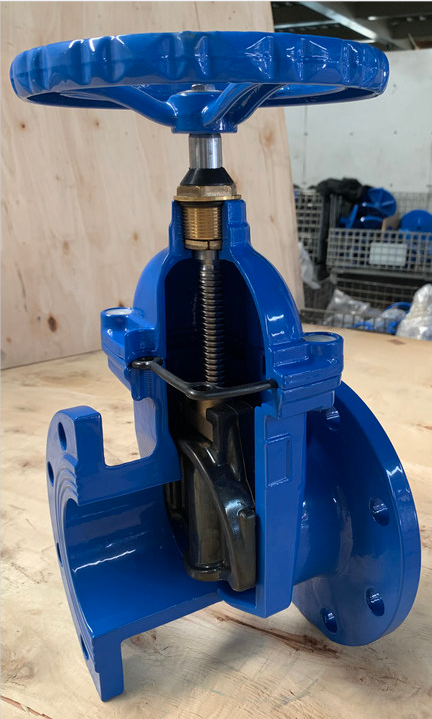
The 10-inch gate valve, manufactured in China, represents a critical component in fluid handling systems across diverse industries including oil & gas, water treatment, chemical processing, and power generation. Gate valves are primarily designed for on/off service, offering minimal pressure drop when fully open. Their positioning within the industrial chain is as a flow isolation device, situated downstream of pumps, reservoirs, and upstream of sensitive instrumentation or process equipment. The core performance characteristics of a 10-inch gate valve hinge on its sealing capability (achieving bubble-tight shutoff), pressure rating (withstanding system pressures), material compatibility (resisting corrosion from the conveyed fluid), and operational torque (ensuring ease of actuation). A key industry pain point revolves around ensuring long-term reliability and minimizing fugitive emissions, particularly with stringent environmental regulations.
Material Science & Manufacturing
The body of a typical China 10-inch gate valve is commonly constructed from cast iron (ASTM A126 Class B), ductile iron (ASTM A536 65-45-12), carbon steel (ASTM A105, A216 WCB), or stainless steel (ASTM A351 CF8, CF8M). The choice of material dictates the valve's chemical compatibility and temperature range. Cast iron offers cost-effectiveness but is susceptible to corrosion and brittle fracture. Ductile iron provides enhanced ductility and impact resistance. Carbon steel is robust and widely used for moderate temperature and pressure applications. Stainless steel is favored for corrosive environments and high-temperature service. The gate itself is often made from bronze (ASTM B584), stainless steel, or alloy steel, chosen for its wear resistance and sealing properties. The seat material is critical for leak prevention and is commonly composed of reinforced PTFE, EPDM, or metal-to-metal sealing configurations.
Manufacturing typically involves several stages: pattern making (for cast valves), sand casting, machining (facing, drilling, and boring), heat treatment (for steel castings to relieve stress and improve mechanical properties), and surface treatment (epoxy coating for corrosion protection). Welding is extensively used to join valve components, requiring strict adherence to welding procedures (AWS D1.1) and non-destructive testing (NDT) such as radiographic testing (RT) and ultrasonic testing (UT) to ensure weld integrity. The critical parameters controlled during manufacturing include dimensional accuracy (ensuring proper fit with piping systems), surface roughness (affecting sealing performance), and hardness (influencing wear resistance). For resilient seated valves, the accurate compression of the seat within the body is paramount and controlled through precise machining and assembly processes.
Performance & Engineering
The performance of a 10-inch gate valve is governed by several engineering principles. Force analysis is crucial in designing the valve body to withstand internal pressure and external loads. The stem must be adequately sized to transmit the required torque for opening and closing the gate without exceeding allowable stress limits. Environmental resistance is paramount, requiring consideration of temperature fluctuations, humidity, and exposure to corrosive agents. The valve must maintain its sealing integrity across its specified temperature and pressure range. Compliance requirements are stringent, particularly in industries governed by ASME Section VIII Division 1 (pressure vessel code), API 6D (ball, gate, globe, and check valves), and ISO 1775 (gate valves). Functional implementation involves considerations such as actuation type (handwheel, gear operator, pneumatic actuator, electric actuator), connection type (flanged, welded, threaded), and pressure loss characteristics. Minimizing pressure drop when fully open is a primary design objective, achieved through streamlined flow paths and optimized gate geometry. Fugitive emission control is a growing concern, driving the adoption of low-emission stem packing and seat designs conforming to standards like API 624 (valve fugitive emissions).
Technical Specifications
| Parameter | Specification (Typical) | Testing Standard | Units |
|---|---|---|---|
| Nominal Size | 10 inches | ASME B16.5 | inches |
| Pressure Rating | 125#, 150#, 300# | ASME B16.34 | psi |
| Material (Body) | ASTM A216 WCB (Carbon Steel) | ASTM A216 | - |
| Material (Gate) | ASTM A580 Grade B (Bronze) | ASTM A580 | - |
| Material (Seat) | PTFE (Reinforced) | ASTM D380 | - |
| Connection Type | Flanged (RF, RTJ) | ASME B16.5 | - |
Failure Mode & Maintenance
Common failure modes for 10-inch gate valves include: seat erosion and leakage (due to abrasive particles in the fluid or seat degradation), stem packing failure (leading to fugitive emissions), corrosion (affecting body and gate integrity), gate sticking (caused by corrosion or debris accumulation), and fatigue cracking (resulting from repeated operation and cyclic loading). Failure analysis often reveals root causes related to improper material selection, inadequate corrosion protection, exceeding pressure/temperature limits, or insufficient maintenance.
Preventative maintenance is crucial. Regular inspection of stem packing for leakage, lubrication of the stem and gate, and periodic testing of seat leakage are essential. Non-destructive testing (NDT) methods, such as visual inspection, liquid penetrant testing, and ultrasonic testing, can detect cracks or corrosion before catastrophic failure. For resilient seated valves, proper torque control during installation and periodic replacement of the seat are vital. In case of failure, disassembly, cleaning, and replacement of worn or damaged components (seat, packing, gate) are typical repair procedures. Complete valve replacement may be necessary in cases of severe corrosion or body damage. Adherence to a documented preventative maintenance schedule, aligned with manufacturer recommendations and industry best practices, significantly extends valve lifespan and minimizes downtime.
Industry FAQ
Q: What is the significance of the K-factor in gate valve selection?
A: The K-factor (Cv value) represents the valve's flow coefficient, indicating its capacity to pass fluid at a given pressure drop. Selecting a valve with an appropriate K-factor is crucial for ensuring the desired flow rate without excessive pressure loss, which can impact system performance.
Q: How does the choice of gasket material impact the valve’s performance and longevity?
A: Gasket material compatibility with the conveyed fluid and operating temperature is paramount. Incompatible materials can lead to swelling, degradation, and leakage. Selecting gaskets that meet industry standards (e.g., ASME B16.20) and are suitable for the specific application is critical for long-term reliability.
Q: What are the advantages of a wedge gate valve compared to a parallel seat gate valve?
A: Wedge gate valves generally provide tighter shut-off due to the angled gate that forces against the seats. Parallel seat gate valves are preferred for applications where minimal pressure drop is required but may be more prone to leakage. The choice depends on the specific application requirements.
Q: What is the role of non-destructive testing (NDT) in ensuring valve quality?
A: NDT methods (RT, UT, PT, MT) are used to detect internal and surface defects without damaging the valve. They are essential for verifying weld integrity, identifying cracks, and ensuring compliance with quality standards. This helps prevent premature failure and ensures safe operation.
Q: How do different actuator types influence the operational lifespan and cost of a 10-inch gate valve?
A: Manual handwheel operation is the most cost-effective but requires manual effort. Gear operators reduce the required torque. Pneumatic and electric actuators offer automated control but have higher initial costs and require regular maintenance of the actuator components themselves, impacting long-term operational costs and potential downtime.
Conclusion
The China-manufactured 10-inch gate valve remains a fundamental component in industrial fluid handling systems. Understanding its material science, manufacturing processes, performance characteristics, and potential failure modes is critical for ensuring reliable operation and minimizing downtime. Proper material selection, adherence to industry standards, rigorous quality control during manufacturing, and a proactive preventative maintenance program are all essential for maximizing valve lifespan and achieving optimal performance.
Looking forward, advancements in materials science (e.g., the development of more corrosion-resistant alloys) and valve design (e.g., low-emission designs) will continue to enhance the performance and sustainability of these critical components. Furthermore, the increasing adoption of digital technologies, such as valve position monitoring and predictive maintenance analytics, will enable more efficient and cost-effective operation of 10-inch gate valves in complex industrial environments.
-
Top Reasons to Choose a Stainless Steel Flange Check Valve for Industrial Applications
-
6 wafer check valve Performance Analysis
-
cryogenic check valves Performance Analysis
-
soft seated check valve Performance Analysis
-
3/4 check valve Performance Analysis
-
wafer style check valve Performance Analysis
-
check valve with orifice Performance Analysis
-
check valve 8 inch Performance Analysis
-
1 1 2 inch check valve Performance Analysis
-
cast iron check valves Performance Analysis
-
teejet check valves Performance Analysis
-
teejet check valve Performance Analysis
-
8 inch check valve Performance Analysis
-
wafer style check valves Performance Analysis
-
3 4 spring check valve Performance Analysis
 Afrikaans
 Albanian
 Amharic
 Arabic
 Armenian
 Azerbaijani
 Basque
 Belarusian
 Bengali
 Bosnian
 Bulgarian
 Catalan
 Cebuano
 Corsican
 Croatian
 Czech
Czech
 Danish
 Dutch
Dutch
 Esperanto
 Estonian
 Finnish
 French
 Frisian
 Galician
 Georgian
 German
 Greek
Greek
 Gujarati
 Haitian Creole
 Hausa
Hawaiian
Hausa
Hawaiian
 Hebrew
 Hindi
Hindi
 Miao
Miao
 Hungarian
 Icelandic
 Igbo
Igbo
 Indonesian
 Irish
Irish
 Italian
 Japanese
 Javanese
Kannada
Javanese
Kannada
 Kazakh
 Khmer
Khmer
 Rwandese
 Korean
 Kurdish
 Kyrgyz
 Lao
Lao
 Latin
Latin
 Latvian
 Lithuanian
 Luxembourgish
 Macedonian
 Malgashi
 Malay
Malay
 Malayalam
 Maltese
 Maori
Maori
 Marathi
 Mongolian
 Myanmar
 Nepali
 Norwegian
 Norwegian
 Occitan
 Pashto
 Persian
 Polish
 Portuguese
Punjabi
Portuguese
Punjabi
 Romanian
 Russian
 Samoan
 Scottish Gaelic
 Serbian
 Sesotho
 Shona
Shona
 Sindhi
 Sinhala
 Slovak
 Slovenian
 Somali
 Spanish
 Sundanese
 Swahili
 Swedish
Tagalog
Swedish
Tagalog
 Tajik
Tajik
 Tamil
Tamil
 Tatar
Tatar
 Telugu
 Thai
Thai
 Turkish
 Turkmen
 Ukrainian
 Urdu
Urdu
 Uighur
 Uzbek
Uzbek
 Vietnamese
 Welsh
Welsh
 Bantu
Bantu
 Yiddish
 Yoruba
 Zulu
Zulu
 English