




china 300psi flanged gate valves Performance Engineering

Introduction
China 300psi flanged gate valves represent a critical component in fluid conveyance systems across diverse industrial applications. Positioned within the broader valve technology sector, these valves facilitate or restrict the flow of liquids or gases within pipelines. Their designation, "300psi," indicates a maximum pressure rating of 300 pounds per square inch, denoting their capacity to withstand significant system pressures. The flanged connection provides a robust and reliable method for integrating the valve into a piping system, ensuring leak-tight performance. Gate valves, specifically, are known for their minimal flow restriction when fully open, making them suitable for applications requiring low pressure drop. Core performance characteristics include tight shut-off capability, durability under pressure, and resistance to corrosion dependent on the materials of construction. The increasing demand for these valves is driven by expansion in infrastructure projects, oil and gas exploration, water treatment facilities, and chemical processing plants, particularly within emerging economies like China.
Material Science & Manufacturing
The body of a 300psi flanged gate valve is commonly constructed from carbon steel (ASTM A105), alloy steel (ASTM A182 F304/F316), or ductile iron (ASTM A536). Carbon steel offers a cost-effective solution for many applications but is susceptible to corrosion; therefore, internal coatings or alloy steel alternatives are often employed for corrosive fluids. Alloy steels, particularly those containing chromium and nickel (304/316), exhibit superior corrosion resistance, making them ideal for chemical processing and marine environments. Ductile iron provides good strength and impact resistance. The gate itself is typically manufactured from bronze (ASTM B584), stainless steel (304/316), or cast iron, chosen for its wear resistance and sealing properties. The seat is frequently made of reinforced PTFE (polytetrafluoroethylene) or other polymeric materials to ensure a tight seal. Manufacturing processes involve precision casting or forging for the body, followed by machining to achieve dimensional accuracy. The gate is produced through casting, followed by meticulous grinding and polishing to create a smooth sealing surface. Flange connections are typically welded to the valve body, requiring strict adherence to welding procedures (AWS D1.1) to maintain structural integrity and prevent defects like porosity or incomplete fusion. Key parameter control during manufacturing includes maintaining tight tolerances on dimensions, ensuring correct heat treatment for steel components to achieve desired mechanical properties (yield strength, tensile strength, elongation), and rigorous quality control checks for material composition and weld integrity. Non-destructive testing methods, such as radiographic testing (RT) and ultrasonic testing (UT), are crucial for detecting internal flaws.
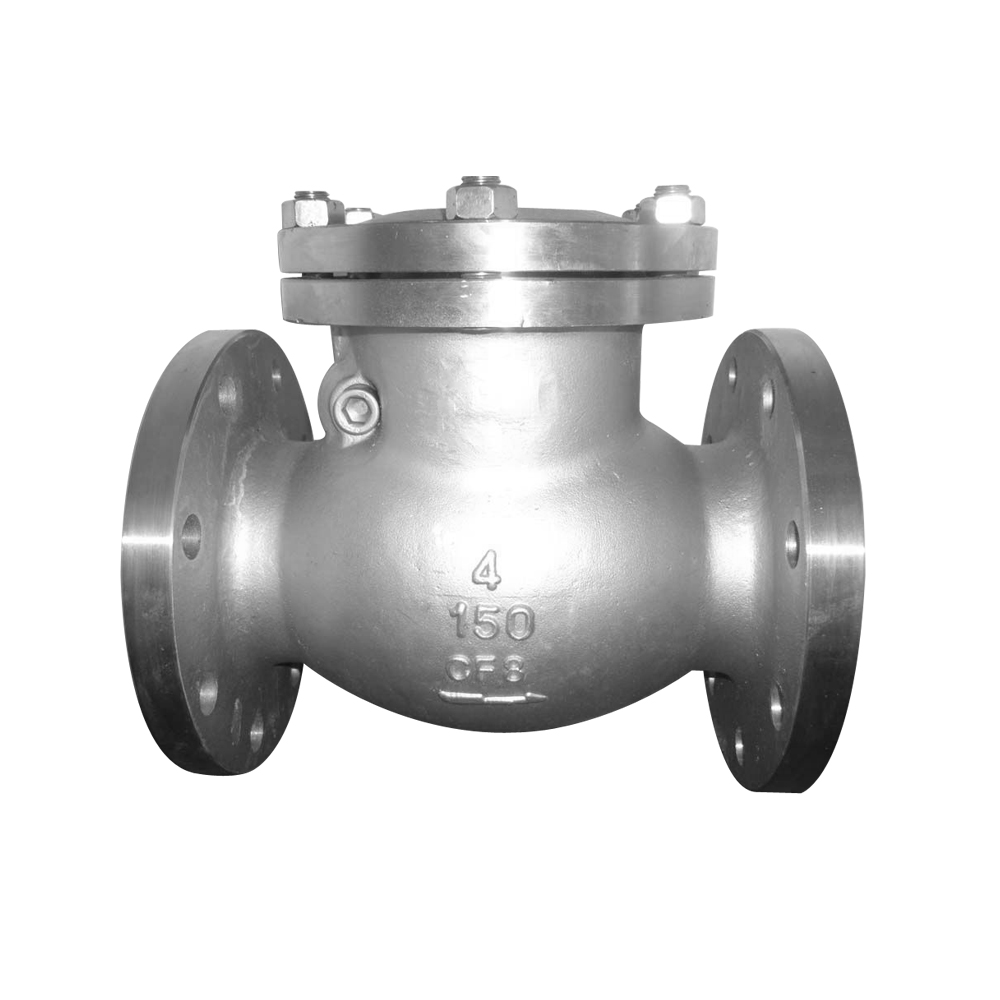
Performance & Engineering
The performance of a 300psi flanged gate valve is governed by several engineering principles. Force analysis during operation focuses on the stresses induced by internal pressure on the valve body and the torque required to operate the gate. The valve body must be designed to withstand the hoop stress generated by the internal pressure, calculated using the thin-walled pressure vessel formula (σ = PD/2t, where σ is stress, P is pressure, D is diameter, and t is wall thickness). Environmental resistance is crucial; valves exposed to outdoor conditions must be designed to withstand temperature fluctuations, UV radiation, and potential corrosion from atmospheric elements. Compliance requirements are stringent, often dictated by API 600 (Steel Gate Valves), which outlines standards for design, materials, manufacturing, inspection, and testing. Functional implementation relies on a stem design that provides smooth and reliable operation. Common stem designs include rising stems and non-rising stems. Rising stems provide visual indication of valve position, while non-rising stems offer a more compact design. Proper sealing is achieved through a combination of gate and seat geometry and the application of appropriate seating materials. The leakage rate must conform to industry standards (e.g., ANSI/FCI 70-2) to ensure tight shut-off. The bonnet design plays a critical role in preventing leakage from the stem packing gland. Actuation mechanisms, whether manual handwheels or automated actuators, must be sized appropriately to provide sufficient torque for operating the valve under various flow conditions. Fatigue analysis is essential for valves subjected to frequent cycling, predicting the valve's lifespan under repeated stress.
Technical Specifications
| Parameter | Specification | Testing Standard | Typical Application |
|---|---|---|---|
| Pressure Rating | 300 PSI (20.7 bar) | API 598 | Water Distribution |
| Valve Size | 2" - 24" (DN50 - DN600) | MSS SP-61 | Oil & Gas Pipelines |
| Body Material | Carbon Steel (A105), Stainless Steel (304/316) | ASTM A105, ASTM A182 | Chemical Processing |
| Gate Material | Bronze (B584), Stainless Steel (304/316) | ASTM B584, ASTM A182 | Wastewater Treatment |
| Seat Material | PTFE, Reinforced PTFE | ASTM D3418 | Steam Lines |
| Connection Type | Flanged (RF, FF, RTJ) | ASME B16.5 | High-Pressure Systems |
Failure Mode & Maintenance
Common failure modes for 300psi flanged gate valves include: 1) Corrosion: Affecting the valve body, gate, and stem, leading to leakage and eventual failure. This is exacerbated by improper material selection for the fluid being handled. 2) Erosion: Caused by abrasive particles in the fluid stream, damaging the gate and seat surfaces. 3) Cavitation: Occurring when pressure drops rapidly, forming vapor bubbles that collapse and erode the valve internals. 4) Fatigue Cracking: Resulting from repeated opening and closing cycles, particularly in the stem and gate. 5) Seat Deformation: Due to high temperatures, pressure fluctuations, or improper seating, leading to leakage. 6) Stem Packing Failure: Allowing leakage around the stem. Preventative maintenance is crucial. This includes regular inspection for signs of corrosion, erosion, or leakage. Lubrication of the stem and gate is essential for smooth operation. Periodic testing of the valve's seating capability (hydrostatic testing) should be performed. Stem packing should be replaced regularly to prevent leakage. For carbon steel valves operating in corrosive environments, applying protective coatings (e.g., epoxy coatings) can extend service life. If erosion is a concern, hardened gate and seat materials should be used. In the event of a failure, a thorough root cause analysis should be conducted to determine the underlying issue and prevent recurrence. Replacement parts should always meet or exceed the original specifications.
Industry FAQ
Q: What is the significance of the flange facing type (RF, FF, RTJ) and how does it impact sealing performance?
A: The flange facing type dictates the method of achieving a leak-tight seal between the valve and the pipeline. Raised Face (RF) flanges are the most common and rely on the compression of the flange gasket between the raised faces. Flat Face (FF) flanges are used with flat-faced mating flanges and are often preferred for low-pressure applications. Ring Type Joint (RTJ) flanges utilize a metallic gasket compressed within a groove, offering the highest sealing performance for high-pressure and high-temperature applications. Incorrect flange facing selection can lead to leakage, even with proper bolting. Compatibility between the valve flange and the pipeline flange is paramount.
Q: How does the material selection impact the valve's resistance to specific fluids, such as seawater or strong acids?
A: Material selection is critical for fluid compatibility. Carbon steel is generally unsuitable for seawater due to its susceptibility to corrosion. Stainless steel (316) offers significantly better resistance to seawater corrosion, but even it can suffer from pitting corrosion in chloride-rich environments. For strong acids, alloy steels containing molybdenum (e.g., Alloy 20) or specialized polymers like PTFE are required. The fluid's pH, temperature, and concentration must be considered when choosing the appropriate material. Consulting a corrosion compatibility chart is recommended.
Q: What are the key considerations for actuator selection (manual vs. automated) for a 300psi flanged gate valve?
A: Actuator selection depends on several factors. Manual operation is suitable for infrequent valve operation and lower torque requirements. Automated actuators (electric, pneumatic, or hydraulic) are preferred for frequent operation, remote control, and high torque requirements. Pneumatic actuators are commonly used for hazardous environments. Electric actuators offer precise control and are suitable for applications requiring modulating control. The actuator must be sized correctly to provide sufficient torque to operate the valve under all operating conditions, including worst-case scenarios.
Q: What are the critical inspection points during routine maintenance to identify potential failures before they occur?
A: Critical inspection points include visual inspection for signs of corrosion, erosion, or leakage around the valve body, flanges, and stem packing. Check for smooth stem operation and any evidence of binding or stiffness. Verify the integrity of the flange bolts and ensure they are properly tightened. Hydrostatic testing should be performed periodically to assess the seat leakage. Inspect the actuator (if applicable) for proper operation and lubrication. Maintain detailed maintenance records to track inspection results and identify trends.
Q: How does valve installation (alignment, bolting torque) affect long-term performance and reliability?
A: Proper valve installation is paramount. Misalignment between the valve and the pipeline can induce stress on the valve body and flanges, leading to leakage or failure. Flange bolts must be tightened to the manufacturer's specified torque values using a calibrated torque wrench, ensuring uniform pressure distribution. Incorrect bolting torque can result in leakage or flange damage. Support the valve adequately to prevent strain on the piping system. Avoid over-tightening bolts, which can strip threads or distort the flanges.
Conclusion
China 300psi flanged gate valves represent a vital component in numerous industrial applications, demanding careful consideration of material science, manufacturing precision, and rigorous performance engineering. A thorough understanding of potential failure modes, coupled with a proactive preventative maintenance strategy, is crucial for ensuring long-term reliability and minimizing downtime. The selection of appropriate materials and adherence to industry standards like API 600 are paramount for achieving optimal performance and safety.
The continued evolution of gate valve technology focuses on enhancing sealing capabilities, improving corrosion resistance, and developing more efficient actuation systems. Future advancements may include the integration of smart sensors for remote monitoring and predictive maintenance, further enhancing the operational efficiency and reliability of these critical industrial components. Proper training of personnel in installation, operation, and maintenance is also essential for maximizing the valve's lifespan and minimizing the risk of failures.
-
Top Reasons to Choose a Stainless Steel Flange Check Valve for Industrial Applications
-
6 wafer check valve Performance Analysis
-
cryogenic check valves Performance Analysis
-
soft seated check valve Performance Analysis
-
3/4 check valve Performance Analysis
-
wafer style check valve Performance Analysis
-
check valve with orifice Performance Analysis
-
check valve 8 inch Performance Analysis
-
1 1 2 inch check valve Performance Analysis
-
cast iron check valves Performance Analysis
-
teejet check valves Performance Analysis
-
teejet check valve Performance Analysis
-
8 inch check valve Performance Analysis
-
wafer style check valves Performance Analysis
-
3 4 spring check valve Performance Analysis
 Afrikaans
 Albanian
 Amharic
 Arabic
 Armenian
 Azerbaijani
 Basque
 Belarusian
 Bengali
 Bosnian
 Bulgarian
 Catalan
 Cebuano
 Corsican
 Croatian
 Czech
Czech
 Danish
 Dutch
Dutch
 Esperanto
 Estonian
 Finnish
 French
 Frisian
 Galician
 Georgian
 German
 Greek
Greek
 Gujarati
 Haitian Creole
 Hausa
Hawaiian
Hausa
Hawaiian
 Hebrew
 Hindi
Hindi
 Miao
Miao
 Hungarian
 Icelandic
 Igbo
Igbo
 Indonesian
 Irish
Irish
 Italian
 Japanese
 Javanese
Kannada
Javanese
Kannada
 Kazakh
 Khmer
Khmer
 Rwandese
 Korean
 Kurdish
 Kyrgyz
 Lao
Lao
 Latin
Latin
 Latvian
 Lithuanian
 Luxembourgish
 Macedonian
 Malgashi
 Malay
Malay
 Malayalam
 Maltese
 Maori
Maori
 Marathi
 Mongolian
 Myanmar
 Nepali
 Norwegian
 Norwegian
 Occitan
 Pashto
 Persian
 Polish
 Portuguese
Punjabi
Portuguese
Punjabi
 Romanian
 Russian
 Samoan
 Scottish Gaelic
 Serbian
 Sesotho
 Shona
Shona
 Sindhi
 Sinhala
 Slovak
 Slovenian
 Somali
 Spanish
 Sundanese
 Swahili
 Swedish
Tagalog
Swedish
Tagalog
 Tajik
Tajik
 Tamil
Tamil
 Tatar
Tatar
 Telugu
 Thai
Thai
 Turkish
 Turkmen
 Ukrainian
 Urdu
Urdu
 Uighur
 Uzbek
Uzbek
 Vietnamese
 Welsh
Welsh
 Bantu
Bantu
 Yiddish
 Yoruba
 Zulu
Zulu
 English