




china 6 inch check valve Performance Analysis
Introduction
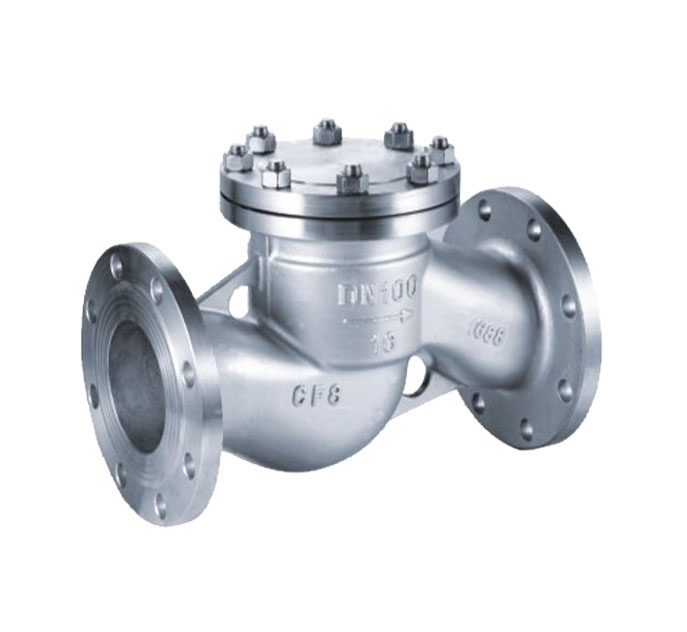
The 6-inch check valve, manufactured in China, is a critical component in fluid handling systems, primarily designed to prevent backflow in pipelines. Positioned within the broader industry chain as a final control element, its function is fundamental to maintaining system integrity and efficiency across various sectors including water treatment, petrochemical processing, power generation, and marine engineering. This valve operates based on the principle of differential pressure, automatically opening to allow flow in the intended direction and sealing tightly to prevent reverse flow. Core performance characteristics are defined by its flow coefficient (Cv), pressure drop, sealing capability (leakage rate), and materials of construction which dictate its compatibility with the conveyed fluid. The increasing demand for reliable and cost-effective fluid control solutions has positioned Chinese manufacturers as significant suppliers in the global market, necessitating a detailed understanding of their products’ technical specifications and performance attributes.
Material Science & Manufacturing
The body of a typical 6-inch check valve is often constructed from cast iron (ASTM A126 Class B), ductile iron (ASTM A536 65-45-12), or stainless steel (304/316 – ASTM A351). Cast iron provides a cost-effective solution for non-corrosive applications, but its inherent brittleness and susceptibility to corrosion limit its use in harsh environments. Ductile iron offers enhanced ductility and impact resistance compared to cast iron, making it suitable for a wider range of applications. Stainless steel offers superior corrosion resistance and is commonly used for handling aggressive fluids. The disc, the critical sealing element, is frequently made from bronze (ASTM B584), stainless steel, or reinforced polymers like PTFE. Elastomeric seats (EPDM, NBR) are used to ensure tight sealing and are selected based on fluid compatibility. Manufacturing processes typically involve sand casting for the body, followed by machining to ensure dimensional accuracy and surface finish. Welding (SMAW, GTAW) is employed for joining components, particularly in stainless steel valve construction. Critical parameters during manufacturing include dimensional tolerances (ISO 2768-mK), surface roughness (ISO 4287), and weld quality (ASME Section IX). Heat treatment is frequently applied to castings to relieve internal stresses and improve mechanical properties. Quality control at each stage involves non-destructive testing (NDT) such as radiography, ultrasonic testing, and liquid penetrant inspection to identify defects and ensure structural integrity.
Performance & Engineering
Performance of a 6-inch check valve is governed by fluid dynamics and structural mechanics. Force analysis considers the hydrodynamic forces exerted by the fluid on the disc, particularly during opening and closing cycles. These forces induce stress on the disc and hinge mechanism, dictating the required material strength and fatigue resistance. The valve’s flow coefficient (Cv) quantifies its capacity to pass fluid at a given pressure drop, directly impacting system efficiency. Environmental resistance is paramount; exposure to corrosive fluids, high temperatures, or UV radiation can lead to material degradation and failure. Valves intended for outdoor applications require coatings (epoxy, polyurethane) to protect against weathering. Compliance with industry standards such as API 598 (manufacturing and testing of valves) and MSS SP-6 (standard dimensions for check valves) ensures interchangeability and consistent performance. Engineering considerations include minimizing pressure drop to reduce energy consumption, optimizing disc geometry for rapid response time, and designing for easy maintenance and repair. The selection of appropriate materials and sealing elements is crucial to prevent leakage and ensure long-term reliability. Finite element analysis (FEA) is increasingly utilized to simulate stress distributions and optimize valve design for specific operating conditions. The valve's body pressure rating, typically expressed in PSI or Bar, must exceed the maximum system pressure to prevent catastrophic failure.
Technical Specifications
| Parameter | Units | Typical Value (Cast Iron) | Typical Value (Ductile Iron) |
|---|---|---|---|
| Nominal Pipe Size | inches | 6 | 6 |
| Maximum Working Pressure | PSI | 200 | 300 |
| Temperature Range | °F | -20 to 250 | -20 to 350 |
| Connection Type | - | Flanged (ANSI B16.1) | Flanged (ANSI B16.1) |
| Flow Coefficient (Cv) | gallons per minute per PSI | 450 | 500 |
| Leakage Rate | % of rated flow | 0.1 | 0.05 |
Failure Mode & Maintenance
Common failure modes for 6-inch check valves include disc erosion due to particulate matter in the fluid, seat degradation resulting in leakage, fatigue cracking in the disc or body due to cyclical loading, corrosion leading to material loss and structural weakening, and binding of the moving parts due to debris accumulation or improper lubrication. Failure analysis reveals that improper installation (misalignment, excessive stress), exceeding the pressure/temperature limits, and inadequate maintenance contribute significantly to premature failures. Corrosion manifests as pitting corrosion in stainless steel (especially in chloride-rich environments) and general corrosion in cast iron. Fatigue cracking typically initiates at stress concentrators such as weld joints or sharp corners. Maintenance procedures involve regular inspection of the disc and seat for wear and damage, cleaning to remove debris, lubrication of moving parts (using compatible lubricants), and periodic testing to verify sealing performance. Preventive maintenance schedules should be established based on operating conditions and fluid characteristics. Replacement of worn components (discs, seats, elastomers) is often necessary to restore functionality. Non-destructive testing (NDT) methods, such as visual inspection, liquid penetrant testing, and ultrasonic testing, can be employed to detect hidden defects before they lead to catastrophic failure. Proper storage and handling during transportation and installation are crucial to prevent damage and ensure long-term reliability.
Industry FAQ
Q: What is the significance of the 'K-factor' in check valve selection?
A: The K-factor, or loss coefficient, quantifies the pressure drop across the check valve when fluid is flowing. A lower K-factor indicates a smaller pressure loss, leading to improved system efficiency. Selecting a check valve with an optimized K-factor is crucial for minimizing energy consumption and maximizing flow rate. It's important to consider the K-factor alongside the Cv value to fully assess the valve's performance.
Q: How does fluid velocity impact the lifespan of a check valve disc?
A: Higher fluid velocity can significantly accelerate erosion and wear on the check valve disc, particularly if the fluid contains abrasive particles. This is due to increased impact forces and cavitation. Selecting a disc material with high erosion resistance and limiting fluid velocity through proper pipe sizing are crucial for extending valve lifespan. Also, regular inspection for signs of erosion is recommended.
Q: What are the implications of using an incompatible elastomeric seat material?
A: Using an elastomeric seat material incompatible with the conveyed fluid can lead to swelling, degradation, and premature failure of the seal. This results in leakage and reduced valve performance. It is essential to consult chemical compatibility charts and select a seat material specifically designed for the intended fluid application. For example, using NBR in contact with strong acids will lead to rapid degradation.
Q: How do different flange standards (ANSI, DIN, JIS) affect interchangeability?
A: Different flange standards (ANSI, DIN, JIS) have variations in bolt circle diameter, flange thickness, and bolt hole patterns. This can affect interchangeability, potentially requiring the use of adapter flanges to connect components manufactured to different standards. It's critical to ensure compatibility when integrating check valves from different sources or replacing existing valves.
Q: What are the best practices for preventing corrosion in stainless steel check valves?
A: Preventing corrosion in stainless steel check valves involves selecting the appropriate grade of stainless steel (316 is more corrosion-resistant than 304), avoiding prolonged exposure to chlorides (especially in stagnant conditions), and implementing cathodic protection if necessary. Regular cleaning and inspection for signs of corrosion are also crucial. Passivation treatments can enhance the corrosion resistance of stainless steel surfaces.
Conclusion
The 6-inch check valve, as a critical component in numerous industrial applications, demands a comprehensive understanding of its material science, manufacturing processes, and performance characteristics. Proper material selection, precise manufacturing control, and adherence to relevant industry standards are fundamental to ensuring reliability and preventing premature failure. Understanding the potential failure modes and implementing proactive maintenance strategies are equally crucial for maximizing valve lifespan and minimizing operational downtime.
The evolving landscape of fluid handling technology necessitates continuous innovation in check valve design and materials. Future developments are likely to focus on enhanced sealing materials, improved corrosion resistance, and the integration of smart sensors for real-time performance monitoring and predictive maintenance. By adopting a holistic approach to check valve selection, installation, and maintenance, industries can optimize fluid handling systems and improve overall operational efficiency.
-
Top Reasons to Choose a Stainless Steel Flange Check Valve for Industrial Applications
-
circle seal check valve Performance Engineering
-
circle seal check valves Performance Analysis
-
cryogenic check valve Performance Analysis
-
3 swing check valve Performance Analysis
-
4 wafer check valve Performance Analysis
-
6 wafer check valve Performance Analysis
-
cryogenic check valves Performance Analysis
-
soft seated check valve Performance Analysis
-
3/4 check valve Performance Analysis
-
wafer style check valve Performance Analysis
-
check valve with orifice Performance Analysis
-
check valve 8 inch Performance Analysis
-
1 1 2 inch check valve Performance Analysis
-
cast iron check valves Performance Analysis
 Afrikaans
 Albanian
 Amharic
 Arabic
 Armenian
 Azerbaijani
 Basque
 Belarusian
 Bengali
 Bosnian
 Bulgarian
 Catalan
 Cebuano
 Corsican
 Croatian
 Czech
Czech
 Danish
 Dutch
Dutch
 Esperanto
 Estonian
 Finnish
 French
 Frisian
 Galician
 Georgian
 German
 Greek
Greek
 Gujarati
 Haitian Creole
 Hausa
Hawaiian
Hausa
Hawaiian
 Hebrew
 Hindi
Hindi
 Miao
Miao
 Hungarian
 Icelandic
 Igbo
Igbo
 Indonesian
 Irish
Irish
 Italian
 Japanese
 Javanese
Kannada
Javanese
Kannada
 Kazakh
 Khmer
Khmer
 Rwandese
 Korean
 Kurdish
 Kyrgyz
 Lao
Lao
 Latin
Latin
 Latvian
 Lithuanian
 Luxembourgish
 Macedonian
 Malgashi
 Malay
Malay
 Malayalam
 Maltese
 Maori
Maori
 Marathi
 Mongolian
 Myanmar
 Nepali
 Norwegian
 Norwegian
 Occitan
 Pashto
 Persian
 Polish
 Portuguese
Punjabi
Portuguese
Punjabi
 Romanian
 Russian
 Samoan
 Scottish Gaelic
 Serbian
 Sesotho
 Shona
Shona
 Sindhi
 Sinhala
 Slovak
 Slovenian
 Somali
 Spanish
 Sundanese
 Swahili
 Swedish
Tagalog
Swedish
Tagalog
 Tajik
Tajik
 Tamil
Tamil
 Tatar
Tatar
 Telugu
 Thai
Thai
 Turkish
 Turkmen
 Ukrainian
 Urdu
Urdu
 Uighur
 Uzbek
Uzbek
 Vietnamese
 Welsh
Welsh
 Bantu
Bantu
 Yiddish
 Yoruba
 Zulu
Zulu
 English