




china high pressure gate valve Performance Analysis

Introduction
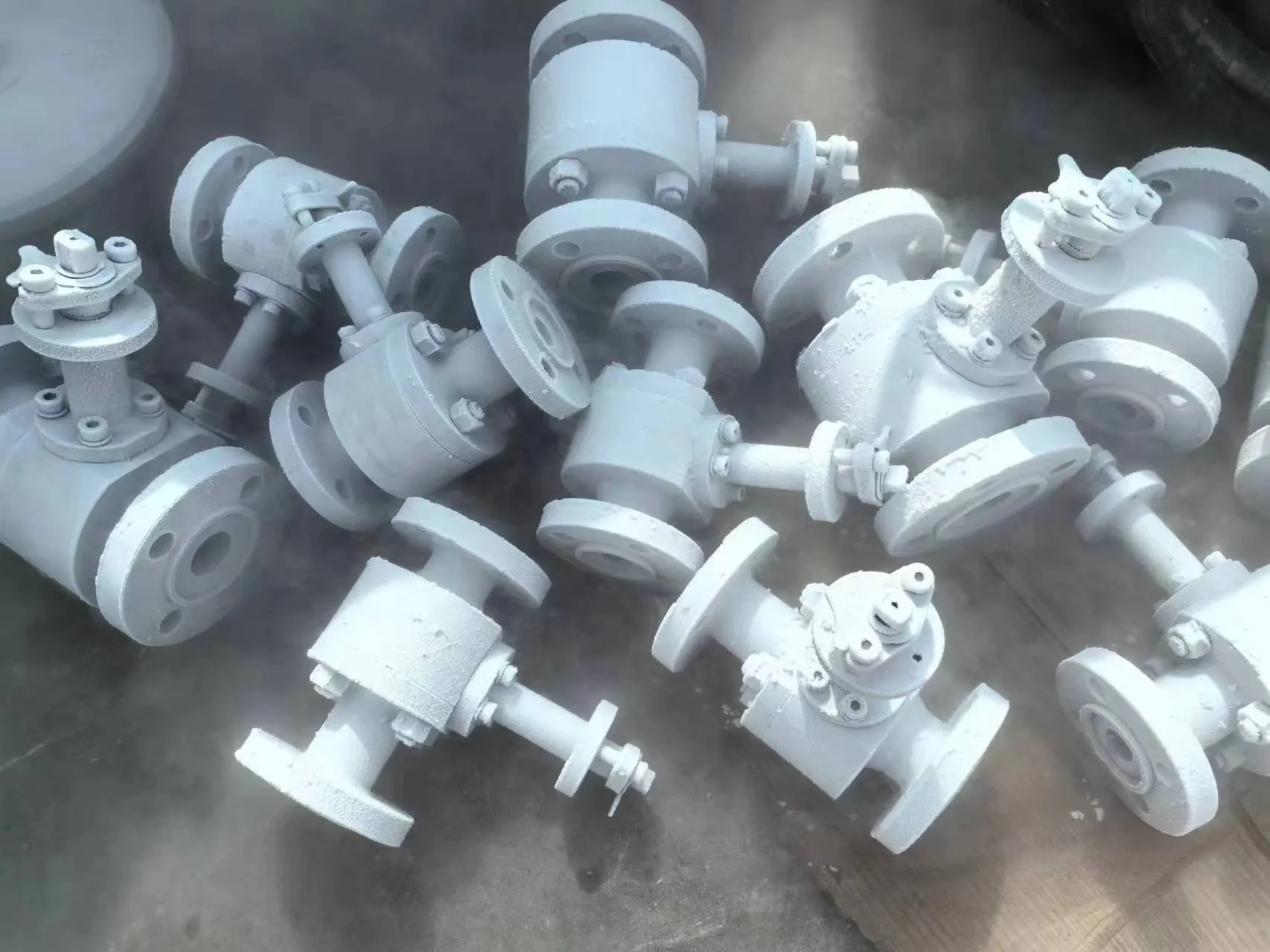
High pressure gate valves, manufactured in China, are critical components in industrial fluid handling systems requiring on/off control of high-pressure media. These valves are primarily utilized in sectors such as oil and gas, petrochemical processing, power generation, and large-scale water infrastructure. Distinguished by their robust construction and tight sealing capabilities, they provide reliable isolation with minimal pressure drop when fully open. Their technical position within the industry chain lies between the raw material suppliers (steel foundries, forging facilities) and the end-user applications (pipelines, refineries, power plants). Core performance characteristics include pressure containment capability, leak tightness, durability under extreme conditions, and compliance with stringent international safety standards. A significant industry pain point revolves around ensuring consistent material quality and manufacturing precision to prevent catastrophic failures associated with high-pressure systems, particularly concerning fatigue cracking and erosion.
Material Science & Manufacturing
The body of a high-pressure gate valve is typically constructed from carbon steel (ASTM A105, A350), alloy steel (ASTM A182 F51, F53), or stainless steel (ASTM A182 F304, F316), selected based on the process fluid's corrosivity and operating temperature. The wedge, which controls flow, frequently utilizes materials like hardened stainless steel (410, 420) or alloy steel with surface treatments like stellite facing to enhance wear resistance. Seat materials commonly include reinforced PTFE, PEEK, or metal-to-metal seals, influencing leak tightness and temperature limitations. Manufacturing involves several crucial steps. Forging or casting creates the body, followed by precise machining to achieve dimensional accuracy and smooth sealing surfaces. Wedge fabrication utilizes machining, grinding, and potentially welding depending on the design. Stem manufacturing involves precision turning and polishing to minimize friction within the packing gland. Critical parameter control includes maintaining tight tolerances on internal diameters, ensuring concentricity of valve components, and implementing rigorous quality control checks on material composition through spectroscopic analysis. Welding processes, where applicable, necessitate qualified welders and adherence to ASME Section IX standards to ensure joint integrity and prevent porosity or cracking. Non-destructive testing (NDT) like radiography and ultrasonic testing are essential to verify weld quality.
Performance & Engineering
High-pressure gate valve performance is governed by several engineering principles. Force analysis considers internal pressure loads acting on the valve body and wedge, requiring robust design to withstand stress without deformation or failure. Stem thrust calculation is critical to determine the force required to operate the valve against the fluid pressure, dictating actuator sizing. Environmental resistance encompasses corrosion prevention through material selection and protective coatings (epoxy, PTFE linings), and temperature resilience via appropriate gasket and seal materials. Compliance requirements mandate adherence to API 6D, ASME Section XI, and pressure equipment directive (PED) 2014/68/EU. Functional implementation details include the gate’s movement – rising stem or non-rising stem – impacting actuator design and operating characteristics. Leak tightness is assessed via hydrostatic testing per API 598, ensuring minimal leakage across the seat. Fatigue analysis is crucial for valves subjected to cyclic operation, assessing the potential for crack initiation and propagation under fluctuating loads. Cavitation resistance is a key consideration in applications with high fluid velocities, requiring optimized valve geometry and material selection to mitigate erosion damage.
Technical Specifications
| Parameter | Unit | Typical Value (Carbon Steel) | Typical Value (Stainless Steel) |
|---|---|---|---|
| Maximum Allowable Pressure | PSI | 900-2500 | 600-1500 |
| Temperature Range | °F | -20 to 450 | -328 to 800 |
| Valve Size | Inches | 2-48 | 2-24 |
| Connection Type | - | Welded, Screwed, Flanged | Welded, Flanged |
| Actuation Type | - | Handwheel, Gear Operator, Pneumatic, Hydraulic | Handwheel, Gear Operator, Pneumatic, Hydraulic |
| Leakage Rate (Class VI) | cc/min | ≤0.1 | ≤0.1 |
Failure Mode & Maintenance
Common failure modes in high-pressure gate valves include: 1) Fatigue cracking: Due to cyclic loading, particularly in the stem and wedge, leading to eventual fracture. Mitigation involves regular inspection and stress relief procedures. 2) Seat erosion/damage: Caused by abrasive particles in the fluid stream, compromising leak tightness. Regular seat grinding or replacement is required. 3) Corrosion: Internal or external corrosion weakening valve components. Protective coatings and material selection are critical. 4) Stem packing failure: Leading to leakage around the stem. Repacking with appropriate materials is necessary. 5) Wedge sticking: Resulting from debris buildup or corrosion, hindering valve operation. Regular cleaning and lubrication are vital. 6) Cavitation erosion: Damage to the wedge and seat due to imploding vapor bubbles. Flow control and appropriate material selection can minimize this. Preventative maintenance includes regular inspection of valve body for cracks, checking stem packing integrity, lubricating moving parts, and performing hydrostatic testing. Detailed records of maintenance activities are crucial for tracking valve performance and predicting potential failures. For critical applications, non-destructive testing (NDT) such as ultrasonic testing should be performed periodically to assess internal component condition.
Industry FAQ
Q: What are the key material considerations when selecting a gate valve for handling sour gas (H2S)?
A: Sour gas applications necessitate materials highly resistant to sulfide stress cracking (SSC). Low alloy steels conforming to NACE MR0175/ISO 15156 are essential. Typically, this means using materials like ASTM A182 F51 (modified) or specialized duplex stainless steels. Proper heat treatment is crucial to ensure the material’s ductility and resistance to cracking. Regular inspection for SSC is also vital.
Q: How does the gate valve’s body joint design (e.g., bolted bonnet vs. welded bonnet) impact its pressure rating and suitability for high-pressure services?
A: Welded bonnets generally offer superior pressure containment capabilities compared to bolted bonnets, especially at higher pressures. Bolted bonnets are susceptible to gasket failure and flange separation under extreme stress. Welded designs create a monolithic structure, providing a more reliable seal. However, welded bonnets make field maintenance more challenging.
Q: What are the advantages and disadvantages of using a rising stem versus a non-rising stem gate valve in a high-pressure application?
A: Rising stem valves visually indicate valve position and generally require less torque to operate, making them suitable for remote actuation. However, they necessitate a larger actuator due to the stem’s travel. Non-rising stem valves are more compact but require precise indicator mechanisms and may demand higher operating torque.
Q: What is the significance of hydrostatic testing, and what acceptance criteria are typically used for high-pressure gate valves?
A: Hydrostatic testing verifies the valve’s pressure integrity by subjecting it to a pressure significantly exceeding its rated working pressure (typically 1.5 times). Acceptance criteria dictate that the valve must show no visible leakage and experience no permanent deformation after the test. The test pressure must be held for a specified duration (e.g., 10 minutes).
Q: How important is surface finish on the gate and seat, and what roughness values are typically specified?
A: Surface finish is paramount for achieving a tight seal. Rough surfaces create leakage paths. Typical roughness (Ra) values for the gate and seat are ≤ 32 µin (0.8 µm) for metal-to-metal seats and ≤ 16 µin (0.4 µm) for soft-seated valves. Polishing and lapping operations are used to achieve these finishes.
Conclusion
China high-pressure gate valves represent a critical component in numerous demanding industrial applications. Successful deployment relies heavily on meticulous material selection, precise manufacturing controls, and adherence to rigorous international standards like API 6D and ASME Section XI. Understanding the potential failure modes – ranging from fatigue cracking to corrosion – is vital for implementing effective preventative maintenance strategies.
The future of high-pressure gate valve technology will likely focus on advancements in material science (e.g., the development of more corrosion-resistant alloys), improved sealing technologies (e.g., advanced polymers and surface treatments), and the integration of smart monitoring systems to predict and prevent failures, enhancing operational reliability and safety within critical infrastructure.
-
Top Reasons to Choose a Stainless Steel Flange Check Valve for Industrial Applications
-
6 wafer check valve Performance Analysis
-
cryogenic check valves Performance Analysis
-
soft seated check valve Performance Analysis
-
3/4 check valve Performance Analysis
-
wafer style check valve Performance Analysis
-
check valve with orifice Performance Analysis
-
check valve 8 inch Performance Analysis
-
1 1 2 inch check valve Performance Analysis
-
cast iron check valves Performance Analysis
-
teejet check valves Performance Analysis
-
teejet check valve Performance Analysis
-
8 inch check valve Performance Analysis
-
wafer style check valves Performance Analysis
-
3 4 spring check valve Performance Analysis
 Afrikaans
 Albanian
 Amharic
 Arabic
 Armenian
 Azerbaijani
 Basque
 Belarusian
 Bengali
 Bosnian
 Bulgarian
 Catalan
 Cebuano
 Corsican
 Croatian
 Czech
Czech
 Danish
 Dutch
Dutch
 Esperanto
 Estonian
 Finnish
 French
 Frisian
 Galician
 Georgian
 German
 Greek
Greek
 Gujarati
 Haitian Creole
 Hausa
Hawaiian
Hausa
Hawaiian
 Hebrew
 Hindi
Hindi
 Miao
Miao
 Hungarian
 Icelandic
 Igbo
Igbo
 Indonesian
 Irish
Irish
 Italian
 Japanese
 Javanese
Kannada
Javanese
Kannada
 Kazakh
 Khmer
Khmer
 Rwandese
 Korean
 Kurdish
 Kyrgyz
 Lao
Lao
 Latin
Latin
 Latvian
 Lithuanian
 Luxembourgish
 Macedonian
 Malgashi
 Malay
Malay
 Malayalam
 Maltese
 Maori
Maori
 Marathi
 Mongolian
 Myanmar
 Nepali
 Norwegian
 Norwegian
 Occitan
 Pashto
 Persian
 Polish
 Portuguese
Punjabi
Portuguese
Punjabi
 Romanian
 Russian
 Samoan
 Scottish Gaelic
 Serbian
 Sesotho
 Shona
Shona
 Sindhi
 Sinhala
 Slovak
 Slovenian
 Somali
 Spanish
 Sundanese
 Swahili
 Swedish
Tagalog
Swedish
Tagalog
 Tajik
Tajik
 Tamil
Tamil
 Tatar
Tatar
 Telugu
 Thai
Thai
 Turkish
 Turkmen
 Ukrainian
 Urdu
Urdu
 Uighur
 Uzbek
Uzbek
 Vietnamese
 Welsh
Welsh
 Bantu
Bantu
 Yiddish
 Yoruba
 Zulu
Zulu
 English