




china square flanges Performance Engineering

Introduction
China square flanges are a critical component in piping systems, facilitating the connection between sections of pipe, valves, pumps, and other equipment. Characterized by their square shape and bolt hole arrangement, these flanges are commonly utilized in industrial applications where robust sealing and structural integrity are paramount. While seemingly simple in design, the selection and application of china square flanges are dictated by stringent engineering considerations, including pressure ratings, material compatibility, temperature ranges, and adherence to international standards. They represent a significant segment within the broader flange market, particularly for applications requiring customized dimensions or specialized materials due to the fabrication capabilities within Chinese manufacturing hubs. Effective use requires understanding the nuances of their design, manufacturing processes, and potential failure modes to ensure long-term operational reliability and safety.
Material Science & Manufacturing
The core material for china square flanges is typically carbon steel (ASTM A105, for instance), though stainless steels (304/316) and alloy steels (A182) are employed for corrosive environments or high-temperature services. Carbon steel exhibits good strength and weldability but is susceptible to corrosion. Stainless steels offer superior corrosion resistance due to the chromium content, forming a passive oxide layer. Alloy steels provide enhanced strength and temperature resistance. The material’s yield strength, tensile strength, and elongation are critical parameters. Manufacturing involves several processes: forging, casting, or machining from bar stock. Forging offers superior grain structure and mechanical properties. Casting is suitable for complex shapes but requires careful quality control to avoid porosity. Machining ensures precise dimensions and smooth surface finishes. Welding procedures (SMAW, GTAW, GMAW) are crucial for attaching connecting elements or reinforcing features. Preheat and post-weld heat treatment (PWHT) are often necessary to prevent cracking. Non-destructive testing (NDT), including radiographic testing (RT), ultrasonic testing (UT), and dye penetrant testing (PT), is vital to verify weld integrity and detect flaws. Surface treatments like galvanizing or epoxy coating can further enhance corrosion resistance. Material traceability is paramount, and comprehensive documentation is maintained throughout the manufacturing process to ensure compliance with specifications.
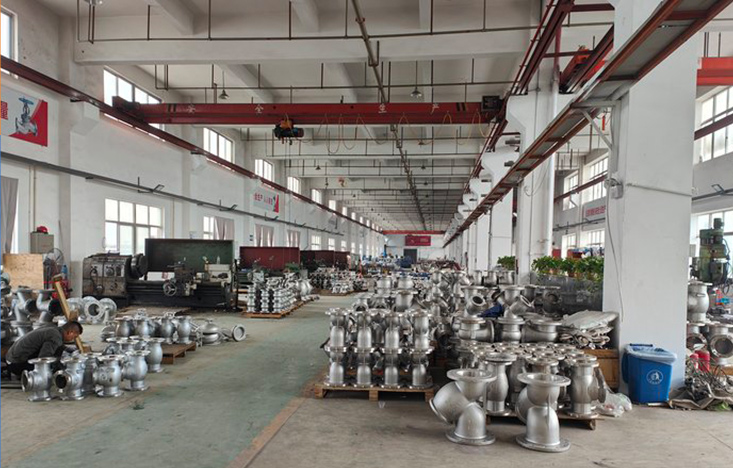
Performance & Engineering
The performance of china square flanges is fundamentally governed by principles of stress analysis and fluid mechanics. Bolt load distribution is critical to maintaining a leak-tight seal. Stress concentration around bolt holes is a primary concern, particularly under fluctuating pressure or temperature. Finite element analysis (FEA) is frequently used to optimize flange geometry and bolt patterns to minimize stress. Gasket selection significantly impacts sealing performance; materials like non-asbestos fiber, PTFE, or metallic gaskets are chosen based on fluid compatibility, temperature, and pressure. Compliance with ASME B16.5 (for flanges and flanged fittings) is essential, specifying dimensional tolerances, pressure-temperature ratings, and bolt hole patterns. Corrosion is a major performance limiter; electrochemical corrosion occurs when dissimilar metals are in contact in the presence of an electrolyte. Galvanic corrosion can be mitigated by using compatible materials or applying protective coatings. Fatigue failure is another concern in cyclic loading applications. Creep, the time-dependent deformation under sustained stress, becomes significant at elevated temperatures. Environmental resistance is crucial; exposure to UV radiation, saltwater, and industrial chemicals can degrade flange materials. Thermal expansion and contraction must be accounted for in piping system design to prevent stresses that could compromise the flange's integrity. Proper bolting torque is vital; over-tightening can damage the gasket or flange, while under-tightening can lead to leaks.
Technical Specifications
| Parameter | Carbon Steel (A105) | Stainless Steel (304/316) | Alloy Steel (A182 F304) | Pressure Rating (PSI) |
|---|---|---|---|---|
| Material | ASTM A105 | ASTM A304/A316 | ASTM A182 F304 | Up to 2000 |
| Temperature Range (°C) | -29 to 370 | -196 to 427 | -73 to 482 | Varies by material |
| Yield Strength (MPa) | 290 | 205 | 240 | Dependent on material |
| Tensile Strength (MPa) | 483 | 517 | 586 | Dependent on material |
| Corrosion Resistance | Limited | Excellent | Good | Material Dependent |
| Typical Applications | Water, Oil, Gas | Chemical Processing, Food & Beverage | High Temperature, High Pressure | General Industrial |
Failure Mode & Maintenance
China square flanges are susceptible to several failure modes. Corrosion, as previously mentioned, leads to material degradation and loss of strength. Fatigue cracking initiates at stress concentration points (bolt holes, weld toes) due to cyclic loading. Creep rupture occurs at high temperatures under sustained stress, resulting in sudden failure. Bolted joint failure can stem from insufficient bolt torque, bolt loosening due to vibration, or bolt material failure. Gasket failure manifests as leaks due to gasket compression set, chemical attack, or improper gasket selection. Erosion, caused by abrasive fluids or particles, gradually wears away the flange material. Failure analysis often involves metallographic examination to identify crack initiation sites and failure mechanisms. Preventative maintenance includes regular visual inspections for corrosion, cracks, and leaks. Bolt torque checks should be performed periodically and adjusted as necessary. Gaskets should be replaced according to manufacturer recommendations. Protective coatings should be inspected and repaired to maintain corrosion resistance. If significant corrosion is detected, the flange should be replaced. NDT methods like UT and PT can be used to detect subsurface flaws before they lead to catastrophic failure. Proper lubrication of bolts prevents galling and facilitates removal for maintenance.
Industry FAQ
Q: What are the key differences between slip-on and weld-neck flanges, and when should each be used?
A: Slip-on flanges are easier to install, requiring less precision in alignment, and are less expensive. However, weld-neck flanges provide a stronger, more fatigue-resistant connection, as the weld is on the neck of the flange, reducing stress concentration. Weld-neck flanges are preferred for high-pressure, high-temperature, or cyclically loaded applications where fatigue resistance is critical. Slip-on flanges are suitable for lower-pressure services and less demanding environments.
Q: How does material selection impact the long-term cost of ownership for flanges in a corrosive environment?
A: Choosing a less expensive carbon steel flange may initially reduce capital expenditure, but the cost of frequent replacements due to corrosion can significantly exceed the initial savings. Investing in stainless steel or alloy steel flanges with superior corrosion resistance dramatically reduces maintenance costs and downtime, leading to a lower total cost of ownership over the flange's lifespan.
Q: What is the importance of proper bolt torque, and what are the potential consequences of over- or under-torquing?
A: Proper bolt torque is crucial for achieving a leak-tight seal and maintaining flange integrity. Over-torquing can yield or distort the flange, damage the gasket, and lead to bolt failure. Under-torquing can result in insufficient gasket compression, leading to leaks. Torque values should be determined based on flange size, material, and gasket type, and verified using calibrated torque wrenches.
Q: What non-destructive testing (NDT) methods are commonly used to inspect flanges, and what flaws can they detect?
A: Radiographic testing (RT) can detect internal flaws like porosity, inclusions, and cracks. Ultrasonic testing (UT) detects subsurface flaws and measures material thickness. Dye penetrant testing (PT) detects surface cracks and discontinuities. Magnetic particle testing (MT) detects surface and near-surface flaws in ferromagnetic materials. Visual testing (VT) identifies surface defects like corrosion and damage.
Q: How do international standards like ASME B16.5 influence the design and manufacturing of china square flanges?
A: ASME B16.5 provides standardized dimensions, pressure-temperature ratings, materials, and bolting requirements for flanges and flanged fittings. Adherence to ASME B16.5 ensures interchangeability of components, compatibility with existing piping systems, and adherence to industry best practices. Compliance is often a contractual requirement for many projects and is essential for safety and reliability.
Conclusion
China square flanges, while appearing straightforward, represent a complex intersection of material science, mechanical engineering, and industrial standards. Their reliable performance is heavily reliant on careful material selection aligned with the operating environment, precise manufacturing processes, and diligent adherence to relevant codes and specifications. Understanding potential failure modes – corrosion, fatigue, and improper bolting – is crucial for implementing effective preventative maintenance strategies and maximizing service life.
Looking forward, the demand for high-performance flanges will continue to grow, driven by increasingly stringent safety regulations and the need for greater operational efficiency in industrial processes. Advancements in materials, such as the development of more corrosion-resistant alloys and composite materials, and the increased utilization of advanced manufacturing techniques, like additive manufacturing, will likely play a significant role in shaping the future of flange technology. Continued focus on non-destructive testing and predictive maintenance will further enhance reliability and minimize the risk of catastrophic failures.
-
Top Reasons to Choose a Stainless Steel Flange Check Valve for Industrial Applications
-
stainless steel check valves Performance Analysis
-
check valve 6 Performance Analysis
-
check valve stainless steel Performance Analysis
-
6 in check valve Performance Engineering
-
6 check valves Performance Analysis
-
12 inch check valve Performance Analysis
-
lift check valves Performance Engineering
-
check valve 12 inch Performance Analysis
-
stop check valve Performance Analysis
-
check stop valve Performance Analysis
-
stop check valves Performance Analysis
-
pilot operated check valve Performance Analysis
-
spring loaded check valve Material Science Manufacturing
-
pilot operated check valves Performance Analysis
 Afrikaans
 Albanian
 Amharic
 Arabic
 Armenian
 Azerbaijani
 Basque
 Belarusian
 Bengali
 Bosnian
 Bulgarian
 Catalan
 Cebuano
 Corsican
 Croatian
 Czech
Czech
 Danish
 Dutch
Dutch
 Esperanto
 Estonian
 Finnish
 French
 Frisian
 Galician
 Georgian
 German
 Greek
Greek
 Gujarati
 Haitian Creole
 Hausa
Hawaiian
Hausa
Hawaiian
 Hebrew
 Hindi
Hindi
 Miao
Miao
 Hungarian
 Icelandic
 Igbo
Igbo
 Indonesian
 Irish
Irish
 Italian
 Japanese
 Javanese
Kannada
Javanese
Kannada
 Kazakh
 Khmer
Khmer
 Rwandese
 Korean
 Kurdish
 Kyrgyz
 Lao
Lao
 Latin
Latin
 Latvian
 Lithuanian
 Luxembourgish
 Macedonian
 Malgashi
 Malay
Malay
 Malayalam
 Maltese
 Maori
Maori
 Marathi
 Mongolian
 Myanmar
 Nepali
 Norwegian
 Norwegian
 Occitan
 Pashto
 Persian
 Polish
 Portuguese
Punjabi
Portuguese
Punjabi
 Romanian
 Russian
 Samoan
 Scottish Gaelic
 Serbian
 Sesotho
 Shona
Shona
 Sindhi
 Sinhala
 Slovak
 Slovenian
 Somali
 Spanish
 Sundanese
 Swahili
 Swedish
Tagalog
Swedish
Tagalog
 Tajik
Tajik
 Tamil
Tamil
 Tatar
Tatar
 Telugu
 Thai
Thai
 Turkish
 Turkmen
 Ukrainian
 Urdu
Urdu
 Uighur
 Uzbek
Uzbek
 Vietnamese
 Welsh
Welsh
 Bantu
Bantu
 Yiddish
 Yoruba
 Zulu
Zulu
 English