




check valve stainless steel Performance Analysis
Introduction
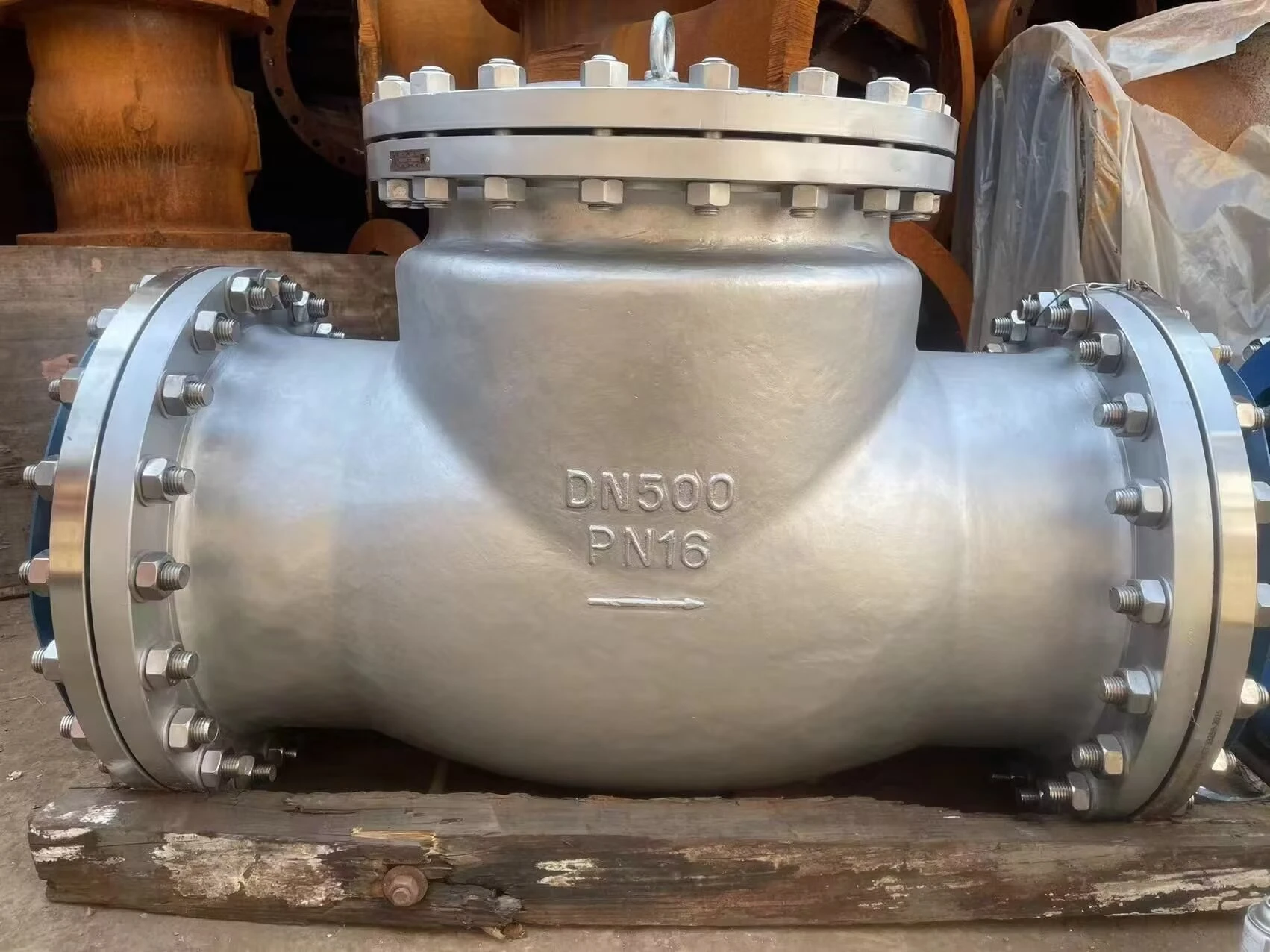
Stainless steel check valves are critical components in fluid handling systems across a diverse range of industries, including chemical processing, oil and gas, water treatment, and power generation. Their primary function is to prevent backflow, ensuring unidirectional fluid movement and protecting sensitive equipment from damage or contamination. Positioned within the broader industrial valve landscape – encompassing ball, gate, globe, and butterfly valves – check valves distinguish themselves through their passive operation, requiring no external control signals. The technical performance of a stainless steel check valve is primarily defined by its pressure rating, flow coefficient (Cv), leak rate, material composition (specifically the grade of stainless steel), and connection type. The selection of the appropriate check valve is dictated by the specific fluid properties (corrosivity, viscosity, temperature), system pressure, and regulatory compliance requirements. Industry pain points often center around material selection for specific fluid compatibility, minimizing pressure drop across the valve, and ensuring long-term reliability in harsh operating environments.
Material Science & Manufacturing
The predominant material for stainless steel check valve construction is austenitic stainless steel, primarily grades 304 and 316. 304 stainless steel offers good corrosion resistance in many applications, containing approximately 18% chromium and 8% nickel. The chromium content forms a passive oxide layer protecting the underlying steel from corrosion. 316 stainless steel further enhances corrosion resistance with the addition of molybdenum (typically 2-3%), making it more resistant to pitting and crevice corrosion, particularly in chloride-containing environments. Other grades like 316L (low carbon) are used to minimize carbide precipitation during welding, improving weldability and preventing intergranular corrosion. Duplex stainless steels, combining austenitic and ferritic microstructures, offer superior strength and corrosion resistance but are less commonly used due to higher cost and more complex manufacturing.
Manufacturing processes vary depending on valve size, complexity, and production volume. Small valves often utilize investment casting for the body, followed by machining to achieve precise dimensions and smooth flow passages. Larger valves typically employ forging, providing higher strength and integrity. The disc (the component that controls backflow) is commonly manufactured from bar stock, machined, and heat-treated for hardness and wear resistance. Welding is a crucial process, typically using GTAW (Gas Tungsten Arc Welding) or SMAW (Shielded Metal Arc Welding) techniques. Strict control of welding parameters – including current, voltage, and shielding gas composition – is essential to prevent porosity, cracking, and incomplete fusion. Post-weld heat treatment (PWHT) is often performed to relieve residual stresses and improve corrosion resistance. Surface finishing, including passivation, is critical for maximizing corrosion resistance. Passivation involves treating the stainless steel surface with an acid solution to remove free iron and enhance the formation of the protective oxide layer. Key parameter control includes maintaining consistent material composition, precise machining tolerances, and rigorously controlled welding and heat treatment procedures.
Performance & Engineering
The performance of a stainless steel check valve is heavily influenced by its hydraulic characteristics and structural integrity. Force analysis focuses on the impact force exerted by the fluid on the disc during closure and the stresses induced in the valve body and disc under pressure. Finite Element Analysis (FEA) is commonly employed to simulate these stresses and optimize valve design to prevent failure. Environmental resistance is paramount, particularly in corrosive environments. The selection of stainless steel grade must align with the fluid composition, temperature, and pressure. Coatings, such as PTFE or PFA, may be applied to internal surfaces to enhance corrosion resistance for highly aggressive fluids. Compliance requirements vary by industry and region. For potable water applications, valves must comply with NSF/ANSI 61 standards, ensuring they do not leach harmful contaminants into the water supply. For oil and gas applications, API 6A and API 598 standards govern valve design, testing, and performance. Functional implementation depends on the valve type (swing, lift, ball, or diaphragm). Swing check valves offer low pressure drop but are susceptible to water hammer. Lift check valves are suitable for high-flow applications but may have higher pressure drop. Ball check valves provide tight shutoff but can trap debris. The choice of valve type depends on the specific application requirements and the trade-offs between performance characteristics.
Technical Specifications
| Parameter | Unit | Typical Value (316 SS, Swing Check Valve) | Tolerance |
|---|---|---|---|
| Maximum Operating Pressure | PSI | 2000 | ±10% |
| Temperature Range | °F | -20 to 450 | ±5°F |
| Cv (Flow Coefficient) | Gallons per minute at 1 PSI pressure drop | 2.5 | ±0.2 |
| Leak Rate | % of set flow | 0.1 | ≤0.2 |
| Connection Type | NPT, Flanged, Socket Weld | Per ASME B1.20.1 | |
| Material (Body & Disc) | 316 Stainless Steel | ASTM A743 Grade CF8M |
Failure Mode & Maintenance
Common failure modes in stainless steel check valves include corrosion-induced failures (pitting, crevice corrosion, and stress corrosion cracking), erosion due to high-velocity fluids, fatigue cracking from cyclic loading, and disc sticking due to debris accumulation. Pitting corrosion is particularly problematic in chloride-containing environments, initiating at imperfections in the passive oxide layer. Crevice corrosion occurs in confined spaces where stagnant fluid can accumulate. Stress corrosion cracking results from the combined effect of tensile stress and a corrosive environment. Fatigue cracking arises from repeated pressure cycles, leading to crack initiation and propagation. Disc sticking can prevent proper valve closure, leading to backflow.
Preventive maintenance is crucial for maximizing valve lifespan. Regular inspection for signs of corrosion, erosion, or damage is essential. Periodic cleaning to remove debris and prevent disc sticking is recommended. Lubrication of moving parts may be necessary for certain valve designs. Non-destructive testing (NDT) methods, such as visual inspection, dye penetrant testing, and ultrasonic testing, can detect hidden cracks or flaws. In cases of severe corrosion or damage, valve replacement is often the most practical solution. If a valve fails due to disc sticking, the valve should be disassembled, cleaned, and inspected for damage before reinstallation. Repairing a valve typically involves replacing the disc and any damaged seals or internal components. The selection of compatible replacement parts is critical to ensure long-term performance and reliability.
Industry FAQ
Q: What is the primary difference between 304 and 316 stainless steel in the context of check valve applications?
A: The key difference lies in the molybdenum content. 316 stainless steel contains molybdenum (2-3%), which significantly enhances its resistance to pitting and crevice corrosion, particularly in chloride-rich environments. Therefore, 316 is preferred for applications involving seawater, saltwater, or chemical processes utilizing chlorides, while 304 is suitable for less corrosive environments like freshwater systems.
Q: How does the flow coefficient (Cv) impact system performance?
A: The Cv value indicates the valve’s capacity to pass fluid at a given pressure drop. A higher Cv means the valve can handle a greater flow rate with less pressure loss. Selecting a valve with an appropriate Cv is critical to avoid excessive pressure drop, which can reduce system efficiency and potentially damage downstream equipment. Under-sizing the valve can lead to cavitation, while over-sizing can result in poor modulation.
Q: What are the potential consequences of water hammer in a check valve system?
A: Water hammer, or hydraulic shock, occurs when a fluid suddenly changes velocity, creating a pressure surge. Swing check valves are particularly susceptible to water hammer. This can cause significant stress on the valve body, piping, and connected equipment, potentially leading to leaks, cracks, or catastrophic failure. Mitigation strategies include using slower-closing check valves (e.g., lift check valves) or installing surge suppressors.
Q: What are the key considerations for selecting a check valve for a high-temperature application?
A: High temperatures can reduce the strength and corrosion resistance of stainless steel. Selecting a valve with a temperature rating exceeding the maximum operating temperature is essential. The grade of stainless steel also plays a role; certain grades maintain their properties better at elevated temperatures. Consideration must also be given to the effects of thermal expansion and contraction on the valve body and connecting piping.
Q: How important is passivation, and how often should it be performed?
A: Passivation is a critical surface treatment that enhances the corrosion resistance of stainless steel by forming a protective oxide layer. It’s essential for new valves and should be performed after any machining or welding operations that could disrupt the passive layer. The frequency of re-passivation depends on the operating environment; in highly corrosive environments, periodic re-passivation may be necessary, typically annually or bi-annually.
Conclusion
Stainless steel check valves represent a robust and reliable solution for preventing backflow in a wide array of industrial applications. The selection process necessitates a thorough understanding of fluid properties, operating conditions, and applicable industry standards. Material selection, particularly the choice between 304 and 316 stainless steel, is pivotal in ensuring long-term corrosion resistance and system integrity. Proper manufacturing processes, including controlled welding, heat treatment, and surface finishing, are critical to achieving optimal performance.
Looking ahead, advancements in materials science – such as the development of more corrosion-resistant alloys and coatings – will continue to enhance the capabilities of stainless steel check valves. The increasing demand for energy efficiency and process optimization will drive the adoption of low-pressure-drop valve designs and smart valve technologies with integrated sensors for real-time monitoring and predictive maintenance. Ultimately, a comprehensive understanding of the technical intricacies outlined herein is essential for engineers and procurement professionals seeking to specify and maintain high-performing check valve systems.
-
Top Reasons to Choose a Stainless Steel Flange Check Valve for Industrial Applications
-
stainless steel check valves Performance Analysis
-
check valve 6 Performance Analysis
-
check valve stainless steel Performance Analysis
-
6 in check valve Performance Engineering
-
6 check valves Performance Analysis
-
12 inch check valve Performance Analysis
-
lift check valves Performance Engineering
-
check valve 12 inch Performance Analysis
-
stop check valve Performance Analysis
-
check stop valve Performance Analysis
-
stop check valves Performance Analysis
-
pilot operated check valve Performance Analysis
-
spring loaded check valve Material Science Manufacturing
-
pilot operated check valves Performance Analysis
 Afrikaans
 Albanian
 Amharic
 Arabic
 Armenian
 Azerbaijani
 Basque
 Belarusian
 Bengali
 Bosnian
 Bulgarian
 Catalan
 Cebuano
 Corsican
 Croatian
 Czech
Czech
 Danish
 Dutch
Dutch
 Esperanto
 Estonian
 Finnish
 French
 Frisian
 Galician
 Georgian
 German
 Greek
Greek
 Gujarati
 Haitian Creole
 Hausa
Hawaiian
Hausa
Hawaiian
 Hebrew
 Hindi
Hindi
 Miao
Miao
 Hungarian
 Icelandic
 Igbo
Igbo
 Indonesian
 Irish
Irish
 Italian
 Japanese
 Javanese
Kannada
Javanese
Kannada
 Kazakh
 Khmer
Khmer
 Rwandese
 Korean
 Kurdish
 Kyrgyz
 Lao
Lao
 Latin
Latin
 Latvian
 Lithuanian
 Luxembourgish
 Macedonian
 Malgashi
 Malay
Malay
 Malayalam
 Maltese
 Maori
Maori
 Marathi
 Mongolian
 Myanmar
 Nepali
 Norwegian
 Norwegian
 Occitan
 Pashto
 Persian
 Polish
 Portuguese
Punjabi
Portuguese
Punjabi
 Romanian
 Russian
 Samoan
 Scottish Gaelic
 Serbian
 Sesotho
 Shona
Shona
 Sindhi
 Sinhala
 Slovak
 Slovenian
 Somali
 Spanish
 Sundanese
 Swahili
 Swedish
Tagalog
Swedish
Tagalog
 Tajik
Tajik
 Tamil
Tamil
 Tatar
Tatar
 Telugu
 Thai
Thai
 Turkish
 Turkmen
 Ukrainian
 Urdu
Urdu
 Uighur
 Uzbek
Uzbek
 Vietnamese
 Welsh
Welsh
 Bantu
Bantu
 Yiddish
 Yoruba
 Zulu
Zulu
 English