




carbon steel flange Performance Engineering
Introduction
Carbon steel flanges are critical components in piping systems, serving as the connecting points between sections of pipe, valves, pumps, and other equipment. They are integral to maintaining the integrity and efficiency of fluid transfer operations across diverse industries including oil and gas, chemical processing, power generation, and water treatment. Positioned as intermediate elements within a larger system, their performance dictates overall system reliability. The primary function of a carbon steel flange is to provide a secure, leak-proof connection. This is achieved through bolting the flange faces together with a gasket material compressed between them. Core performance metrics revolve around pressure containment capability, resistance to corrosion, and dimensional accuracy to ensure proper mating with other components. The selection of appropriate flange types (weld neck, slip-on, blind, etc.) and pressure classes is paramount for safe and efficient operation, often dictated by stringent industry codes and standards.
Material Science & Manufacturing
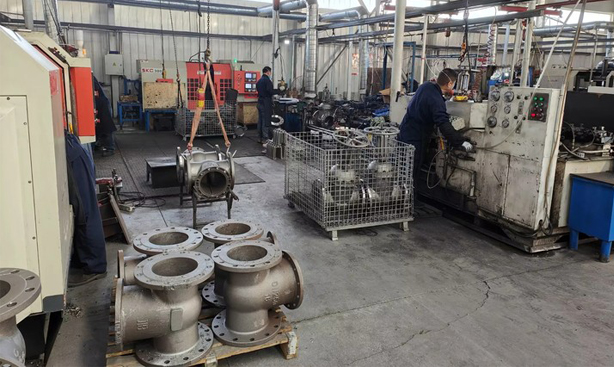
Carbon steel flanges are typically manufactured from materials conforming to ASTM A105, encompassing a range of compositions primarily based on iron with controlled carbon content (generally below 0.30%). The specific carbon content influences the material’s strength, ductility, and weldability. Lower carbon content increases ductility and weldability, while higher carbon content improves strength. Other alloying elements such as manganese, silicon, and phosphorus are present in controlled amounts to refine grain structure and improve mechanical properties. The manufacturing process typically begins with steel billet cutting, followed by forging or casting to create the flange shape. Forged flanges offer superior grain structure and mechanical properties, particularly suitable for high-pressure and high-temperature applications. Casting provides a more cost-effective solution for large-diameter or complex flange designs. Critical manufacturing parameters include forging temperature, cooling rate, and heat treatment procedures (normalizing, annealing) to achieve desired microstructure and mechanical properties. Machining operations, including facing, boring, and drilling, ensure dimensional accuracy and proper surface finish. Welding procedures (when applicable, as in weld neck flanges) must adhere to ASME Section IX, requiring qualified welders and stringent quality control measures to prevent defects such as porosity, slag inclusions, and incomplete fusion. Surface treatments like galvanizing or painting are applied for corrosion protection, dependent on the operating environment.
Performance & Engineering
The performance of carbon steel flanges is governed by several engineering principles. Stress analysis, employing Finite Element Analysis (FEA), is crucial to determine the flange’s ability to withstand internal pressure, external loads (weight of piping, thermal expansion), and bolt loads. Bolt load distribution is particularly important; uneven loading can lead to gasket failure and leakage. The gasket selection is critical, based on fluid compatibility, temperature, and pressure. Gasket materials range from non-asbestos fiber to PTFE and metallic gaskets, each with varying resistance to chemical attack and temperature extremes. Environmental resistance is a major concern. Carbon steel is susceptible to corrosion in corrosive environments. Corrosion mitigation strategies include material selection (e.g., using higher alloy steels), applying protective coatings, and implementing cathodic protection systems. Flange design must also account for thermal expansion and contraction. Expansion joints or appropriately sized flange connections are necessary to accommodate movement and prevent stress concentration. Compliance with industry standards (ASME B16.5, EN 1092-1) dictates flange dimensions, pressure-temperature ratings, and bolting requirements. Failure to adhere to these standards can lead to catastrophic failures. Hydrostatic testing is routinely performed to verify the flange’s pressure integrity before installation and commissioning. This involves subjecting the flange to a pressure exceeding its operating pressure for a specified duration, observing for any signs of leakage or deformation.
Technical Specifications
| Parameter | ASTM A105 | ASTM A182 F304 (for comparison) | Unit |
|---|---|---|---|
| Tensile Strength | 400 | 500 | MPa |
| Yield Strength | 250 | 205 | MPa |
| Elongation | 20 | 30 | % |
| Hardness (Brinell) | 110-140 | 95-120 | HB |
| Carbon Content (max) | 0.30 | 0.08 | % |
| Pressure Rating (Class 150) | Up to 20 bar | Up to 20 bar | bar |
Failure Mode & Maintenance
Carbon steel flanges are susceptible to several failure modes. Corrosion, particularly pitting corrosion and galvanic corrosion, is a common cause of failure, especially in marine or chemical processing environments. Fatigue cracking can occur due to cyclic loading, especially in systems subject to vibration or pressure fluctuations. Stress corrosion cracking (SCC) can occur in the presence of specific corrosive agents and tensile stress. Bolting failures, including bolt loosening, thread stripping, and bolt fracture, are also prevalent. Gasket failure is often a secondary consequence of other failures, such as flange misalignment or excessive bolt load. Maintenance strategies include regular visual inspections for signs of corrosion, cracking, or leakage. Torque checks on bolts are essential to ensure proper clamping force. Periodic non-destructive testing (NDT) methods, such as ultrasonic testing (UT) or radiographic testing (RT), can detect internal flaws and corrosion. Protective coatings should be inspected and reapplied as necessary. When failures occur, a thorough failure analysis should be conducted to determine the root cause and prevent recurrence. Replacement flanges should meet or exceed the original specifications. Careful attention to proper installation procedures, including proper gasket selection and bolt tightening, is critical to prevent premature failure.
Industry FAQ
Q: What is the impact of flange facing type on gasket selection?
A: The flange facing type (Raised Face, Flat Face, Ring Type Joint) directly dictates the appropriate gasket material and design. Raised Face flanges require gaskets that can compensate for the raised surface, such as spiral wound gaskets or rubber gaskets. Flat Face flanges are suitable for lower-pressure applications and often utilize flat gaskets like full-face gaskets. Ring Type Joint (RTJ) flanges necessitate metal ring gaskets designed to seal within a machined groove.
Q: How does temperature affect the bolt load in a flanged joint?
A: Temperature variations induce thermal expansion and contraction in the flange and connected piping. Increasing temperature generally decreases bolt load due to material expansion, potentially leading to leakage. Conversely, decreasing temperature increases bolt load. Proper gasket selection and flange design must account for these temperature-induced stresses, and periodic bolt re-tightening may be required in high-temperature applications.
Q: What are the common causes of flange leakage, and how can they be addressed?
A: Common causes include gasket failure (due to improper selection, damage, or degradation), flange misalignment, inadequate bolt load, corrosion, and surface damage. Addressing these requires careful gasket selection, precise alignment during installation, proper bolt torqueing, corrosion protection measures, and regular inspections.
Q: What is the difference between a weld neck flange and a slip-on flange, and when would you use each?
A: A weld neck flange is welded to the pipe using a full penetration weld, providing a stronger and more reliable connection, particularly for high-pressure and high-temperature applications. It’s more expensive and requires skilled welding. A slip-on flange simply slips over the pipe and is welded in place; it’s easier to install and less expensive, but offers lower strength and is suitable for lower-pressure applications.
Q: What are the requirements for hydrostatic testing of flanged joints?
A: Hydrostatic testing typically involves pressurizing the system with water to 1.5 times the design pressure for a specified duration (usually 10-30 minutes), while visually inspecting for leaks. The test pressure must be maintained without any pressure drop. Detailed procedures are outlined in ASME B31.3 (Process Piping) and other relevant codes. Safety precautions are paramount during hydrostatic testing, including proper venting and isolation of the system.
Conclusion
Carbon steel flanges represent a foundational element in piping systems, their reliable performance being essential to operational safety and efficiency. Understanding the interplay between material science, manufacturing processes, and engineering principles is critical for selecting and implementing flanges that meet the demands of specific applications. The potential failure modes, stemming from corrosion, fatigue, and improper installation, highlight the necessity for robust maintenance programs and adherence to stringent industry standards.
Future advancements in flange technology will likely focus on enhanced corrosion resistance through advanced alloy development, improved gasket materials for higher temperature and pressure applications, and the integration of smart sensors for real-time monitoring of flange integrity. The ongoing refinement of non-destructive testing techniques will also contribute to more proactive and effective maintenance strategies, further minimizing the risk of catastrophic failures and maximizing system uptime.
-
Top Reasons to Choose a Stainless Steel Flange Check Valve for Industrial Applications
-
diaphragm check valve Material Science Manufacturing
-
dual plate check valve Performance Analysis
-
check valve 6 inch Material Science
-
diaphragm check valves Performance Analysis
-
dual plate check valves Performance Analysis
-
vertical check valves Material Science Manufacturing
-
8 check valves Performance Analysis
-
refrigeration check valves Performance Analysis
-
pilot check valve Performance Analysis
-
pressure check valve Performance Analysis
-
check valve 3 4 inch Performance Analysis
-
3 4 inch check valve Performance Analysis
-
piloted check valve Performance Analysis
-
pilot check valves Performance Analysis
 Afrikaans
 Albanian
 Amharic
 Arabic
 Armenian
 Azerbaijani
 Basque
 Belarusian
 Bengali
 Bosnian
 Bulgarian
 Catalan
 Cebuano
 Corsican
 Croatian
 Czech
Czech
 Danish
 Dutch
Dutch
 Esperanto
 Estonian
 Finnish
 French
 Frisian
 Galician
 Georgian
 German
 Greek
Greek
 Gujarati
 Haitian Creole
 Hausa
Hawaiian
Hausa
Hawaiian
 Hebrew
 Hindi
Hindi
 Miao
Miao
 Hungarian
 Icelandic
 Igbo
Igbo
 Indonesian
 Irish
Irish
 Italian
 Japanese
 Javanese
Kannada
Javanese
Kannada
 Kazakh
 Khmer
Khmer
 Rwandese
 Korean
 Kurdish
 Kyrgyz
 Lao
Lao
 Latin
Latin
 Latvian
 Lithuanian
 Luxembourgish
 Macedonian
 Malgashi
 Malay
Malay
 Malayalam
 Maltese
 Maori
Maori
 Marathi
 Mongolian
 Myanmar
 Nepali
 Norwegian
 Norwegian
 Occitan
 Pashto
 Persian
 Polish
 Portuguese
Punjabi
Portuguese
Punjabi
 Romanian
 Russian
 Samoan
 Scottish Gaelic
 Serbian
 Sesotho
 Shona
Shona
 Sindhi
 Sinhala
 Slovak
 Slovenian
 Somali
 Spanish
 Sundanese
 Swahili
 Swedish
Tagalog
Swedish
Tagalog
 Tajik
Tajik
 Tamil
Tamil
 Tatar
Tatar
 Telugu
 Thai
Thai
 Turkish
 Turkmen
 Ukrainian
 Urdu
Urdu
 Uighur
 Uzbek
Uzbek
 Vietnamese
 Welsh
Welsh
 Bantu
Bantu
 Yiddish
 Yoruba
 Zulu
Zulu
 English