




Slip on flange Performance Analysis
Introduction
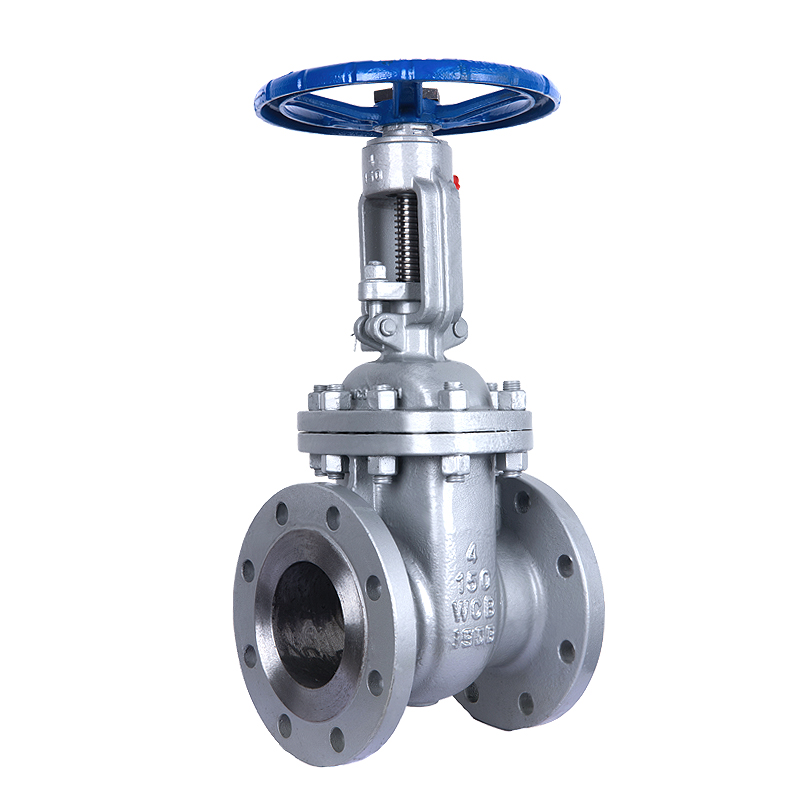
Slip-on flanges are a prevalent connection method in piping systems, characterized by their ease of installation and cost-effectiveness. Positioned within the fluid transfer infrastructure, they facilitate the joining of pipes, valves, pumps, and other equipment. Unlike weld-neck or threaded flanges, slip-on flanges are simply slipped over the pipe and then fillet welded, reducing the precision required during alignment. Their primary performance characteristics revolve around pressure containment, structural integrity under load, and resistance to corrosion. The choice of material dictates the flange’s performance envelope, with carbon steel being common for general service, while stainless steel, alloy steel, and specialized materials are utilized in harsher environments. A critical pain point in the industry is ensuring adequate weld penetration and quality, as this is the primary source of failure for these flanges. Proper welding procedure specification (WPS) and welder qualification are paramount.
Material Science & Manufacturing
Slip-on flanges are typically manufactured from carbon steel (ASTM A105, SA-105), stainless steel (304/304L, 316/316L, Duplex), alloy steel (A182 F51, F52, F53), or other alloys depending on the application. Carbon steel exhibits good strength and weldability but is susceptible to corrosion. Stainless steels offer superior corrosion resistance due to the presence of chromium, forming a passive oxide layer. Alloy steels are used in high-temperature, high-pressure environments, possessing enhanced creep resistance and tensile strength. The manufacturing process generally involves forging, casting, or cutting from plate material. Forging provides superior grain structure and mechanical properties. Cutting from plate involves CNC machining to create the flange’s face, bore, and weld preparation. Key parameters during manufacturing include material composition verification (through methods like positive material identification - PMI), dimensional accuracy (ensured through precise machining and inspection), and surface finish (to minimize stress concentrations and corrosion initiation sites). Welding preparation involves beveling the flange and pipe ends to accommodate the fillet weld. The welding process, typically Shielded Metal Arc Welding (SMAW), Gas Metal Arc Welding (GMAW), or Submerged Arc Welding (SAW), requires controlled heat input to prevent distortion and ensure full penetration. Post-weld heat treatment (PWHT) is often employed to relieve residual stresses and improve the weld’s ductility.
Performance & Engineering
The performance of a slip-on flange connection is dictated by several engineering principles. Firstly, stress analysis is crucial, considering the internal pressure of the fluid, the external loads from the piping system (weight, thermal expansion, seismic activity), and the stresses induced by the weldment. Finite Element Analysis (FEA) is commonly used to model the stress distribution and identify potential failure points. The weld joint is the most critical area. Fillet weld size and geometry are designed to withstand the shear stresses imposed by the internal pressure and external loads. Corrosion resistance is another vital performance aspect. The material selection must align with the fluid's chemical composition and operating temperature. Galvanic corrosion can occur when dissimilar metals are used in contact; therefore, appropriate isolation methods (e.g., dielectric gaskets) must be employed. Compliance requirements, dictated by standards like ASME B16.5, define the allowable pressure-temperature ratings for different flange sizes and materials. These standards also specify the dimensions and tolerances to ensure interchangeability. Bolt circle diameter, bolt hole size, and flange facing type (Raised Face, Flat Face) are all critical parameters that influence performance and leak tightness. Furthermore, hydrostatic testing is routinely performed to verify the integrity of the connection after installation.
Technical Specifications
| Parameter | Unit | ASTM A105 Carbon Steel | SS316/316L Stainless Steel |
|---|---|---|---|
| Pressure Rating | PSI | Up to 2000 | Up to 6000 |
| Temperature Range | °F | -20 to 800 | -325 to 850 |
| Tensile Strength | MPa | 400-550 | 500-700 |
| Yield Strength | MPa | 250-345 | 205-310 |
| Elongation | % | 18-22 | 30-50 |
| Hardness (Brinell) | HB | 150-200 | 85-100 |
Failure Mode & Maintenance
Slip-on flange connections are susceptible to several failure modes. Fatigue cracking is common in cyclical loading conditions, particularly at the weld toe where stress concentrations are highest. Corrosion, especially pitting and crevice corrosion, can occur in corrosive environments, weakening the flange material. Weld defects (e.g., porosity, lack of fusion, incomplete penetration) significantly reduce the connection’s strength and can lead to catastrophic failure. Erosion can occur in high-velocity fluid streams, wearing away the flange material. Bolting failures (e.g., bolt stretching, thread stripping) can result in leaks. Maintenance primarily involves regular visual inspections for signs of corrosion, cracks, or leakage. Non-destructive testing (NDT) methods, such as ultrasonic testing (UT), radiographic testing (RT), and magnetic particle inspection (MPI), are used to detect hidden defects. Weld inspections are crucial to verify weld quality. Periodic retorquing of bolts is necessary to maintain proper flange sealing. If corrosion is detected, surface preparation and protective coating application (e.g., painting, galvanizing) can extend the flange's service life. Replacement of severely corroded or damaged flanges is often required. Proper lubrication of bolts during installation and maintenance prevents galling and facilitates future disassembly.
Industry FAQ
Q: What is the primary difference between a slip-on flange and a weld-neck flange in terms of welding requirements and cost?
A: Slip-on flanges require less precise welding than weld-neck flanges. Weld-neck flanges necessitate a full penetration weld around the bore, demanding highly skilled welders and significant quality control. Slip-on flanges only require fillet welds, simplifying the process and lowering labor costs. However, weld-neck flanges generally offer higher strength and better resistance to stress corrosion cracking due to the reinforced weld configuration.
Q: How does material selection impact the long-term performance of a slip-on flange in a seawater application?
A: Seawater is a highly corrosive environment. Carbon steel flanges will rapidly corrode in seawater, leading to failure. Stainless steel alloys, particularly duplex stainless steels and super austenitic stainless steels, offer superior corrosion resistance in seawater. Material selection should also consider the potential for chloride stress corrosion cracking (CSCC) and pitting corrosion.
Q: What are the critical considerations when specifying the facing of a slip-on flange (e.g., Raised Face, Flat Face)?
A: The facing type must match the mating flange to ensure a proper seal. Raised Face (RF) is common for moderate pressure applications, providing a contact area for the gasket. Flat Face (FF) is used for lower pressures and mating to cast iron or other fragile materials. Ring Type Joint (RTJ) facings are used for high-pressure, high-temperature applications, requiring a metallic gasket. Mismatched facings will result in leaks.
Q: What non-destructive testing (NDT) methods are commonly used to inspect slip-on flange welds?
A: Radiographic Testing (RT) is used to detect internal weld defects like porosity and cracks. Ultrasonic Testing (UT) can also detect internal defects and measure weld thickness. Magnetic Particle Inspection (MPI) is effective for detecting surface and near-surface cracks. Liquid Penetrant Inspection (LPI) is used to detect surface-breaking flaws. Visual Inspection (VT) is always the first step, looking for surface imperfections.
Q: How can the risk of galvanic corrosion be minimized when using a slip-on flange connecting dissimilar metals?
A: Galvanic corrosion occurs when dissimilar metals are in electrical contact in the presence of an electrolyte. To minimize this risk, use dielectric gaskets to isolate the metals. Applying a protective coating to the more anodic metal can also reduce corrosion rates. Careful material selection, avoiding large potential differences between the metals, is crucial.
Conclusion
Slip-on flanges represent a practical and cost-effective solution for joining piping systems across a wide range of industries. Their performance, however, is intrinsically linked to proper material selection, meticulous manufacturing processes, and stringent quality control during installation. The weld joint remains the most vulnerable component, demanding skilled welding practices and comprehensive inspection. Understanding the potential failure modes—fatigue, corrosion, and weld defects—is critical for implementing effective maintenance strategies.
Future trends in slip-on flange technology may focus on advanced welding techniques (e.g., automated welding) to improve weld quality and reduce defects. The development of new corrosion-resistant alloys and coatings will further enhance their durability in harsh environments. Furthermore, the integration of digital technologies, such as sensor-based monitoring and predictive maintenance algorithms, will enable proactive detection of potential failures and optimize maintenance schedules, leading to improved system reliability and reduced lifecycle costs.
-
Top Reasons to Choose a Stainless Steel Flange Check Valve for Industrial Applications
-
diaphragm check valve Material Science Manufacturing
-
dual plate check valve Performance Analysis
-
check valve 6 inch Material Science
-
diaphragm check valves Performance Analysis
-
dual plate check valves Performance Analysis
-
vertical check valves Material Science Manufacturing
-
8 check valves Performance Analysis
-
refrigeration check valves Performance Analysis
-
pilot check valve Performance Analysis
-
pressure check valve Performance Analysis
-
check valve 3 4 inch Performance Analysis
-
3 4 inch check valve Performance Analysis
-
piloted check valve Performance Analysis
-
pilot check valves Performance Analysis
 Afrikaans
 Albanian
 Amharic
 Arabic
 Armenian
 Azerbaijani
 Basque
 Belarusian
 Bengali
 Bosnian
 Bulgarian
 Catalan
 Cebuano
 Corsican
 Croatian
 Czech
Czech
 Danish
 Dutch
Dutch
 Esperanto
 Estonian
 Finnish
 French
 Frisian
 Galician
 Georgian
 German
 Greek
Greek
 Gujarati
 Haitian Creole
 Hausa
Hawaiian
Hausa
Hawaiian
 Hebrew
 Hindi
Hindi
 Miao
Miao
 Hungarian
 Icelandic
 Igbo
Igbo
 Indonesian
 Irish
Irish
 Italian
 Japanese
 Javanese
Kannada
Javanese
Kannada
 Kazakh
 Khmer
Khmer
 Rwandese
 Korean
 Kurdish
 Kyrgyz
 Lao
Lao
 Latin
Latin
 Latvian
 Lithuanian
 Luxembourgish
 Macedonian
 Malgashi
 Malay
Malay
 Malayalam
 Maltese
 Maori
Maori
 Marathi
 Mongolian
 Myanmar
 Nepali
 Norwegian
 Norwegian
 Occitan
 Pashto
 Persian
 Polish
 Portuguese
Punjabi
Portuguese
Punjabi
 Romanian
 Russian
 Samoan
 Scottish Gaelic
 Serbian
 Sesotho
 Shona
Shona
 Sindhi
 Sinhala
 Slovak
 Slovenian
 Somali
 Spanish
 Sundanese
 Swahili
 Swedish
Tagalog
Swedish
Tagalog
 Tajik
Tajik
 Tamil
Tamil
 Tatar
Tatar
 Telugu
 Thai
Thai
 Turkish
 Turkmen
 Ukrainian
 Urdu
Urdu
 Uighur
 Uzbek
Uzbek
 Vietnamese
 Welsh
Welsh
 Bantu
Bantu
 Yiddish
 Yoruba
 Zulu
Zulu
 English